
Kryminał

Valentine Williams
Philip Clavering is a British agent using fake name James Dunlop while in Belgium. He found out that the train Berlin-Paris crashed. His boss calls and tells him that agent Charles Forrest was on this train, and Philip must find the gold box he was carrying. The woman who survived the crash is in his hotel, and he asks her if she has any information about Forrest. She is in a state of panic and loses consciousness. Returning to the lobby, he meets with Dr. Grundt, who rides upstairs to see the woman. He does not know who Grundt is. He will find out later.
Arthur B. Reeve
Guy Garrick, a detective who has made a scientific study of crime, has been the hero of a number of earlier short stories. In the present novel he is engaged in tracking down a gang of motor bandits. The police, the city detectives, the automobile detectives and Guy Garrick are all working on the problems, and the unravelling and subsequent glory of Garrick are very exciting. The eleventh volume in the chronicles of Craig Kennedy, scientific detective, takes up the familiar and successful formula for a new round of adventures, written by Arthur B. Reeve. Reeve was an American mystery writer who created 82 Craig Kennedy mystery stories. An enjoyable collection, especially for those interested in sleuthing aided by science.
Fred M. White
Fred M. Whites hobby is to confuse the reader from the very first pages. The same happens in The Golden Bat, from the very first phrases we learn about a real confident man, Lytton Barle. He was the head of the Secret Squad at New Scotland. His friend, Ray, came to London to find a man who stole $ 40,000 from him. Ray joins the Secret Squad. Together, two comrades are going to make noise and punish those responsible.
E. Phillips Oppenheim
Edward Phillips Oppenheim (1866-1946) was the earliest writer of spy fiction as understood today, inventing the rogue male school of adventure thrillers and writing over 150 novels of all sorts. In The Golden Beast, a woman curses her lovers father, a baron, who had her gamekeeper father hanged. Years afterward, three of the barons descendants disappear in a manner that baffles Scotland Yard, appearing they were the victims of that ancient curse. Written in 1925, with a powerful Jewish family as the main characters, there are strong descriptions and anti-Semitic characterizations. The men are greedy, money obsessed, and unattractive. The women are beautiful, alluring, exotic, and immoral.

Mary Elizabeth Braddon
The plot tells the story of Ida Pallizer, the daughter of a poor Anglican pastor. Miss Pughs teacher and a wealthier student named Urania Pallizer often taunts and makes silly remarks about her poverty. The best line from this part of the book is when Ida is excluded. Miss Pugh says: You can stay here as long as you need to pack your bags. Not that it takes a long time.
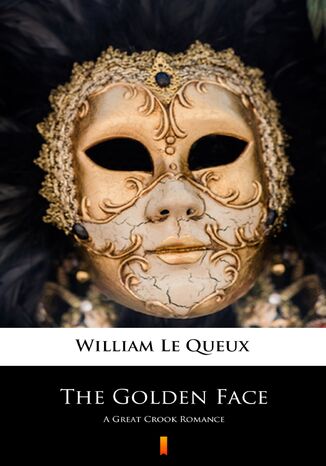
The Golden Face. A Great Crook Romance
William Le Queux
Imagine an organized gang of thieves, ruthless, working together like a modern machine, run by one man referred to only as Golden Face."This tale inexorably takes you step-by-step into the organization, as we follow the main characters fall into the underworld of crime.Takes place around the 1900s, but action packed and loaded with intrigue; even room for a budding romance in with all the twists and turns of the story.Really enjoyed this story, looking for more like it.
Edgar Wallace
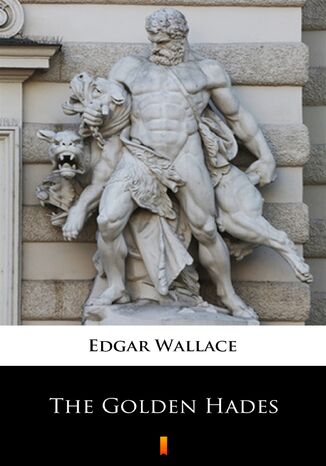
This early work by Edgar Wallace was originally published in 1929. "The Golden Hades" is a tale of murder and a symbol on bank notes leading to a sinister organization. This mystery novel features Wilbur Smith of the Treasury Department for Counterfeit in his investigations. Each time a crime happens be it a robbery or a murder, there is a sinister sign of Pluto (Hades) gold there... a statue of the Greek god of the underworld and the sign of dangerous gang of forgers. One of the most prolific writers of the twentieth century, Edgar Wallace was an immensely popular author, who created exciting thrillers spiced with tales of treacherous crooks and hard-boiled detectives.
Fred M. White
Lethbridge was indifferent to neither sport nor politics, nor even love itself. He was just a healthy model of an average Englishman, ready to follow the traditions of his race and live purely and happily. He was an artist who found beauty and inspiration in flowers. An unexpected turn of events occurs: John Lethbridge was accused of theft. He is not even trying to justify himself, he was so wilted. But is he to blame?