
Kryminał
Edgar Wallace, Robert Curtis
The novel of Edgar Wallaces famous play told by Robert Curtis in story form with all the dramatic excitement and suspense. In the shady setting of a solicitors office on the East End waterfront a plan is evolved all quite legal to get hold of a large American legacy bequeathed to an English girl. Murder is planned and tried: kidnapping, incarceration in a London barge, a dash for freedom, the intervention of the river police and knock-out drops all play their part in the unfolding of the tale which keeps its suspense to the last in as swift-moving a sequence of events as ever Edgar Wallace at his best devised. It is a case where the Yard was best not to call them in for reasons best known to the characters in the story as the reader will find for himself.

E. Phillips Oppenheim
Uncommon Oppenheim novel tells a strong story of the complicated love affairs, thrilling and mystifying revelations in the life of a young occult. Mr. Henry Rochester is an honest and honorable landowner in rural England. One evening he is walking his estate when he happens across the boy who is meditating on a hillside, and after a conversation, takes it into his head to give the boy money and see what hell make of himself. Unfortunately, he also tells the boy that if he fails, hed be better off killing himself. Seven years later the boys has become Mr. Bertrand Saton, a mystical adventurer, adopted son of the Comtesse Rachael, and ravisher of female London. The two become enemies, with several women at stake in the contest. Henrys wife, Lady Mary; his ward Lois, and his great love Pauline.
Aidan de Brune
Meet the famous Australian author Aidan de Brune and his latest mystery The Murders at Madlands. Eight persons are assembled in the dining room of the palatial home of Sir Rupert Haffervale, Sydneys business magnate. Five of them are his associates, prominent men in the life of the city. The sixth is the star reporter of a big daily. The occasion is the formal handing over of control of a huge trust to Sir Ruperts niece and heiress on her coming of age. At noon, as the knight is about to conduct his niece to the head of the table he falls forward with a bullet through his heart. The fatal shot was undoubtedly fired by someone in the room, yet no report was heard. Who was the murderer?
William Le Queux
We were standing together in the small shabby bedroom of the boarding-house wherein I lived in Granville Gardens, facing the recreation ground close to Shepherds Bush Railway Station. The stifling July day was at an end, and the narrow room was lit by the soft hazy glow of the fast-fading London sunset. Through the open window came the shouts of children at play upon the green opposite, mingled with the chatter of the passers-by and the ever-increasing whirr of the electric trams. Within that faded, smoke-grimed chamber of the dead was silence. Upon the bed between us lay the dead strangerthe man who was a mystery.
William Le Queux
We all got up from tea in the hall, made our way to the drawing-room, and thence into the morning-room, which opened out of it. There was plenty of daylight still. James came in after us, and went straight up to a framed panel portrait which stood with others on a small table in a remote corner. It showed a tall handsome, clean-shaved man of three or four and thirty, of fine physique, seated astride a chair, his arms folded across the back of the chair as he faced the camera.
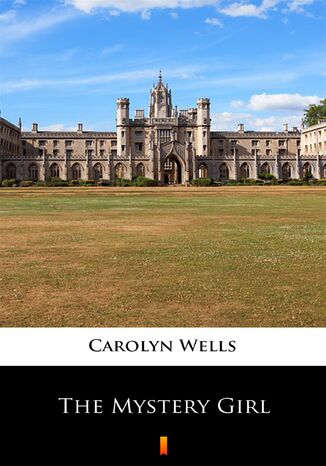
Carolyn Wells
The cozy college town of Corinth, New England is the setting for this classic locked-room mystery by Carolyn Wells, author of The Clue. In the middle of the election of a new president of the University the favorite candidate is found dead. Is it murder or suicide? All entrances to the study where the body was found were locked from the inside. The future college president and groom-to-be had no known cause for suicide, yet no clues in either direction appeared to make any sense. Its up to Detective Fleming Stone and his remarkable ingenuity to decipher the storys twin puzzles; the mystery of the locked-room death and the true nature of... The Mystery Girl. One of Carolyn Wells most well-known novels, The Mystery Girl is an enjoyable, intriguing read that will surely leave you glad for having picked it up.
Fred M. White
Already by the name it becomes clear that this story contains many secrets and mystics. All events revolve around Miss Ellen Marchant, confidential clerk and typist to James Melrose. Mr. James Melrose, the eminent head and only partner in the firm of Melrose and Clapstone. Her father was rich, everyone knew that he led the "dark" affairs. He had a large Crocksands estate that Ellen could get. She gave up everything that connected with her surname and decided to start a new life with a new job. However, she finds a letter from a dead father sent to her boss.
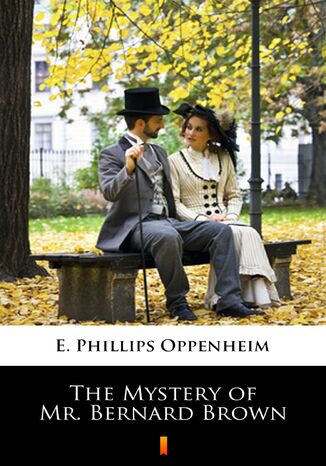
The Mystery of Mr. Bernard Brown
E. Phillips Oppenheim
The Mystery of Mr. Bernard Brown is an 1896 novel by the British writer E. Phillips Oppenheim. Following the apparent murder of a man, a novelist comes under suspicion. Very enjoyable period piece with lovely descriptions and intense love between hero and heroine. He has to clear his name, as main suspect in a murder and he had sworn revenge and had taken an assumed name. Flashbacks to Italy. Full of rich and influential people with touch of Dickens with Benjamin Levy, the private sleuth who is obsessed with money. The author has acquired an admirable technique of the sort demanded by this novel of intrigue and mystery. Readers of Mr. Oppenheims novels may always count on a story of absorbing interest, turning on a complicated plot, worked out with dexterous craftsmanship.