Podręczniki szkolne

9
Ładowanie...
EBOOK

Annales Mathematicae Silesianae. T. 23 (2009)

Komitet Redakcyjny

Kolejny tom otwiera wspomnienie o zmarłym w grudniu 2006 r. matematyku Profesorze Andrzeju Lasocie, który był nie tylko wybitnym uczonym, ale także znakomitym wykładowcą, wychowawcą wielu pokoleń polskich matematyków. W tomie zamieszczono ponadto zarówno artykuły zawierające nowe wyniki z analizy matematycznej i algebry, jak i sprawozdania z konferencji i sympozjów naukowych.

10
Ładowanie...
EBOOK

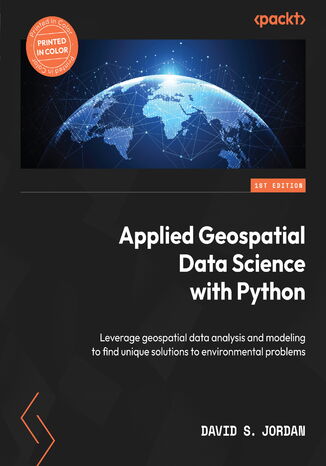
Applied Geospatial Data Science with Python. Leverage geospatial data analysis and modeling to find unique solutions to environmental problems

David S. Jordan

Data scientists, when presented with a myriad of data, can often lose sight of how to present geospatial analyses in a meaningful way so that it makes sense to everyone. Using Python to visualize data helps stakeholders in less technical roles to understand the problem and seek solutions. The goal of this book is to help data scientists and GIS professionals learn and implement geospatial data science workflows using Python.Throughout this book, you’ll uncover numerous geospatial Python libraries with which you can develop end-to-end spatial data science workflows. You’ll learn how to read, process, and manipulate spatial data effectively. With data in hand, you’ll move on to crafting spatial data visualizations to better understand and tell the story of your data through static and dynamic mapping applications. As you progress through the book, you’ll find yourself developing geospatial AI and ML models focused on clustering, regression, and optimization. The use cases can be leveraged as building blocks for more advanced work in a variety of industries.By the end of the book, you’ll be able to tackle random data, find meaningful correlations, and make geospatial data models.

11
Ładowanie...
EBOOK

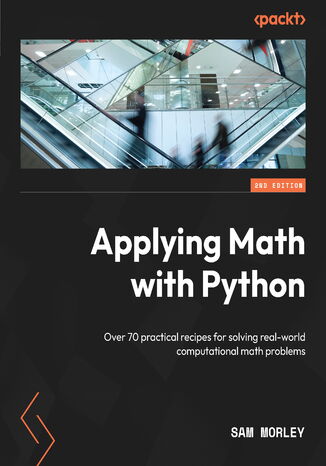
Applying Math with Python. Over 70 practical recipes for solving real-world computational math problems - Second Edition

Sam Morley

The updated edition of Applying Math with Python will help you solve complex problems in a wide variety of mathematical fields in simple and efficient ways. Old recipes have been revised for new libraries and several recipes have been added to demonstrate new tools such as JAX.You'll start by refreshing your knowledge of several core mathematical fields and learn about packages covered in Python's scientific stack, including NumPy, SciPy, and Matplotlib. As you progress, you'll gradually get to grips with more advanced topics of calculus, probability, and networks (graph theory). Once you’ve developed a solid base in these topics, you’ll have the confidence to set out on math adventures with Python as you explore Python's applications in data science and statistics, forecasting, geometry, and optimization. The final chapters will take you through a collection of miscellaneous problems, including working with specific data formats and accelerating code.By the end of this book, you'll have an arsenal of practical coding solutions that can be used and modified to solve a wide range of practical problems in computational mathematics and data science.

12
Ładowanie...
EBOOK

Artificial Intelligence Basics. A Self-Teaching Introduction

Mercury Learning and Information, N. Gupta, R....

This book is designed as a self-teaching introduction to the fundamental concepts of artificial intelligence (AI). It begins with the history of AI, the Turing test, and early applications, providing a strong foundation. Later chapters cover the basics of searching, game playing, and knowledge representation. The journey continues with detailed explorations of expert systems and machine learning, equipping readers with essential AI techniques.As the course progresses, you will delve into separate programming chapters on Prolog and Python, learning how to implement AI concepts in these languages. These chapters offer practical coding experience, enhancing your understanding of AI programming. The book culminates with a comprehensive chapter on AI machines and robotics, showcasing numerous modern applications and providing a glimpse into the future of AI technology.Understanding these AI concepts is crucial as they form the basis of many modern technologies and applications. This book ensures a smooth transition from a beginner to a proficient AI practitioner, equipped with both theoretical knowledge and practical skills. By the end of the book, you will have a thorough understanding of AI's history, core principles, and practical implementations, ready to apply this knowledge to real-world problems and projects.

13
Ładowanie...
EBOOK

Artificial Intelligence for Cybersecurity. Develop AI approaches to solve cybersecurity problems in your organization

Bojan Kolosnjaji, Huang Xiao, Peng Xu, Apostolis...

Artificial intelligence offers data analytics methods that enable us to efficiently recognize patterns in large-scale data. These methods can be applied to various cybersecurity problems, from authentication and the detection of various types of cyberattacks in computer networks to the analysis of malicious executables.Written by a machine learning expert, this book introduces you to the data analytics environment in cybersecurity and shows you where AI methods will fit in your cybersecurity projects. The chapters share an in-depth explanation of the AI methods along with tools that can be used to apply these methods, as well as design and implement AI solutions. You’ll also examine various cybersecurity scenarios where AI methods are applicable, including exercises and code examples that’ll help you effectively apply AI to work on cybersecurity challenges. The book also discusses common pitfalls from real-world applications of AI in cybersecurity issues and teaches you how to tackle them.By the end of this book, you’ll be able to not only recognize where AI methods can be applied, but also design and execute efficient solutions using AI methods.*Email sign-up and proof of purchase required

14
Ładowanie...
EBOOK

Arystoteles na nowo odczytany. Ryszarda Kilvingtona

Elżbieta Jung

 Książka jest efektem wieloletnich badań dotyczących historii nauki średniowiecznej, mianowicie początków fizyki matematycznej. Można w niej wyodrębnić dwie części: monografię, w której autorka odpowiada na pytanie, czy XIV-wieczna fizyka matematyczna, inspirowana nominalistyczną filozofią Wilhelma Ockhama, doprowadziła do zerwania z jakościową fizyką Arystotelesa już w wieku XIV, oraz – tłumaczenie Kwestii o ruchu Ryszarda Kilvingtona, jednego z twórców szkoły Oksfordzkich Kalkulatorów. Z pozycji nominalistycznej, z jednej strony odrzuca on dużą część podejmowanej przez Arystotelesa problematyki, z drugiej zaś, wypełniając obowiązki nauczycielskie na średniowiecznym uniwersytecie, poddaje teorie Stagiryty interpretacji pozwalającej odnaleźć w jego myśli elementy bliskie – jak się Kilvingtonowi wydaje – jego poglądom. W swoich kwestiach Kilvington podejmuje analizę zagadnienia zmian, rozumianych, zgodnie z definicją Arystotelesa, jako ruch przestrzenny, zmiany jakościowe oraz ilościowe w ujęciu nominalistycznym, czyniąc matematykę właściwym językiem opisu przyrody. Są one też rezultatem jego nauczania, czasami zapisu ćwiczeń odbywanych w klasie ze studentami, zatem tekst ten ma również walor historyczny, ponieważ pokazuje nam, jak wielkie wymagania stawiano studentom średniowiecznym i jak dobrze się z nich wywiązywali. Jakiego rodzaju były to „obliczenia” i jakie dzięki nim można osiągnąć rezultaty, Czytelnik dowie się z lektury książki.

15
Ładowanie...
EBOOK

Bioinformatics with Python Cookbook. Solve advanced computational biology problems and build production pipelines with Python and AI tools - Fourth Edition

Shane Brubaker

If you've ever felt overwhelmed by the vast number of Python tools available for bioinformatics, you're not alone. The Bioinformatics with Python Cookbook is a recipe-based guide that explores practical approaches for solving classic bioinformatics challenges, showing you which Python packages work best for each task.You’ll start with the essential Python libraries for data science and bioinformatics, then move through key workflows in sequencing analysis, quality control, alignment, and variant calling. Along the way, you’ll pick up modern coding practices, explore recent advances in bioinformatics research, and gain hands-on experience with libraries such as NumPy, pandas, and sci-kit learn. This book walks you through core bioinformatics tasks such as phylogenetic analysis and population genomics while familiarizing you with the wealth of modern public bioinformatics databases. You’ll learn cloud computing approaches used by researchers, set up workflow orchestration systems for controlling bioinformatics pipelines, and see how AI and the use of large language models (LLMs) are reshaping the field–right down to designing proteins and DNA.By the end of this book, you’ll be ready to apply Python for real bioinformatics work and launch bioinformatics pipelines for your research.

16
Ładowanie...
EBOOK

Buduję swoją pierwszą drukarkę 3D

Szymon Terczyński, Damian Gąsiorek, Marek Smyczek, Grzegorz...

Książka Buduję swoją pierwszą drukarkę 3D skierowana jest dla osób, które chcą poglądowo zapoznać się z technologiami przyrostowymi, a w szczególności technologią FDM (Fused Deposition Modeling), poznać historię technologii przyrostowych na świecie, a także dowiedzieć się jak można zbudować własną i tanią drukarkę 3D. Nie jest to podręcznik teoretyczny, skupiający się na szczegółowym opisie każdej technologii czy też współczesnej drukarki. Stanowi natomiast pełny, praktyczny przewodnik, opisujący proces budowy i użytkowania drukarek 3D na przykładzie modelu Prusa i3. Zawiera także instrukcję montażu niecodziennego projektu drukarki 3D z odzyskanych, starych napędów CD ROM.   Książka ta, to również dowód i przykład jak obecnie wygląda współpraca uczelni wyższej z wybranymi szkołami średnimi (Zespół Szkół Nr1 z Piekar Śląskich oraz Śląskie Techniczne Zakłady Naukowe z Katowic). Współpraca szkół średnich z pracownikami Politechniki Śląskiej to dowód na wspieranie młodych talentów, a owocem tego jest między innymi budowa własnych drukarek, czyli urządzeń mechatronicznych, łączących konstrukcję, napędy i sterowanie. Tematyka związana z drukiem 3D jest jednym z filarów przemysłu 4.0 i coraz więcej firm poszukuje osób, które potrafią drukować modele przestrzenne. Autorzy tej książki to zespół międzypokoleniowy i interdyscyplinarny. Utalentowany uczeń Śląskich Technicznych Zakładów Naukowych z Katowic, Szymon Terczyński i jego nauczyciel mgr inż. Marek Smyczek. Pracownik Politechniki Śląskiej, również mentor i opiekun naukowy Szymona, dr hab. inż. Damian Gąsiorek prof. PŚ. Ważnym ogniwem łączącym przemysł z edukacją jest otoczenie społeczno gospodarcze, które reprezentuje wiceprezes zarządu Grupy Azoty S.A. dr Grzegorz Kądzielawski.