
Sensacja
R. Austin Freeman
In this novel, Dr. Thorndyke builds a card house of wild speculations to solve a perplexing murder case, astonishing all observers, including the police. The victim is Julius D Arblay, an artist highly skilled at the rare French art of making wax-work figures and portrait masks. DArblay has a beautiful daughter, which leads to a romance with a young Dr. Grey who discovers the fathers body and brings the case to Dr. Thorndykes attention. Before the end of the story, the young doctor and his love will each have survived two murder attempts by an increasingly frantic killer. There are lots of great scenes: stalking scenes, vicious attacks on Dr. Gray and Marion with various weapons, a sinister scene in a dense yellow London fog, a humorous exhumation of a dead man of dubious identity, and very funny vignettes with a tippler of an old doctor advising Gray on how to handle troublesome patients. Thorndykes lovable lab assistant Polton has a starring role in this novel.
R. Austin Freeman
What would you do if your doppelganger were committing crimes and making the police believe you were the perpetrator? In Danby Crokers case, he decides to retaliate! But that is only one of the problems besetting him in this set of interlinked stories. Given a job as an antique dealer, can he resist the temptations of earning some easy money through a bit of fencing and counterfeiting? And what on earth is he doing going round London dressed as a suffragette?! R. Austin Freemans The Exploits of Danby Croker involves mistaken identities, art forgery, antique swindles, and even a little cross-dressing. There is a price to be paid for breaking the law, but whos going to pay it? Originally written in 1911 by the great author of detective stories R. Austin Freeman, this is a comic novel that may surprise those who know Freemans work only through the Dr. Thorndyke stories! This rare collection of stories is an enjoyable romp through crime and romance.
R. Austin Freeman
The Eye of Osiris, published in 1911, was the second of R. Austin Freemans many Dr. Thorndyke mystery novels. Here the great expert in medical jurisprudence will encounter the mysteries of ancient Egypt without ever leaving London. The cast of characters is rich in Egyptologists. A wealthy old man, John Bellingham, collector of Egyptian antiquities, has disappeared without a trace. His brother is also an Egyptologist, as is his niece and the lawyer who executed his will. Circumstances strongly suggest that the old man is dead, and innocent people may be accused of murder. Happily Dr. Thorndyke gets involved quite by chance. The plot is tremendously clever, and the denouement a total surprise. The great strength of the novel lies in the plotting which is ingenious enough and complicated enough to satisfy any fan of the puzzle-style of mystery story.
The Golden Pool. A Story of a Forgotten Mine
R. Austin Freeman
This novel begins with Robert Englefield, a young Englishman, taking on a job with a vessel sailing for northern Africa. Once there, Englefield is placed in the position of running the store through which the captain sells and trades his goods. As Englefield spends more and more time at this outpost on the African coast, he hears stories a legendary mine in the interior of Africa where the priests capture unwary travelers and blind them to prevent escape. Purely out of curiousity, Englefield finally decides to go looking for this mine in spite of the obvious dangers presented to a white man traveling in the rural African interior. Once Englefield departs and inevitably runs into trouble, the story finally takes on some suspense and unpredictability.
The Great Portrait Mystery and Other Stories
R. Austin Freeman
A daring daylight art theft from a crowded museum, a secret document centuries old, and a hidden treasure, these are the elements of the title story in this collection of tales by R. Austin Freeman. Though best known for his famous forensic sleuth, Dr. John Thorndyke, Freeman also on occasion wrote stories featuring other characters. In addition to The Great Portrait Mystery, this collection features four more of these tales which show a more whimsical and humorous side of the author, dealing in turn with a bewitched curate, thieves whose clever plans go adrift, a haunted lawyer, and a poor bricklayer on whom fortune smiles in a strange fashion. This collection of seven short stories includes two featuring Dr. John Evelyn Thorndyke, a fictional detective in a long series of novels and short stories by British author R. Austin Freeman (1862-1943).

John Buchan
Sir Richard Hannay, retired mining engineer, lives a comfortable suburban life outside London, but feels old age and stodginess coming on and longs to have his mettle tested again. He gets his chance when a promise he made years ago in Rhodesia, to protect the son of an old acquaintance from a sinister conspiracy, and the action moves rapidly from England through the Scottish Borders to the Island of Sheep in the remote Norlands, where Hannay and his friends turn at last to confront their enemy. In this, his final adventure, Buchans hero Richard Hannay becomes embroiled in one of the most hazardous escapades of his life. This novel contains what all of Buchans yarns contain: peril, action, heroism, dastardly villains, powerful manly friendships, a hint of romance, references to the classics, British pluck in the face of danger, can-do youngsters, picturesque country folk...
R. Austin Freeman
R. Austin Freemans mysteries are often divided into two parts, the first dealing with events leading up to a murder, followed by Dr. Thorndykes investigation. In this case, the first part, about a beautiful woman who poses as a serious artist, then disappears, is delightful. It details the friendship between Thomas Pedley and Loretta Schiller. The second part is written in the first person with Jervis, Thorndykes assistant, being the narrator as usual. A peaceful, pleasant afternoon in the woodland scene of Linton Green is disturbed when a brutal murder takes place. But thanks to an unseen witness, the killer may be caught, and the witness turns out to be a blessing in disguise. This is the story of Thomas Pedley, a gifted artist who paints what he sees from memory.
The Life and Adventures of Martin Chuzzlewit
Charles Dickens
Martin Chuzzlewit by Charles Dickens is a story of selfishness, greed, and hypocrisy. The central character is old Martin Chuzzlewit, whose selfishness and cynicism, combined with his great wealth, cause him to mistrust everyone around him. Also a major character in the story is his relative, Mr. Pecksniff, an accomplished hypocrite, who covers his avarice with a mask of smooth piety and humility. Martin Chuzzlewit is a picaresque novel, which follows the genre convention of depicting the humorous adventures of a roguish hero of low social class who lives by his wits and corrupts society. As in most picaresque novels, the primary objective is social satire or criticism.
The Man Who Was Thursday. A Nightmare
G.K. Chesterton
The Man Who Was Thursday: A Nightmare was written by G.K. Chesterton and published in 1908. Ostensibly about a secret policeman investigating anarchists, it becomes a surreal and philosophical novel. It is a metaphysical thriller, and a detective story filled with poetry and politics. Gabriel Syme is a poet and a police detective. Lucian Gregory is a poet and a bomb-throwing anarchist. Syme infiltrates a secret meeting of anarchists and becomes Thursday, one of the seven members of the Central Anarchist Council. He soon learns, however, that he is not the only one in disguise, and the nightmare begins...The Man Who Was Thursday has a Mission plot, although the final confrontation with the Antagonist is rather a bizarre one.
R. Austin Freeman
Second in the Dr. Thorndyke mystery series set in London around 1900. Thorndyke is a lawyer and medical doctor who reasons out mysteries. This involves a young doctor friend who Thorndyke hires as his assistant whose strange case involving a mysteries man and couple who are caring for him and an inheritance case brought to Thorndyke. A classic English mystery with the detective, Dr. Thorndyke, solving what appears to be two disparate mysteries. One is an apparent suicide with a disputed will; the other is one of his sidekicks (Dr. Jervis) odd case of an apparent poisoning. Despite the twists and turns, the mysteries are solved.
R. Austin Freeman
Angelina Frood, a striking young ex-actress, has gone missing and her new friend Dr. Strangeways, a good-hearted young doctor and the narrator of the story, is determined to find out what has happened and along the way enlists the assistance of Dr. Thorndyke. The local police Sergeant is hot on the trail, as items of clothing and jewellery belonging to Angelina are discovered. Theres serious trouble ahead, but fortunately Dr. Thorndyke, the great medico-legal expert, will take a keen interest in the young womans troubles, through the championship of Dr. Strangeways. This novel deals with some very modern themes: domestic violence, gender inequalities, drug addiction and advanced methods of forensic science as practiced by Dr. Thorndyke.
Charles Dickens
As in many of Dickenss greatest novels, the gulf between appearance and reality drives the action. Set in the seemingly innocuous cathedral town of Cloisterham, the story rapidly darkens with a sense of impending evil. Charles Dickenss final, unfinished novel is in many ways his most intriguing. A highly atmospheric tale of murder, The Mystery of Edwin Drood foreshadows both the detective stories of Conan Doyle and the nightmarish novels of Kafka. Though The Mystery of Edwin Drood is one of its authors darkest books, it also bustles with a vast roster of memorable-and delightfully named-minor characters: Mrs. Billikins, the landlady; the foolish Mr. Sapsea; the philanthropist, Mr. Honeythunder; and the mysterious Datchery. Several attempts have been made over the years to complete the novel and solve the mystery, but even in its unfinished state it is a gripping and haunting masterpiece.
R. Austin Freeman
The Penrose Mystery, fist published in 1936, is definitely up to the high standard of the wonderful Dr. Thorndyke series. Penrose is an eccentric old man in possession of some dazzling gems, which he wont insure. When Dr. Thorndyke is alerted to a burglary at his house, a scrap of paper is found with the word lobster on it along with two Latin words. Meanwhile, Penrose has fled in panic after a car accident. The police believe hes gone into hiding to avoid a manslaughter charge after a hit-and-run accident. Finding him is a forlorn hope, theres so little to go on. But Thorndyke has a way of seeing significance in the merest bits of dirt inside a tire or oddments in a pocket... Polton, Dr. Thorndykes lovable lab assistant, has an important presence in the plot, less this time for his remarkable technical skills than for his fondness for fixing antique clocks.
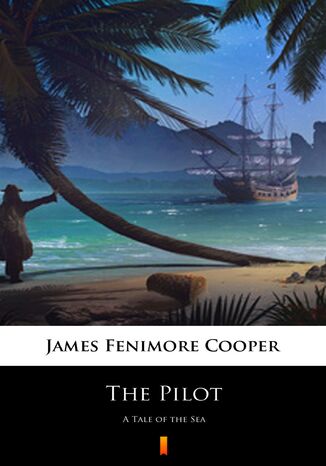
James Fenimore Cooper
In The Pilot (1824), James Fenimore Cooper invented a new literary genre: the sea novel. Bold, vigorous, original, it is a tale of high adventure that vividly captures the majesty and power of the seafaring life. Cooper drew on his direct knowledge of ships and sailors to present a truer picture of life on the sea than had ever before achieved in literature. As a boy of seventeen he had experienced the life of a common seaman, learned the craft of sailing, encountered terrifying storms, was chased by pirates, and watched the impressment of crew members by a British man-of-war.The Pilot is loosely based upon stories of John Paul Joness daring hit-and-run tactics during the Revolutionary War. The shadowy hero, modeled on Jones, leads a squadron of the infant American navy in a series of raids on the English coast, braving fierce storms and the guns of hostile warships, yet never revealing his identity. In this novel Cooper introduced the character of the old salt, the seasoned deckhand happy only aboard ship.
John Buchan
Edward Leithen is a young British lawyer who learns that one of his Oxford contemporaries, Charles Pitt-Heron, has just disappeared. Leithen learns from Pitt-Herons wife that he has been forced to flee. But a series of strange events that follow Pitt-Herons disappearance convinces Leithen that he is dealing with a sinister secret society. His suspicions begin to center on a wealthy, well-known, and intelligent businessman, who reveals himself to Leithen as an ardent anarchist. The barrister finds himself the target of many watchers, and then, as his understanding of the conspiracy involving the Power House grows, he is trapped and chased unrelentingly. The Author, despite being very busy in Public Service, wrote over fifty books during his life but his particular talent was for writing fast-moving adventure stories. The Power-House, a good example of this genre, was published in 1916.
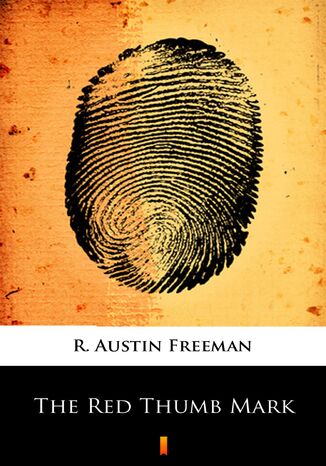
R. Austin Freeman
Originally written in 1907, The Red Thumb Mark opens the series by R. Austin Freeman featuring Dr. Thorndyke, who is a sort of Sherlock-Holmes type character. A single fingerprint is found at the scene of a crime. When the police are able to identify that fingerprint, the case seems closed. But Dr. Thorndyke, the detective/barrister/medical doctor who takes on defense of this suspect, thinks he can disprove the prosecutions case, based on that same fingerprint. It does not take Dr. Thorndyke to figure out who the criminal is. It is up to Dr. John Thorndyke, and his new assistant Dr. Jervis to prove the young mans innocence before hes found guilty and hanged. The mystery in this wonderful detective tale is who the lovely heroine is in love with. The answer may surprise you.