
Hacking
Arush Kakkar, Richard Grimmett, Ashwin Pajankar, Matthew...
Looking for inspiration for your next Raspberry Pi project? Not sure where to begin? This Learning Path is the perfect place to begin, providing you with an accessible yet comprehensive journey through Raspberry Pi. Following three modules, you’ll soon be confident and prepared to get creative with your microcomputer. Raspberry Pi by Example is the first module in this Learning Path – and it does exactly what it says. It doesn’t just teach, it shows you how to go and build some awesome Raspberry Pi projects immediately. Build and play your own games with the Pi, build a complete Internet of Things home automation system that controls your house through Twitter… let your imagination run wild!In the next module we’ll look in more depth at building a home security system. You’ll be using some of the skills you devoped through the first module, but apply them to something more intricate and impressive. Using a Linux based operating system as the foundations, you’ll gradually build up an entire security infrastructure adding cameras, remote controls, and even intrusion alerts!In the final module, we’ll take you into the world of Raspberry Pi robotics. By the end of it, you’ll have built a biped robot that can interact with its environment!This Learning Path combines some of the best that Packt has to offer in one complete, curated package. It includes content from the following Packt products:? Raspberry Pi By Example by Ashwin Pajankar and Arush Kakkar? Building a Home Security System with Raspberry Pi by Matthew Pole? Raspberry Pi Robotics Essentials by Richard Grimmett
Real-World SRE. The Survival Guide for Responding to a System Outage and Maximizing Uptime
Nat Welch
Real-World SRE is the go-to survival guide for the software developer in the middle of catastrophic website failure. Site Reliability Engineering (SRE) has emerged on the frontline as businesses strive to maximize uptime. This book is a step-by-step framework to follow when your website is down and the countdown is on to fix it. Nat Welch has battle-hardened experience in reliability engineering at some of the biggest outage-sensitive companies on the internet. Arm yourself with his tried-and-tested methods for monitoring modern web services, setting up alerts, and evaluating your incident response.Real-World SRE goes beyond just reacting to disaster—uncover the tools and strategies needed to safely test and release software, plan for long-term growth, and foresee future bottlenecks. Real-World SRE gives you the capability to set up your own robust plan of action to see you through a company-wide website crisis.The final chapter of Real-World SRE is dedicated to acing SRE interviews, either in getting a first job or a valued promotion.
Glen D. Singh
This book explores reconnaissance techniques – the first step in discovering security vulnerabilities and exposed network infrastructure. It aids ethical hackers in understanding adversaries’ methods of identifying and mapping attack surfaces, such as network entry points, which enables them to exploit the target and steal confidential information.Reconnaissance for Ethical Hackers helps you get a comprehensive understanding of how threat actors are able to successfully leverage the information collected during the reconnaissance phase to scan and enumerate the network, collect information, and pose various security threats. This book helps you stay one step ahead in knowing how adversaries use tactics, techniques, and procedures (TTPs) to successfully gain information about their targets, while you develop a solid foundation on information gathering strategies as a cybersecurity professional. The concluding chapters will assist you in developing the skills and techniques used by real adversaries to identify vulnerable points of entry into an organization and mitigate reconnaissance-based attacks.By the end of this book, you’ll have gained a solid understanding of reconnaissance, as well as learned how to secure yourself and your organization without causing significant disruption.
Red Hat Enterprise Linux 8 Essentials. Learn to install, administer and deploy RHEL 8 systems
Neil Smyth
Red Hat Enterprise Linux 8 is one of the most secure and dependable operating systems available. For this reason, the ambitious system or network engineer will find a working knowledge of Red Hat Enterprise 8 to be an invaluable advantage in their respective fields. This book, now updated for RHEL 8.1, begins with a history of Red Enterprise Linux and its installation. You will be virtually perform remote system administration tasks with cockpit web interface and write shell scripts to maintain server-based systems without desktop installation. Then, you will set up a firewall system using a secure shell and enable remote access to Gnome desktop environment with virtual network computing (VNC). You’ll share files between the Red Hat Enterprise Linux 8 (RHEL 8) and Windows System using Samba client and NFS. You will also run multiple guest operating systems using virtualization and Linux containers, and host websites using RHEL 8 by installing an Apache web server. Finally, you will create logical disks using logical volume management and implement swap space to maintain the performance of a RHEL 8 system. By the end of this book, you will be armed with the skills and knowledge to install the RHEL 8 operating system and use it expertly.
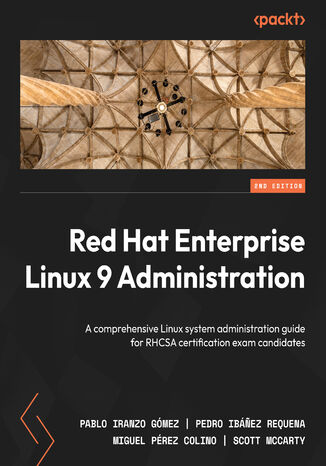
Pablo Iranzo Gómez, Pedro Ibanez Requena, Miguel...
With Red Hat Enterprise Linux 9 becoming the standard for enterprise Linux used from data centers to the cloud, Linux administration skills are in high demand. With this book, you’ll learn how to deploy, access, tweak, and improve enterprise services on any system on any cloud running Red Hat Enterprise Linux 9.Throughout the book, you’ll get to grips with essential tasks such as configuring and maintaining systems, including software installation, updates, and core services. You’ll also understand how to configure the local storage using partitions and logical volumes, as well as assign and deduplicate storage. You’ll learn how to deploy systems while also making them secure and reliable.This book provides a base for users who plan to become full-time Linux system administrators by presenting key command-line concepts and enterprise-level tools, along with essential tools for handling files, directories, command-line environments, and documentation for creating simple shell scripts or running commands. With the help of command line examples and practical tips, you’ll learn by doing and save yourself a lot of time.By the end of the book, you’ll have gained the confidence to manage the filesystem, users, storage, network connectivity, security, and software in RHEL 9 systems on any footprint.
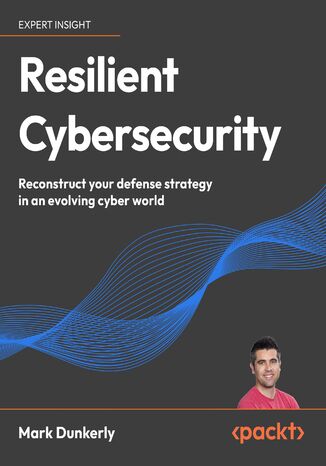
Resilient Cybersecurity. Reconstruct your defense strategy in an evolving cyber world
Mark Dunkerley
Building a Comprehensive Cybersecurity Program addresses the current challenges and knowledge gaps in cybersecurity, empowering individuals and organizations to navigate the digital landscape securely and effectively. Readers will gain insights into the current state of the cybersecurity landscape, understanding the evolving threats and the challenges posed today.This book emphasizes the importance of prioritizing well-being within the cybersecurity profession, addressing a concern often overlooked in the industry. You will construct a cybersecurity program that encompasses cybersecurity architecture, identity and access management, cybersecurity operations, vulnerability management, cybersecurity awareness, training, and testing, vendor risk management, and proactive services. It dives deep into managing Operational Technology (OT) & the Internet of Things (IoT), equipping readers with the knowledge and strategies to secure these critical areas.You will also explore the critical components of governance, risk, and compliance (GRC) within cybersecurity, focusing on the oversight and management of these functions. This book provides practical insights, strategies, and knowledge to help organizations build and enhance their cybersecurity programs, ultimately safeguarding against evolving threats in today's digital landscape.
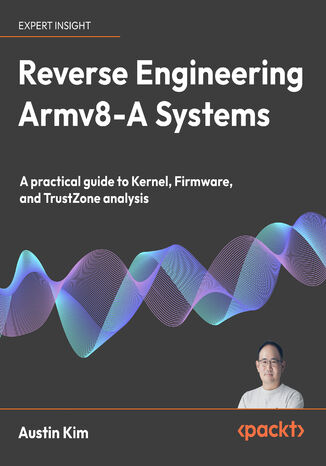
Reverse Engineering Armv8-A Systems. A practical guide to kernel, firmware, and TrustZone analysis
Austin Kim, Bojun Seo
Unlock the secrets hidden in binary code without needing the source! Written by a Linux kernel engineer and author with over 14 years of industry experience, this book lays a solid foundation in reverse engineering and takes you from curious analyst to expert. You’ll master advanced techniques to dissect kernel binaries, including kernel module files, vmlinux, and vmcore, giving you the power to analyze systems at their core.This practical, three-part journey starts with the essentials of reverse engineering, introducing the key features of Armv8-A processors and the ELF file format. The second part walks you through the reverse-engineering process, from Arm environment setup to using static and dynamic analysis tools, including innovative methods for analyzing kernel binaries and the powerful debugging tool uftrace. The final part covers security, exploring TrustZone and the latest security techniques to safeguard Arm devices at the hardware level.By the end of this reverse engineering book, you'll have comprehensive Armv8-A expertise and the practical skills to analyze any binary with confidence while leveraging advanced security features to harden your systems.
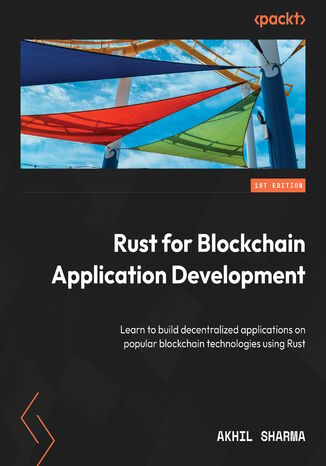
Akhil Sharma
Before Rust, blockchain developers didn’t have a systems programming language that was type-safe, fast, and, at the same time, had stable and easy memory management. Rust proved to be a boon for developers and works as the perfect solution for not only blockchain and protocol development but also dApp development.Rust for Blockchain Application Development focuses on demonstrating solutions that can help blockchain developers productize decentralized applications using Rust, which is a complex language with a steep learning curve.This book starts with basic Rust language concepts and then builds on these concepts to enable you to develop your own blockchain from scratch. As you progress, you’ll learn how to build dApps on popular chains like Solana and NEAR. You’ll also be guided through creating Ethereum dApps using Foundry (Rust). Finally, you’ll develop a custom blockchain using Substrate by Parity (Polkadot). The book provides a complete 360-degree view of Rust in the blockchain ecosystem.By the end of this Rust book, you’ll have a thorough understanding of how to apply your Rust knowledge to building dApps and blockchains from scratch.