
Hacking
Monnappa K A
Malware analysis and memory forensics are powerful analysis and investigation techniques used in reverse engineering, digital forensics, and incident response. With adversaries becoming sophisticated and carrying out advanced malware attacks on critical infrastructures, data centers, and private and public organizations, detecting, responding to, and investigating such intrusions is critical to information security professionals. Malware analysis and memory forensics have become must-have skills to fight advanced malware, targeted attacks, and security breaches.This book teaches you the concepts, techniques, and tools to understand the behavior and characteristics of malware through malware analysis. It also teaches you techniques to investigate and hunt malware using memory forensics. This book introduces you to the basics of malware analysis, and then gradually progresses into the more advanced concepts of code analysis and memory forensics. It uses real-world malware samples, infected memory images, and visual diagrams to help you gain a better understanding of the subject and to equip you with the skills required to analyze, investigate, and respond to malware-related incidents.
Wojciech Kocjan
This is a beginner-level book, which will introduce Nagios to System Administrators who are interested in monitoring their systems. The focus is on teaching system administrators to secure their systems in a much improved manner incorporating the newer features of Nagios.It will teach Nagios beginners the basics of installation and configuration of version 3; it will show professionals who have already worked on earlier versions of Nagios the new features of Nagios like inheritance and also the new internal functions like better check scheduling. The target readers for this book are System Administrators interested in using Nagios. This book will introduce Nagios with the new features of Version 3 for System Administrators.
Samir Datt
We live in a highly networked world. Every digital device—phone, tablet, or computer is connected to each other, in one way or another. In this new age of connected networks, there is network crime. Network forensics is the brave new frontier of digital investigation and information security professionals to extend their abilities to catch miscreants on the network.The book starts with an introduction to the world of network forensics and investigations. You will begin by getting an understanding of how to gather both physical and virtual evidence, intercepting and analyzing network data, wireless data packets, investigating intrusions, and so on. You will further explore the technology, tools, and investigating methods using malware forensics, network tunneling, and behaviors. By the end of the book, you will gain a complete understanding of how to successfully close a case.
Samir Datt
We live in a highly networked world. Every digital device—phone, tablet, or computer is connected to each other, in one way or another. In this new age of connected networks, there is network crime. Network forensics is the brave new frontier of digital investigation and information security professionals to extend their abilities to catch miscreants on the network.The book starts with an introduction to the world of network forensics and investigations. You will begin by getting an understanding of how to gather both physical and virtual evidence, intercepting and analyzing network data, wireless data packets, investigating intrusions, and so on. You will further explore the technology, tools, and investigating methods using malware forensics, network tunneling, and behaviors. By the end of the book, you will gain a complete understanding of how to successfully close a case.
Christopher Duffy
Utilize Python scripting to execute effective and efficient penetration testsAbout This BookUnderstand how and where Python scripts meet the need for penetration testingFamiliarise yourself with the process of highlighting a specific methodology to exploit an environment to fetch critical dataDevelop your Python and penetration testing skills with real-world examplesWho This Book Is ForIf you are a security professional or researcher, with knowledge of different operating systems and a conceptual idea of penetration testing, and you would like to grow your knowledge in Python, then this book is ideal for you.What You Will LearnFamiliarise yourself with the generation of Metasploit resource filesUse the Metasploit Remote Procedure Call (MSFRPC) to automate exploit generation and executionUse Python’s Scapy, network, socket, office, Nmap libraries, and custom modulesParse Microsoft Office spreadsheets and eXtensible Markup Language (XML) data filesWrite buffer overflows and reverse Metasploit modules to expand capabilitiesExploit Remote File Inclusion (RFI) to gain administrative access to systems with Python and other scripting languagesCrack an organization’s Internet perimeterChain exploits to gain deeper access to an organization’s resourcesInteract with web services with PythonIn DetailPython is a powerful new-age scripting platform that allows you to build exploits, evaluate services, automate, and link solutions with ease. Python is a multi-paradigm programming language well suited to both object-oriented application development as well as functional design patterns. Because of the power and flexibility offered by it, Python has become one of the most popular languages used for penetration testing.This book highlights how you can evaluate an organization methodically and realistically. Specific tradecraft and techniques are covered that show you exactly when and where industry tools can and should be used and when Python fits a need that proprietary and open source solutions do not.Initial methodology, and Python fundamentals are established and then built on. Specific examples are created with vulnerable system images, which are available to the community to test scripts, techniques, and exploits. This book walks you through real-world penetration testing challenges and how Python can help.From start to finish, the book takes you through how to create Python scripts that meet relative needs that can be adapted to particular situations. As chapters progress, the script examples explain new concepts to enhance your foundational knowledge, culminating with you being able to build multi-threaded security tools, link security tools together, automate reports, create custom exploits, and expand Metasploit modules.Style and approachThis book is a practical guide that will help you become better penetration testers and/or Python security tool developers. Each chapter builds on concepts and tradecraft using detailed examples in test environments that you can simulate.
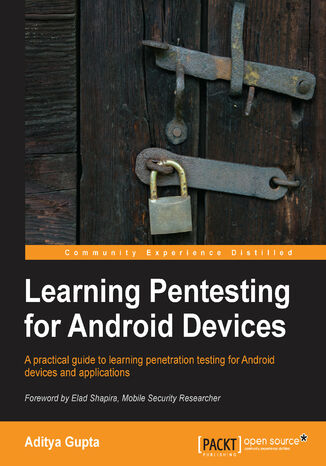
Aditya Gupta
This is an easy-to-follow guide, full of hands-on and real-world examples of applications. Each of the vulnerabilities discussed in the book is accompanied with the practical approach to the vulnerability, and the underlying security issue. This book is intended for all those who are looking to get started in Android security or Android application penetration testing. You don’t need to be an Android developer to learn from this book, but it is highly recommended that developers have some experience in order to learn how to create secure applications for Android.
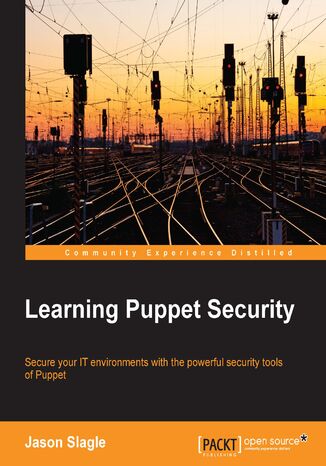
Learning Puppet Security. Secure your IT environments with the powerful security tools of Puppet
Jason Slagle
If you are a security professional whose workload is increasing, or a Puppet professional looking to increase your knowledge of security, or even an experienced systems administrator, then this book is for you. This book will take you to the next level of security automation using Puppet. The book requires no prior knowledge of Puppet to get started.
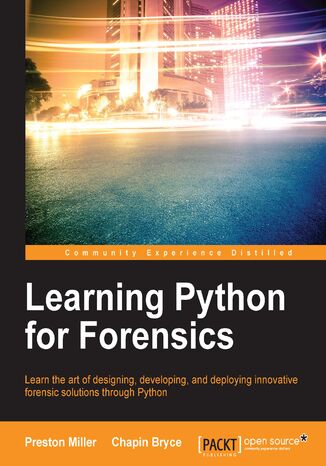
Preston Miller, Chapin Bryce
This book will illustrate how and why you should learn Python to strengthen your analysis skills and efficiency as you creatively solve real-world problems through instruction-based tutorials. The tutorials use an interactive design, giving you experience of the development process so you gain a better understanding of what it means to be a forensic developer.Each chapter walks you through a forensic artifact and one or more methods to analyze the evidence. It also provides reasons why one method may be advantageous over another. We cover common digital forensics and incident response scenarios, with scripts that can be used to tackle case work in the field. Using built-in and community-sourced libraries, you will improve your problem solving skills with the addition of the Python scripting language. In addition, we provide resources for further exploration of each script so you can understand what further purposes Python can serve. With this knowledge, you can rapidly develop and deploy solutions to identify critical information and fine-tune your skill set as an examiner.
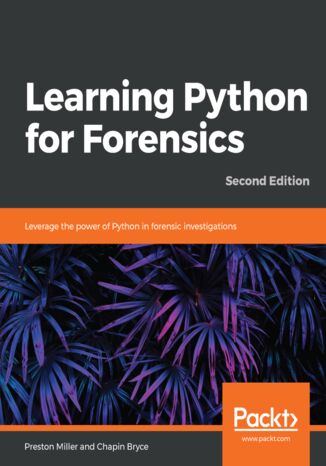
Preston Miller, Chapin Bryce
Digital forensics plays an integral role in solving complex cybercrimes and helping organizations make sense of cybersecurity incidents. This second edition of Learning Python for Forensics illustrates how Python can be used to support these digital investigations and permits the examiner to automate the parsing of forensic artifacts to spend more time examining actionable data.The second edition of Learning Python for Forensics will illustrate how to develop Python scripts using an iterative design. Further, it demonstrates how to leverage the various built-in and community-sourced forensics scripts and libraries available for Python today. This book will help strengthen your analysis skills and efficiency as you creatively solve real-world problems through instruction-based tutorials.By the end of this book, you will build a collection of Python scripts capable of investigating an array of forensic artifacts and master the skills of extracting metadata and parsing complex data structures into actionable reports. Most importantly, you will have developed a foundation upon which to build as you continue to learn Python and enhance your efficacy as an investigator.
Preston Miller, Chapin Bryce
Digital forensics plays an integral role in solving complex cybercrimes and helping organizations make sense of cybersecurity incidents. This second edition of Learning Python for Forensics illustrates how Python can be used to support these digital investigations and permits the examiner to automate the parsing of forensic artifacts to spend more time examining actionable data.The second edition of Learning Python for Forensics will illustrate how to develop Python scripts using an iterative design. Further, it demonstrates how to leverage the various built-in and community-sourced forensics scripts and libraries available for Python today. This book will help strengthen your analysis skills and efficiency as you creatively solve real-world problems through instruction-based tutorials.By the end of this book, you will build a collection of Python scripts capable of investigating an array of forensic artifacts and master the skills of extracting metadata and parsing complex data structures into actionable reports. Most importantly, you will have developed a foundation upon which to build as you continue to learn Python and enhance your efficacy as an investigator.