
Informatyka
Go Systems Programming. Master Linux and Unix system level programming with Go
Mihalis Tsoukalos
Go is the new systems programming language for Linux and Unix systems. It is also the language in which some of the most prominent cloud-level systems have been written, such as Docker. Where C programmers used to rule, Go programmers are in demand to write highly optimized systems programming code.Created by some of the original designers of C and Unix, Go expands the systems programmers toolkit and adds a mature, clear programming language. Traditional system applications become easier to write since pointers are not relevant and garbage collection has taken away the most problematic area for low-level systems code: memory management.This book opens up the world of high-performance Unix system applications to the beginning Go programmer. It does not get stuck on single systems or even system types, but tries to expand the original teachings from Unix system level programming to all types of servers, the cloud, and the web.
Go Web Development Cookbook. Build full-stack web applications with Go
Arpit Aggarwal
Go is an open source programming language that is designed to scale and support concurrency at the language level. This gives you the liberty to write large concurrent web applications with ease. From creating web application to deploying them on Amazon Cloud Services, this book will be your one-stop guide to learn web development in Go. The Go Web Development Cookbook teaches you how to create REST services, write microservices, and deploy Go Docker containers. Whether you are new to programming or a professional developer, this book will help get you up to speed with web development in Go. We will focus on writing modular code in Go; in-depth informative examples build the base, one step at a time. You will learn how to create a server, work with static files, SQL, NoSQL databases, and Beego. You will also learn how to create and secure REST services, and create and deploy Go web application and Go Docker containers on Amazon Cloud Services. By the end of the book, you will be able to apply the skills you've gained in Go to create and explore web applications in any domain.
Go Web Scraping Quick Start Guide. Implement the power of Go to scrape and crawl data from the web
Vincent Smith
Web scraping is the process of extracting information from the web using various tools that perform scraping and crawling. Go is emerging as the language of choice for scraping using a variety of libraries. This book will quickly explain to you, how to scrape data data from various websites using Go libraries such as Colly and Goquery.The book starts with an introduction to the use cases of building a web scraper and the main features of the Go programming language, along with setting up a Go environment. It then moves on to HTTP requests and responses and talks about how Go handles them. You will also learn about a number of basic web scraping etiquettes.You will be taught how to navigate through a website, using a breadth-first and then a depth-first search, as well as find and follow links. You will get to know about the ways to track history in order to avoid loops and to protect your web scraper using proxies.Finally the book will cover the Go concurrency model, and how to run scrapers in parallel, along with large-scale distributed web scraping.
Jeff Johnson
Want to transition from Godot 3 to 4? Look no further than the Godot 4 Game Development Cookbook. This comprehensive guide covers everything you need to become proficient with the latest GUI, GDscript 2.0, Vulkan 2D/3D rendering, shaders, audio, physics, TileSet/TileMap, importing, sound/music, animation, and multiplayer workflows. With its detailed recipes, the book leaves no stone unturned.The Godot 4 Cookbook begins by exploring the updated graphical user interface and helps you familiarize yourself with the new features of GDscript 2.0. Next, it delves into the efficient rendering of 2D and 3D graphics using the Vulkan renderer. As it guides you in navigating the new Godot 4 platform, the book offers an in-depth understanding of shaders, including the latest enhancements to the shader language. Moreover, it covers a range of other topics, including importing from Blender, working with audio, and demystifying the new Vulkan Renderer and the physics additions for 2D and 3D. The book also shows you how the new changes to TileSet and TileMap make 2D game development easy. Advanced topics such as importing in Godot 4, adding sound and music to games, making changes in the Animation editor, and including workflows for multiplayer in Godot 4 are covered in detail.By the end of this game development book, you’ll have gained a better understanding of Godot 4 and will be equipped with various powerful techniques to enhance your Godot game development efficiency.

Josh Elster, David Catuhe
Babylon.js allows anyone to effortlessly create and render 3D content in a web browser using the power of WebGL and JavaScript. 3D games and apps accessible via the web open numerous opportunities for both entertainment and profit. Developers working with Babylon.js will be able to put their knowledge to work with this guide to building a fully featured 3D game.The book provides a hands-on approach to implementation and associated methodologies that will have you up and running, and productive in no time. Complete with step-by-step explanations of essential concepts, practical examples, and links to fully working self-contained code snippets, you’ll start by learning about Babylon.js and the finished Space-Truckers game. You’ll also explore the development workflows involved in making the game. Focusing on a wide range of features in Babylon.js, you’ll iteratively add pieces of functionality and assets to the application being built. Once you’ve built out the basic game mechanics, you’ll learn how to bring the Space-Truckers environment to life with cut scenes, particle systems, animations, shadows, PBR materials, and more.By the end of this book, you’ll have learned how to structure your code, organize your workflow processes, and continuously deploy to a static website/PWA a game limited only by bandwidth and your imagination.
Google Analytics dla marketingowców. Wydanie II
Martyna Zastrożna
Humanista w świecie liczb „Słowa, słowa, słowa” — powiedział Hamlet do Poloniusza w drugim akcie słynnego dramatu, zapytany o to, co czyta. „Liczby, liczby, liczby” — odpowiedziałby na to samo pytanie marketer skupiony na pracy z pulpitem Google Analytics. Byłaby to prawda, ponieważ to interesujące narzędzie operuje na liczbach i za ich pomocą pokazuje aktywność użytkowników na Twojej witrynie. Nauka czytania tych tajemnych liczb to początek skutecznego marketingu online. Skutecznego, czyli świadomego, coraz bardziej efektywnego, popartego danymi w tabelach i na wykresach oraz twardymi dowodami, które tak bardzo lubią zarząd Twojej firmy i Twoi klienci, prawda? Jak widzisz, czas najwyższy podjąć naukę czytania liczb. Nie przerażaj się jednak! Nawet jeśli jesteś zdeklarowanym humanistą, wystarczy, że poznasz możliwości i podstawowe reguły, jakimi rządzi się Google Analytics, a szybko się z nim zaprzyjaźnisz! Drugie wydanie tej praktycznej książki zostało zaktualizowane zgodnie ze zmianami, jakie w ostatnim czasie wprowadzono w tym narzędziu. Dotyczy to zarówno zrzutów interfejsów, skryptów, jak i nowych możliwości, które oferuje Universal Analytics. W tej odsłonie bestsellera Martyny Zastrożnej znajdziesz jeszcze więcej pomysłów na przydatne alerty, zaawansowanych segmentów gotowych do pobrania i polecanych źródeł wiedzy. Dowiesz się też sporo o remarketingu, odkryjesz Google Tag Manager i zapoznasz się z ofertą, jaką Google Analytics ma dla firm z segmentu e-commerce.
Google Analytics. Integracja i analiza danych
Daniel Waisberg
Aby podjąć dobrą decyzję o rozwoju firmy, trzeba dysponować dobrymi danymi. Zachowania użytkowników, decyzje, które podejmują, ich sposób korzystania z zasobów sieci to nieprzebrana kopalnia danych marketingowych. Ich zebranie, porównanie z danymi pochodzącymi z innych źródeł, a następnie przeanalizowanie dostarcza cennych informacji. Tymczasem wielu specjalistów wciąż analizuje tylko część danych o zachowaniu użytkowników korzystających z zasobów cyfrowych, nie mogąc uwzględnić wszystkich istotnych czynników. Problem polega na rozproszeniu różnych danych w różnych miejscach i przechowywaniu ich na różne sposoby. Konsekwencją są złe decyzje. Rozwiązaniem tego problemu jest narzędzie Google Analytics, wyjątkowo dobrze nadające się do utworzenia platformy analizy danych. Podobnie książka, którą masz przed sobą, wyjątkowo dobrze przedstawia wszystkie istotne informacje o integrowaniu danych za pomocą tego narzędzia. Odwołując się do praktycznych przykładów, szczegółowo opisano tu metody integracji i analizy danych z takich źródeł, jak AdWords, AdSense, systemy CRM i wiele innych. Autor zawarł tu też liczne wskazówki i porady, bazując na swoim ogromnym doświadczeniu. Dzięki tej książce: zaczniesz udoskonalać integrację danych pochodzących z analizy zachowań klientów i z wielu innych źródeł, będziesz stosował sprawdzone techniki umożliwiające zbieranie czytelnych i dokładnych danych, nauczysz się integrować i importować do Google Analytics wszystkie dane o rynku i klientach, wykorzystasz możliwości analityczne tego narzędzia do uzyskania pełniejszego obrazu zachowań klientów, uzyskasz spójny zestaw informacji wysokiej jakości, dzięki czemu umożliwisz managerom podejmowanie właściwych, racjonalnych decyzji biznesowych. Kluczem do sukcesu jest informacja. Kluczem do informacji jest Google Analytics.

Google Analytics od podstaw. Analiza wpływu biznesowego i wyznaczanie trendów
Mark Edmondson
Google Analytics 4 wyznacza nowe zasady marketingu cyfrowego: obecnie chodzi nie tyle o raportowanie zdarzeń z przeszłości, ile o aktywację danych przez łączenie danych online i offline ze wszystkich strumieni, aby zapewnić kompleksowe informacje marketingowe. Taka analityka cyfrowa umożliwia szybsze podejmowanie decyzji. Umiejętność korzystania z GA4 staje się więc nieodzowna. Oto zwięzły i praktyczny przewodnik po usłudze GA4 i jej integracji z chmurą. Szczególnie skorzystają z niego analitycy danych, biznesu i marketingu. Opisano tu wszystkie istotne kwestie dotyczące tego nowego, potężnego modelu analitycznego. Szczególną uwagę poświęcono bardziej zaawansowanym funkcjonalnościom GA4. Zaprezentowano architekturę GA4, strategie danych, a także informacje dotyczące pozyskiwania, przechowywania i modelowania danych. W książce znalazło się również omówienie typowych przypadków użycia dla aktywacji danych i instrukcji przydatnych podczas implementacji tych przypadków. Co istotne, poszczególne zagadnienia zostały zilustrowane praktycznymi przykładami kodu. Ta książka pomaga nie tylko zrozumieć dane, ale także wygenerować przewagę konkurencyjną! Melinda Schiera, strateg do spraw analityki Najciekawsze zagadnienia: integracja Google Cloud z GA4 przeprowadzanie integracji GA4 przechwytywanie danych GA4 i realizacja przypadków użycia projektowanie przepływów danych dostosowywanie przypadków użycia do potrzeb biznesowych Przygotuj się na cyfrowy marketing przyszłości!
Arvind Ravulavaru
Cognitive services are the new way of adding intelligence to applications and services. Now we can use Artificial Intelligence as a service that can be consumed by any application or other service, to add smartness and make the end result more practical and useful.Google Cloud AI enables you to consume Artificial Intelligence within your applications, from a REST API. Text, video and speech analysis are among the powerful machine learning features that can be used. This book is the easiest way to get started with the Google Cloud AI services suite and open up the world of smarter applications.This book will help you build a Smart Exchange, a forum application that will let you upload videos, images and perform text to speech conversions and translation services. You will use the power of Google Cloud AI Services to make our simple forum application smart by validating the images, videos, and text provided by users to Google Cloud AI Services and make sure the content which is uploaded follows the forum standards, without a human curator involvement.You will learn how to work with the Vision API, Video Intelligence API, Speech Recognition API, Cloud Language Process, and Cloud Translation API services to make your application smarter.By the end of this book, you will have a strong understanding of working with Google Cloud AI Services, and be well on the way to building smarter applications.
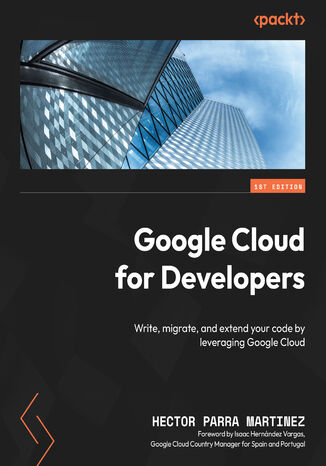
Google Cloud for Developers. Write, migrate, and extend your code by leveraging Google Cloud
Hector Parra Martinez, Isaac Hernández Vargas
As more organizations embrace cloud computing, developers new to the cloud often feel overwhelmed by cloud migration and code running directly on the cloud. Google Cloud for Developers comes packed with practical tips and expert advice to accelerate your application development journey and help you unlock the full potential of cloud computing.You’ll begin by understanding and comparing all the available options to run your code. You’ll write, deploy, monitor, and troubleshoot your code without leaving the Google Cloud IDE while selecting the best option – serverless or GKE containers – for each use case. After that, you’ll get to grips with the basic Google Cloud infrastructure services and connect your code with public APIs. This will help you add features to your application, such as language translation and object detection in images or videos. Furthermore, you’ll explore a comprehensive list of tips and best practices to make your migration smooth. You’ll also gain the necessary knowledge to write code from scratch, by employing the basics of hybrid cloud applications and build services that can run virtually anywhere.By the end of this book, you’ll be well equipped to carry out the application development process and successfully move your code to Google Cloud.
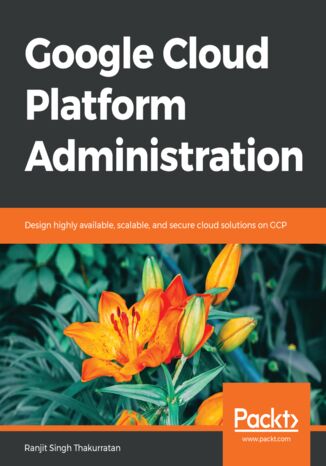
Ranjit Singh Thakurratan
On-premise data centers are costly to manage. If you need a data center but don’t want to deal with a physical one, Google Cloud Platform (GCP) is the solution. With GCP, you can build, test, and deploy applications on Google’s infrastructure. Google Cloud Platform Administration begins with GCP fundamentals, with the help of which you will deploy your first app and gain an understanding of Google Cloud architecture and services. Furthermore, you will learn how to manage Compute, networking, and storage resources. As you make your way through the book, you will learn how to track and manage GCP’s usage, monitoring, and billing access control. You will also be able to manage your GCP's access and permissions. In the concluding chapters, you will explore a list of different developer tools for managing and interacting with the GCP platform. By the end of this book, you will have learned how to effectively deploy workloads on GCP.
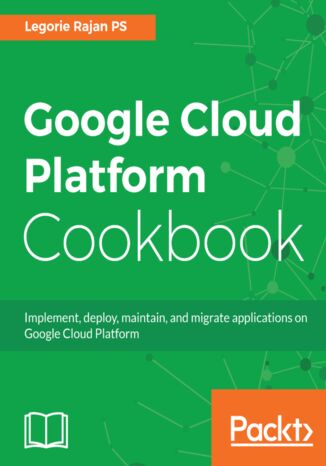
Legorie Rajan PS
Google Cloud Platform is a cloud computing platform that offers products and services to host applications using state-of-the art infrastructure and technology. You can build and host applications and websites, store data, and analyze data on Google's scalable infrastructure. This book follows a recipe-based approach, giving you hands-on experience to make the most of Google Cloud services.This book starts with practical recipes that explain how to utilize Google Cloud's common services. Then, you'll see how to make full use of Google Cloud components such as networking, security, management, and developer tools. Next, we'll deep dive into implementing core Google Cloud services into your organization, with practical recipes on App Engine, Compute Engine, Cloud Functions, virtual networks, and Cloud Storage. Later, we'll provide recipes on implementing authentication and security, Cloud APIs, command-line management, deployment management, and the Cloud SDK. Finally, we'll cover administration and troubleshooting tasks on applications with Compute services and we'll show how to monitor your organization's efficiency with best practices.By the end of this book, you'll have an overall understanding and hands-on implementation of Google Cloud services in your organization with ease.
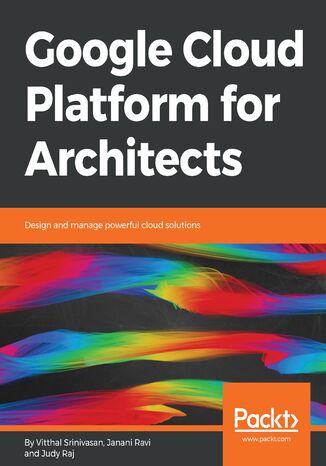
Google Cloud Platform for Architects. Design and manage powerful cloud solutions
Vitthal Srinivasan, Loonycorn Ravi, Judy Raj
Using a public cloud platform was considered risky a decade ago, and unconventional even just a few years ago. Today, however, use of the public cloud is completely mainstream - the norm, rather than the exception. Several leading technology firms, including Google, have built sophisticated cloud platforms, and are locked in a fierce competition for market share.The main goal of this book is to enable you to get the best out of the GCP, and to use it with confidence and competence. You will learn why cloud architectures take the forms that they do, and this will help you become a skilled high-level cloud architect. You will also learn how individual cloud services are configured and used, so that you are never intimidated at having to build it yourself. You will also learn the right way and the right situation in which to use the important GCP services.By the end of this book, you will be able to make the most out of Google Cloud Platform design.
Ted Hunter, Steven Porter
Google Cloud Platform (GCP) provides autoscaling compute power and distributed in-memory cache, task queues, and datastores to write, build, and deploy Cloud-hosted applications.With Google Cloud Platform for Developers, you will be able to develop and deploy scalable applications from scratch and make them globally available in almost any language. This book will guide you in designing, deploying, and managing applications running on Google Cloud. You’ll start with App Engine and move on to work with Container Engine, compute engine, and cloud functions. You’ll learn how to integrate your new applications with the various data solutions on GCP, including Cloud SQL, Bigtable, and Cloud Storage. This book will teach you how to streamline your workflow with tools such as Source Repositories, Container Builder, and StackDriver. Along the way, you’ll see how to deploy and debug services with IntelliJ, implement continuous delivery pipelines, and configure robust monitoring and alerting for your production systems.By the end of this book, you’ll be well-versed with all the development tools of Google Cloud Platform, and you’ll develop, deploy, and manage highly scalable and reliable applications.
Google Gemini for Python. Coding with Bard: Mastering Python with Google's AI Tools
Mercury Learning and Information, Oswald Campesato
This book bridges Python 3 programming and Generative AI, equipping readers with the skills to navigate both domains confidently. It starts with Python basics, covering data types, number formatting, text manipulation, loops, functions, data structures, NumPy, Pandas, conditional logic, and reserved words. You'll also learn about handling user input, managing exceptions, and working with command-line arguments.The journey continues into Generative AI, distinguishing it from Conversational AI. It introduces popular platforms and models, including Bard (now called Gemini) and its competitors, providing insights into their capabilities, strengths, weaknesses, and applications. The final chapters show how to generate various Python 3 code samples using Gemini.Understanding these concepts is crucial for modern programming and AI applications. This book transitions readers from basic Python programming to advanced AI techniques, blending theoretical knowledge with practical skills. Companion files with source code and figures enhance the learning experience, making this an essential resource for mastering Python 3 and Generative AI.
Alper Dincer, Balkan Uraz
Day by day, the use of location data is becoming more and more popular, and Google is one of the main game changers in this area. The Google Maps JavaScript API is one of the most functional and robust mapping APIs used among Geo developers. With Google Maps, you can build location-based apps, maps for mobile apps, visualize geospatial data, and customize your own maps.Google Maps JavaScript API Cookbook is a practical, hands-on guide that provides you with a number of clear, step-by-step recipes that will help you to unleash the capabilities of the Google Maps JavaScript API in conjunction with open source or commercial GIS servers and services through a number of practical examples of real world scenarios.This book begins by covering the essentials of including simple maps for Web and mobile, adding vector and raster layers, styling your own base maps, creating your own controls and responding to events, and including your own events.You will learn how to integrate open source or commercial GIS servers and services including ArcGIS Server, GeoServer, CartoDB, Fusion Tables, and Google Maps Engine with the Google Maps JavaScript API. You will also extend the Google Maps JavaScript API to push its capabilities to the limit with additional libraries and services including geometry, AdSense, geocoding, directions, and StreetView.This book covers everything you need to know about creating a web map or GIS applications using the Google Maps JavaScript API on multiple platforms.
Google Picasa. Ćwiczenia praktyczne
Bartosz Danowski
Google Picasa -- połącz pasję fotografowania ze sprawnym zarządzaniem zasobami zdjęć Jak publikować zdjęcia na blogu? Jak zarządzać dużymi kolekcjami fotografii? Jak tworzyć niepowtarzalne albumy cyfrowe? Google Picasa to zaawansowana przeglądarka lokalnych plików graficznych, służąca do szybkiego przeglądania, wyszukiwania, udostępniania i edycji zdjęć w Internecie. Aplikacja pozwala także na obróbkę fotografii z możliwością dodawania efektów specjalnych oraz umożliwia przygotowanie cyfrowych albumów na płytach. Co więcej, dzięki programowi można zlecić wykonanie tradycyjnych odbitek ze zdjęć cyfrowych bezpośrednio przez Internet. Kolejne zalety to łatwość użytkowania i -- co bardzo istotne -- darmowy dostęp do tej przeglądarki! Książka "Google Picasa. Ćwiczenia praktyczne" od postaw ukazuje możliwości tej aplikacji. Z podręcznika dowiesz się, jak pobrać i zainstalować program na swoim komputerze, a wykonując kolejne ćwiczenia, szybko nauczysz się bardziej zaawansowanych czynności i realizacji trudniejszych zadań. Będziesz potrafił zmieniać właściwości zdjęć, dodawać efekty specjalne i animacje, tworzyć kolaże oraz udostępniać zdjęcia w Internecie. Uda Ci się wreszcie zapanować nad chaosem wśród Twoich zdjęć -- usystematyzujesz je i porządnie skatalogujesz. Będziesz mógł także efektownie zaprezentować swoje prace, tworząc oryginalne albumy cyfrowe. Pobieranie, instalacja i konfiguracja Pokaz slajdów Edycja i zmiana właściwości zdjęć Dostrajanie i efekty Edycja i udostępnianie zdjęć w Internecie Podstawy obsługi galerii Picasa Web Albums Kolaże i animacje Nagrywanie płyt CD/DVD Kopie bezpieczeństwa Okiełznaj swoje fotografie i zaprezentuj je wreszcie światu!
Google SketchUp. Ćwiczenia praktyczne
Aleksandra Tomaszewska
Wykorzystaj w praktyce możliwości Google SketchUp! Jak rozpocząć pracę z Google SketchUp? Jak zbudować Twój pierwszy model? Jak wykorzystać narzędzia konstrukcyjne? Google SketchUp jest narzędziem pozwalającym bez trudu tworzyć trójwymiarowe modele, których możesz używać przy wielu różnych projektach: począwszy od wizualizacji projektu Twojego domu, a skończywszy na prowadzeniu atrakcyjnych lekcji geometrii. Tylko od Twoich potrzeb i wyobraźni zależy, w jakich warunkach i do czego wykorzystasz zalety tej aplikacji. Dzięki książce "Google SketchUp. Ćwiczenia praktyczne " poznasz możliwości tego narzędzia oraz zdobędziesz wiedzę, która pozwoli Ci w swobodny sposób używać ich w codziennej pracy. Sprawdzona forma ćwiczeń sprawi, że nauka będzie miała charakter przede wszystkim praktyczny, a nie tylko teoretyczny. W trakcie lektury dowiesz się, jak dostosować program do Twoich potrzeb, wykorzystywać podstawowe narzędzia oraz tworzyć złożone obiekty geometryczne. Instalacja i uruchomienie programu Dostosowanie Google SketchUp do Twoich potrzeb Wykorzystanie biblioteki komponentów dynamicznych Praca z podstawowymi narzędziami Google SketchUp Edycja obiektów Tworzenie złożonych obiektów geometrycznych Sposoby użycia narzędzi konstrukcyjnych Twórz trójwymiarowe modele - łatwo, szybko i przyjemnie!
Robin de Jongh
Creating video game environments similar to the best 3D games on the market is now within the capability of hobbyists for the first time, with the free availability of game development software such as Unity 3D, and the ease with which groups of enthusiasts can get together to pool their skills for a game project. The sheer number of these independent game projects springing up means there is a constant need for game art, the physical 3D environment and objects that inhabit these game worlds. Now thanks to Google there is an easy, fun way to create professional game art, levels and props.Google SketchUp is the natural choice for beginners to game design. This book provides you with the workflow to quickly build realistic 3D environments, levels, and props to fill your game world. In simple steps you will model terrain, buildings, vehicles, and much more.Google SketchUp is the ideal entry level modeling tool for game design, allowing you to take digital photographs and turn them into 3D objects for quick, fun, game creation. SketchUp for Game Design takes you through the modeling of a game level with SketchUp and Unity 3D, complete with all game art, textures and props. You will learn how to create cars, buildings, terrain, tools and standard level props such as barrels, fencing and wooden pallets. You will set up your game level in Unity 3D to create a fully functional first person walk-around level to email to your friends or future employers.When you have completed the projects in this book, you will be comfortable creating 3D worlds, whether for games, visualization, or films.
Traci Lynn Ruthkoski
There's a lot of data in our world, and visual representations are often the best method of making sense of it all. Yet, it should not take an army of programmers and analysts to create visualizations in order to make data useful. The Google Visualization API is accessible to novice and advanced programmers alike, making data useful to more people.Google Visualization API Essentials will show you how to create interactive data displays with very little code. The API, combined with Google Spreadsheets and Fusion Tables, is a complete system, from data management to analytical displays. Not only is it simple to learn, but the Google Visualization API can also be viewed as a first step to learning additional Google APIs.Google Visualization API Essentials uses both methodology overviews and hands-on examples with real data to introduce chart and graph creation on the Google platform. Topics are presented from various aspects, including Google Spreadsheets and Fusion Tables, and Graphic User Interfaces. An overview of the various API development environments available to developers is also covered. Basic and advanced charts, data source connectivity, style formatting, and publishing options are also explored in depth.Google Visualization API Essentials brings the arsenal of Google Visualizations into the web developer toolkit.
Shamsuddin Ahammad
GWT 2 radically improves web experience for users by using existing Java tools to build no-compromise AJAX for any modern browser. It provides a solid platform so that other great libraries can be built on top of GWT. Creating web applications efficiently and making them impressive, however, is not as easy as it sounds. Writing web applications for multiple browsers can be quite tasking. In addition, building, reusing, and maintaining large JavaScript code bases and AJAX components can be difficult. GWT 2 Application Development Cookbook eases these burdens by allowing developers to quickly build and maintain complex yet highly efficient JavaScript front-end applications in the Java programming language . It tells you how to make web experience all the more thrilling and hassle free, using various tools along with GWT SDK.This book starts with developing an application from scratch. Right from creating the layout of the home page to home page elements including left and right sidebars, to placing tree like navigational menu, menu bars, tool bars, banners, footers are discussed with examples.You will see how to create forms using the Ext GWT library widgets and handle different types of events. Then you will move on to see how to design a database for sales processing systems and learn to create the database in MySQL with the help of easy–to-follow recipes.One of the interesting topics of this book is using JPA in GWT. Using the JPA object in GWT is a challenge. To use them perfectly, a mechanism to convert the JPA object into plain object and vice versa is required. You will see recipes to use entity classes, entity managers, and controller classes in GWT application. You will efficiently create reports with parameters, variables and subreports, and get the report output in both HTML and PDF format using real-world recipes.You will then learn to configure the GlassFish server to deploy a GWT application with database. Finally, learn how to trace speed and improve perfomance in web applications using tracing techniques.
Nigel King, Adil Khan
It seems that every year since the Enron collapse there has been a fresh debacle that refuses to lower the spotlight from corporate Governance, Risk, and Compliance management.Before Sarbanes Oxely forced company managers to become risk conscious, if you asked a chief executive whether he thought he had adequate internal controls, the most likely answer would have been What is an internal control? This is clearly no longer the case. Every week some story breaks detailing a lack of good governance, a failure to plan for a foreseeable catastrophe or a failure to comply with an important law or regulation. These stories bring GRC themes into public view, and public scrutiny, and make management and directors keen to show they have put their best efforts forward to govern their companies well, manage risks to the enterprise, and to comply with all applicable laws.Perhaps only Oracle and SAP are in a position to really address all three aspects. The mission of GRC applications is to ensure that the managers and directors of Enterprises that run such applications have a strong defensible position. Written by industry experts with more than 30 years combined experience, this book covers the Governance, Risk Management and Compliance Management of a large modern enterprise and how the IT Infrastructure, in particular the Oracle IT Infrastructure, can assist in that governance. This book is not an implementation guide for GRC products rather it shows you how those products participate in the governance process, how they introduce or mitigate risk, and how they can be brought into compliance with best practice, as well as applicable laws and regulations.The book is divided into three major sections:Governance ñ where we discuss the strategic management of the enterprise, setting plans for managers, making disclosures to investors, and ensuring that the board knows that the enterprise is meeting its goals and staying within its policies.Risk Management ñ where we discuss audit disciplines. This is where we work out what can go wrong, document what we have to do to prevent it from going wrong and check that what we think prevents it going wrong - actually works! We move through the various sub-disciplines within the audit profession and show what tools are best suited from within the Oracle family to assist.Compliance Management ñ where we map the tools and facilities that we have discovered in the first two sections to frameworks and legislations. We give this from an industry and geography agnostic viewpoint, and then drill into some specific industries and countries.We neither stay in the narrow definition of GRC applications, nor limit ourselves to the Business Applications but take you to the most appropriate places in the full Oracle footprint. The book is written from the perspective of big GRC. It is not an implementation manual for the GRC products, although we hope you can get the best out of the GRC products after reading this book. We discuss many applications and technology products that are not in the GRC product family.
GPT-3. The Ultimate Guide To Building NLP Products With OpenAI API
Sandra Kublik, Shubham Saboo
GPT-3 has made creating AI apps simpler than ever. This book provides a comprehensive guide on how to utilize the OpenAI API with ease. It explores imaginative methods of utilizing this tool for your specific needs and showcases successful businesses that have been established through its use.The book is divided into two sections, with the first focusing on the fundamentals of the OpenAI API. The second part examines the dynamic and thriving environment that has arisen around GPT-3.Chapter 1 sets the stage with background information and defining key terms. Chapter 2 goes in-depth into the API, breaking it down into its essential components, explaining their functions and offering best practices. Chapter 3, you will build your first app with GPT-3.Chapter 4 features interviews with the founders of successful GPT-3-based products, who share challenges and insights gained. Chapter 5 examines the perspective of enterprises on GPT-3 and its potential for adoption. The problematic consequences of widespread GPT-3 adoption, such as misapplication and bias, are addressed along with efforts to resolve these issues in Chapter 6. Finally, Chapter 7 delves into the future by exploring the most exciting trends and possibilities as GPT-3 becomes increasingly integrated into the commercial ecosystem.