
Informatyka
Joseph Kwan
VirtueMart is the best shopping cart solution around for the Joomla! CMS. A VirtueMart template is a Joomla! template that is designed to create the overall look of a store. It puts in things such as a shopping cart bar, more shop-like graphics, more readable colors, and so on. A VirtueMart theme only impacts the area of the site actually controlled by the VirtueMart component. Themes work inside the overall framework. Applying custom templates and themes to give a unique look and feel to your VirtueMart web store will really attract customers! This book will guide you to build VirtueMart custom themes and templates.Joomla! VirtueMart 1.1 Theme and Template Design explains how the VirtueMart theme and template system works and points out ways to configure the default theme. It then goes on to look at each of the major templates with an emphasis on how to customize them. It then discusses individual page groups such as product list, product details, shopping cart, checkout, and invoice e-mails in the order they appear to your customer. After-sale services like invoice e-mail, account management, and order list are also discussed.The book also discusses the different components of a VirtueMart theme and will teach you how to build a theme from scratch. You will also learn advanced features like child products, advanced attributes, custom attributes, and product types. Topics like integration with Joomla! plugins and AJAX functions are also included. An Appendix provides a comprehensive template reference of the use and available fields of every template.Joomla! VirtueMart 1.1 Theme and Template Design is a practical guide for all those who want to make VirtueMart work for them. It will put many advanced features of this popular open source e-Commerce application at your finger tips.
Suhreed Sarkar
You can build any kind of web site using Joomla! The look and feel of Joomla! web sites can largely be customized using the many templates, components, modules and plug-ins available. With all these features, ease of administration, and options for customization, sometimes you may think of integrating other technologies such as Flash with it. This is because Flash provides great animation features that are otherwise not available in Joomla!This book shows how to integrate Flash into Joomla! You will learn how to add the various functionalities provided by Flash and make your site stunning, visually rich, and interactive. The book covers topics like flash headers, menus, displaying and maintaining flash movies, slide shows, animation, interactivity, and more. Installation and use of Joomla! modules like Flash, Joomla Random Flash, Active, and Handy SWF Flash module are covered too.The book introduces Joomla! and Flash and briefly shows the benefits of using Flash in Joomla!. It shows you how to add Flash objects in Joomla! articles and modules, build Flash-based menus, create Flash-based photo galleries, interactive maps, and charts. It also shows you how to display content in custom fonts, create a streaming media site, customize the Joomla! template to display Flash logos, headers and banners, and use Joomla! content in Flash objects. Finally the book covers troubleshooting Joomla! and its extensions. At the end of the book an appendix lists resources on Joomla!, Flash, and related extensions, to help you find more information.
Anghel Leonard
jOOQ is an excellent query builder framework that allows you to emulate database-specific SQL statements using a fluent, intuitive, and flexible DSL API. jOOQ is fully capable of handling the most complex SQL in more than 30 different database dialects.jOOQ Masterclass covers jOOQ from beginner to expert level using examples (for MySQL, PostgreSQL, SQL Server, and Oracle) that show you how jOOQ is a mature and complete solution for implementing the persistence layer. You’ll learn how to use jOOQ in Spring Boot apps as a replacement for SpringTemplate and Spring Data JPA. Next, you’ll unleash jOOQ type-safe queries and CRUD operations via jOOQ’s records, converters, bindings, types, mappers, multi-tenancy, logging, and testing. Later, the book shows you how to use jOOQ to exploit powerful SQL features such as UDTs, embeddable types, embedded keys, and more. As you progress, you’ll cover trending topics such as identifiers, batching, lazy loading, pagination, and HTTP long conversations. For implementation purposes, the jOOQ examples explained in this book are written in the Spring Boot context for Maven/Gradle against MySQL, Postgres, SQL Server, and Oracle.By the end of this book, you’ll be a jOOQ power user capable of integrating jOOQ in the most modern and sophisticated apps including enterprise apps, microservices, and so on.

Dr. Logan Song
This book aims to provide a study guide to learn and master machine learning in Google Cloud: to build a broad and strong knowledge base, train hands-on skills, and get certified as a Google Cloud Machine Learning Engineer.The book is for someone who has the basic Google Cloud Platform (GCP) knowledge and skills, and basic Python programming skills, and wants to learn machine learning in GCP to take their next step toward becoming a Google Cloud Certified Machine Learning professional.The book starts by laying the foundations of Google Cloud Platform and Python programming, followed the by building blocks of machine learning, then focusing on machine learning in Google Cloud, and finally ends the studying for the Google Cloud Machine Learning certification by integrating all the knowledge and skills together.The book is based on the graduate courses the author has been teaching at the University of Texas at Dallas. When going through the chapters, the reader is expected to study the concepts, complete the exercises, understand and practice the labs in the appendices, and study each exam question thoroughly. Then, at the end of the learning journey, you can expect to harvest the knowledge, skills, and a certificate.
Kae Verens
To make PHP applications that respond quickly, avoid unnecessary page reloads, and provide great user interfaces, often requires complex JavaScript techniques and even then, if you get that far, they might not even work across different browsers! With jQuery, you can use one of the most popular JavaScript libraries, forget about cross-browser issues, and simplify the creation of very powerful and responsive interfaces ñ all with the minimum of code.This is the first book in the market that will ease the server-side PHP coder into the client-side world of the popular jQuery JavaScript library.This book will show you how to use jQuery to enhance your PHP applications, with many examples using jQuery's user interface library jQuery UI, and other examples using popular jQuery plugins. It will help you to add exciting user interface features to liven up your PHP applications without having to become a master of client-side JavaScript.This book will teach you how to use jQuery to create some really stunning effects, but without you needing to have in-depth knowledge of how jQuery works. It provides you with everything you need to build practical user interfaces for everything from graphics manipulation to drag-and-drop to data searching, and much more. The book also provides practical demonstrations of PHP and jQuery and explains those examples, rather than starting from how JavaScript works and how it is different from PHP.By the end of this book, you should be able to take any PHP application you have written, and transform it into a responsive, user-friendly interface, with capabilities you would not have dreamed of being able to achieve, all in just a few lines of JavaScript.
Jonathan Chaffer, Karl Swedberg, John Resig
Co to są selektory? Jak operować na drzewie DOM? Jak tworzyć efektowne galerie? Język JavaScript po blisko piętnastu latach na rynku dalej ma się dobrze. Interaktywne strony, interesujące efekty oraz technologia AJAX sprawiają, że wciąż jest bardzo atrakcyjnym narzędziem, a aplikacje internetowe z każdym rokiem coraz bardziej zaczynają przypominać te znane z codziennej pracy. Biblioteka jQuery pozwala na jeszcze więcej przy zdecydowanie mniejszym nakładzie pracy! Niemożliwe? Przekonaj się sam! W trakcie lektury tej książki poznasz tajniki biblioteki jQuery oraz atuty, dzięki którym zyskała ona taką rzeszę fanów. Autorzy omawiają wszystkie zagadnienia związane z tą biblioteką. Na samym początku nauczysz się korzystać z selektorów oraz zdarzeń, aby następnie przejść do zaawansowanych tematów związanych z AJAX-em oraz edycją drzewa DOM. Rozdział poświęcony efektom specjalnym będzie jednym z tych, które pozwolą Ci wykrzesać jeszcze więcej porywających efektów z Twojego kodu. Olśniewające galerie, pokazy slajdów, interaktywne formularze są w zasięgu Twoich możliwości! Pod koniec książki dowiesz się, jak wykorzystywać dodatki oraz tworzyć własne. Trzymasz w rękach długo oczekiwaną na polskim rynku pozycję, poświęconą niezwykłej bibliotece! Przeznaczenie biblioteki jQuery Wykorzystanie selektorów Wykorzystanie mechanizmu zdarzeń Zdarzenia złożone Użycie efektów specjalnych Modyfikowanie arkuszy CSS "w locie" Edycja drzewa DOM Metody na łatwiejsze wykorzystanie technologii AJAX Operacje na tabelach Praca z formularzami Instalowanie oraz wykorzystanie dodatków Tworzenie własnych dodatków dla jQuery Uzyskaj jeszcze więcej z języka JavaScript!
Dan Wellman
Master animation in jQuery to produce slick and attractive interfaces that respond to your visitors' interactionsjQuery is a cross-browser JavaScript library designed to simplify the client-side scripting of HTML, and is the most popular JavaScript library in use today. Using the features offered by jQuery, developers are able to create dynamic web pages. This book will act as a resource for you to create animation and advanced special effects in your web applications, by following the easy-to-understand steps mentioned in it.jQuery 1.4 Animation Techniques: Beginners Guide will allow you to master animation in jQuery to produce slick and attractive interfaces that respond to your visitors' interactions. You will learn everything you need to know about creating engaging and effective web page animations using jQuery. The book uses many examples and explains how to create animations using an easy, step-by-step, beginners guide approach.This book will provide you with...This book provides various examples that gradually build up the reader’s knowledge and practical experience in using the jQuery API to create stunning animations. The book starts off by explaining how animations make your user interface interactive and attractive. It explains the various methods used to make the element being animated appear or disappear. It provides a set of steps to create simple animations and show fading animations.You can later learn how to make complex animations by chaining different effects together as well as how to halt a currently running application. You will find out how to slide your animation elements and learn to create custom animations that can be complex and specialized.You will find out how to obtain and set up the jQuery UI— the official user interface library for jQuery. The book will tell you how to animate a page's background image, and will teach you how to make images scroll in a certain direction and at a certain speed depending on the movement of the mouse pointer
Jonathan Chaffer, Karl Swedberg
If you are looking for a comprehensive reference guide to this popular JavaScript library, this book and eBook is for you.To make optimal use of jQuery, it's good to keep in mind the breadth of capabilities it provides. You can add dynamic, interactive elements to your sites with reduced development time using jQuery.Revised and updated for version 1.4 of jQuery, this book offers an organized menu of every jQuery method, function, and selector. Each method and function is introduced with a summary of its syntax and a list of its parameters and return value, followed by a discussion, with examples where applicable, to assist in getting the most out of jQuery and avoiding the pitfalls commonly associated with JavaScript and other client-side languages.In this book you will be provided information about the latest features of jQuery that include Sizzle Selector, Native event delegation, Event triggering, DOM manipulation, and many more. You won't be confined to built-in functionality, you'll be able to examine jQuery's plug-in architecture and we discuss both how to use plug-ins and how to write your own. If you're already familiar with JavaScript programming, this book will help you dive right into advanced jQuery concepts. You'll be able to experiment on your own, trusting the pages of this book to provide information on the intricacies of the library, where and when you need it.This book is a companion to Learning jQuery 1.3. Learning jQuery 1.3 begins with a tutorial to jQuery, where the authors share their knowledge, experience, and enthusiasm about jQuery to help you get the most from the library and to make your web applications shine.jQuery 1.4 Reference Guide digs deeper into the library, taking you through the syntax specifications and following up with detailed discussions. You'll discover the untapped possibilities that jQuery 1.4 makes available, and polish your skills as you return to this guide time and again.
Marcin Lis
Zaoszczędź mnóstwo czasu - jeszcze dziś poznaj jQuery! Po co Ci jQuery, czyli genialny sposób na uproszczenie tworzenia witryn WWW Ważne pola eksploatacji, czyli zapewnienie pożądanych efektów w różnych przeglądarkach Rozszerzenia i jQuery UI, czyli przydatne funkcje i elementy doskonałej strony internetowej Bez jQuery trudno dziś wyobrazić sobie szybkie tworzenie serwisów WWW. Kiedy tylko powstała ta biblioteka, jej możliwości docenili wszyscy - od projektantów amatorów po poważne koncerny, takie jak Google czy Microsoft. Dziś jQuery jest rozwijana na zasadach wolnego oprogramowania i coraz rzadziej można spotkać strony internetowe, których twórcy ignorują jej potężne zalety, takie jak łatwość dostępu do elementów witryny, manipulacja strukturą strony i węzłami DOM, spójna obsługa zdarzeń czy tworzenie animacji. Jeśli wiesz już, jak stworzyć serwis internetowy za pomocą HTML-a i CSS, a także języka JavaScript, ale nie zetknąłeś się dotychczas z jQuery, koniecznie musisz to nadrobić. Idealnym przewodnikiem będzie dla Ciebie ta książka - w serii sensownych, logicznie ułożonych ćwiczeń nauczysz się wszystkiego, co może być Ci potrzebne do efektywnego korzystania z mocy biblioteki. Dowiesz się, jak używać funkcji jQuery i selektorów, modyfikować atrybuty węzłów, stosować funkcję zwrotną i dodawać nowe elementy do witryny. Poznasz procedury obsługi zdarzeń i sposoby nadawania określonego wyglądu stronom WWW. Zrozumiesz, jak jQuery współdziała z JavaScriptem i Ajaksem, a ponadto zorientujesz się w możliwościach biblioteki jQuery UI oraz rozszerzeń, które dodatkowo wspomogą Twoją pracę. Nie czekaj, zabierz się do ćwiczeń! Podstawy jQuery Dostęp do elementów strony Manipulowanie węzłami DOM Obsługa zdarzeń Efekty na stronach WWW jQuery i Ajax Rozszerzenia Obsługa interfejsu za pomocą myszy Widżety jQuery UI Z jQuery praca stanie się prostsza!
jQuery Design Patterns. Write Elegant, Structured and Efficient jQuery
Thodoris Greasidis
jQuery is a feature-rich JavaScript library that makes HTML document traversal and manipulation, event handling, animation, and Ajax much simpler with an easy-to-use API that works across a variety of browsers. With a combination of versatility and extensibility, jQuery has changed the way that millions of people write JavaScript.jQuery solves the problems of DOM manipulation, event detection, AJAX calls, element selection and document queries, element attribute and data management, as well as object management utilities. This book addresses these problems and shows you how to make the best of jQuery through the various design patterns available.The book starts off with a refresher to jQuery and will then take you through the different design patterns such as facade, observer, publisher/subscriber, and so on. We will also go into client-side templating techniques and libraries, as well as some plugin development patterns. Finally, we will look into some best practices that you can use to make the best of jQuery.
Natalie Maclees
jQuery is awesome for designers ñ it builds easily on the CSS and HTML you already know and allows you to create impressive effects with just a few lines of code. However, without a background in programming, JavaScript ñ on which jQuery is built ñ can feel intimidating and impossible to grasp. This book will show you how simple it can be to learn the basics and then extend your capabilities by taking advantage of jQuery plugins.jQuery for Designers offers approachable lessons for designers with little or no background in JavaScript. The book begins by introducing the jQuery library and a small and simple introduction to JavaScript. Then you'll step through a few simple tasks to get your feet wet before diving into using plugins to quickly and simply add complex effects with just a few lines of code.You'll be surprised at how far you can get with JavaScript when you start with the power of the jQuery library and this book will show you how. We'll cover common interface widgets and effects such as tabbed interfaces, custom tooltips, and custom scrollbars. You'll learn how to create an animated navigation menu and how to add simple AJAX effects to enhance your site visitors' experience. Then we'll wrap up with interactive data grids which make sorting and searching data easy.
Natalie Maclees
A step-by-step guide that spices up your web pages and designs them in the way you want using the most widely used JavaScript library, jQuery. The beginner-friendly and easy-to-understand approach of the book will help get to grips with jQuery in no time. If you know the fundamentals of HTML and CSS, and want to extend your knowledge by learning to use JavaScript, then this is just the book for you. jQuery makes JavaScript straightforward and approachable – you'll be surprised at how easy it can be to add animations and special effects to your beautifully designed pages.

jQuery, jQuery UI oraz jQuery Mobile. Receptury
Adriaan de Jonge, Phillip Dutson
Najlepsze receptury dla jQuery! Czy ktokolwiek pamięta jeszcze czasy, kiedy JavaScript był zmorą dla użytkowników? To już przeszłość! Obecnie język ten święci triumfy wraz z HTML5 i CSS3. Dzięki bibliotekom jQuery, jQuery UI i jQuery Mobile wykorzystanie jego potencjału stało się jeszcze łatwiejsze. Teraz możesz błyskawicznie dodawać zaawansowane komponenty i interakcje do Twojej strony, a także tworzyć aplikacje i strony na urządzenia mobilne. Nigdy dotąd nie było to tak proste! Książka ta napisana jest w sprawdzonej formule receptur i przykładów, dzięki którym błyskawicznie poznasz typowe zastosowania omawianych bibliotek. W trakcie lektury nauczysz się wybierać konkretne elementy na stronie, modyfikować je i usuwać. Ponadto dowiesz się, jak korzystać z modelu zdarzeń, komunikować się z serwerem oraz używać zawansowanych komponentów interfejsu użytkownika, zawartych w bibliotece jQuery UI. Część trzecia książki poświęcona została jQuery Mobile. Znajdziesz w niej najlepsze sposoby nawigowania, obsługi interakcji oraz dopasowania aplikacji do urządzeń mobilnych. To doskonały przewodnik dla wszystkich twórców stron internetowych oraz aplikacji mobilnych. Sprawdź: jak łatwo wykorzystać potencjał JavaScriptu jak operować na grupach elementów jak obsługiwać zdarzenia w jaki sposób tworzyć aplikacje na urządzenia mobilne Wykorzystaj w pełni potencjał JavaScriptu dzięki bibliotece jQuery!
Paweł Mikołajewski
Używasz jQuery, ale chcesz robić to lepiej? Przekonaj się, jak możesz to osiągnąć! jQuery to biblioteka programistyczna ułatwiająca korzystanie z języka Javascript, a jednocześnie niezwykle popularne narzędzie programistyczne, dzięki któremu można znacznie skrócić czas tworzenia skryptów i w dużej mierze uprościć ich kod. jQuery pozwala manipulować strukturą DOM, dynamicznie zmieniać zawartość stron, tworzyć animacje, obsługiwać zdarzenia, wykonywać zapytania AJAX, a także przeprowadzać wiele innych przydatnych operacji. Duża popularność jQuery nie idzie niestety w parze z należytą znajomością tej biblioteki wśród programistów. Często postrzegają ją oni jako cudowną czarną skrzynkę, która spełnia ich oczekiwania, nie troszczą się jednak zbytnio o sposób jej działania. Ten stan rzeczy ma zmienić książka "jQuery. Kod doskonały". Osobom mającym pewne doświadczenie w posługiwaniu się Javascriptem i jQuery przedstawi ona mocne strony biblioteki oraz najlepsze techniki jej wykorzystania. Pomoże też poprawić wydajność pracy i efektywność kodu. Zasady tworzenia kodu łatwego w utrzymaniu Sposoby poprawiające wydajność działania skryptów Sztuczki umożliwiające zwiększenie elastyczności kodu Reguły przygotowywania i przeprowadzania testów Praktyczne rozwiązania ułatwiające pracę programisty Chcesz dobrze zarządzać swoim kodem Javascript i podnieść jego wydajność? Ta książka jest właśnie dla Ciebie!
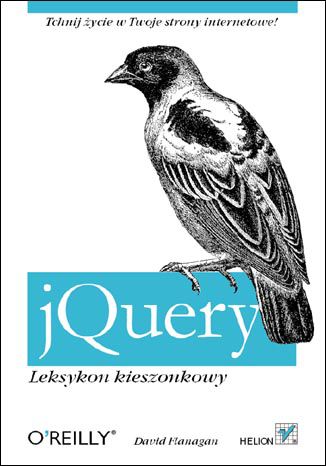
David Flanagan
Tchnij życie w Twoje strony internetowe! Jak wycisnąć z JavaScriptu jeszcze więcej? Jak operować na polach formularza? Jak łatwiej wykorzystać możliwości technologii AJAX? Historia języka JavaScript pełna jest zakrętów - okresów popularności oraz odrzucenia. W momentach zachwytu język ten był wręcz nadużywany, a gdy przychodziły gorsze dni, był przez użytkowników masowo blokowany. Jego prawdziwy potencjał został natomiast wykorzystany w technologii AJAX. Od tego dnia jego popularność nie maleje. Powstają liczne rozwiązania oparte o JavaScript. Wśród nich znajduje się - ostatnio najmodniejsza - biblioteka jQuery. Jej możliwości naprawdę robią wrażenie! Biblioteka jQuery pozwala przy użyciu zwięzłej składni wyprawiać w przeglądarce niestworzone rzeczy! Zjawiskowe pokazy slajdów, okna dialogowe, efekty specjalne to tylko niektóre z atrakcji wizualnych dostarczanych przez jQuery. Narzędzie to pozwala na banalnie prostą manipulację wszystkimi elementami drzewa DOM, ich atrybutami oraz własnościami. Dzięki tej książce zawsze będziesz miał pod ręką ściągę pozwalającą Ci błyskawicznie wykorzystać każdą funkcjonalność jQuery. Dowiesz się, jak rejestrować i obsługiwać zdarzenia, pobierać elementy, rozszerzać funkcjonalność za pomocą wtyczek oraz usprawnić korzystanie z technologii AJAX. Biblioteka jQuery to potężne narzędzie, dzięki któremu tchniesz życie w Twoje strony internetowe! Pobieranie elementów Określanie klas CSS Operowanie na wartościach formularzy Manipulowanie strukturą dokumentu Obsługa i generowanie zdarzeń Efekty animacji Obsługa technologii AJAX Metody wybierania Mechanizm wtyczek - rozszerzanie możliwości jQuery Wykorzystaj potencjał języka JavaScript!

Jon Reid
Aplikacje mobilne dla każdego! Mimo że na rynku wciąż wiodą prym tylko dwa systemy operacyjne dla urządzeń mobilnych, tworzenie aplikacji natywnych przeznaczonych wyłącznie dla nich jest zbyt czasochłonne. Przyszłość należy do tych aplikacji, które będą kompatybilne z wieloma platformami sprzętowymi. Jednak lista problemów, z jakimi musi się zmierzyć projektant takiego oprogramowania, jest długa. Czy coś można na to poradzić? Tak! Rozwiązaniem są bogate możliwości HTML5 i CSS3! Jeżeli dołożyć do tego genialną bibliotekę jQuery Mobile, otrzymamy wybitne trio, pozwalające stworzyć aplikacje, które będą spójnie wyglądać i działać na wielu różnych urządzeniach. Dzięki tej książce poznasz możliwości jQuery Mobile i przekonasz się, że tworzenie aplikacji na urządzenia mobilne nie musi być trudne. Dowiesz się, jak przygotować strukturę strony oraz jak wykorzystać dostępne elementy interfejsu użytkownika. Nauczysz się nawigować pomiędzy stronami oraz korzystać z okien dialogowych i formularzy. Znajdziesz tu też informacje na temat mechanizmu zdarzeń w jQuery Mobile oraz poznasz podstawy tworzenia własnych motywów graficznych. Książka ta jest idealną pozycją dla wszystkich osób chcących zaprojektować swoją pierwszą aplikację dla urządzeń mobilnych. jQuery Mobile pozwala na: błyskawiczne tworzenie aplikacji mobilnych korzystanie z rozbudowanego mechanizmu zdarzeń łatwą nawigację pomiędzy stronami tworzenie własnych motywów graficznych Wykorzystaj całą zdobytą wiedzę do stworzenia aplikacji mobilnej od początku do końca!