
Informatyka
Steven Renders
Microsoft Dynamics NAV is widely used in enterprises with its enhanced reporting features, but there still isn’t a book that covers reporting in depth, until now. This book will show you what’s possible and exactly how to develop reports for Dynamics NAV 2009. Learn why reports are designed in a specific way and then apply this knowledge to your advantage. Microsoft Dynamics NAV 2009: Professional Reporting is an essential guide to understanding the effort involved in creating reports in Dynamics NAV 2009, and all of the available reporting possibilities. Reading this book will result in a better understanding and it will help you save time during development.The book starts with an overview of what kind of reports you can create without a developer using charts, dimensions, and analysis views. The next chapter will introduce the new architecture of Role Tailored Client (RTC) reports and the basics on how to create them or have them generated. Moving on we will discuss data visualization, where you will learn how and when to implement all the available Visual Studio controls. Document reports and other types of specific reports are covered next, and you will get to know all the best workarounds for getting them to work correctly.Knowing other related features is vitally important to obtain a helicopter view of all the reporting possibilities of Dynamics NAV, and the next chapter will introduce Business Intelligence concepts and available technologies that could be used in combination with the Dynamics NAV database. Technology is evolving rapidly and new versions of Dynamics NAV are in the pipeline, so the book will also provide you with a view to the future and how to prepare for it.
Microsoft Dynamics NAV 2009 Programming Cookbook. Build better business applications with NAV
Matthew Traxinger
Microsoft Dynamics NAV 2009 is a business management solution that helps simplify and streamline highly specialized business processes such as finance, manufacturing, customer relationship management, supply chains, analytics, and electronic commerce for small and medium-sized enterprises. ERP systems like NAV thus become the center of a company's day-to-day operations. When you learn to program in an environment like this it opens up doors to many other exciting areas like .NET programming, SQL Server, and Web Services.Microsoft Dynamics NAV 2009 Programming Cookbook will take you through interesting topics that span a wide range of areas such as integrating the NAV system with other software applications like Microsoft Office, creating reports to present information from multiple areas of the system, and so on. You will not only learn the basics of NAV programming, but you will also be exposed to the technologies that surround the NAV system such as .NET programming, SQL Server, and Web Services.The first half of the cookbook will help programmers coming to NAV for the first time by walking them through the building blocks of writing code and creating objects like tables, forms, and reports.The second half focuses on using the technologies surrounding NAV to build better solutions. You will learn how to write .NET code that works with the NAV system and how to integrate the system with other software applications like Microsoft Office or even custom programs. You will also discover some of the features of the Role Tailored Client including creating Pages and custom add-ins.
Steven Renders
Microsoft Dynamics NAV is a multi-lingual, multi-currency business management solution that organizations use to manage their accounts, supply chain, sales, payroll, and HR. It is an ERP tool for organizations that is fast to implement, easy to configure, and simple to use. It is widely used because simplicity is a part of its development, product design, usability, and implementation.This book will help you to master, analyze, and deliver the most challenging reporting requirements in Dynamics NAV 2015.The book starts by explaining report development and it's different phases such as data model, layout, and testing you go through. It introduces you to RDLC and the different controls in the toolbox, such as the Tablix, in its many forms. You will learn to use expressions to make your layout dynamic and to overcome typical problems.Moving on, the book will teach you to visualize data and be able to understand and read a report as it is intended. You will also learn to use Microsoft Word to create a layout for a report. With Power BI and Power Pivot, Power View, and Power Map, you will learn how easy and powerful it is to bring your data to life, so you can spot trends and perform in depth analysis of your business. Reporting Services is also explained as another way that you can apply the knowledge you have about RDLC to build RDL layouts outside of Dynamics NAV.By the end, you will create different types of charts so you can visualize key performance indicators inside the Dynamics NAV application.
Anju Bala, Cristina Nicolas Lorente, Laura Nicolas...
Microsoft Dynamics NAV is a global Enterprise Resource Planning (ERP) solution that provides small and mid-size businesses with greater control over their finances and a way to simplify their supply chain, manufacturing, and operations.Microsoft Dynamics NAV Financial Management explains all you need to know in order to successfully handle your daily financial management tasks. This book walks you through all the improvements in the latest release and shows you how to apply them in your workplace. You will learn about functionalities including sales and purchase processes, payments, bank account management, reporting taxes, budgets, cash flow, fixed assets, cost accounting, inventory valuation, workflows, sending and receiving electronic documents, and business intelligence. This book comprehensively covers all the financial management features inside the latest version of Dynamics NAV and follows a logical schema. By the time you’re finished this book you will have learned about budgets, cash flow management, currencies, intercompany postings, and accounting implications in areas such as jobs, services, warehousing, and manufacturing.
Amit Sachdev, Sharan Oberoi
Microsoft Dynamics NAV is an Enterprise Resource Planning (ERP) software product that integrates financial, manufacturing, supply chain management, sales and marketing, project management, human resources, and services management information from across your organization, into a centralized database. It can take hours to browse through documentation and references available online to learn how to install, configure, deploy and administer Dynamics NAV. This book aims to offer quick-start information in one place.You will be amazed to find out how easily you can administer Dynamics NAV using this quick step-by-step guide. This book also has recommendations for software and hardware requirements including operating system considerations and hardware considerations for administering Dynamics NAV to your advantage. It covers some advanced functions to set up periodic activities, common batch jobs, and create object files. It will also guide you to secure your database by creating backups and improving performance with practical examples.First you will look at the considerations for deploying Dynamics NAV and best practices and the most important aspects of every ERP installation. Then you will install Dynamics NAV—client and server components and use Dynamics NAV with the Microsoft Stack.We discuss the Dynamics NAV Security Architecture including security recommendations and best practices. You will then create and restore backups. This book covers some recommendations about performance tuning—using appropriate code syntax, proper hardware sizing, and considerations for writing customized C/AL code while using SQL Server database.Finally, you will set up procedures for scheduling pre-defined reoccurring processes, error and exception handling procedures, and provide mechanisms for automatic data processing on the server. Also, you will learn different methods used in handling, promoting to the database, and creating object files—tables, reports, codeunits, forms, pages, dataports and XMLports.
Microsoft Dynamics NAV. Implementing ERP Systems
Laura Nicolas Lorente, Christopher Studebaker, Marije Brummel,...
Microsoft Dynamics NAV is an Enterprise Resource Planning (ERP) application used in all kinds of organizations around the world. It provides a great variety of functionality, out-of-the-box, in different topics such as accounting, sales, purchase processing, logistics, and manufacturing. Microsoft Dynamics NAV also allows companies to grow their applications by customizing solutions to meet specific requirements.This course is a hands-on tutorial on working with a real Dynamics NAV implementation. It begins by providing an insight into the different tools available to migrate data from client legacy systems into Microsoft Dynamics NAV. If you are already live with Microsoft Dynamics NAV, you will learn about upgrades and what to expect from them. We’ll also show you how to implement additional or expanding functionalities within your existing Microsoft Dynamics NAV installation, perform data analysis, debug error messages, and implement free third-party add-ons to your existing installation. From here, you will be introduced to integrated development tools to make you a highly productive developer in the NAV environment.The course will serve as a comprehensive reference guide, complementing NAV's Help files. You will find this course really useful if you want to evaluate Microsoft Dynamics NAV's development capabilities or need to manage NAV-based projects. Additionally, you will also learn about the NAV application structure, the C/SIDE development environment, the C/AL language, the construction and uses of each object type, and how it all fits together. Moving on, you will be guided through the NAV way of solving problems. You will be introduced to patterns and the software NAV architecture and will then build an example application. Then, you will walk through the details of architectural patterns, design patterns, and implementation patterns and will also learn about anti-patterns and handling legacy code. You will learn how to build solutions using patterns. The course offers premium, highly practical content on this recently released version of Dynamics NAV, and includes material from the following Packt books : 1. Implementing Microsoft Dynamics NAV - Third Edition 2. Programming Microsoft Dynamics™ NAV 3. Learning Dynamics NAV Patterns
Chandru Shankar, Vincent Bellefroid
Delivering business solutions is more than just product play. Software is often viewed as the enabler; however, the key to success is how the solution is implemented and how the implementations are managed. With this as the background, Microsoft has developed Microsoft Dynamics Sure Step as the full lifecycle methodology for the Dynamics business solutions portfolio. Microsoft Dynamics Sure Step enables you to maximize your Dynamics investments and increase your efficiency to select, sell, deliver, operate and support your business solution.This book details the use of the Microsoft Dynamics Sure Step methodology to enable the full lifecycle of Microsoft Dynamics Sure Step business solutions engagements. Guidance is provided on the due diligence process for the customer that overlaps the solution selling cycle for the service provider, through to the solution implementation phases, encompassing on-going maintenance and upgrades.This book provides detailed coverage of how to use Microsoft Dynamics Sure Step to successfully deliver Dynamics solutions for your business.The book begins by focusing on the aspects of due diligence and solution selling– whether you are the customer or the service provider, you can learn how you work together to select the right solution to meet the organization’s needs.In the ensuing chapters, you will learn how Microsoft Dynamics Sure Step can help improve the overall quality of your Dynamics business solution, including coverage of proactive and post go-live optimization offerings and a thorough explanation of how to upgrade your Dynamics solutions to the latest release of the products.Finally, the book discusses the essence of Microsoft Dynamics Sure Step projects and how to successfully deliver these business solutions, including project and change management disciplines and processes.Additional key topics such as a guide to adopting Microsoft Dynamics Sure Step are also provided if you are looking to develop a consistent process in your organization.
Microsoft Excel 2016 Analiza i modelowanie danych biznesowych
Wayne L. Winston
Opanuj techniki modelowania biznesowego i analiz wykorzystujące Microsoft Excel 2016 i przekształć swoje dane w użyteczne wnioski. Wayne Winston, zdobywca wielu nagród akademickich, dzieli się swoim ogromnym doświadczeniem na stronach praktycznego podręcznika. To wydanie zawiera ponad 150 problemów z rozwiązaniami, a także rozdział o podstawach modelowania, pozwalając od razu przejść do realnej pracy. Rozwiązuj prawdziwe problemy biznesowe w programie Excel Szybkie przejście od podstaw do zaawansowanych analiz Podsumowywanie danych przy użyciu tabel przestawnych i statystyk opisowych Wykorzystanie linii trendu, regresii wielokrotnej i wygładzania wykładniczego Użycie zaawansowanych funkcji, takich jak OFFSET i INDIRECT Kluczowe funkcje finansowe, statystyczne i czasowe Wykorzystanie nowych typów wykresów programu Excel 2016 Tworzenie bardziej efektywnych wykresów w Power View Przetwarzanie złożonych optymalizcji przy użyciu Excel Solver Symulacje Monte Carlo dla cen giełdowych i modeli licytacji Posługiwanie się funkcją AGGREGATE i fragmentatorami Tworzenie tabel przestawnych z danych z różnych arkuszy Podstawy rachunku prawdopodobieństwa i twierdzenie Bayesa Automatyzacja powtarzalnych zadań przy użyciu makr O autorze Wayne L. Winston jest wykładowcą Decision and Information Sciences w Bauer College of Business Uniwersytetu Houston. Od ponad 20 lat uczy najbardziej efektywnych technik wykorzystania programu Excel do rozwiązywania problemów i podejmowania lepszych decyzji. Jest współtwórcą systemu śledzenia i oceniania graczy drużyny Dallas Mavericks, a także autorem wielu książek, w tym Practical Management Science, Mathletics, oraz Marketing Analytics.
Microsoft Excel 2019 Analiza i modelowanie danych biznesowych
Wayne L. Winston
Opanuj techniki modelowania biznesowego i analiz wykorzystujące Microsoft Excel 2019 i przekształć swoje dane w użyteczne wnioski. Wayne Winston, zdobywca wielu nagród akademickich, dzieli się swoim ogromnym doświadczeniem na stronach praktycznego podręcznika. Nowe wydanie obejmuje zagadnienia od PowerQuery po nowe typy danych geograficznych i giełdowych. Osiągnij biegłość, rozwiązując ponad 800 problemów opartych na prawdziwych wyzwaniach, przed którymi stają analitycy. Rozwiązuj prawdziwe problemy biznesowe w programi e Excel Szybkie przejście od podstaw do zaawansowanych analiz Wykorzystanie Power Query do pobierania i przekształcania danych z wielu rozmaitych źródeł Nowe typy danych i sześć nowych funkcji Ilustrowanie spostrzeżeń w danych geograficznych i czasowych przy użyciu Map 3D Podsumowywanie danych przy użyciu tabel przestawnych i statystyk opisowych Używanie linii trendu, regresii wielokrotnej i wygładzania wykładniczego Kluczowe funkcje finansowe, statystyczne i czasowe Przetwarzanie złożonych optymalizcji przy użyciu Excel Solver Wykonywanie symulacji Monte Carlo dla cen giełdowych i modeli licytacyjnych Wykorzystanie modelu danych i Power Pivot do skutecznego budowania i wykorzystywania relacyjnych źródeł danych Automatyzacja powtarzalnych zadań przy użyciu makr O autorze Wayne L. Winston jest emerytowanym profesorem Decision and Information Sciences w Bauer College of Business Uniwersytetu Houston, gdzie zdobył ponad 40 nagród za efektywne nauczanie. Wykładał najbardziej efektywne techniki wykorzystania programu Excel do rozwiązywania problemów i podejmowania lepszych decyzji. Jest współtwórcą systemu śledzenia i oceniania graczy drużyny Dallas Mavericks, a także autorem wielu książek, w tym Practical Management Science, Mathletics, oraz Marketing Analytics. Dwukrotny zwycięzca konkursu Jeopardy!
Microsoft Excel 2019: Formuły i funkcje
Paul McFedries
Ekspert Paul McFedries pomoże Ci opanować kluczowe narzędzia programu Excel 2019 i pakietu Office 365 do budowy bardziej złożonych arkuszy kalkulacyjnych. Skorzystaj z podstawowych funkcji programu Excel 2019 i pakietu Office 365 do budowy arkuszy kalkulacyjnych, które rozwiązują problemy biznesowe i dostarczają wiarygodnych odpowiedzi. Bazując na swoim niezrównanym doświadczeniu, Paul McFedries pomoże Ci w pełni wykorzystać potencjał istniejących formuł i funkcji, wliczając w to najnowsze usprawnienia w zakresie korzystania z tablic, obsługiwania błędów w formułach i obliczania statystyk. Przedstawione przez McFedriesa projekty krok po kroku przeprowadzą Cię przez proces realizacji kluczowych zadań, począwszy od tworzenia kart czasu pracy, a skończywszy na prognozowaniu przepływu gotówki i wiekowaniu należności. Jego praktyczne przykłady i przejrzyste instrukcje dogłębnie objaśnią Ci sposoby tworzenia formuł o średnim i wysokim stopniu skomplikowania, a także pomogą Ci wykorzystać najbardziej przydatne funkcje programu Excel w Twojej codziennej pracy. Droga do zostania ekspertem programu Excel jeszcze nigdy nie była tak prosta! Ta książka pozwoli Ci: Usprawnić analizy biznesowe poprzez wprowadzenie do Twoich modeli inteligencji i wiedzy Zastąpić problematyczne formuły wygodnymi funkcjami wbudowanymi Radykalnie uprościć złożone obliczenia przy pomocy nowych dynamicznych tablic pakietu Office 365 Odkryć anomalie, problemy lub możliwości za pomocą formatowania warunkowego Obliczyć raty kredytu, koszty odsetek, okres kredytowania oraz plany amortyzacji Wyprognozować przyszłą wartość inwestycji oraz zaplanować osiąganie celów inwestycyjnych Opanować podstawowe narzędzia do dyskontowania i analizy przepływów gotówkowych, wliczając w to wartość bieżącą netto oraz wewnętrzną stopę zwrotu Sortować, filtrować i analizować dane tabelaryczne, od klientów po zapasy W łatwy sposób analizować duże zbiory danych z użyciem tabel przestawnych O książce Dla każdego, kto chce zrobić w programie Microsoft Excel więcej w dużo krótszym czasie Dla profesjonalistów z zakresu biznesu i finansów, przedsiębiorców i studentów oraz tych, którzy muszą analizować i zarządzać danymi w efektywny sposób O autorze Paul McFedries, ekspert programu Excel i etatowy autor tekstów technicznych, pisze książki o tematyce komputerowej od 1991 roku. Łącznie napisał ponad 95 książek, m.in. My Office 2016, Windows 10 In Depth (we współpracy z Brianem Knittelem) oraz PCs for Grownups, które na całym świecie sprzedały się w nakładzie 4 milionów egzemplarzy. Jest również właścicielem witryny Word Spy (www.wordspy.com), której zadaniem jest tropienie nowych słów i zwrotów wprowadzonych do języka angielskiego.
Microsoft Excel 2019 Krok po kroku
Curtis Frye
Szybka metoda nauki Microsoft Excel 2019 Nauka może być łatwa. Osiągnij więcej w krótkim czasie przy użyciu Microsoft Excel 2019. Znajdź odpowiedź, której potrzebujesz już teraz, albo pracuj od deski do deski, pobierając pliki ćwiczeń i systematycznie budując swoje umiejętności. Szybko twórz skoroszyty, wprowadzaj dane i formatuj je w celu poprawy czytelności Wykonuj obliczenia, odnajduj i poprawiaj błędy Twórz wyrafinowane arkusze prognoz, wskaźników KPI i linii czasu Wizualizuj dane w trójwymiarowych mapach, wykresach i schematach Importuj, przetwarzaj, podsumowuj i analizuj wielke zbiory danych w ulepszonych mechanizmach tabel przestawnych i Power Query Buduj skuteczne modele dane i używaj ich w analizach biznesowych Curtis Frye jest autorem przeszło 30 książek, w tym Microsoft Excel 2016 Krok po kroku oraz Brilliant Excel VBA Programming. Opracowane przez niego kursy dla Linda.com i LinkedIn obejmują m.in. Tableau Essential training i Excel: Scenario Planning and Analysis.
Microsoft Excel 2019: VBA i makra
Bill Jelen, Tracy Syrstad
Uznani eksperci Bill Jelen (MrExcel) i Tracy Syrstad pokazują, jak budować wydajniejsze, bardziej niezawodne i skuteczne arkusze programu Excel. Przewodnik ten pokazuje, jak zautomatyzować praktycznie wszystkie rutynowe zadania, aby oszczędzić sobie całych godzin, dni, a może i tygodni pracy. Spraw, aby Excel wykonywał rzeczy, które uważałeś za niemożliwe. Poznaj techniki makr, których nie znajdziesz nigdzie indziej i twórz zautomatyzowane raporty. Bill Jelen i Tracy Syrstad pokazują, jak natychmiast wizualizować informacje, aby móc działać na nich, przechwytywać dane skądkolwiek i używać ich gdziekolwiek oraz automatyzować najlepsze nowe funkcje programu Excel 2019 i Excela w Office 365. Znajdziesz tu proste instrukcje krok po kroku, praktyczne przykłady oraz ponad 50 skoroszytów wypełnionych dodatkowymi przykładami, makrami i rozwiązaniami. Dzięki lekturze tej książki będziesz w stanie: Szybko opanować tworzenie makr w programie Excel Wydajniej posługiwać się zakresami, komórkami i formułami Generować zautomatyzowane raporty i szybko dostosowywać je do nowych wymagań Automatyzować tabele przestawne w celu tworzenia podsumowań, analiz, badania i prezentacji danych Używać niestandardowych okien dialogowych do zbierania danych od użytkowników Ulepszać niezawodność i elastyczność swoich makr Integrować dane z Internetu, baz danych Access i innych źródeł Automatycznie generować wykresy, wizualizacje, linie przebiegu w czasie, a nawet dokumenty programu Word Tworzyć wydajne rozwiązania przy użyciu klas, kolekcji i funkcji niestandardowych Szybciej rozwiązywać zaawansowane problemy analizy biznesowej O tej książce Przeznaczona dla każdego, kto chce wykonać więcej pracy w programie Excel w krótszym czasie.
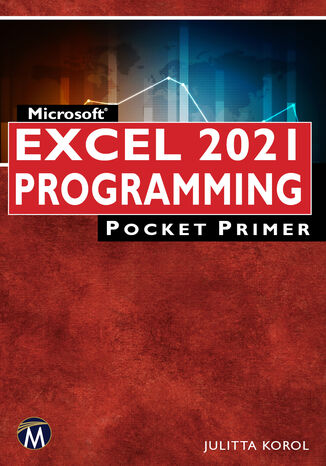
Microsoft Excel 2021 Programming Pocket Primer. A Comprehensive Guide to Mastering Excel VBA
Mercury Learning and Information, Julitta Korol
This book, part of the successful Pocket Primer series, is designed for those who need to quickly master Excel programming fundamentals. It offers a concise, efficient introduction to VBA, ensuring you only learn what you need to feel comfortable with Excel VBA. The concepts learned in this book also apply to Access programming. The nine chapters progressively introduce you to programming in Microsoft Excel 2021.Starting with a quick guide to Excel macros and the VBA programming environment, the book moves on to fundamental concepts and writing function procedures. You will learn to add decision-making capabilities and looping statements to your programs, store and manage multiple values using arrays and collections, and utilize built-in tools for testing and debugging your code.By the end of the course, you will have a solid foundation in Excel VBA, enabling you to automate tasks and enhance your productivity. This structured approach makes the book an essential resource for mastering Excel VBA efficiently and effectively.
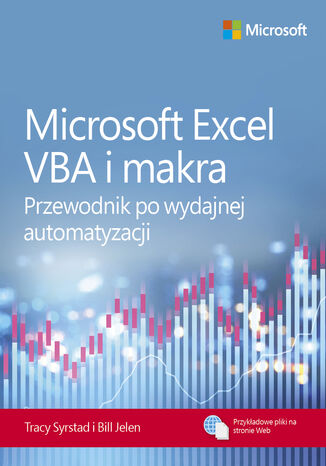
Microsoft Excel VBA i makra. Przewodnik po wydajnej automatyzacji
Tracy Syrstad; Bill Jelen
Uznani eksperci Tracy Systard i Bill Jelen (MrExcel) pomagają automatyzować zadania, aby móc zrobić więcej w krótszym czasie i mniejszym wysiłkiem! Poznaj język Microsoft Excel Visual Basic for Applications (VBA) i opanuj zaawansowane techniki, takie jak przetwarzanie w pamięci i programowanie obiektów niestandardowych, umożliwiających efektywną manipulację danymi. Naucz się pisać i rozumieć kod VBA, automatyzować złożone zadania w Excelu, importować i eksportować dane, wchodzić w interakcję z komórkami oraz efektywnie przekształcać dane. Poznaj zaawansowaną automatyzację umożliwiającą generowanie i aktualizowanie wykresów i tabel przestawnych oraz tworzenie programów, które jednym kliknięciem przekształcają surowe dane w kompleksowe raporty. Dzięki przejrzystym objaśnieniom i praktycznym przykładom Tracy Syrstad i Bill Jelen sprawiają, że złożone zadania stają się proste! Znajdziesz tu instrukcje krok po kroku, realistyczne studia przypadków, rozwiązania specyfikacji projektu oraz 50 skoroszytów wypełnionych przykładami i kompletnymi, łatwymi do dostosowania rozwiązaniami. Czytając tę książkę: - Szybko opanujesz tworzenie makr w Excelu - nawet jeśli zaczynasz bez wcześniejszego doświadczenia. - Poznasz podstawy języka VBA. - Zdobędziesz praktyczne techniki zapewniające czystszy kod, lepszą strukturę i długoterminową łatwość utrzymania. - Będziesz projektować zaawansowane formularze użytkownika z wieloma widokami, niestandardowymi kontrolkami i walidacją danych. - Będziesz używać niestandardowych obiektów i kolekcji do pisania skalowalnego, obiektowego kodu. - Rozszerzysz możliwości Excela, automatyzując Worda, Outlooka i inne programy pakietu Office. - Zintegrujesz dane z Internetu, plików tekstowych, Access i innych źródeł. O tej książce - Dla każdego, kto chce osiągnąć więcej w Microsoft Excel w krótszym czasie - Dla specjalistów, naukowców, studentów i wszystkich innych, którzy potrzebują wydajnie analizować dane O autorach Tracy Syrstad jest autorką 11 książek o Excelu i doświadczoną programistką dysponującą dziesięcioleciami doświadczeń w budowaniu niestandardowych rozwiązań dla firm i indywidualnych osób. Od roku 1997 pomaga klientom porządkować przepływy pracy, automatyzować, raportować i opanować mętne dane za pomocą całej mocy Excela i VBA. Jej pisarstwo odzwierciedla to samo podejście, które oferuje w konsultingu - przejrzyste, praktyczne i skupione na rozwiązywaniu realnych problemów w rzeczywistym świecie. Bill Jelen to Excel MVP, gospodarz witryny MrExcel.com oraz autor 71 książek na temat Excela. Był komentatorem ESPN na World Excel Championships, ponad 80 razy wystąpił w programie Call for Help with Leo Laporte i został wybrany gościem roku programu Computer America. Jest też autorem felietonu o Excelu w magazynie Strategic Finance.
Mike Pfeiffer
This book is written in a cookbook-style format and provides practical, immediately usable task-based recipes that show you how to manage and maintain your Microsoft Exchange Server 2010 environment with Windows PowerShell 2.0. Each chapter of the book is written so that it can be used as a desktop reference, or it can be read from beginning to end, allowing you to build a solid foundation for building scripts in your Exchange environment. This book is for messaging professionals who want to learn how to build real-world scripts with Windows PowerShell 2.0 and the Exchange Management Shell. If you are a network or systems administrator responsible for managing and maintaining Exchange Server 2010, then this book is for you. The recipes in this cookbook touch on each of the core Exchange 2010 server roles and require a working knowledge of supporting technologies including Windows Server 2008 or Windows Server 2008 R2, Active Directory, and DNS. This book covers the latest additions to Exchange Server 2010 including Service Pack 1. A basic understanding of Exchange Server 2010 and Windows PowerShell 2.0 is highly recommended.
Peter De Tender, Michael Van Horenbeeck
This book is a practical, hands-on guide that provides the reader with a number of clear, step-by-step exercises. Microsoft Exchange 2013 Cookbook is targeted at network administrators who deal with the Exchange server in their day-to-day jobs. It assumes you have some practical experience with previous versions of Exchange (although this is not a requirement), without being a subject matter expert.