
Informatyka
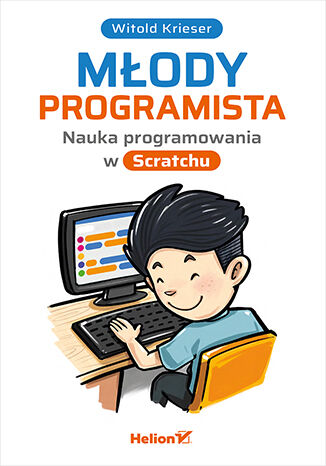
Młody programista. Nauka programowania w Scratchu
Witold Krieser
Baw się ― i ucz się programowania! Programowanie to dziś niezwykle ważna umiejętność. I wszystko wskazuje na to, że jego znaczenie będzie tylko rosło. Warto więc zawczasu pomyśleć o przyszłości swojego dziecka i pomóc mu rozpocząć przygodę z programowaniem. Tym bardziej że istnieje Scratch ― język kodowania, wokół którego skupia się liczna społeczność internetowa ― pozwalający tworzyć własne interaktywne historie, gry i animacje i dzielić się nimi z ludźmi na całym świecie. A że Scratch powstał z myślą o młodych programistach, w wieku 8 – 16 lat, idealnie się sprawdza jako pierwszy język przyszłego informatyka. Na rynku jest dostępnych wiele opracowań poświęconych obsłudze Scratcha. Tę książkę wyróżnia to, że zawiera niezbędne minimum tekstu, za to maksymalnie dużo grafik. Za ich pośrednictwem autor pokazuje podstawowe instrukcje języka i programy pomagające kreować rozmaite kształty. Młody czytelnik będzie w stanie każdy z tych programów przeanalizować, wprowadzić do Scratcha, wreszcie ― sprawdzić jego działanie. Wszystko po to, by samodzielnie tworzyć ciekawe efekty graficzne, animacje i gry.
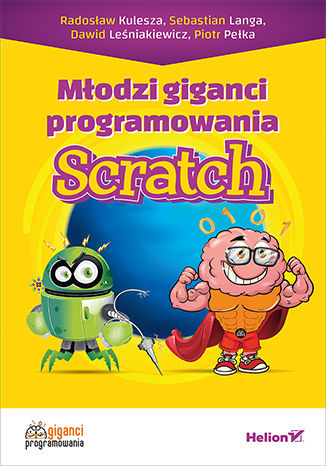
Młodzi giganci programowania. Scratch
Radosław Kulesza, Sebastian Langa, Dawid Leśniakiewicz, Piotr...
Nauka programowania? Ze Scratchem to nic trudnego! Nudzą Cię już gry komputerowe i zwykłe przeglądanie internetu? Uważasz, że stać Cię na więcej? Masz ochotę zaskoczyć kolegów z klasy? A może po prostu... chcesz nauczyć się programować? Jeśli tak, to dobrze trafiłeś! Scratch to doskonałe narzędzie, dzięki któremu młodzi pasjonaci na całym świecie bez trudu poznają tajniki programowania komputerów od podstaw. Scratch ułatwia rozpoczęcie nauki i umożliwia szybkie tworzenie atrakcyjnych gier, animacji i aplikacji, będąc przy tym narzędziem zupełnie bezpłatnym. Jeśli chcesz dołączyć do społeczności użytkowników Scratcha, jesteś na dobrym tropie! Książka Młodzi giganci programowania. Scratch szybko i bezboleśnie wprowadzi Cię w niezwykły świat. Krok po kroku poznasz sposób tworzenia gier komputerowych i przeżyjesz przy tym wspaniałą przygodę! Ta publikacja sprawdzi się zarówno w przypadku młodych adeptów sztuki programowania, jak i nauczycieli zainteresowanych prowadzeniem zajęć z informatyki dla najmłodszych. Pierwsza część zawiera bardzo dokładny opis środowiska, a druga to doskonałe pomysły na rozbudowane gry komputerowe. Elementy środowiska Scratch i sposoby ich wykorzystania Używanie i edycja postaci, kostiumów oraz teł Korzystanie z możliwości ruchu i efektów dźwiękowych Posługiwanie się danymi, blokami i wyrażeniami Obsługa zdarzeń i czujników, korzystanie z możliwości kontroli Praktyczne pomysły na prawdziwe gry komputerowe Zacznij programować już dziś i szybko opracuj swoją pierwszą grę komputerową!
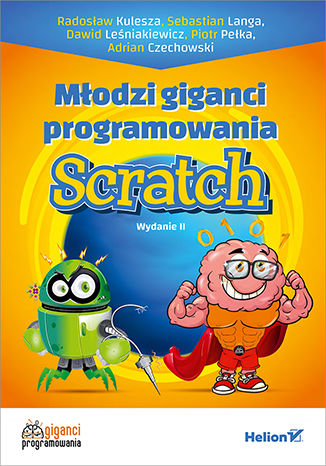
Młodzi giganci programowania. Scratch. Wydanie II
Radosław Kulesza, Sebastian Langa, Dawid Leśniakiewicz, Piotr...
Programowanie? Ze Scratchem to czysta przyjemność! Jeśli masz już dość bezproduktywnego wpatrywania się w ekran komputera lub tabletu i chciałbyś zacząć robić coś naprawdę ciekawego, dobrze trafiłeś! A jeśli przy tym chcesz zabłysnąć w klasie i zostać prawdziwą gwiazdą na lekcji informatyki, to trafiłeś jeszcze lepiej! Scratch to doskonałe narzędzie, dzięki któremu wielu młodych ludzi na całym świecie bez trudu poznało tajniki programowania komputerów. Ułatwia naukę podstaw i umożliwia szybkie tworzenie atrakcyjnych gier, animacji i aplikacji, a do tego jest narzędziem zupełnie bezpłatnym. Aby dołączyć do społeczności użytkowników Scratcha, sięgnij po książkę Młodzi giganci programowania. Scratch. Wydanie II! Szybko i bezboleśnie wprowadzi Cię ona w magiczny świat programowania. Dzięki niej poznasz sposób tworzenia prawdziwej gry komputerowej i przeżyjesz wspaniałą przygodę! Książka sprawdzi się w przypadku zarówno młodych adeptów sztuki programowania, jak i nauczycieli zainteresowanych prowadzeniem zajęć z informatyki dla najmłodszych. Pierwsza część zawiera bardzo dokładny opis środowiska, a druga to doskonałe pomysły na rozbudowane gry komputerowe. Elementy środowiska Scratch i sposoby ich wykorzystania Używanie i edycja postaci, kostiumów oraz teł Korzystanie z możliwości ruchu i efektów dźwiękowych Posługiwanie się danymi, blokami i wyrażeniami Obsługa zdarzeń i czujników, korzystanie z możliwości kontroli Praktyczne pomysły na prawdziwe gry komputerowe Ciekawe zadania z programowania z rozwiązaniami Zostań asem programowania! Napisz swoją pierwszą grę komputerową!
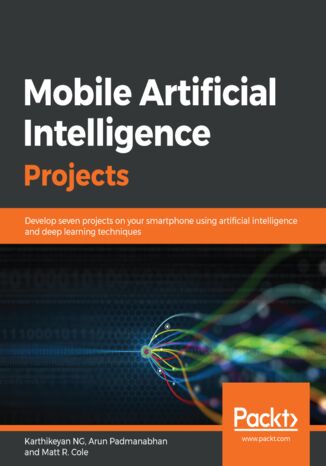
Karthikeyan NG, Arun Padmanabhan, Matt Cole
We’re witnessing a revolution in Artificial Intelligence, thanks to breakthroughs in deep learning. Mobile Artificial Intelligence Projects empowers you to take part in this revolution by applying Artificial Intelligence (AI) techniques to design applications for natural language processing (NLP), robotics, and computer vision.This book teaches you to harness the power of AI in mobile applications along with learning the core functions of NLP, neural networks, deep learning, and mobile vision. It features a range of projects, covering tasks such as real-estate price prediction, recognizing hand-written digits, predicting car damage, and sentiment analysis. You will learn to utilize NLP and machine learning algorithms to make applications more predictive, proactive, and capable of making autonomous decisions with less human input. In the concluding chapters, you will work with popular libraries, such as TensorFlow Lite, CoreML, and PyTorch across Android and iOS platforms.By the end of this book, you will have developed exciting and more intuitive mobile applications that deliver a customized and more personalized experience to users.
Mobile DevOps. Deliver continuous integration and deployment within your mobile applications
Rohin Tak, Jhalak Modi
Today's world is all about perfection, and there are hundreds of applications that are released each day out of which only a few succeed. Making sure that the app looks, performs, and behaves as expected is one of the biggest challenge developers face today.The main goal of this book is to teach developers to implement DevOps to build, test, and deliver. This book will teach you to implement Mobile DevOps at every stage of your application's lifecycle with Visual Studio and Xamarin Mobile Lifecycle solutions. Later, it will also show you how to leverage Mobile Center's continuous integration and automated testing to develop a high-quality applications. Next, you’ll see how to mobilize your on-premises data to the cloud and increase your productivity with code reuse. Finally, you’ll discover how to find and fix bugs beforehand, improving the efficiency of your application while it is being developed.By the end of this book, you will be well-versed with Mobile DevOps techniques, delivering high quality and high performance mobile apps.
Mobile DevOps Playbook. A practical guide for delivering high-quality mobile applications like a pro
Moataz Nabil
To build mobile apps, you need to understand mobile-first features, tools, and processes that help you build, test, and release robust apps faster and more efficiently. The multitude of challenges stemming from mobile development's inherent complexities, including native iOS and Android app creation, cross-platform frameworks, and the implementation of scalable architectures within extensive teams, collectively contribute to a substantial number of obstacles that can significantly prolong the release process.This book will help you understand and implement the best practices of mobile DevOps for continuous integration, testing, delivery, deployment, and monitoring. You’ll explore different challenges faced by developers due to varied OSs, the unforgiving nature of mobile applications, and continuous updates to mobile phones and learn how to maneuver through these challenges. You’ll also get to grips with the latest trends while discovering the potential future of mobile DevOps, with valuable insights and guidance about integrating mobile development teams into your organization.By the end of this book, you’ll be well-equipped to successfully implement mobile DevOps and build fast, qualitative, and efficient mobile apps for your team or organization.
Igor Mikhaylov
Considering the emerging use of mobile phones, there is a growing need for mobile forensics. Mobile forensics focuses specifically on performing forensic examinations of mobile devices, which involves extracting, recovering and analyzing data for the purposes of information security, criminal and civil investigations, and internal investigations.Mobile Forensics Cookbook starts by explaining SIM cards acquisition and analysis using modern forensics tools. You will discover the different software solutions that enable digital forensic examiners to quickly and easily acquire forensic images. You will also learn about forensics analysis and acquisition on Android, iOS, Windows Mobile, and BlackBerry devices. Next, you will understand the importance of cloud computing in the world of mobile forensics and understand different techniques available to extract data from the cloud. Going through the fundamentals of SQLite and Plists Forensics, you will learn how to extract forensic artifacts from these sources with appropriate tools. By the end of this book, you will be well versed with the advanced mobile forensics techniques that will help you perform the complete forensic acquisition and analysis of user data stored in different devices.
Claudio Scolastici, David M Nolte
The videogame industry is not affected by the economic crisis as the market expands each year. In addition to that, the mobile market offers the opportunity to small teams with limited budgets to create successful games that can compete with the big companies. This is a guide to help you take a share of this huge market.Mobile Game Design Essentials will teach you how to develop professional quality games for mobile platforms. You will learn how to take advantage of devices and their built-in technologies. Get to know the best software and programming languages to create videogames from scratch and detailed tutorials to get your hands dirty with the common practices of game development.Mobile Game Design Essentials introduces you to smartphones, their operating systems, and development environments. It describes in detail the roles required by an indie team of mobile developers, the most popular software to create graphics and audio for games, the most used programming languages, and the best game engines. It also provides several tutorials detailing efficient game development and prototyping.Starting with a description of the mobile platforms and the roles to cover when building up your own indie team, Mobile Game Design Essentials then provides a description of the techniques and software used to create graphics and audio for games and the coding languages and development environments used by programmers. It also aims to acquaint you with the best practices of mobile game design and development, by addressing the importance of the prototype-test-polish cycle and the analysis of the distinctive aspects of mobile game design. Finally, it concludes with a step-by-step guide to create the presentation document for your next mobile game.Mobile Game Design Essentials covers everything you need to know to get started in the mobile game industry; from collecting your team, recommendations on development software, to marketing and publication.
Will Hacker
Mobile app and website design are two of of the most popular areas of user experience design. Axure RP 7 allows you to design and build mobile prototypes and deploy them to real devices for testing and stakeholder review. It also allows you to create an interactive HTML website wireframe or UI mockup without coding. Axure 7 has new features such as new widget events, page events, adaptive views, and so on, that give you more flexibility while building mobile prototypes.If you have experience with Axure but have never designed anything for mobile devices or responsive design, this book will get you started right away. This book contains working examples of how to complete some common mobile design tasks using Axure and focuses on creating rich, functional prototypes for mobiles, whether they are apps or websites.Using this practical, example-oriented guide, you will learn how Axure RP 7 can be used by user experience designers to create and deploy mobile prototypes on smartphones and tablets.You will also learn how Axure RP 7 can be used to create adaptive views for multi-device designs, sliding menus, mobile-friendly forms, drag and drop interactions, tool bars, and basic transitional animations common to mobile apps. You will get to know how to publish prototypes so that they can be tested or demonstrated on a real mobile device.
Mobile Test Automation with Appium. Mobile application testing made easy
Nishant Verma
Appium is an open source test automation framework for mobile applications. It allows you to test all three types of mobile applications: native, hybrid, and mobile web. It allows you to run the automated tests on actual devices, emulators, and simulators. Today, when every mobile app is made on at least two platforms, iOS and Android, you need a tool that allows you to test across platforms. Having two different frameworks for the same app increases the cost of the product and time to maintain it as well. Appium helps save this cost.With mobile app growth exploding, mobile app automation is mainstream now. In this book, author Nishant Verma provides you with a firm grounding in the concepts of Appium while diving into how to set up appium & Cucumber-jvm test automation framework, implement page object design pattern, automate gestures, test execution on emulators and physical devices, and implement continuous integration with Jenkins. The mobile app we have referenced in this book is Quikr because of its relatively lower learning curve to understand the application. It's a local classifieds shopping app.
Mobile Web Development. Smashing Magazine
G. Avola, Jon Raasch
„Smashing Magazine” to jeden z najpopularniejszych serwisów poświęconych zagadnieniom z dziedziny programowania, między innymi tworzenia profesjonalnych stron WWW. Jest to obowiązkowa pozycja wśród ulubionych serwisów każdego projektanta i dewelopera. Na łamach tego portalu najwybitniejsi eksperci dzielą się wiedzą z zakresu projektowania interfejsów użytkownika, aplikacji mobilnych i stron WWW. Kolejna książka z tej serii poświęcona jest w całości aplikacjom mobilnym. W trakcie lektury poznasz podstawy HTML5, CSS3 i JavaScriptu oraz zaznajomisz się z możliwościami, jakie dają one deweloperom. Z kolejnych rozdziałów dowiesz się, jak skonfigurować platformę rozwojową i produkcyjną, jak stworzyć prototyp oraz jaką bazę danych warto wykorzystać. Ponadto nauczysz się w praktyce stosować mechanizmy geolokalizacji czy integracji z serwisami społecznościowymi oraz kontrolować wydajność Twojej aplikacji. Na sam koniec przekonasz się, że przygotowanie aplikacji do premiery wcale nie jest takie trudne. Nie martw się, z tą książką odniesiesz sukces! Sprawdź: jakie nowości kryją HTML5 i CSS3 jak przygotować platformę rozwojową i produkcyjną jak przechowywać dane w aplikacji mobilnej dlaczego warto tworzyć aplikacje na urządzenia przenośne jak odnieść sukces Fenomenalne źródło informacji o aplikacjach mobilnych!
S. S. Niranga
With users increasingly accessing the web on mobile devices, it’s crucial to make sure your website is built to seamlessly fit this radical change in user behavior. Mobile Web Performance Optimization is designed to help you do exactly that – it’s been created to help you build fast, and mobile-user-friendly websites and applications. Featuring guidance through a range of techniques and tools essential to modern mobile development, this accessible guide will make sure you’re delivering a seamless and intuitive experience for your website’s users.Begin by exploring the fundamental components of mobile web design and website optimization, before learning how to put the concepts into practice. Featuring cross-platform solutions, insights on developing lightweight yet robust UI, and insights on how to successfully manage data, this application development book takes you through every stage in the development process – so you can be confident that you’re asking the right questions and using the best tools in the most effective way. By the end, you’ll understand implicitly what it means to ‘build for performance’- you’ll be a more confident developer, capable of building projects that adapt to a changing world.

Lyza Danger Gardner, Jason Grigsby
Zdobądź nowych użytkowników smartfonów! Liczba użytkowników internetu przeglądających strony internetowe za pomocą smartfonów rośnie lawinowo. Powszechnie sądzi się, że wkrótce będzie ich więcej niż tych, którzy korzystają z tradycyjnych komputerów. Dlatego już dziś należy przygotować się na rewolucję i zmienić podejście do tworzenia stron internetowych. Skorzystaj z nowości HTML5 oraz CSS3 i przekonaj się, że to wcale nie musi być trudne. Jeżeli dołożysz do tego kolejną książkę z serii "Rusz głową!", całe zagadnienie może okazać się wręcz banalne. Dzięki nowatorskim technikom nauczania będziesz chłonął wiedzę niczym gąbka. W trakcie lektury nauczysz się korzystać z Responsive Web Design oraz sprawdzisz, jak rozpoznać, że użytkownik korzysta ze smartfona. Ponadto poznasz biblioteki, które pomogą Ci w trakcie realizacji postawionych (na przykład jQuery Mobile — jej możliwości są oszałamiające!). Twoją ciekawość powinien wzbudzić też projekt PhoneGap. Dzięki niemu będziesz mógł skonwertować swoją aplikację napisaną przy użyciu HTML5 do natywnego formatu, a to da Ci parę nowych możliwości. Książka ta jest obowiązkową pozycją dla wszystkich projektantów stron internetowych, którzy chcą być na czasie! Zaliczasz się do nich? Poznaj: przyszłość sieci internet i stron WWW podejście Responsive Web Design możliwości biblioteki jQuery i projektu PhoneGap rozwiązania typowych problemów Wykorzystaj potencjał HTML5 i CSS3!
MobX Quick Start Guide. Supercharge the client state in your React apps with MobX
Pavan Podila, Michel Weststrate
MobX is a simple and highly scalable state management library in JavaScript. Its abstractions can help you manage state in small to extremely large applications. However, if you are just starting out, it is essential to have a guide that can help you take the first steps. This book aims to be that guide that will equip you with the skills needed to use MobX and effectively handle the state management aspects of your application.You will first learn about observables, actions, and reactions: the core concepts of MobX. To see how MobX really shines and simplifies state management, you'll work through some real-world use cases. Building on these core concepts and use cases, you will learn about advanced MobX, its APIs, and libraries that extend MobX.By the end of this book, you will not only have a solid conceptual understanding of MobX, but also practical experience. You will gain the confidence to tackle many of the common state management problems in your own projects.
Mehul Gupta, Niladri Sen
This book offers a detailed introduction to the groundbreaking field of AI agents and Model Context Protocol (MCP). The first section delves into generative AI and large language models (LLMs), exploring how these technologies power modern AI systems. From there, the book introduces the concept of AI agents—autonomous systems capable of executing tasks with varying levels of complexity. Moving into practical applications, the book focuses on Model Context Protocol, explaining its key components and how it enables effective interaction between AI and various software tools. Each chapter offers step-by-step instructions for setting up MCP servers for popular tools like Gmail, YouTube, GitHub, and more, empowering readers to automate tasks and streamline workflows. The book concludes by addressing the future of MCP, its potential risks, and how to stay safe while using these advanced technologies. Whether you're a beginner or experienced practitioner, this guide will deepen your understanding of AI and enhance your ability to leverage cutting-edge automation in daily operations.

Model systemu zarządzania indywidualną wiedzą naukową w humanistyce
Anna Matysek
W świecie nadmiaru informacji codziennym wyzwaniem badaczy jest odnajdywanie i selekcjonowanie materiałów, organizowanie literatury przedmiotu i własnych notatek. Proponowany model systemu zarządzania indywidualną wiedzą naukową podpowiada, jak zarządzać wiedzą naukową, jak organizować własną przestrzeń wiedzy naukowej, jakie narzędzia cyfrowe wdrożyć do warsztatu badawczego, by efektywnie wykorzystywać zgromadzony materiał badawczy i tworzyć nową wiedzę w humanistyce. System składa się z elementów podstawowych i uzupełniających - procesów, czynności i narzędzi zarządzania indywidualną wiedzą naukową. Podano przykłady programów komputerowych, ich funkcje i możliwości zastosowania w zarządzaniu wiedzą.