
Informatyka
MySQL. Leksykon kieszonkowy. Wydanie II
George Reese
MySQL to jeden z najpopularniejszych systemów zarządzania bazami danych. Rozprowadzany na zasadzie open source, MySQL jest wykorzystywany jako zaplecze bazodanowe setek tysięcy serwisów WWW, sklepów internetowych, blogów i galerii. Coraz częściej sięgają po niego także twórcy rozbudowanych aplikacji korporacyjnych, poszukujący stabilnej, bezpiecznej i wydajnej platformy do przechowywania danych. W najnowszej wersji, oznaczonej symbolem 5.0, dodano wiele od dawna oczekiwanych funkcji, w tym procedury składowane, wyzwalacze, kursory i widoki. Poprawiono także mechanizmy składowania danych. Jeśli jesteś administratorem lub programistą baz danych, książka "MySQL. Leksykon kieszonkowy. II wydanie" będzie dla Ciebie nieocenioną pomocą. W skondensowanej formie przedstawiono w niej wszystkie najistotniejsze zagadnienia związane z instalacją i konfiguracją tego systemu, a także z zarządzaniem nim i wykorzystywaniem go. Znajdziesz tu omówienie typów danych, poleceń języka SQL, funkcji i rodzajów tabel. Przeczytasz także o replikacji, procedurach składowanych, narzędziach dostępnych z wiersza poleceń i wyzwalaczach. Pobieranie i instalacja MySQL Replikacja danych Narzędzia wiersza poleceń Typy danych Polecenia SQL Operatory Procedury składowane Dzięki tej książce Twoja praca z MySQL stanie się szybsza i efektywniejsza.
Gökhan Ozar
Any database designer who wants to accomplish both everyday tasks and more advanced actions with a few clicks or drag-and-drops can now do so using Navicat's advanced tools and this book.Starting with the basics before progressing with advanced features, this book can be read from cover to cover, or simply used as a reference guide for any problems you encounter.The book features 'work along' tutorials, some of which will surprise you by revealing features of Navicat which you may never have known existed ñ features such as designing functions and stored procedures, event triggers, creating batch jobs and scheduling.MySQL Management and Administration with Navicat is an ideal resource to master Navicat and unlock its true potential.
MySQL. Mechanizmy wewnętrzne bazy danych
Sasha Pachev
Poznaj sekrety jednej z najpopularniejszych baz danych Jak przechowywane są dane? Jak dodawać własne zmienne konfiguracyjne? Jak przebiega proces replikacji? MySQL to obecnie jedna z najpopularniejszych baz danych. Jedną z jej największych zalet jest nieodpłatny dostęp zarówno do samego systemu, jak i do jego kodu źródłowego. Możliwość przeglądania kodu i -- w razie potrzeby -- samodzielnego modyfikowania go może okazać się przydatna programistom tworzącym aplikacje, które korzystają z MySQL jako zaplecza bazodanowego. Jednak samodzielne "przegryzanie się" przez setki tysięcy linii kodu i rozpracowywanie mechanizmów działania bazy danych może zająć mnóstwo czasu. Dzięki tej książce poznasz kod źródłowy i sposób działania tego narzędzia. Autor, przez wiele lat pracujący w zespole tworzącym MySQL, przedstawia w niej tajniki systemu. Podczas czytania poznasz architekturę i wzajemne powiązania pomiędzy komponentami MySQL, strukturę kodu źródłowego oraz metody modyfikowania go przez kompilacją. Dowiesz się także, jak przebiega komunikacja pomiędzy klientem i serwerem bazy danych, jak realizowane są zapytania, w jaki sposób składowane są dane i jak implementowane są mechanizmy replikacji. Architektura MySQL Struktura kodu źródłowego Komunikacja pomiędzy klientem i serwerem Zmienne konfiguracyjne Obsługa żądań Parser i optymalizator zapytań Mechanizmy składowania danych Replikacja danych Dzięki tej książce zrozumiesz budowę bazy danych MySQL i będziesz w stanie samodzielnie dostosować ją do każdego zadania.

MySQL. Vademecum profesjonalisty. Wydanie V
Paul DuBois
Kompendium wiedzy o MySQL! MySQL to jedna z najpopularniejszych baz danych wykorzystywanych we współczesnych aplikacjach internetowych. Swój sukces zawdzięcza prostej konfiguracji, niewielkim wymaganiom oraz wysokiej niezawodności. Jeżeli do tego dołożymy genialny współczynnik możliwości do ceny — baza jest darmowa — oraz doskonałą współpracę z językiem PHP, to otrzymamy rewelacyjny produkt. Warto pamiętać, że MySQL to prawdziwy system bazodanowy, wspierający zaawansowane techniki replikacji danych i mogący przechowywać bez problemu miliardy rekordów. Ta książka to kompletny poradnik poświęcony wykorzystaniu bazy danych MySQL oraz administrowaniu tą bazą. W trakcie lektury dowiesz się, jak najlepiej składować dane w bazie, jak optymalizować zapytania oraz jak pobierać metadane. Ponadto nauczysz się uzyskiwać dostęp do bazy z użyciem języków C, Perl oraz PHP. Niezwykle istotna jest część trzecia niniejszej publikacji. Poświęcona została w całości zagadnieniom związanym z administrowaniem bazą MySQL. Zrozumiesz dzięki niej, w jaki sposób baza przechowuje dane, jak zoptymalizować jej wydajność oraz co musisz zrobić, by zagwarantować najwyższy poziom bezpieczeństwa. Warto, żebyś zawczasu zapoznał się z rozdziałem poświęconym wykonywaniu i odtwarzaniu kopii zapasowej. Książka jest doskonałym źródłem informacji zarówno dla programistów, jak i administratorów korzystających z tej bazy danych. Dzięki tej książce: - poznasz dogłębnie bazę danych MySQL - zoptymalizujesz jej działanie - podłączysz się do jej zasobów za pomocą języków C, Perl i PHP - w pełni wykorzystasz potencjał bazy danych MySQL Wykorzystaj potencjał bazy danych MySQL!

Myśl jak inżynier. Projekty techniczne dla młodych bystrzaków
Camille McCue
Książka inżynierska dla dzieci! Inżynierowie to ludzie, którzy lubią wiedzieć, jak działają różne urządzenia. Ta książka pomoże Ci w uczynieniu pierwszego kroku na drodze do zdobycia umiejętności typowych dla prawdziwego inżyniera. Zacznij od zabawnych projektów, opartych na cyklu inżynierskim, aby szybko przejść do rozwiązywania rzeczywistych problemów współczesnego świata. Wytrzymałość mostu — zaprojektuj wirtualny most, a potem zbuduj model makaronowy. Inwazja kosmitów — wykonaj ubranie wyposażone w obwody elektryczne oraz obiekty drukowane w 3D. Przejażdżka kolejką górską — skonstruuj miniaturę roller coastera. Dr Camille McCue jest doświadczoną nauczycielką przedmiotów ścisłych. Naucza matematyki, techniki i fizyki zarówno w tradycyjnych klasach lekcyjnych, jak i za pośrednictwem telewizji. Obecnie pracuje w Las Vegas, w stanie Nevada.
Myślenie obiektowe w programowaniu. Wydanie IV
Matt Weisfeld
Obiektowe podejście do programowania pojawiło się w latach 60. ubiegłego wieku. Simula 67 był pierwszym językiem, w którym je zastosowano. Dzięki temu życie programistów stało się zdecydowanie prostsze, a odwzorowanie świata rzeczywistego — możliwe. Jednak żeby skorzystać z zalet podejścia obiektowego, należy najpierw opanować nowy sposób myślenia. Kolejne wydanie tej docenionej przez profesjonalistów książki szybko Ci w tym pomoże! W trakcie lektury poznasz podstawowe pojęcia oraz założenia programowania obiektowego. Dowiesz się, co to hermetyzacja, polimorfizm oraz dziedziczenie. Zobaczysz, jak obiekty powoływane są do życia oraz jak komunikują się między sobą. Ponadto nauczysz się korzystać z interfejsów, modelować klasy z wykorzystaniem diagramów UML oraz utrwalać stan obiektów. To wydanie zostało uzupełnione o mnóstwo nowych informacji, dotyczących między innymi wykorzystania obiektów w usługach sieciowych oraz aplikacjach mobilnych. Książka ta jest obowiązkową lekturą dla każdego programisty chcącego w 100% wykorzystać potencjał programowania obiektowego. Sięgnij po tę książkę i: modeluj klasy przy użyciu UML swobodnie poruszaj się w świecie klas, interfejsów i obiektów utrwalaj stan swoich obiektów poprzez serializację korzystaj z obiektów w komunikacji sieciowej zostań ekspertem w zakresie programowania obiektowego Twoje kompendium wiedzy o programowaniu obiektowym!
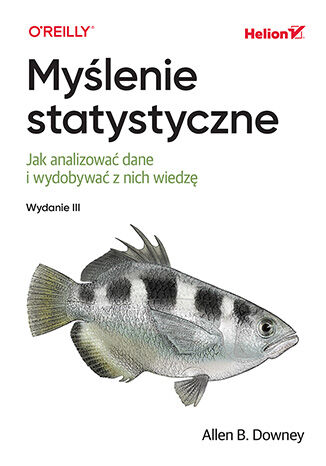
Myślenie statystyczne. Jak analizować dane i wydobywać z nich wiedzę. Wydanie III
Allen B. Downey
Dla większości z nas statystyka jest poddziedziną matematyki związaną z opracowywaniem teoretycznych podstaw prawdopodobieństwa i wnioskowania statystycznego. Analitycy danych podchodzą do tego inaczej: dla nich statystyka jest niezbędnym zestawem narzędzi i praktyk, które służą do pracy z danymi, odpowiadania na pytania i ułatwiają podejmowanie najlepszych decyzji. To trzecie wydanie przewodnika cenionego przez analityków danych, inżynierów oprogramowania i pasjonatów danologii. Dzięki niemu szybko nauczysz się korzystać z bibliotek NumPy, SciPy i Pandas. Poznasz różne metody eksploracji i wizualizacji danych, odkrywania zależności i trendów, a także prezentowania wyników. Struktura książki odpowiada rzeczywistemu procesowi pracy ze zbiorem danych: od importowania i oczyszczenia, przez analizę wieloczynnikową, aż po wizualizację uzyskanych wyników. Wszystkie rozdziały są dostępne w formie notatników Jupytera, dzięki czemu możesz jednocześnie czytać tekst, uruchamiać kod i pracować nad ćwiczeniami. W książce znajdziesz również takie zagadnienia jak: analiza rozkładów danych i wizualizacja wzorców za pomocą bibliotek Pythona korzystanie z modeli regresji analiza szeregów czasowych i analiza przeżycia tworzenie zrozumiałych wizualizacji danych rozwiązywanie typowych problemów związanych z analizą danych Jeśli chcesz się szybko nauczyć statystyki i stosowania jej w praktyce, to ta książka jest dla Ciebie! Zachary del Rosario, adiunkt w Olin College of Engineering
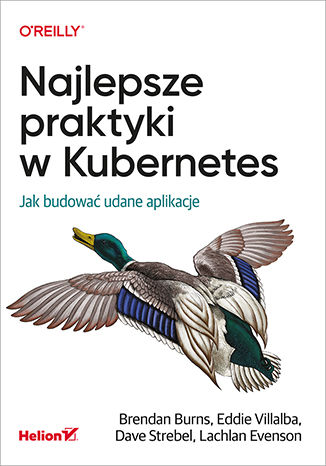
Najlepsze praktyki w Kubernetes. Jak budować udane aplikacje
Brendan Burns, Eddie Villalba, Dave Strebel, Lachlan...
Systemy informatyczne oparte na chmurze stały się atrakcyjną alternatywą dla standardowej infrastruktury. Wymusiły jednak radykalne zmiany w praktykach tworzenia, wdrażania i utrzymywania aplikacji. Dziś uwaga profesjonalistów skupiona jest na Kubernetes, który w ciągu zaledwie kilku lat stał się faktycznym standardem wdrażania natywnej chmury. Aby tworzone aplikacje funkcjonowały wydajnie, bezawaryjnie i niezawodnie, warto wdrożyć i stosować wzorce i najlepsze praktyki. Konieczne jest również przemodelowanie sposobu pracy programistów. Ta książka jest przeznaczona dla profesjonalnych użytkowników Kubernetes, którzy chcą poznać wzorce i najlepsze praktyki przy wdrażaniu rzeczywistych rozwiązań. Znalazły się tu informacje o jego działaniu w różnych skalach, topologiach i domenach, a także liczne przykłady zastosowania omawianych technologii. Sporo miejsca poświęcono zagadnieniom projektowania aplikacji, konfiguracji i działania usług Kubernetes, a także ciągłej integracji i testowania aplikacji. Ważnym zagadnieniem są takie aspekty zarządzania klastrem jak przydzielanie zasobów, zapewnienie bezpieczeństwa czy autoryzacja i dostęp do klastra. Prezentowane treści zilustrowano fragmentami przejrzystego kodu, co dodatkowo zwiększa przydatność tej książki w pracy inżyniera. Najciekawsze zagadnienia: konfiguracja i projektowanie aplikacji w Kubernetes wzorce monitorowania i zarządzanie uaktualnieniami aplikacji wdrażanie i wycofywanie aplikacji Kubernetes polityka sieciowa i współpraca Kubernetes z architekturą Service Mesh platformy wysokiego poziomu na bazie Kubernetes Kubernetes i uczenie maszynowe Najlepsze praktyki w Kubernetes: poradzisz sobie z każdym wyzwaniem!

Nanomateriały węglowe w technologii elektroniki drukowanej
Marcin Słoma
W opracowaniu przedstawiono najważniejsze osiągnięcia w dziedzinie szeroko pojętej nanotechnologii w elektronice z zastosowaniem nanomateriałów węglowych, poczynając od opisu procesów ich syntezy, przez narzędzia badawcze stosowane do oceny ich właściwości, a kończąc na praktycznych i potencjalnych zastosowaniach w elektronice. Autor skupił się na przedstawieniu światowych osiągnięć w dziedzinie badań i zastosowania nanomateriałów węglowych w technice drukowanej. W książce zawarto krytyczną analizę aspektu zastosowania nanomateriałów węglowych, których niespotykane wcześniej właściwości elektroniczne, mechaniczne, termiczne, optyczne, chemiczne i biologiczne sugerowały niemal nieograniczone możliwości aplikacyjne, co rozbudzało marzenia o zastosowaniach mogących zrewolucjonizować nasz świat technologii i nauki. Próby wykorzystania tych wyjątkowych możliwości wymagają jednak całkiem nowych rozwiązań technicznych, technologicznych i badawczych. Książka powinna być zrozumiała dla studentów stopnia magisterskiego, posiadających wiedzę z zakresu matematyki, fizyki, chemii i inżynierii materiałowej. Może być także przydatna dla naukowców z innych obszarów badań oraz kadry dydaktycznej jako podręcznik do zajęć z zakresu nowych technologii elektronicznych.
Native Docker Clustering with Swarm. Create and manage clusters of any size
Chanwit Kaewkasi, Fabrizio Soppelsa
Docker Swarm serves as one of the crucial components of the Docker ecosystem and offers a native solution for you to orchestrate containers. It’s turning out to be one of the preferred choices for Docker clustering thanks to its recent improvements. This book covers Swarm, Swarm Mode, and SwarmKit. It gives you a guided tour on how Swarm works and how to work with Swarm. It describes how to set up local test installations and then moves to huge distributed infrastructures. You will be shown how Swarm works internally, what’s new in Swarmkit, how to automate big Swarm deployments, and how to configure and operate a Swarm cluster on the public and private cloud. This book will teach you how to meet the challenge of deploying massive production-ready applications and a huge number of containers on Swarm. You'll also cover advanced topics that include volumes, scheduling, a Libnetwork deep dive, security, and platform scalability.
Brian Sacash, Bhargav Srinivasa-Desikan, Reddy Anil Kumar
Modern text analysis is now very accessible using Python and open source tools, so discover how you can now perform modern text analysis in this era of textual data.This book shows you how to use natural language processing, and computational linguistics algorithms, to make inferences and gain insights about data you have. These algorithms are based on statistical machine learning and artificial intelligence techniques. The tools to work with these algorithms are available to you right now - with Python, and tools like Gensim and spaCy.You'll start by learning about data cleaning, and then how to perform computational linguistics from first concepts. You're then ready to explore the more sophisticated areas of statistical NLP and deep learning using Python, with realistic language and text samples. You'll learn to tag, parse, and model text using the best tools. You'll gain hands-on knowledge of the best frameworks to use, and you'll know when to choose a tool like Gensim for topic models, and when to work with Keras for deep learning.This book balances theory and practical hands-on examples, so you can learn about and conduct your own natural language processing projects and computational linguistics. You'll discover the rich ecosystem of Python tools you have available to conduct NLP - and enter the interesting world of modern text analysis.
Mercury Learning and Information, Oswald Campesato
This book introduces developers to basic concepts in NLP and machine learning, providing numerous code samples to support the topics covered. The journey begins with introductory material on NumPy and Pandas, essential for data manipulation. Following this, chapters delve into NLP concepts, algorithms, and toolkits, providing a solid foundation in natural language processing.As you progress, the book covers machine learning fundamentals and classifiers, demonstrating how these techniques are applied in NLP. Practical examples using TF2 and Keras illustrate how to implement various NLP tasks. Advanced topics include the Transformer architecture, BERT-based models, and the GPT family of models, showcasing the latest advancements in the field.The final chapters and appendices offer a comprehensive overview of related topics, including data and statistics, Python3, regular expressions, and data visualization with Matplotlib and Seaborn. Companion files with source code and figures ensure a hands-on learning experience. This book equips you with the knowledge and tools needed to excel in NLP and machine learning.
Mercury Learning and Information, Oswald Campesato
This book is for developers seeking an overview of basic concepts in Natural Language Processing (NLP). It caters to those with varied technical backgrounds, offering numerous code samples and listings to illustrate the wide range of topics covered. The journey begins with managing data relevant to NLP, followed by two chapters on fundamental NLP concepts. This foundation is reinforced with Python code samples that bring these concepts to life.The book then delves into practical NLP applications, such as sentiment analysis, recommender systems, COVID-19 analysis, spam detection, and chatbots. These examples provide real-world context and demonstrate how NLP techniques can be applied to solve common problems. The final chapter introduces advanced topics, including the Transformer architecture, BERT-based models, and the GPT family, highlighting the latest state-of-the-art developments in the field.Appendices offer additional resources, including Python code samples on regular expressions and probability/statistical concepts, ensuring a well-rounded understanding. Companion files with source code and figures enhance the learning experience, making this book a comprehensive guide for mastering NLP techniques and applications.
Natural Language Processing: Python and NLTK. Click here to enter text
Jacob Perkins, Nitin Hardeniya, Deepti Chopra, Iti...
Natural Language Processing is a field of computational linguistics and artificial intelligence that deals with human-computer interaction. It provides a seamless interaction between computers and human beings and gives computers the ability to understand human speech with the help of machine learning. The number of human-computer interaction instances are increasing so it’s becoming imperative that computers comprehend all major natural languages. The first NLTK Essentials module is an introduction on how to build systems around NLP, with a focus on how to create a customized tokenizer and parser from scratch. You will learn essential concepts of NLP, be given practical insight into open source tool and libraries available in Python, shown how to analyze social media sites, and be given tools to deal with large scale text. This module also provides a workaround using some of the amazing capabilities of Python libraries such as NLTK, scikit-learn, pandas, and NumPy.The second Python 3 Text Processing with NLTK 3 Cookbook module teaches you the essential techniques of text and language processing with simple, straightforward examples. This includes organizing text corpora, creating your own custom corpus, text classification with a focus on sentiment analysis, and distributed text processing methods. The third Mastering Natural Language Processing with Python module will help you become an expert and assist you in creating your own NLP projects using NLTK. You will be guided through model development with machine learning tools, shown how to create training data, and given insight into the best practices for designing and building NLP-based applications using Python.This Learning Path combines some of the best that Packt has to offer in one complete, curated package and is designed to help you quickly learn text processing with Python and NLTK. It includes content from the following Packt products:? NTLK essentials by Nitin Hardeniya? Python 3 Text Processing with NLTK 3 Cookbook by Jacob Perkins? Mastering Natural Language Processing with Python by Deepti Chopra, Nisheeth Joshi, and Iti Mathur
Mercury Learning and Information, Oswald Campesato
This book is for developers seeking an overview of basic concepts in Natural Language Processing (NLP). It caters to a technical audience, offering numerous code samples and listings to illustrate the wide range of topics covered. The journey begins with managing data relevant to NLP, followed by two chapters on fundamental NLP concepts. This foundation is reinforced with Python code samples that bring these concepts to life.The book then delves into practical NLP applications, such as sentiment analysis, recommender systems, COVID-19 analysis, spam detection, and chatbots. These examples provide real-world context and demonstrate how NLP techniques can be applied to solve common problems. The final chapter introduces advanced topics, including the Transformer architecture, BERT-based models, and the GPT family, highlighting the latest state-of-the-art developments in the field.Appendices offer additional resources, including Python code samples on regular expressions and probability/statistical concepts, ensuring a well-rounded understanding. Companion files with source code and figures enhance the learning experience, making this book a comprehensive guide for mastering NLP techniques and applications.
Mona M, Premkumar Rangarajan
Natural language processing (NLP) uses machine learning to extract information from unstructured data. This book will help you to move quickly from business questions to high-performance models in production.To start with, you'll understand the importance of NLP in today’s business applications and learn the features of Amazon Comprehend and Amazon Textract to build NLP models using Python and Jupyter Notebooks. The book then shows you how to integrate AI in applications for accelerating business outcomes with just a few lines of code. Throughout the book, you'll cover use cases such as smart text search, setting up compliance and controls when processing confidential documents, real-time text analytics, and much more to understand various NLP scenarios. You'll deploy and monitor scalable NLP models in production for real-time and batch requirements. As you advance, you'll explore strategies for including humans in the loop for different purposes in a document processing workflow. Moreover, you'll learn best practices for auto-scaling your NLP inference for enterprise traffic.Whether you're new to ML or an experienced practitioner, by the end of this NLP book, you'll have the confidence to use AWS AI services to build powerful NLP applications.