
Informatyka
Richard Seroter
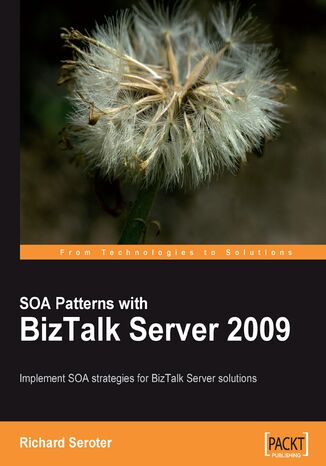
SOA is about architecture, not products and SOA enables you to create better business processes faster than ever. While BizTalk Server 2009 is a powerful tool, by itself it cannot deliver long-lasting, agile solutions unless we actively apply tried and tested service-oriented principles.The current BizTalk Server books are all for the 2006 version and none of them specifically looks at how to map service-oriented principles and patterns to the BizTalk product. That's where this book fits in. In this book, we specifically investigate how to design and build service-oriented solutions using BizTalk Server 2009 as the host platform.This book extends your existing BizTalk knowledge to apply service-oriented thinking to classic BizTalk scenarios. We look at how to build the most reusable, flexible, and loosely-coupled solutions possible in the BizTalk environment. Along the way, we dive deeply into BizTalk Server's integration with Windows Communication Foundation, and see how to take advantage of the latest updates to the Microsoft platform. Chock full of dozens of demonstrations, this book walks through design considerations, development options, and strategies for maintaining production solutions.
Tom Schrijvers
With software systems reaching new levels of complexity and programmers aiming for the highest productivity levels, software developers and language designers are turning toward functional programming because of its powerful and mature abstraction mechanisms. This book will help you tap into this approach with Haskell, the programming language that has been leading the way in pure functional programming for over three decades.The book begins by helping you get to grips with basic functions and algebraic datatypes, and gradually adds abstraction mechanisms and other powerful language features. Next, you’ll explore recursion, formulate higher-order functions as reusable templates, and get the job done with laziness. As you advance, you’ll learn how Haskell reconciliates its purity with the practical need for side effects and comes out stronger with a rich hierarchy of abstractions, such as functors, applicative functors, and monads. Finally, you’ll understand how all these elements are combined in the design and implementation of custom domain-specific languages for tackling practical problems such as parsing, as well as the revolutionary functional technique of property-based testing.By the end of this book, you’ll have mastered the key concepts of functional programming and be able to develop idiomatic Haskell solutions.
Amanda Belton
Become a professional social networking expert and give your organization a cost-effective advantage in the hiring market.Social networks have opened up whole new channels of communication between prospective employees and employers. They provide perfect opportunities to build a strong relationship with potential employees that ensures investment in recruitment is targeted towards a successful, cost effective hire. Social networks also allow an organization to build a strong employer brand that reaches the digital natives of the world, enabling the recruiter to achieve a competitive advantage.

Socjotechnika. Sztuka zdobywania władzy nad umysłami. Wydanie II
Christopher Hadnagy
Nowa książka Chrisa Hadnagy'ego, Socjotechnika. Sztuka zdobywania władzy nad umysłami jest doskonałą lekturą dla każdego, kto jest choć trochę zainteresowany kwestią inżynierii społecznej. Opisane w niej działania, od zdobywania informacji po wykonanie planu, umożliwiają infiltrację dowolnego celu. Kevin Mitnick, autor, prelegent i konsultant Wykorzystaj najlepsze techniki hackerskie, aby lepiej bronić się przed atakami. W sieci zabezpieczeń, które stworzyliśmy dla ochrony naszych danych, najsłabszym elementem jest zawsze czynnik ludzki. Hackerzy, zarówno etyczni, jak i nie, korzystają z wachlarza sztuczek opierających na "hackowaniu osobistym" i pozwalających przekonać innych do ujawnienia haseł, przekazania wrażliwych plików, przelania znacznych sum pieniędzy i świadomego podjęcia działań, które zdecydowanie nie są w najlepszym interesie osób, które wykonują te czynności. Książka Socjotechnika. Sztuka zdobywania władzy nad umysłami opisuje te sztuczki, aby umożliwić specjalistom zajmującym się bezpieczeństwem danych wykorzystanie tych umiejętności w celu odkrycia i wyeliminowania słabości zabezpieczeń. Niniejsza pozycja zarówno przedstawia techniki takie, jak modelowanie komunikacji, mentalność plemienna, obserwacja bądź manipulacja, jak i prezentuje wskazówki umożliwiające rozpoznanie, zwalczanie i zapobieganie atakom wykorzystującym inżynierię społeczną. Drugie, rozszerzone wydanie prezentuje różne techniki inżynierii społecznej, od klasycznych po najnowocześniejsze, przedstawiając je w kontekście zdarzeń znanych z pierwszych stron gazet, jak z własnych doświadczeń autora. Szczegółowe omówienie technik, takich jak wzbudzanie emocji, tworzenie pretekstu, biały wywiad, tailgating bądź phishing pozwala zrozumieć, jak łatwo jest skłonić ludzi do podjęcia szkodliwych decyzji. "W późnych latach 70. zacząłem korzystać z inżynierii społecznej, aby jeździć autobusem za darmo jako nastolatek, przechwytywać połączenia NSA w liceum i łamać dowolne zabezpieczenia w wieku studenckim. Wszystko to robiłem wyłącznie z ciekawości, chęci sprawdzenia się i żądzy przygód. Dziś, po kilku dekadach, wciąż twierdze, że inżynieria społeczna jest najważniejszą metodą każdego testu penetracji. Nie tylko ja zresztą. Agenci rządowi, hackerzy kryminalni i hacktywiści korzystają z takiej taktyki, aby kraść pieniędze, zdobywać dane a czasami nawet wpływać na wyniki wyborów w państwie." Kevin Mitnick, autor, prelegent i konsultant Posłuchaj audiobooka:
Tyson Cadenhead
Socket.IO is a JavaScript library that provides you with the ability to implement real-time analytics, binary streaming, instant messaging, and document collaboration. It has two parts: a client-side library that runs in the browser, and a server-side library for node.js. Socket.IO is event-driven and primarily uses the WebSocket protocol that allows us to emit data bi-directionally from the server and the client. Socket.IO This book is a complete resource, covering topics from webSocket security to scaling the server-side of a Socket.IO application and everything in between.This book will provide real-world examples of how secure bi-directional, full-duplex connections that can be created using Socket.IO for different environments. It will also explain how the connection vulnerabilities can be resolved for large numbers of users and huge amounts of data/messages.By the end of the book, you will be a competent Socket.IO developer. With the help of the examples and real-world solutions,you will learn to create fast, scalable, and dynamic real-time apps by creating efficient messaging systems between the server side and the client side using Socket.IO.
Joseph Ingeno
The Software Architect’s Handbook is a comprehensive guide to help developers, architects, and senior programmers advance their career in the software architecture domain. This book takes you through all the important concepts, right from design principles to different considerations at various stages of your career in software architecture. The book begins by covering the fundamentals, benefits, and purpose of software architecture. You will discover how software architecture relates to an organization, followed by identifying its significant quality attributes. Once you have covered the basics, you will explore design patterns, best practices, and paradigms for efficient software development.The book discusses which factors you need to consider for performance and security enhancements. You will learn to write documentation for your architectures and make appropriate decisions when considering DevOps. In addition to this, you will explore how to design legacy applications before understanding how to create software architectures that evolve as the market, business requirements, frameworks, tools, and best practices change over time.By the end of this book, you will not only have studied software architecture concepts but also built the soft skills necessary to grow in this field.
Software Architecture for Busy Developers. Talk and act like a software architect in one weekend
Stéphane Eyskens
Are you a seasoned developer who likes to add value to a project beyond just writing code? Have you realized that good development practices are not enough to make a project successful, and you now want to embrace the bigger picture in the IT landscape? If so, you're ready to become a software architect; someone who can deal with any IT stakeholder as well as add value to the numerous dimensions of software development.The sheer volume of content on software architecture can be overwhelming, however. Software Architecture for Busy Developers is here to help. Written by Stéphane Eyskens, author of The Azure Cloud Native Mapbook, this book guides you through your software architecture journey in a pragmatic way using real-world scenarios. By drawing on over 20 years of consulting experience, Stéphane will help you understand the role of a software architect, without the fluff or unnecessarily complex theory.You'll begin by understanding what non-functional requirements mean and how they concretely impact target architecture. The book then covers different frameworks used across the entire enterprise landscape with the help of use cases and examples. Finally, you'll discover ways in which the cloud is becoming a game changer in the world of software architecture.By the end of this book, you'll have gained a holistic understanding of the architectural landscape, as well as more specific software architecture skills. You'll also be ready to pursue your software architecture journey on your own - and in just one weekend!
Mihaela Roxana Ghidersa
Large-scale web applications require you to write code efficiently following business and architectural considerations. They require web developers to understand the impact of their work on the system and how they can evolve the product.With this handbook, every developer will find something to take away. This book will help web developers looking to change projects or work on a new project in understanding the context of the application, along with how some design decisions or patterns fit better in their application’s architecture. It acts as a guide, taking you through different levels of professional growth with a focus on best practices, coding guidelines, business considerations, and soft skills that will help you gain the knowledge to craft a career in web development. Finally, you’ll work with examples and ways of applying the discussed concepts in practical situations.By the end of this book, you’ll have gained valuable insights into what it means to be a web architect, as well as the impact architecture has on a web application.
John Gilbert, Memi Lavi
Organizations undergoing digital transformation rely on IT professionals to design systems to keep up with the rate of change while maintaining stability. With this edition, enriched with more real-world examples, you’ll be perfectly equipped to architect the future for unparalleled innovation.This book guides through the architectural patterns that power enterprise-grade software systems while exploring key architectural elements (such as events-driven microservices, and micro frontends) and learning how to implement anti-fragile systems.First, you'll divide up a system and define boundaries so that your teams can work autonomously and accelerate innovation. You'll cover the low-level event and data patterns that support the entire architecture while getting up and running with the different autonomous service design patterns.This edition is tailored with several new topics on security, observability, and multi-regional deployment. It focuses on best practices for security, reliability, testability, observability, and performance. You'll be exploring the methodologies of continuous experimentation, deployment, and delivery before delving into some final thoughts on how to start making progress.By the end of this book, you'll be able to architect your own event-driven, serverless systems that are ready to adapt and change.
Gabriel Baptista, Francesco Abbruzzese
Software Architecture with C# 12 and .NET 8 puts high-level design theory to work in a .NET context, teaching you the key skills, technologies, and best practices required to become an effective .NET software architect.This fourth edition puts emphasis on a case study that will bring your skills to life. You’ll learn how to choose between different architectures and technologies at each level of the stack. You’ll take an even closer look at Blazor and explore OpenTelemetry for observability, as well as a more practical dive into preparing .NET microservices for Kubernetes integration.Divided into three parts, this book starts with the fundamentals of software architecture, covering C# best practices, software domains, design patterns, DevOps principles for CI/CD, and more. The second part focuses on the technologies, from choosing data storage in the cloud to implementing frontend microservices and working with Serverless. You’ll learn about the main communication technologies used in microservices, such as REST API, gRPC, Azure Service Bus, and RabbitMQ. The final part takes you through a real-world case study where you’ll create software architecture for a travel agency.By the end of this book, you will be able to transform user requirements into technical needs and deliver highly scalable enterprise software architectures.
Jason (Tsz Shun) Chow
Software Architecture with Kotlin explores the various styles of software architecture with a focus on using the Kotlin programming language. The author draws on their 20+ years of industry experience in developing large-scale enterprise distributed systems to help you grasp the principles, practices, and patterns that shape the architectural landscape of modern software systems.The book establishes a strong foundation in software architecture, explaining key concepts such as architectural qualities and principles, before teaching you how architectural decisions impact the quality of a system, such as scalability, reliability, and extendability. The chapters address modern architecture topics such as microservices, serverless, and event-driven architectures, providing insights into the challenges and trade-offs involved in adopting these architectural styles. You’ll also discover practical tools that’ll help you make informed decisions and mitigate risks. All architectural patterns in this book are demonstrated using Kotlin.By the end of this book, you’ll have gained practical expertise by using real-world examples, along with a solid understanding of Kotlin, to become a more proficient and impactful software architect.
Anand Balachandran Pillai
This book starts by explaining how Python fits into an application's architecture. As you move along, you will get to grips with architecturally significant demands and how to determine them. Later, you’ll gain a complete understanding of the different architectural quality requirements for building a product that satisfies business needs, such as maintainability/reusability, testability, scalability, performance, usability, and security.You will also use various techniques such as incorporating DevOps, continuous integration, and more to make your application robust. You will discover when and when not to use object orientation in your applications, and design scalable applications.The focus is on building the business logic based on the business process documentation, and understanding which frameworks to use and when to use them. The book also covers some important patterns that should be taken into account while solving design problems, as well as those in relatively new domains such as the Cloud.By the end of this book, you will have understood the ins and outs of Python so that you can make critical design decisions that not just live up to but also surpassyour clients’ expectations.
René Enríquez, Alberto Salazar
Spring 5 and its ecosystem can be used to build robust architectures effectively. Software architecture is the underlying piece that helps us accomplish our business goals whilst supporting the features that a product demands. This book explains in detail how to choose the right architecture and apply best practices during your software development cycle to avoid technical debt and support every business requirement. Choosing the right architecture model to support your business requirements is one of the key decisions you need to take when a new product is being created from scratch or is being refactored to support new business demands. This book gives you insights into the most common architectural models and guides you when and where they can be used. During this journey, you’ll see cutting-edge technologies surrounding the Spring products, and understand how to use agile techniques such as DevOps and continuous delivery to take your software to production effectively. By the end of this book, you’ll not only know the ins and outs of Spring, but also be able to make critical design decisions that surpass your clients’ expectations.
Wanderson Xesquevixos
Keep up with the fast-paced tech landscape with Software Architecture with Spring, your practical guide to making strategic architectural decisions that align seamlessly with your business objectives.Drawing from Wanderson's decades of experience, you'll journey through the complete software development lifecycle—from initial requirements gathering, through development and testing, to production deployment. You'll get hands-on with the evolution of an auction system, exploring its transformation through multiple architectural styles. You’ll discover how you can effectively transform a monolithic system into microservices using proven patterns and practices.As you progress, you’ll master advanced architectural paradigms such as Event-Driven Architecture, Filter-and-Pipeline Architecture, and Serverless Architecture.
Software Craftsman. Profesjonalizm, czysty kod i techniczna perfekcja
Sandro Mancuso
Coraz więcej mówi się o dobrych praktykach programistycznych, a mimo to wciąż zdarzają się przypadki wydania nieudanego produktu. Istnieje wiele przyczyn tego stanu rzeczy, np. postrzeganie procesu tworzenia oprogramowania jako linii produkcyjnej, brak właściwego zarządzania projektami, a także brak wypracowanych metod rekrutacji specjalistów i kierowania zespołem. Rozwój metodyk zwinnego programowania poprawił sytuację, lecz problem niskiej jakości samych projektów nie zniknął. Książka ta proponuje czysto rzemieślnicze podejście do pracy programisty. Idea ta, znana jako software craftsmanship, zakłada kompletną zmianę sposobu myślenia o programowaniu. Priorytetami stają się tu profesjonalizm, techniczna perfekcja i zadowolenie klienta, a osiąga się to, stosując pewne praktyki programistyczne, które zaczerpnięto m.in. z metodyk programowania ekstremalnego, zwinnego i odchudzonego. Autor, który jest współzałożycielem największej organizacji deweloperów-rzemieślników, dzieli się swoją wiedzą i doświadczeniem poprzez inspirujące przykłady i praktyczne rady. Okazuje się, że dzięki tej postawie zespół może osiągnąć najwyższy poziom technicznej doskonałości tworzonych projektów. Jest to książka o peofesjonalizmie programowania. Nie tylko o profesjonalizmie programisty, ale również o całej organizacji tworzenia oprogramowania Jest to książka o mistrzostwie w programowaniu. Na jej stronach autor przedstawia plan, srategię, podejścia i reguły, które mogą pomóc każdemu programiście, każdemu zespołowi programistów i każdej organizacji wytwarzającej oprogramowanie w wyrwaniu się z grzęzawiska mierności i we wkroczeniu na ścieżkę profesjonalizmu, jak również w zapewnieniu większej wydajności oraz poczucia dumy z tego, co się robi. / ze wstępu, Robert C. Martin Z książki dowiesz się: w jaki sposób podejście rzemieślnicze zwiększa jakość tworzonego oprogramowania i obsługi klientów, kiedy i jak mówić klientowi nie oraz jak proponować rozwiązania zastępcze, dlaczego dobrym deweloperom zdarza się pisać zły kod i jak można temu zapobiegać, jak być pragmatykiem — a nie dogmatykiem — w kwestii stosowania praktyk i narzędzi, w jaki sposób zatrudniać deweloperów-rzemieślników, jak nimi kierować, jak zaszczepić w zespole prawdziwy kult uczenia się, jak wprowadzać zmiany techniczne. Programuj profesjonalnie — liczą się pragmatyzm, perfekcja i cel! Sandro Mancuso programuje od dziecka. Pracował w wielu różnych firmach, również w korporacjach międzynarodowych i bankach inwestycyjnych. Jest zwolennikiem idei programowania mistrzowskiego i ekstremalnego. W październiku 2013 roku został współzałożycielem firmy konsultingowej o nazwie Codurance, w której za podstawę działania przyjęto zasady i wartości software craftsmanship. Mancuso jako cel zawodowy przyjął sobie podnoszenie jakości branży informatycznej przez pomaganie deweloperom w doskonaleniu rzemiosła programistycznego. Często bierze udział w konferencjach informatycznych w różnych miejscach świata.
Mark Walker
Software Development on the SAP HANA Platform is a general tutorial guide to SAP HANA.This book is written for beginners to the SAP HANA platform. No knowledge of SAP HANA is necessary to start using this book.