
Informatyka
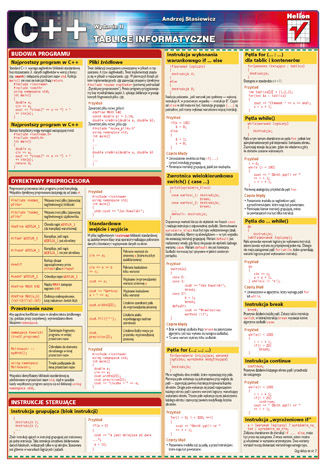
Tablice informatyczne. C++. Wydanie II
Andrzej Stasiewicz
Koniec z wertowaniem książek i dokumentacji w poszukiwaniu składni poleceń, typów danych czy struktur języka. W tablicach informatycznych znajdziesz wszystkie podstawowe informacje, których potrzebujesz podczas codziennej pracy, podane w sposób zwięzły i treściwy. Składnia poleceń, struktura programu, funkcje i metody, obiekty, typy danych -- jest tu wszystko, nad czym mógłbyś się zastanawiać. "Tablice informatyczne. C++" zawierają zestawienie najpotrzebniejszych informacji dotyczących języka C++. Każdy programista doceni je, gdy podczas pracy nie będzie miał czasu na wertowanie kilkunastu książek. W Tablicach uwzględniono najważniejsze propozycje nowego standardu języka C++ i przedstawiono następujące zagadnienia: Dyrektywy dla kompilatora Standardowe wejście i wyjście Standardowe typy danych i operacje na nich Instrukcje sterujące Funkcje Klasy Konwersje typów Wyjątki Wzorce funkcji i klas Wzorzec biblioteczny vector
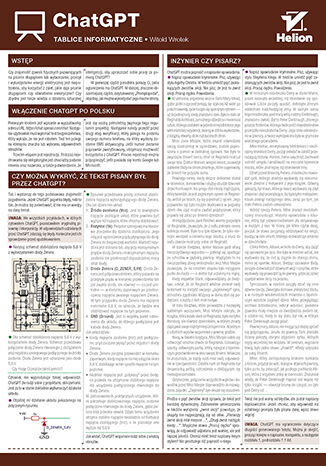
Tablice informatyczne. ChatGPT
Witold Wrotek
W porozumieniu ze sztuczną inteligencją ChatGPT, chatbot opracowany i udostępniony przez firmę OpenAI, szybko stał się obiektem zainteresowania internautów na całym świecie - i na nowo wzbudził gorące dyskusje wokół sztucznej inteligencji. Ludzie mediów prześcigają się w skrajnych wizjach, jedni podchodzą do tematu entuzjastycznie, wypatrując kolejnych, doskonalszych wersji ChatGPT i pokrewnych mu botów, inni kreślą wizje ponure niczym z literatury i filmów science fiction, oczekując momentu, w którym sztuczna inteligencja się zbuntuje i przejmie władzę nad światem... W tej dyskusji nie powinien nam umknąć praktyczny aspekt zagadnienia. Wszak ChatGPT to model językowy opracowany w konkretnym celu - ma w odpowiedni sposób reagować na dane wprowadzane do niego przez użytkownika. Innymi słowy, odpowiadać na zadawane pytania dotyczące rozmaitych dziedzin dostępnej ludziom wiedzy. Jak się z nim poprawnie komunikować? Jak formułować myśli w sposób, który pozwoli nakłonić ChatGPT do podzielenia się pożądanymi przez nas informacjami? Tego dowiesz się z niniejszej pozycji. Jeśli chcesz zaprząc ChatGPT do pracy na swoją rzecz: Poznaj mocne i słabe strony ChatGPT Dowiedz się, w czym i jak może Ci pomóc Naucz się promptować, czyli zadawać właściwe pytania w odpowiedni sposób
Paweł Philipczyk
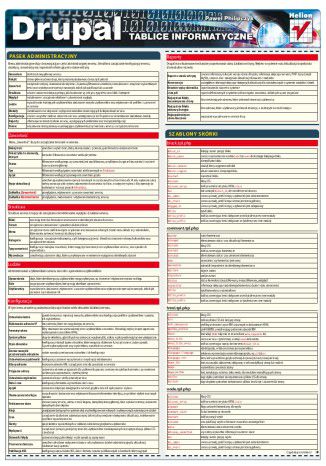
Wybierz Drupal i twórz strony swoich marzeń! Jak właściwie skonfigurować CMS, by móc z łatwością z niego korzystać? Jaki szablon wybrać i jak go zmienić w razie potrzeby? Jak połączyć witrynę z bazą danych, by współpraca przebiegała bezproblemowo? Drupal, system zarządzania treścią oparty na języku PHP, to jeden z najlepszych i najpopularniejszych CMS-ów, jakie dotychczas wymyślono. Jest dostępny za darmo, można znaleźć do niego liczne dodatki zwiększające funkcjonalność, a otwarty kod źródłowy pozwala bardziej zaawansowanym użytkownikom ściśle dopasować to środowisko do własnych potrzeb. W dodatku Drupal bez trudu współpracuje z bazami danych, a umieścić go można na serwerach Apache oraz IIS. Tablice informatyczne zawierające spis wszystkich najważniejszych funkcji, poleceń, szablonów i sposobów konfiguracji programu to coś, bez czego żaden użytkownik nie będzie czuł się pewnie. Jeśli chcesz, by tworzenie stron w Drupalu przebiegało gładko, a efekt był satysfakcjonujący, kup tablice i miej je zawsze pod ręką! Pasek administracyjny page.tpl.php Dostępne pliki szablonów Funkcje hook rdzenia Funkcje hook węzła Funkcje hook widoku Plik przykład.info modułu Przykład API bazy danych Devel Komendy Drush 5 Tablice informatyczne - ściąga na każdą okazję!
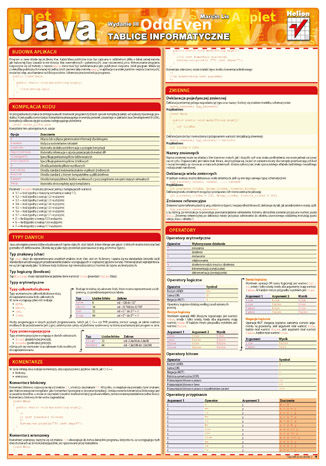
Tablice informatyczne. Java. Wydanie III
Marcin Lis
Bez Javy ani rusz! Od czego zacząć budowanie aplikacji za pomocą Javy? Jakie instrukcje języka i operatory są najważniejsze dla działania aplikacji? Jak optymalnie wykorzystać klasy i obiekty? Java przydaje się do wszystkiego. Jej legendarna elastyczność zyskuje rzesze zwolenników, z których żaden nie może obyć się bez tablic informatycznych, zawierających wszystkie najważniejsze elementy i konstrukcje tego języka. Wśród nich wymienić można chociażby szczegółowo rozpisane typy danych, operatory i instrukcje, a także informacje dotyczące budowy i funkcji klas oraz obiektów czy tworzenia i wykorzystywania interfejsów. Ponadto znajdziesz tu wskazówki dotyczące obsługi wyjątków czy współpracy z systemem plików. Podręczny i poręczny zestaw oferuje Ci możliwość szybkiego przeglądania i odnalezienia konkretnych informacji bez wielogodzinnego ślęczenia nad opasłymi tomami książek. Budowa aplikacji i kompilacja kodu Typy danych i komentarze Zmienne i operatory Instrukcje języka Tablice i interfejsy Klasy i obiekty Typy uogólnione Pakiety i wyjątki Współpraca z systemem Tablice informatyczne - ściąga na każdą okazję!
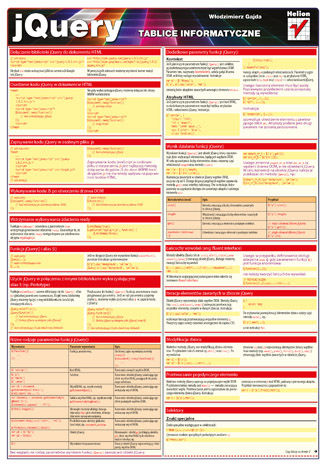
Włodzimierz Gajda
Biblioteka jQuery - niezastąpiona pomoc dla JavaScriptu! Jak dołączyć bibliotekę jQuery do dokumentu HTML? Jak zapewnić jej optymalne działanie? Jak sprawnie manipulować modelem DOM? Biblioteka jQuery, opracowana na potrzeby użytkowników JavaScriptu, okazała się strzałem w dziesiątkę, jeśli chodzi o ułatwienie korzystania z tego języka. Szybkość działania, przejrzystość tworzonego kodu i opcja wykonywania zapytań Ajax to jej główne, choć nie jedyne atuty. Każdy programista używający na co dzień języka JavaScript doceni niezależność kodu od przeglądarki internetowej, możliwość wykorzystania selektorów, atrybutów czy filtrów. Jedne z najważniejszych cech biblioteki jQuery to zapewnienie prostoty wykonywania operacji na modelu DOM oraz rozbudowywanie funkcjonalności dzięki przeróżnym wtyczkom. Informacje na temat posługiwania się tą biblioteką znajdziesz w tablicach informatycznych, stanowiących znakomite podręczne źródło wiedzy. Ich skrótowa, lecz przejrzysta kompozycja sprawia, że to, czego właśnie szukasz, będziesz mieć zawsze pod ręką! Dołączanie biblioteki jQuery do dokumentu HTML Osadzanie kodu jQuery w dokumencie HTML Zapisywanie kodu jQuery w osobnym pliku .js Wykonywanie kodu JS po utworzeniu drzewa DOM Wstrzymanie wykonywania zdarzenia ready Funkcja jQuery() i alias $() Użycie jQuery w połączeniu z innymi bibliotekami wykorzystującymi alias $ Różne rodzaje parametrów funkcji jQuery() Dodatkowe parametry funkcji jQuery() Wynik działania funkcji jQuery() Łańcuchy wywołań i selektory Iteracja elementów zawartych w zbiorze jQuery Modyfikacja zbioru i przetwarzanie pojedynczego elementu Tworzenie i modyfikacja węzłów DOM Zdarzenia i odczyt parametrów zdarzenia Wędrówka po drzewie DOM i filtrowanie zbioru elementów Ajax, wtyczki i wybrane funkcje pomocnicze Efekty i animacje Tablice informatyczne - ściąga na każdą okazję!
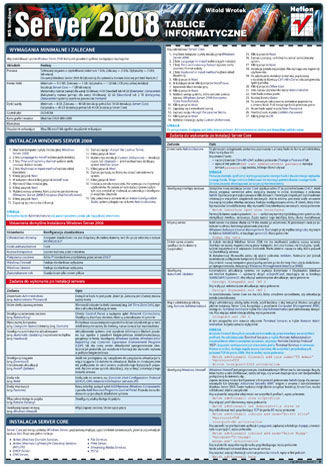
Tablice informatyczne. MS Windows Server 2008
Witold Wrotek
Jak zainstalować Windows Server 2008? W jaki sposób skonfigurować usługi sieciowe? Jak określić polityki zabezpieczeń? Administrowanie systemem Windows to ciągły wyścig z czasem. Zmieniające się wymagania użytkowników, coraz bardziej wysublimowane techniki ataków hakerskich, konieczność dostosowania konfiguracji systemu do warunków pracy - wszystko to powoduje, że administrator Windows musi błyskawicznie poznawać nowe zagadnienia. W takich warunkach ciężko znaleźć czas na spokojne przeczytanie książki poświęconej systemowi Windows. Na szczęście, dzięki tablicom informatycznym, można poradzić sobie z tym problemem. Koniec z wertowaniem setek stron, czytaniem długich opisów i schematów. Tablice informatyczne zawierają wszystkie niezbędne informacje, podane w skondensowanej i czytelnej postaci - w sam raz dla tych, którzy cenią sobie swój czas. "Tablice informatyczne. MS Windows Server 2008" to podręczny zbiór wiadomości na temat tego systemu operacyjnego, niezbędny każdemu administratorowi. Znajdziesz w nich następujące informacje: Instalacja i konfiguracja Windows Server i Server Core Konfigurowanie protokołu IPsec i firewalla Przyłączanie komputera do domeny Konfigurowanie usług sieciowych Definiowanie grup i polityki bezpieczeństwa Role i funkcje serwera Usprawnij swoją pracę i oszczędzaj czas korzystając z tablic informatycznych.
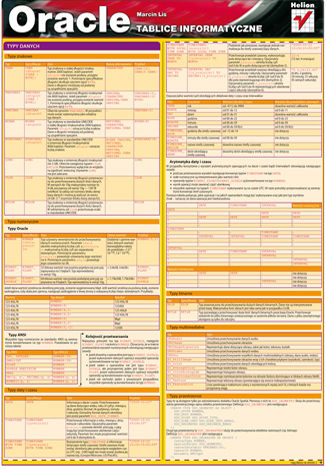
Marcin Lis
Jak tworzyć struktury danych i poruszać się wśród nich? Jak wykorzystać specyficzne możliwości operatorów? Jak tworzyć i modyfikować tabele oraz indeksy? Baza danych Oracle to dziś jedna z najlepszych i najbardziej wszechstronnych relacyjnych baz danych, umożliwiających gromadzenie ogromnych ilości informacji. To system, który doskonale sprawdza się chociażby w każdym przedsiębiorstwie. Sprawne poruszanie się wśród jego skomplikowanych możliwości i sensowne wykorzystanie wielu opcji staje się rzeczą kluczową, jeśli chcemy mieć wgląd w gromadzone dane. Trudno jednak spamiętać te wszystkie polecenia, operatory, sekwencje czynności i implikacje związane z ich stosowaniem. Tu właśnie do akcji wkraczają "Tablice informatyczne. Oracle". Tablice, które trzymasz w rękach, zawierają wszystkie potrzebne informacje, zebrane w formie tabel i skrótowych wyjaśnień, dotyczących konkretnych operacji. Bez zbędnego wodolejstwa książka ta przekazuje Ci wiedzę na temat typów danych, operatorów, struktur danych, tabel, widoków, operacji na danych i innych kwestii, związanych z eksploatacją bazy. Dowiesz się z niej, jak wprowadzać dane, nadawać przywileje użytkownikom, tworzyć sekwencje i dbać o integralność bazy. Wszystko to w ściśle skondensowanej formie, by ułatwić Ci szukanie konkretnych zagadnień i efektywne użytkowanie bazy danych. Typy danych -- znakowe, numeryczne, daty i czasu, specjalne Operatory -- logiczne, arytmetyczne, relacyjne i inne Struktury danych -- tabele, indeksy, widoki, sekwencje, synonimy Operacje na danych -- pobieranie, wprowadzanie, modyfikacja, usuwanie Użytkownicy i role -- tworzenie, modyfikacja, usuwanie Przywileje -- systemowe, dotyczące obiektów, nadawanie, odbieranie Twoja niezastąpiona pomoc w codziennej, sprawnej pracy z bazą danych!
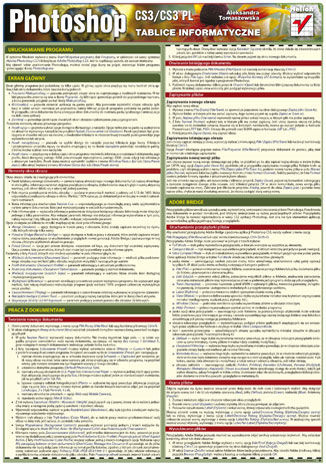
Tablice informatyczne. Photoshop CS3/CS3 PL
Aleksandra Tomaszewska
Jak katalogować, przeglądać i otwierać pliki graficzne? W jaki sposób korzystać z trybów mieszania i efektów? Jak pracować z warstwami i zaznaczeniami? Photoshop, niekwestionowany "król aplikacji graficznych" to niezbędne narzędzie pracy projektantów, grafików i fotografów. Ogromne możliwości tej aplikacji pozwalają nie tylko na tworzenie i obróbkę cyfrowych obrazów i zdjęć, ale także na katalogowanie kolekcji fotografii, przygotowywanie grafiki na potrzeby publikacji w sieci oraz do druku. Mnogość funkcji i narzędzi Photoshopa sprawia, że nawet najbardziej doświadczeni użytkownicy czasem czują się zagubieni w jego interfejsie. Każdy użytkownika doceni w takiej sytuacji podręczną "ściągę" zawierającą wszystkie niezbędne informacje, podane w skondensowanej i czytelnej postaci. "Tablice informatyczne. Photoshop CS3/CS3 PL" to podręczny zbiór wiadomości na temat tego wspaniałego programu, niezbędny każdemu jego użytkownikowi. Znajdziesz w nich następujące informacje: Interfejs użytkownika, menu i palety Zarządzanie kolekcją plików za pomocą przeglądarki Bridge Tryby mieszania i efekty Edycja i definiowanie kolorów Skalowanie i kadrowanie obrazów Warstwy i ścieżki Zaznaczanie Usprawnij swoją pracę i oszczędzaj czas korzystając z tablic informatycznych.
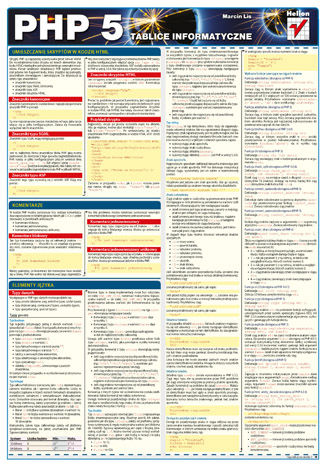
Marcin Lis
Twórz dynamiczne strony internetowe z językiem PHP! Jak umieszczać skrypty PHP w kodzie HTML? Jak efektywnie stosować kluczowe elementy PHP 5? Jak wykorzystać różne właściwości tego języka? PHP 5, jeden z najchętniej używanych dziś obiektowych języków programowania, pozwala osiągnąć spektakularne efekty pracy używającym go programistom. Tworzenie dynamicznych stron WWW i umieszczanie w kodzie HTML skryptów wykonywanych po stronie serwera to zaledwie początek jego możliwości. Tablice informatyczne, zawierające opis wszystkich najważniejszych elementów i konstrukcji tego języka, to niezbędnik każdego projektanta, który chce szybko przypomnieć sobie potrzebne mu polecenia czy instrukcje. Zmienne i stałe, typy danych, operatory, właściwości klas i obiektów - wszystko to jest na wyciągnięcie ręki. Wystarczy tylko sięgnąć po tablice. Ich logiczna i przejrzysta struktura pozwoli Ci natychmiast znaleźć konkretną informację i wykorzystać ją w Twoim projekcie. Znaczniki kanoniczne i typu SGML Znaczniki typu ASP i skryptów HTML, przykład skryptu Komentarz blokowy i jednowierszowy Komentarz jednowierszowy uniksowy Typy danych i lista słów kluczowych Operatory i ich priorytety Zmienne i stałe Instrukcje i funkcje Klasy, obiekty i wyjątki Zmienne superglobalne i przetwarzanie formularzy Zapis i odczyt plików Data i czas, sesje Odbieranie i wysyłanie plików Tablice informatyczne - ściąga na każdą okazję!
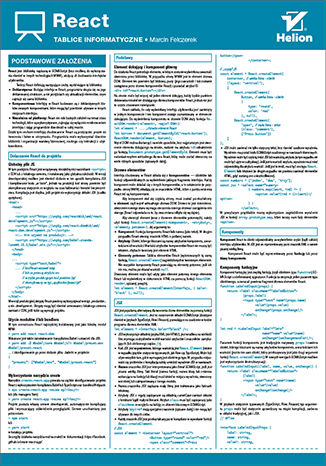
Marcin Felczerek
Zapomniałeś? Sięgnij po ściągę! React to zdobywająca coraz większą popularność biblioteka do budowania graficznych interfejsów użytkownika serwisów internetowych. Dzięki deklaratywności, modułowości i niezależności od jakiejkolwiek platformy stała się jedną z wiodących technologii w branży, a budowane za jej pomocą interfejsy są przejrzyste, elastyczne oraz łatwe do utworzenia i utrzymania. Tablice informatyczne. React to krótkie podsumowanie najważniejszych informacji na temat biblioteki. Niezależnie od tego, czy dopiero się jej uczysz, czy wykorzystujesz tę technologię już od pewnego czasu, pomogą Ci szybko znaleźć niezbędne wiadomości. Przejrzysty układ i skrótowa forma tablic sprawdzi się zarówno w codziennej pracy, jak i podczas nauki czy przygotowywania się do egzaminów. Podstawowe informacje Dołączanie Reacta do projektu Komponenty, stany i cykl życia Klucze, formularze, zdarzenia Wirtualny DOM, referencje, kontekst Architektura i biblioteki komponentów Tworzenie aplikacji mobilnych w React Native React? Z tablicami to nic strasznego!
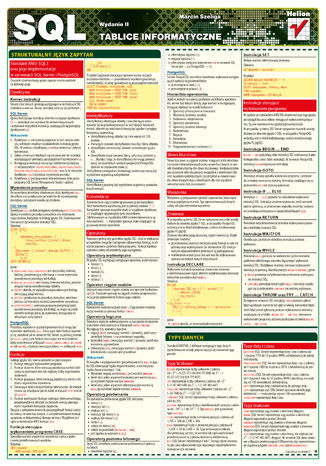
Tablice informatyczne. SQL. Wydanie II
Marcin Szeliga
Koniec z wertowaniem książek i dokumentacji w poszukiwaniu składni poleceń, typów danych czy struktur języka. W tablicach informatycznych znajdziesz wszystkie podstawowe informacje, których potrzebujesz podczas codziennej pracy, podane w sposób zwięzły i treściwy. Składnia poleceń, struktura programu, funkcje i metody, obiekty, typy danych -- jest tu wszystko, nad czym mógłbyś się zastanawiać. "Tablice informatyczne. SQL" to zbiór najważniejszych informacji o strukturalnym języku zapytań - języku wykorzystywanym praktycznie we wszystkich obecnych na rynku serwerach relacyjnych baz danych. W tablicach zebrane są wiadomości dotyczące standardu ANSI SQL99 i jego późniejszych rozszerzeń, przydatne przy odczytywaniu i manipulacji danymi przechowywanymi w bazach takich serwerów jak SQL Server, PostgreSQL, Access czy MySQL, administrowaniu tabelami i kontami użytkowników oraz optymalizowaniu zapytań. Tabele SQL to zebrane w jednym miejscu, najpotrzebniejsze informacje na temat: Typów danych Pobierania danych Łączenie tabel i wyników zapytań Grupowania wyników zapytań Podzapytań Modyfikowania danych Transakcyjnego przetwarzania danych Administrowania uprawnieniami użytkowników Tworzenia baz danych i tabel Indeksów, widoków i ograniczeń
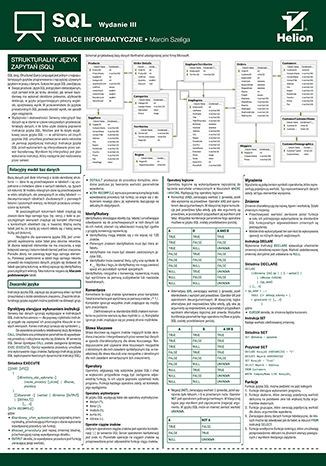
Tablice informatyczne. SQL. Wydanie III
Marcin Szeliga
SQL? Z tablicami to proste! Poznaj instrukcje języka Naucz się tworzyć zapytania Zostań mistrzem SQL-a Relacyjne bazy danych są wszędzie wokół nas, a do podstawowych umiejętności wymaganych od współczesnych programistów należy dobra znajomość języka SQL. Na świecie nie ma jednak osób, którym nie zdarza się czegoś zapomnieć. Jeśli potrzebujesz pomocy w codziennej pracy lub chcesz odświeżyć wiedzę na temat SQL-a, sięgnij po te tablice! Szybko znajdziesz w nich niezbędne informacje i sprawdzisz instrukcje, które umożliwią sprawne osiągnięcie celu. Jedno spojrzenie pozwoli Ci przypomnieć sobie sposób tworzenia zapytań i zastosowanie różnych konstrukcji języka. W publikacji: Znaczniki języka i typy danych Tworzenie prostych zapytań Konstruowanie zapytań analitycznych Zastosowanie podzapytań Modyfikowanie danych i obiektów Tablice informatyczne - cała wiedza w jednym miejscu!
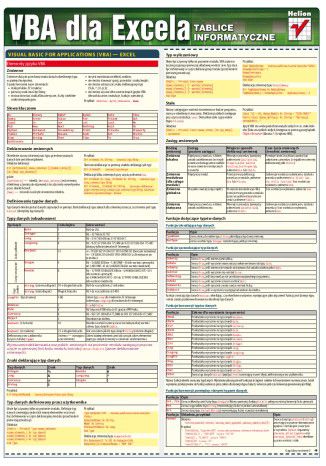
Tablice informatyczne. VBA dla Excela
Tomasz Fus
Ujarzmij Excel z językiem VBA! Do czego w Excelu warto stosować język VBA? Jakie procedury przydają się najczęściej? Jak wykonywać operacje na plikach i dyskach? "Excel jest naprawdę fantastycznym programem, a jego możliwości są nieskończone…" — myślisz zwykle do chwili, w której okazuje się, że coś, co powinno zająć Ci dwie minuty, zajmuje całe godziny, ponieważ projektanci Excela czegoś nie przewidzieli. Wtedy właśnie do akcji powinien wkroczyć język VBA. Jego zadaniem jest poszerzanie funkcjonalności programu, by dokładnie odpowiadał Twoim specyficznym potrzebom. Jeśli poświęcisz trochę czasu na poznanie tego języka, a pod ręką będziesz mieć zawsze tablice informatyczne z jego elementami, procedurami, instrukcjami, operatorami oraz opisami operacji na plikach i dyskach, udoskonalony Excel odwdzięczy Ci się stokrotnie, a Ty będziesz mógł pęcznieć z dumy. VBA dla Excela naprawdę działa — i to znakomicie! Elementy języka VBA Instrukcje, operatory Procedury Obiekty, kolekcje Operacje na plikach i dyskach Operacje na plikach tekstowych Współpraca z aplikacjami zewnętrznymi Tablice informatyczne - ściąga na każdą okazję!
Derek Wilson
SQL Server Analysis Service (SSAS) has been widely used across multiple businesses to build smart online analytical reporting solutions. It includes two different types of modeling for analysis services: Tabular and Multi Dimensional. This book covers Tabular modeling, which uses tables and relationships with a fast in-memory engine to provide state of the art compression algorithms and query performance.The book begins by quickly taking you through the concepts required to model tabular data and set up the necessary tools and services. As you learn to create tabular models using tools such as Excel and Power View, you’ll be shown various strategies to deploy your model on the server and choose a query mode (In-memory or DirectQuery) that best suits your reporting needs. You’ll also learn how to implement key and newly introduced DAX functions to create calculated columns and measures for your model data. Last but not least, you’ll be shown techniques that will help you administer and secure your BI implementation along with some widely used tips and tricks to optimize your reporting solution.By the end of this book, you’ll have gained hands-on experience with the powerful new features that have been added to Tabular models in SSAS 2016 and you’ll be able to improve user satisfaction with faster reports and analytical queries.

Tajemnice JavaScriptu. Podręcznik ninja
John Resig, Bear Bibeault
Najlepsze porady dla programistów JavaScript! JavaScript to język programowania, który wymaga od programisty szerokiej wiedzy i dokładności. Chwila nieuwagi może spowodować poważne problemy, trudne do wykrycia. Jak sobie radzić w tym wymagającym środowisku? Jak zwinnie poruszać się pomiędzy zastawionymi pułapkami? Na te i wiele innych pytań znajdziesz odpowiedź w tej książce. Dzięki niej będziesz zwinnie jak ninja przemykał pomiędzy niuansami języka JavaScript. W trakcie lektury poznasz dogłębnie najlepszą broń przeciw błędom — debuger oraz testy automatyczne. W kolejnych rozdziałach nauczysz się korzystać z potencjału funkcji oraz domknięć. W tej doskonałej książce znajdziesz również szerokie omówienie wyrażeń regularnych — tematu, który spędza programistom sen z oczu. Ponadto szczegółowo poznasz zasady programowania obiektowego w JavaScripcie, modyfikowania drzewa DOM, wsparcia dla różnych przeglądarek oraz obsługi zdarzeń. Książka ta zawiera praktyczne porady, które sprawdzą się w codziennej pracy z językiem JavaScript. Jest to obowiązkowa pozycja dla każdego programisty! Dzięki tej książce: - nauczysz się pisać testy automatyczne - wykorzystasz wyrażenia regularne w JavaScripcie - zmodyfikujesz drzewo DOM - opanujesz niuanse języka JavaScript Pisz kod JavaScript jak prawdziwy ninja!

Krzysztof Boruń
Autor opisuje przypadki konstruowanych w XX wieku sztucznych zwierząt. Pierwszy elektryczny pies Philidog został zaprezentowany na Międzynarodowej Wystawie w Paryżu w 1929 roku. Potrafił on "tropić" światło, czyli podążać za jego źródłem. To dość prosta umiejętność, jednak ostatnie opisane przez autora zwierzęta wykazują znacznie bardziej skomplikowane działania - przy ich budowie zastosowano techniki maszynowego modelowania zjawisk i procesów psychicznych.