
Informatyka

Grywalizacja. Mechanika gry na stronach WWW i w aplikacjach mobilnych
Gabe Zichermann, Christopher Cunningham
Zakoduj grywalizację w umysłach swoich klientów! Na rynku aplikacji jest już tak ciasno, że nowy produkt musi być zaskakujący, nowatorski i atrakcyjny, a ponadto gwarantować dużo przyjemności z użytkowania. Dopiero wtedy ma szansę konkurować z innymi, dostępnymi wcześniej. Warto więc zastanowić się nad tym, co sprawia, że jedna aplikacja zdobywa popularność, a druga o identycznej funkcjonalności nie może się przebić. Wszyscy autorzy pragną, aby ich dzieło należało do tej pierwszej kategorii. Jak to osiągnąć? Wszyscy wiedzą, jak gry potrafią wciągać. Często już po pierwszym uruchomieniu gracze mają problem, żeby zakończyć rozrywkę, i wracają do niej w każdej wolnej chwili. A gdyby zastosować mechanizmy stosowane w grach także w aplikacjach? Czy użytkownicy też mogliby się od nich uzależnić? Oczywiście! Proces ten nazywa się grywalizacją i jest powszechnie stosowany! W tej książce znajdziesz wiedzę niezbędną do wykorzystania tych elementów w Twojej aplikacji. Dzięki temu łatwiej osiągniesz sukces! Niezależnie od tego, czy jesteś producentem, projektantem, kierownikiem czy deweloperem gier, książka ta pozwoli Ci zrozumieć, jak tworzyć mechanikę gry zapewniającą lojalność klientów. Odkryj system motywacyjny stosowany przez projektantów gier do angażowania różnych typów klientów Poznaj podstawowe elementy mechaniki gry: punkty, odznaczenia, poziomy, wyzwania i tabele wyników Skuś klientów odpowiednią strukturą nagród, pozytywnym wzmocnieniem lub pętlami informacji zwrotnych Połącz grę z elementami społecznymi i działaniami takimi, jak zbieractwo, heroizm, chwalenie się lub dawanie prezentów Poznaj opisy systemów grywalizacji stosowanych przez Nike i Yahoo! oraz przeanalizuj rozwiązania firm Google, Facebook i Zynga Zaprojektuj i zaimplementuj grywalizację na prostej witrynie Gabe Zichermann to jeden z najlepszych ekspertów od grywalizacji. Jest przewodniczącym Gamification Summit and Workshops ( https://GSummit.com ). Christopher Cunningham to przedsiębiorca i ekspert od technologii informatycznych, który pomógł odkryć jedno z pierwszych rozwiązań dotyczących grywalizacji. Zachęć użytkowników do korzystania z Twojej aplikacji na okrągło!
Marcelo Guerra Hahn
Developing graphical user interfaces in C# can feel overwhelming with so many frameworks and tools to choose from. This book simplifies the journey by teaching GUI fundamentals through small, structured, and practical examples.You start with core GUI concepts, event driven programming, and basic interface design. Then you build simple web apps using Blazor and WebAssembly, learning about components, rendering, and data binding. Next, you explore cross platform development with .NET MAUI, working with XAML, layouts, controls, and basic app logic. Finally, you create Windows desktop applications with WinUI 3, using common controls and foundational patterns such as MVVM and data binding.Rather than focusing on complex enterprise architecture, the book builds your skills step by step. Each chapter reinforces key ideas through clear examples designed to build confidence and practical understanding.Written by Marcelo, a developer with over 18 years of experience in C#, C++, Azure, and data driven systems, this book helps you gain clarity in GUI development. By the end, you will be able to create simple, well structured web and desktop interfaces in C# and understand the core concepts behind them.
Gaston C. Hillar, Daron Yöndem
Cosmos DB is a NoSQL database service included in Azure that is continuously adding new features and has quickly become one of the most innovative services found in Azure, targeting mission-critical applications at a global scale. This book starts off by showing you the main features of Cosmos DB, their supported NoSQL data models and the foundations of its scalable and distributed architecture. You will learn to work with the latest available tools that simplify your tasks with Cosmos DB and reduce development costs, such as the Data Explorer in the Azure portal, Microsoft Azure Storage Explorer, and the Cosmos DB Emulator.Next, move on to working with databases and document collections. We will use the tools to run schema agnostic queries against collections with the Cosmos DB SQL dialect and understand their results. Then, we will create a first version of an application that uses the latest .NET Core SDK to interact with Cosmos DB. Next, we will create a second version of the application that will take advantage of important features that the combination of C# and the .NET Core SDK provides, such as POCOs and LINQ queries. By the end of the book, you will be able to build an application that works with a Cosmos DB NoSQL document database with C#, the .NET Core SDK, LINQ, and JSON.

Hacking and Security. The Comprehensive Guide to Penetration Testing and Cybersecurity
Rheinwerk Publishing, Inc, Michael Kofler, Klaus Gebeshuber,...
This book provides a comprehensive guide to cybersecurity, covering hacking techniques, tools, and defenses. It begins by introducing key concepts, distinguishing penetration testing from hacking, and explaining hacking tools and procedures. Early chapters focus on security fundamentals, such as attack vectors, intrusion detection, and forensic methods to secure IT systems.As the book progresses, readers explore topics like exploits, authentication, and the challenges of IPv6 security. It also examines the legal aspects of hacking, detailing laws on unauthorized access and negligent IT security. Readers are guided through installing and using Kali Linux for penetration testing, with practical examples of network scanning and exploiting vulnerabilities.Later sections cover a range of essential hacking tools, including Metasploit, OpenVAS, and Wireshark, with step-by-step instructions. The book also explores offline hacking methods, such as bypassing protections and resetting passwords, along with IT forensics techniques for analyzing digital traces and live data. Practical application is emphasized throughout, equipping readers with the skills needed to address real-world cybersecurity threats.
Hadoop 2.x Administration Cookbook. Administer and maintain large Apache Hadoop clusters
Aman Singh
Hadoop enables the distributed storage and processing of large datasets across clusters of computers. Learning how to administer Hadoop is crucial to exploit its unique features. With this book, you will be able to overcome common problems encountered in Hadoop administration.The book begins with laying the foundation by showing you the steps needed to set up a Hadoop cluster and its various nodes. You will get a better understanding of how to maintain Hadoop cluster, especially on the HDFS layer and using YARN and MapReduce. Further on, you will explore durability and high availability of a Hadoop cluster. You’ll get a better understanding of the schedulers in Hadoop and how to configure and use them for your tasks. You will also get hands-on experience with the backup and recovery options and the performance tuning aspects of Hadoop. Finally, you will get a better understanding of troubleshooting, diagnostics, and best practices in Hadoop administration.By the end of this book, you will have a proper understanding of working with Hadoop clusters and will also be able to secure, encrypt it, and configure auditing for your Hadoop clusters.
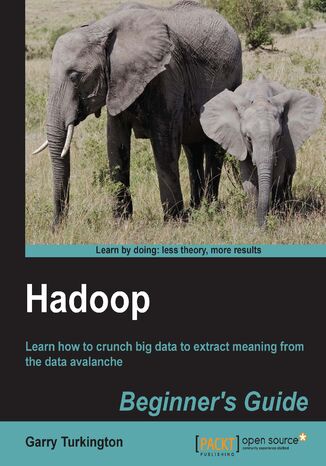
Gerald Turkington
Data is arriving faster than you can process it and the overall volumes keep growing at a rate that keeps you awake at night. Hadoop can help you tame the data beast. Effective use of Hadoop however requires a mixture of programming, design, and system administration skills.Hadoop Beginner's Guide removes the mystery from Hadoop, presenting Hadoop and related technologies with a focus on building working systems and getting the job done, using cloud services to do so when it makes sense. From basic concepts and initial setup through developing applications and keeping the system running as the data grows, the book gives the understanding needed to effectively use Hadoop to solve real world problems.Starting with the basics of installing and configuring Hadoop, the book explains how to develop applications, maintain the system, and how to use additional products to integrate with other systems.While learning different ways to develop applications to run on Hadoop the book also covers tools such as Hive, Sqoop, and Flume that show how Hadoop can be integrated with relational databases and log collection.In addition to examples on Hadoop clusters on Ubuntu uses of cloud services such as Amazon, EC2 and Elastic MapReduce are covered.
Danil Zburvisky
Big Data is the hottest trend in the IT industry at the moment. Companies are realizing the value of collecting, retaining, and analyzing as much data as possible. They are therefore rushing to implement the next generation of data platform, and Hadoop is the centerpiece of these platforms.This practical guide is filled with examples which will show you how to successfully build a data platform using Hadoop. Step-by-step instructions will explain how to install, configure, and tie all major Hadoop components together. This book will allow you to avoid common pitfalls, follow best practices, and go beyond the basics when building a Hadoop cluster.This book will walk you through the process of building a Hadoop cluster from the ground up. By using practical examples and command samples, you will be able to get a cluster up and running in no time, and you will also gain a deep understanding of how various Hadoop components work and interact with each other.You will learn how to pick the right hardware for different types of Hadoop clusters and about the differences between various Hadoop distributions. By the end of this book, you will be able to install and configure several of the most popular Hadoop ecosystem projects including Hive, Impala, and Sqoop, and you will also be given a sneak peek into the pros and cons of using Hadoop in the cloud.
Hadoop. Komplety przewodnik. Analiza i przechowywanie danych
Tom White
Analiza danych z Hadoopem — i wszystko staje się prostsze! Podstawy Hadoopa i model MapReduce Praca z Hadoopem, budowa klastra i zarządzanie platformą Dodatki zwiększające funkcjonalność Hadoopa Platforma Apache Hadoop to jedno z zaawansowanych narzędzi informatycznych. Dzięki niej można przeprowadzać różne operacje na dużych ilościach danych i znacznie skrócić czas wykonywania tych działań. Wszędzie tam, gdzie potrzebne jest szybkie sortowanie, obliczanie i archiwizowanie danych — np. w dużych międzynarodowych sklepach internetowych, serwisach społecznościowych lub wyszukiwarkach, takich jak Amazon, Facebook, Yahoo!, Apache Hadoop sprawdza się znakomicie. Jeśli potrzebne Ci narzędzie do poważnej analizy dużych zbiorów danych, nie znajdziesz lepszego rozwiązania! Tę książkę napisał wytrawny znawca i współtwórca Hadoopa. Przedstawia w niej wszystkie istotne mechanizmy działania platformy i pokazuje, jak efektywnie jej używać. Dowiesz się stąd, do czego służą model MapReduce oraz systemy HDFS i YARN. Nauczysz się budować aplikacje oraz klastry. Poznasz dwa formaty danych, a także wykorzystasz narzędzia do ich pobierania i transferu. Sprawdzisz, jak wysokopoziomowe narzędzia do przetwarzania danych współdziałają z Hadoopem. Zorientujesz się, jak działa rozproszona baza danych i jak zarządzać konfiguracją w środowisku rozproszonym. Przeczytasz również o nowinkach w Hadoopie 2 i prześledzisz studia przypadków ilustrujące rolę Hadoopa w systemach służby zdrowia i przy przetwarzaniu danych o genomie. Hadoop i model MapReduce Systemy HDFS i YARN Operacje wejścia – wyjścia w platformie Hadoop Typy, formaty, funkcje i budowa aplikacji w modelu MapReduce Zarządzanie platformą Hadoop Avro, Parquet, Flume i Sqoop — metody pracy z danymi Pig, Hive, Crunch i Spark — wysokopoziomowe narzędzia do przetwarzania danych HBase i ZooKeeper — praca w środowisku rozproszonym Integrowanie danych w firmie Cerner Nauka o danych biologicznych Cascading Hadoop — rozwiązanie na miarę wyzwań globalnych! Tom White — jeden z czołowych ekspertów w zakresie obsługi platformy Hadoop. Członek organizacji Apache Software Foundation, inżynier oprogramowania w firmie Cloudera.
Tanmay Deshpande
Big data is the current requirement. Most organizations produce huge amount of data every day. With the arrival of Hadoop-like tools, it has become easier for everyone to solve big data problems with great efficiency and at minimal cost. Grasping Machine Learning techniques will help you greatly in building predictive models and using this data to make the right decisions for your organization. Hadoop Real World Solutions Cookbook gives readers insights into learning and mastering big data via recipes. The book not only clarifies most big data tools in the market but also provides best practices for using them. The book provides recipes that are based on the latest versions of Apache Hadoop 2.X, YARN, Hive, Pig, Sqoop, Flume, Apache Spark, Mahout and many more such ecosystem tools. This real-world-solution cookbook is packed with handy recipes you can apply to your own everyday issues. Each chapter provides in-depth recipes that can be referenced easily. This book provides detailed practices on the latest technologies such as YARN and Apache Spark. Readers will be able to consider themselves as big data experts on completion of this book. This guide is an invaluable tutorial if you are planning to implement a big data warehouse for your business.

Hakowanie Androida. Kompletny przewodnik XDA Developers po rootowaniu, ROM-ach i kompozycjach
Jason Tyler, Will Verduzco
Sprawdź, co potrafi Twój telefon! System operacyjny Android ma rzeszę fanów. Zdobył ich dzięki swym niezwykłym możliwościom, imponującej elastyczności oraz ogromowi dostępnych aplikacji. System ten łączy w sobie prostotę ważną dla początkujących użytkowników z możliwościami rozwoju i ingerencji istotnymi dla tych zaawansowanych. Jeżeli masz pomysł, jak ulepszyć Twój system operacyjny, jeżeli chcesz dostosować go do swoich potrzeb, trafiłeś na właściwą książkę! Dzięki niej dowiesz się, jak skutecznie zrootować Twoje urządzenie i przejąć nad nim pełną kontrolę. To jest pierwszy i najważniejszy krok. Gdy go wreszcie uczynisz, świat pełen różnych wersji ROM-ów, modyfikacji i atrakcyjnych funkcjonalności stanie przed Tobą otworem. W trakcie lektury nauczysz się modyfikować wygląd i styl Twojego Androida, tworzyć pełną kopię bezpieczeństwa oraz wydłużać życie baterii. Znajdziesz tu również szczegółowe informacje na temat rootowania konkretnych modeli telefonów oraz tabletów. Książka ta jest idealną pozycją dla wszystkich chcących wycisnąć jeszcze więcej z telefonów z systemem Android. Dzięki tej książce: przygotujesz środowisko pracy zrootujesz swój telefon dostosujesz wygląd systemu zainstalujesz niestandardowy ROM Naucz swój telefon nowych, fantastycznych sztuczek!
Banibrata De
Effective machine learning (ML) now demands not just building models but deploying and managing them at scale. Written by a seasoned senior software engineer with high-level expertise in both MLOps and LLMOps, Hands-On MLOps on Azure equips ML practitioners, DevOps engineers, and cloud professionals with the skills to automate, monitor, and scale ML systems across environments.The book begins with MLOps fundamentals and their roots in DevOps, exploring training workflows, model versioning, and reproducibility using pipelines. You'll implement CI/CD with GitHub Actions and the Azure ML CLI, automate deployments, and manage governance and alerting for enterprise use. The author draws on their production ML experience to provide you with actionable guidance and real-world examples. A dedicated section on LLMOps covers operationalizing large language models (LLMs) such as GPT-4 using RAG patterns, evaluation techniques, and responsible AI practices. You'll also work with case studies across Azure, AWS, and GCP that offer practical context for multi-cloud operations.Whether you're building pipelines, packaging models, or deploying LLMs, this guide delivers end-to-end strategy to build robust, scalable systems. By the end of this book, you'll be ready to design, deploy, and maintain enterprise-grade ML solutions with confidence.
David Harned
As teams scale in size, project management can get very complicated. One of the best tools to deal with this kind of problem is JIRA. This book will start by organizing your project requirements and the principles of Agile development to get you started. You will then be introduced to set up a JIRA account and the JIRA ecosystem to help you implement a dashboard for your team's work and issues. You will learn how to manage any issues and bugs that might emerge in the development stage. Going ahead, the book will help you build reports and use them to plan the releases based on the study of the reports. Towards the end, you will come across working with the gathered data and create a dashboard that helps you track the project's development.
Christoffer Noring
AI is no longer just about generating text. It’s about building autonomous, goal-driven systems that can reason, act, and collaborate. Hands-On AI Agents for the Web is your practical guide to designing and deploying agentic web applications powered by Large Language Models (LLMs).Starting with the fundamentals of agentic thinking and responsible AI, this book walks you through integrating LLMs into real-world web apps. You’ll progressively enhance your systems with tool calling, Retrieval-Augmented Generation (RAG), and advanced reasoning patterns like ReAct, before moving into the design of fully autonomous agents.As you advance, you’ll explore agent architectures, planning systems, orchestration, and multi-agent collaboration, learning how modern frameworks and protocols like Model Context Protocol (MCP) enable scalable, interoperable AI systems. The book emphasizes hands-on learning, with practical examples that demonstrate how to build AI assistants, coordinate multiple agents, and apply proven design patterns, while avoiding common pitfalls.By the end, you’ll have the skills to build production-ready, intelligent web experiences powered by autonomous agents.
Bruce M. Van Horn II, Quan Nguyen
In the quest to develop robust, professional-grade software with Python and meet tight deadlines, it’s crucial to have the best tools at your disposal. In this second edition of Hands-on Application Development with PyCharm, you’ll learn tips and tricks to work at a speed and proficiency previously reserved only for elite developers.To achieve that, you’ll be introduced to PyCharm, the premiere professional integrated development environment for Python programmers among the myriad of IDEs available. Regardless of how Python is utilized, whether for general automation scripting, utility creation, web applications, data analytics, machine learning, or business applications, PyCharm offers tooling that simplifies complex tasks and streamlines common ones. In this book, you'll find everything you need to harness PyCharm's full potential and make the most of Pycharm's productivity shortcuts. The book comprehensively covers topics ranging from installation and customization to web development, database management, and data analysis pipeline development helping you become proficient in Python application development in diverse domains.By the end of this book, you’ll have discovered the remarkable capabilities of PyCharm and how you can achieve a new level of capability and productivity.

Carlos A. Lozano , Dhruv Shah, Riyaz...
Burp suite is a set of graphic tools focused towards penetration testing of web applications. Burp suite is widely used for web penetration testing by many security professionals for performing different web-level security tasks.The book starts by setting up the environment to begin an application penetration test. You will be able to configure the client and apply target whitelisting. You will also learn to setup and configure Android and IOS devices to work with Burp Suite. The book will explain how various features of Burp Suite can be used to detect various vulnerabilities as part of an application penetration test. Once detection is completed and the vulnerability is confirmed, you will be able to exploit a detected vulnerability using Burp Suite. The book will also covers advanced concepts like writing extensions and macros for Burp suite. Finally, you will discover various steps that are taken to identify the target, discover weaknesses in the authentication mechanism, and finally break the authentication implementation to gain access to the administrative console of the application.By the end of this book, you will be able to effectively perform end-to-end penetration testing with Burp Suite.
Jeffrey Ng , Subhash Shah
Remodeling your outlook on banking begins with keeping up to date with the latest and most effective approaches, such as artificial intelligence (AI). Hands-On Artificial Intelligence for Banking is a practical guide that will help you advance in your career in the banking domain. The book will demonstrate AI implementation to make your banking services smoother, more cost-efficient, and accessible to clients, focusing on both the client- and server-side uses of AI.You’ll begin by understanding the importance of artificial intelligence, while also gaining insights into the recent AI revolution in the banking industry. Next, you’ll get hands-on machine learning experience, exploring how to use time series analysis and reinforcement learning to automate client procurements and banking and finance decisions. After this, you’ll progress to learning about mechanizing capital market decisions, using automated portfolio management systems and predicting the future of investment banking. In addition to this, you’ll explore concepts such as building personal wealth advisors and mass customization of client lifetime wealth. Finally, you’ll get to grips with some real-world AI considerations in the field of banking. By the end of this book, you’ll be equipped with the skills you need to navigate the finance domain by leveraging the power of AI.