
Informatyka
Zajrzyj do kategorii Informatyka w księgarni internetowej Ebookpoint. Znajdziesz tutaj bestsellerowe książki, ebooki i kursy video z branży IT. Sięgnij po najlepszą literaturę dla specjalistów i rozwijaj doświadczenie, które już posiadasz, lub rozpocznij swoją przygodę z programowaniem, cyberbezpieczeństwem lub grafiką komputerową. Pogłębiaj swoją wiedzę tak, jak Ci wygodnie - z tradycyjną książką, wygodnym ebookiem lub nowoczesnym videokursem. Sprawdź, jakie tytuły znajdziesz w kategorii Informatyka!
Sriram Rajendran
With the growing interest in Software Defined Data Centers (SDDC), vRealize Automation offers data center users an organized service catalog and governance for administrators. This way, end users gain autonomy while the IT department stays in control, making sure security and compliance requirements are met. Learning what each component does and how they dovetail with each other will bolster your understanding of vRealize Automation.The book starts off with an introduction to the distributed architecture that has been tested and installed in large scale deployments. Implementing and configuring distributed architecture with custom certificates is unarguably a demanding task, and it will be covered next. After this, we will progress with the installation. A vRealize Automation blueprint can be prepared in multiple ways; we will focus solely on vSphere endpoint blueprint. After this, we will discuss the high availability configuration via NSX loadbalancer for vRealize Orchestrator. Finally, we end with Advanced Service Designer, which provides service architects with the ability to create advanced services and publish them as catalog items.
Rebecca Fitzhugh, Abhilash G B
Computer virtualization is a method to enable the running of multiple application workloads on a machine to achieve efficient utilization and reduce the number of physical machines in a data center. This has now become the foundation of many modern day data centers. What began as a technology to virtualize x86 architecture has now grown beyond the limits of a server’s hardware and into the realm of storage and network virtualization. VMware is currently the market leader in developing data center virtualization solutions. This book goes into the details of designing and implementing VMware solutions that form the foundation of a VMware infrastructure.The book begins by introducing you to the concepts of server virtualization followed by the architecture of VMware’s hypervisor – ESXi and then by its installation and configuration. You then learn what is required to manage a vSphere environment and configure advanced management capabilities of vCenter. Next you are taken through topics on vSphere Networking, Storage, ESXi Clustering, Resource Management and Virtual Machine Management. You will then be introduced to SSL Certificate Management and its use in a vSphere environment. Finally, you will learn about the lifecycle management of a vSphere environment by effectively monitoring, patching and upgrading vSphere components using Update Manager. By the end of the book, you will know how to use VMware’s vSphere suite of components to lay the foundation of a modern day virtual infrastructure.
Learning WebRTC. Develop interactive real-time communication applications with WebRTC
Daniel M. Ristic
If you are a web developer who wants to create well designed WebRTC applications for your users, this is the book for you. Even if you are early in your web development career, this book aims to provide a complete understanding of the WebRTC API. It is assumed that you have previous exposure to web development using HTML5 and JavaScript technologies.
Learning Windows Server Containers. Build and deploy high-quality portable apps faster
Srikanth Machiraju
Windows Server Containers are independent, isolated, manageable and portable application environments which are light weight and shippable. Decomposing your application into smaller manageable components or MicroServices helps in building scalable and distributed application environments. Windows Server Containers have a significant impact on application developers, development operations (DevOps) and infrastructure management teams. Applications can be built, shipped and deployed in a fast-paced manner on an easily manageable and updatable environment.Learning Windows Server Containers teaches you to build simple to advanced production grade container based application using Asp.Net Core, Visual Studio, Azure, Docker and PowerShell technologies. The book teaches you to build and deploy simple web applications as Windows and Hyper-V containers on Windows 10 and Windows Server 2016 on Azure. You will learn to build on top of Windows Container Base OS Images, integrate with existing images from Docker Hub, create custom images and publish to Hub. You will also learn to work with storage containers built using Volumes and SQL Server as container, create and configure custom networks, integrate with Redis Cache containers, configure continuous integration and deployment pipelines using VSTS and Git Repository. Further you can also learn to manage resources for a container, setting up monitoring and diagnostics, deploy composite container environments using Docker Compose on Windows and manage container clusters using Docker Swarm. The last chapter of the book focuses on building applications using Microsoft’s new and thinnest server platform – Nano Servers.
Sufyan bin Uzayr
The WordPress REST API is a recent innovation that has the potential to unlock several new opportunities for WordPress developers. It can help you integrate with technologies outside of WordPress, as well as offer great flexibility when developing themes and plugins for WordPress. As such, the REST API can make developers’ lives easier. The book begins by covering the basics of the REST API and how it can be used along with WordPress. Learn how the REST API interacts with WordPress, allowing you to copy posts and modify post metadata. Move on to get an understanding of taxonomies and user roles are in WordPress and how to use them with the WordPress REST API. Next, find out how to edit and process forms with AJAX and how to create custom routes and functions. You will create a fully-functional single page web app using a WordPress site and the REST API. Lastly, you will see how to deal with the REST API in future versions and will use it to interact it with third-party services. By the end of the book, you will be able to work with the WordPress REST API to build web applications.
William Smith
This book is intended for .NET developers with any level of experience and who are interested in building native applications without the hassle of becoming Objective-C or Java experts. Although it will be beneficial to have some development experience, particularly in .NET, Learning Xamarin help even a novice developer get past the headaches of setting up and customizing their new development environment so they can move on to producing high-quality native applications quickly.
Miroslav Vitula
A penetration test is one of the most important methods to secure a network or any individual machine. Having knowledge of these methods can enable a user to protect himself/herself from any kinds of attacks. Penetration tests can also be used to discover flaws or loop holes in one's security system, which if not fixed, can be exploited by an unwanted entity.This book starts off with an introduction to what penetration testing is, and how it can be performed on Android using zANTI2. Once you are aware of the basics, we move on to teach you the different types of scans that can be performed to search for targets. You will then learn how to connect to open ports and intrude into an unsecured computer. From here you will explore vulnerabilities and their usage, including ShellShock and SSL Poodle vulnerability.When connected to an open network, a user is susceptible to password and session hijacking, and a number of other cyber attacks. The book therefore ends with one of the main aspects of cyber security: the Man in the Middle attack. You will get to know everything about the MITM attack, how it works, and how one can be protected against it.
Learning Zig. A reimagined introduction to low-level programming with Zig
Alex Rios
System programming has long forced developers to choose between safety and performance, but Zig changes the game with its no hidden control flow philosophy and explicit resource management. If you've struggled with memory leaks, undefined behavior, or cryptic compiler errors, Zig offers an alternative that puts you back in control.Alex Rios, a seasoned software engineer with experience building high-throughput systems across fintech, telecom, and gaming industries, brings his unconventional system design approach and offers insight into Zig, as someone who's seen the limitations of existing languages firsthand.You’ll get to grips with Zig's safety-centric design fundamentals, which will guide you through setting up your app development environment and writing your first programs. You'll then explore Zig's distinctive features in depth, such as explicit error handling, manual memory management, and compile-time execution. The book tackles each topic with a blend of technical depth and wit, ensuring you grasp not just the how but also the why behind Zig's design decisions.By the end of this book, you'll be ready to build a complete application that interacts with the OS, third-party libraries, and C dependencies, as well as engage with Zig's growing community and contribute to its ecosystem.
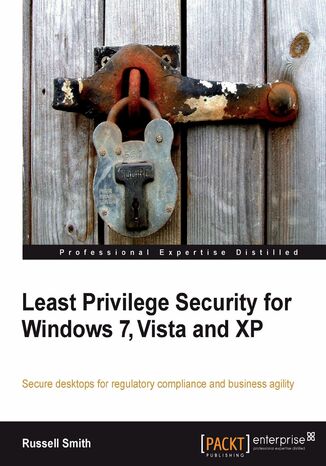
Russell Smith
Least Privilege Security is the practice of assigning users and programs the minimum permissions required to complete a given task. Implementing this principle in different versions of Microsoft Windows requires careful planning and a good understanding of Windows security. While there are benefits in implementing Least Privilege Security on the desktop, there are many technical challenges that you will face when restricting privileges.This book contains detailed step-by-step instructions for implementing Least Privilege Security on the desktop for different versions of Windows and related management technologies. It will provide you with quick solutions for common technical challenges, Microsoft best practice advice, and techniques for managing Least Privilege on the desktop along with details on the impact of Least Privilege Security.The book begins by showing you how to apply Least Privilege Security to different categories of users. You will then prepare a desktop image with Least Privilege Security enabled from the start and deploy the new image while preserving users' files and settings. You will identify problems with applications caused by Least Privilege Security using the Application Compatibility Toolkit. This book will help you configure User Account Control on multiple computers using Group Policy and support Least Privilege user accounts using reliable remote access. Then, you will modify legacy applications for Least Privilege Security, achieving the best balance between compatibility and security by using Application Compatibility shims. You will install per-machine ActiveX Controls using the ActiveX Installer Service (AxIS). The book will help you implement best practices for working with ActiveX Controls in a managed environment. Finally, you will deploy default Software Restriction Policy (SRP) or AppLocker rules to ensure only programs installed in protected locations can run and blacklist applications using SRP or AppLocker.
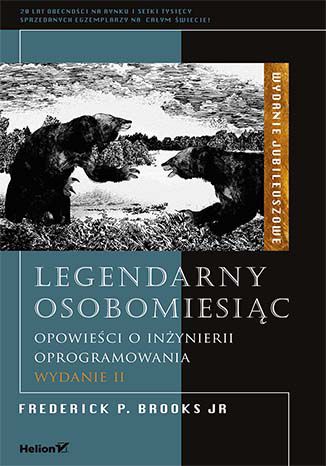
Legendarny osobomiesiąc. Opowieści o inżynierii oprogramowania. Wydanie II
Frederick P. Brooks Jr.
Rocznicowe wydanie kultowej książki o zarządzaniu projektami w IT - to już 20 lat obecności na rynku i setki tysięcy sprzedanych egzemplarzy na świecie! Zarządzanie procesem tworzenia oprogramowania bywa doświadczeniem bardzo pouczającym, a jednocześnie niezwykle frustrującym. Z jednej strony takie projekty są podobne do innych dużych przedsięwzięć, z drugiej - wymagają od kierownictwa sporo specjalistycznej wiedzy i specyficznego podejścia do zagadnień programistycznych. Oczywiście, wiedza na ten temat stale rośnie, pojawiają się też nowe koncepcje kierowania dużymi projektami. Jeśli brakuje Ci literatury, która potraktowałaby to zagadnienie kompleksowo, katalogowałaby poszczególne propozycje i opisywałaby je w przystępny i przydatny sposób - sięgnij po ten tytuł! Książka Legendarny osobomiesiąc zyskała już miano kultowej; jest niezmiennie aktualna i wciąż inspiruje programistów na całym świecie. Składa się z kilkunastu esejów, które zawierają informacje i inspiracje bezcenne dla każdego menedżera i programisty. Przy dużych projektach konieczne jest zachowanie ich spójności koncepcyjnej, co w przypadku dużych zadań stanowi warunek dość trudny do spełnienia, dlatego wiele obiecujących przedsięwzięć zakończyło się porażką. Trzeba też zdawać sobie sprawę, że złożone zadanie oznacza dla zespołu dobre i złe chwile. Autor w niezwykle interesujący i praktyczny sposób pokazuje, jak czerpać siły z chwil radości i skutecznie radzić sobie z problemami, aby zakończyć z sukcesem nawet najbardziej złożony projekt programistyczny. W tej książce znalazły się koncepcje obejmujące między innymi: podejmowanie decyzji zadania architekta skalowanie i zachowanie spójności projektu sporządzanie dokumentacji i specyfikacji zarządzanie komunikacją w wielkich projektach A także: retrospektywna analiza tych i innych koncepcji sprzed 20 lat Nie ma drugiej tak wpływowej i ponadczasowej książki dla twórców oprogramowania!
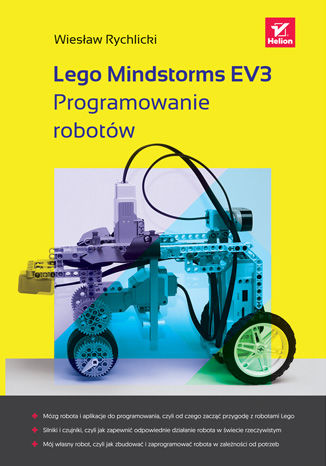
Lego Mindstorms EV3. Programowanie robotów
Wiesław Rychlicki
Mózg robota i aplikacje do programowania, czyli od czego zacząć przygodę z robotami LEGO Silniki i czujniki, czyli jak zapewnić odpowiednie działanie robota w świecie rzeczywistym Mój własny robot, czyli jak zbudować i zaprogramować robota w zależności od potrzeb Robotyka jest jedną z dziedzin szybko rozwijających się we współczesnym świecie. Roboty świetnie sprawdzają się w najróżniejszych warunkach, a umiejętność ich programowania jest coraz bardziej ceniona na rynku pracy. To wszystko prawda, ale nie można zapominać o tym, że programowanie robotów może także stanowić świetną zabawę. Zwłaszcza jeśli dotyczy to robotów LEGO MINDSTORMS! Nie trzeba być dzieckiem, by poczuć ekscytację związaną z samodzielnym zaprojektowaniem zachowań robota, który wykona wszystkie wymagane od niego czynności. A zatem — do dzieła! W tej książce znajdziesz wszystkie elementy niezbędne do rozpoczęcia pracy z LEGO MINDSTORMS. Jej autor pokaże Ci, jak działa kostka EV3 i jakie aplikacje możesz wykorzystać do programowania Twoich robotów. Poprowadzi Cię przez krainę danych liczbowych, operacji logicznych, arytmetycznych i innych, a także instrukcji sterujących. Zapozna Cię z możliwościami w zakresie tworzenia podprogramów i programowania wielowątkowego. Dzięki niemu poznasz silniki i czujniki oraz bloczki służące do ich programowania. Zobaczysz, jak można łączyć ze sobą kostki EV3, a potem przyjrzysz się trzem ulubionym robotom autora. To z pewnością zainspiruje Cię do wymyślania własnych konstrukcji LEGO i sterującego nimi oprogramowania! Mózg robota LEGO MINDSTORMS EV3 Zaczynamy programowanie w aplikacji LEGO MINDSTORMS EV3 Podstawowe operacje na danych Silniki i czujniki LEGO MINDSTORMS EV3 Programowanie wybranych konstrukcji robotów Budujemy własne roboty Pliki graficzne i dźwiękowe w zasobach aplikacji Edycja obrazów dla kostki EV3 i edycja dźwięków Programowanie muzyki na podstawie zapisu nutowego Rysowanie figur geometrycznych i konstrukcje Matematyczne podstawy sterowania pojazdem Sprawdź, jak ożywić Twoje LEGO!
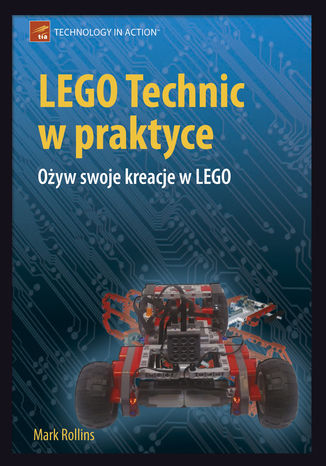
LEGO Technic w praktyce. Ożyw swoje kreacje w LEGO
Mark Rollins
Każdy wie, jak tworzyć niezwykłe konstrukcje za pomocą LEGO, ale nie każdy zdaje sobie sprawę, że można wykonać ruchome pojazdy oraz modele obejmujące wyposażenie do lądowania i klapy, które się wysuwają i chowają. Można nawet zbudować działające roboty nie korzystając przy tym z elementów Mindstorms i programowania. W tej książce Mark Rollins pokazuje, jak korzystać z komponentów LEGO i elementów Power Functions, takich jak silniki i zdalne sterowanie, aby konstruować samochody z silnikiem, pojazdy terenowe, czy też maszyny budowlane, takie jak dźwigi i wózki widłowe, a nawet samoloty. W rezultacie nauczymy się, jak tworzyć wyjątkowe, przynoszące wiele radości kreacje w LEGO. Konstrukcje LEGO Technic są podobne do Mindstorms w tym sensie, że możemy tworzyć wszelkiego rodzaju samochody i gadżety. Jednak w przeciwieństwie do Mindstorms nie musimy uczyć się programowania. Techniki Power Functions pozwalają nam na dodawanie silników, zdalnego sterowania i pojemników z bateriami do projektów LEGO, bez potrzeby programowania. I choć moglibyśmy zbudować po prostu gadżet LEGO Technic z gotowego zestawu, korzystając z tej książki nauczymy się zasad projektowania konstrukcji oraz zapoznamy się z pomysłami, które można wykorzystać we własnych projektach. Książka LEGO Technic w praktyce obejmuje: - Podstawy projektowania pojazdów silnikowych, które jeżdżą i można nimi sterować. - Wskazówki dotyczące budowy reflektorów oraz wykorzystywania zestawu Power Functions Light Kit. - Projektowanie zawieszenia stosowanego w samochodach terenowych. - Pomoc w budowie maszyn roboczych, w tym dźwigu i wózka widłowego. Czego się można nauczyć? - Umieszczania silnika w każdym pojeździe LEGO i uruchomienia go; budowy kół, które się obracają i elementów podwozia, które się wysuwa i chowa. - Budowy systemu zawieszenia i mechanizmu sterowania do właściwej kontroli nad pojazdem. - Dodawania do projektów Technic działających świateł, takich jak reflektory i światła tylne. - Projektowania pojazdów LEGO wyglądających i działających jak prawdziwe konstrukcje, w tym dźwigów i wózków widłowych. - Budowy samolotu ze wszystkimi elementami wraz z chowanym podwoziem Dla kogo jest ta książka? LEGO Technic w praktyce to idealna książka dla wszystkich entuzjastów LEGO i konstruowania, niezależnie od ich wieku i doświadczenia, którzy chcą poznać zasady tworzenia konstrukcji za pomocą LEGO Technic.

Donald E. Knuth
50 lat temu wybitny angielski matematyk John H. Conway przy użyciu dwóch niepozornych reguł skonstruował nowy, zadziwiający system liczbowy, rozszerzający zbiór liczb rzeczywistych o obiekty nieskończenie wielkie i nieskończenie małe, a także o niewyobrażalne bogactwo ich kombinacji. Zainspirowany tym odkryciem Donald E. Knuth postanowił opisać je w możliwie przystępnej formie „matematycznej powiastki”, w której dwójka byłych studentów – Alice i Bill – usiłuje przeniknąć tajemnice liczb Conwaya. Po drodze bohaterowie przeżywają radości i smutki towarzyszące twórczemu uprawianiu matematyki, a Czytelnik ma rzadką okazję zajrzeć za kulisy wielkiego matematycznego odkrycia, które wciąż skrywa przed badaczami wiele sekretów. Fascynujący popis matematycznego prestidigitatorstwa. Conway kładzie pusty kapelusz na stole standardowej teorii mnogości, wymawia dwie proste reguły-zaklęcia, po czym sięga w niemal całkowitą pustkę i wyciąga nieskończenie bogaty, misternie utkany liczbowy gobelin […]. Każda liczba rzeczywista jest w nim otoczona mrowiem liczb nowego typu, które leżą bliżej niej niż jakakolwiek inna „rzeczywista” wartość. System Conwaya jest iście „nadrzeczywisty”.

Liczby w HR. Matematyczne ramy najbardziej ludzkiej części biznesu
Anna Morawiec-Bartosik
Czy pracę działu HR da się zmierzyć? Współczesny biznes liczbami stoi. Wykresy, tabele, przetwarzanie danych, analizowanie wyników z przeszłości, prognozowanie sprzedaży, zakupów i produkcji... Większość działów w dużych przedsiębiorstwach wspiera się tym, co policzalne. Większość, ale raczej nie dział human resources. Dlaczego? Czyżby HR-owcy nie wierzyli w liczby i stawiali na intuicję? Może. A może po prostu brakuje im rzetelnych narzędzi, dzięki którym można przeanalizować dane, jakie są dostępne dla osób wyspecjalizowanych w zarządzaniu zasobami ludzkimi firmy? Do niedawna działy HR uchodziły powszechnie za najbardziej niemierzalne w przedsiębiorstwach. Ostatnio jednak ten trend się zmienia. Takie pojęcia jak data-based HR czy data-driven HR z roku na rok zyskują na popularności. Zarządzający firmami, a także sami pracownicy human resources chcą mierzyć efektywność coraz większej liczby procesów personalnych, by na podstawie uzyskanych wyników móc planować przyszłe działania. Tylko co mierzyć? Jakimi metodami to robić? Odpowiedzi na te i inne pytania związane z analityką zasobów ludzkich znajdziesz w tej książce. Ta książka pomoże Ci zbudować lub wzmocnić rolę analityki HR w Twojej firmie, pomoże także w rozwijaniu umiejętności i perspektywy analityków HR oraz przekona zarząd i biznes, że warto zainwestować czas i fundusze w rozwijanie tej części biznesu. Wskaże jasne cele analityki personalnej, przeprowadzi Cię krok po kroku przez najważniejsze aspekty liczb w HR, które będziesz mógł wykorzystać w swojej firmie. Przede wszystkim książka pomoże Ci w znalezieniu wspólnego języka z biznesem, finansami i zarządem ― a językiem tym są właśnie dane.
Jarrod Anderson
Nowoczesne organizacje muszą używać sztucznej inteligencji, aby realizować cele strategiczne i wprowadzać innowacje. W świecie napędzanym przez AI przetrwanie i rozwój wymagają inteligentnych systemów, modeli wspierających kluczowe decyzje i przełomowych aplikacji. Wizjonerskie przywództwo jednak powinno się harmonijnie łączyć z praktyką codziennego działania firmy. Ten podręcznik na nowo definiuje rolę lidera do spraw sztucznej inteligencji w środowisku, w którym używa się predykcyjnej, deterministycznej, generatywnej i agentowej AI do rozwiązywania złożonych problemów i wspierania innowacyjności. Autor przedstawia strategie realizacji transformacyjnych inicjatyw z obszaru AI, budowania skutecznych zespołów i zarządzania nimi. Dużo miejsca poświęca odpowiedzialnemu wdrażaniu AI i zachowaniu zgodności z regulacjami. Książka spełnia rolę mapy drogowej od projektowania przełomowych rozwiązań po osiąganie wymiernych rezultatów biznesowych. W książce: rozwój i realizacja strategii AI w zgodzie z regulacjami zarządzanie projektami z wykorzystaniem metodyk zwinnych przykłady zastosowania deterministycznej i probabilistycznej AI optymalizacja działania systemów autonomicznych zasady projektowania systemów AI skoncentrowanych na człowieku mechanizmy ochrony danych i prywatności modeli AI nie jest wyborem. To paradygmat przywództwa!
Lifehacker. Jak żyć i pracować z głową. Kolejne wskazówki
Adam Pash, Gina Trapani
Doba może mieć więcej niż 24 godziny! Co za czasy! Zewsząd słychać, że komputery wspomagają nas we wszelkich dziedzinach życia, na każdym kroku czekają nas ułatwienia, a my mimo wszystko pracujemy coraz więcej. Więcej? Nie należy mylić ilości z wydajnością! Jak sobie z tym poradzić? Jak zapanować nad natłokiem zadań i obowiązków? I - co najważniejsze - jak wykonać więcej (oraz lepiej) zadań w tym samym czasie? Myślisz, że to niemożliwe??? Z tą książką poprawa wydajności jest w zasięgu Twoich rąk! Druga część bestsellera Lifehacker. Jak żyć i pracować z głową zawiera niezwykle przydatne informacje na temat automatyzacji często wykonywanych czynności, dostępu do swoich danych z dowolnego urządzenia i miejsca na świecie oraz wydajnego korzystania z możliwości wyszukiwarek internetowych. Znajdziesz tu również dobre rady na temat pracy z urządzeniami mobilnymi oraz zarządzania wieloma komputerami. Jeżeli chcesz zaoszczędzić konkretną ilość czasu w każdym tygodniu, ta książka jest właśnie dla Ciebie! Dzięki tej książce zoptymalizujesz swoje działania i dowiesz się, jak: zautomatyzować najczęściej wykonywane zadania uzyskać dostęp do swoich danych z dowolnego miejsca i urządzenia wykorzystać potencjał wyszukiwarek do granic możliwości wydajniej korzystać ze swojego telefonu zaoszczędzić cenny czas Sięgnij po sprawdzone triki i sztuczki z komputerem, które ułatwią Ci życie!
Lifehacker. Jak żyć i pracować z głową. Wydanie III
Adam Pash, Gina Trapani
Doba może mieć więcej niż 24 godziny! Co za czasy! Zewsząd słychać, że komputery wspomagają nas we wszelkich dziedzinach życia, na każdym kroku czekają nas ułatwienia, a my mimo wszystko pracujemy coraz więcej. Oczywiście nie należy mylić ilości z wydajnością! Jak sobie z tym poradzić? Jak zapanować nad natłokiem zadań i obowiązków? I - co najważniejsze - jak wykonać więcej (oraz lepiej) zadań w tym samym czasie? Myślisz, że to niemożliwe??? Z tą książką jest to w zasięgu Twoich rąk! Znajdziesz w niej dziesiątki genialnych sposobów, które pozwolą Ci efektywniej wykorzystać czas spędzony przed komputerem. Ile czasu codziennie tracisz na wyszukiwanie danych, plików oraz kontaktów? Prawda, że dużo? Nie musi tak być! Poznaj najlepsze skróty klawiszowe, dobre rady w kwestii korzystania z poczty elektronicznej oraz metody na zabezpieczenie swoich danych. Sięgnij po tę książkę, a odkryjesz, że dzień może być dłuższy! Dzięki tej książce zoptymalizujesz swoje działania i dowiesz się, jak: usprawnić korzystanie z poczty elektronicznej zbierać nowe pomysły uporządkować folder z dokumentami błyskawicznie wyszukiwać informacje zablokować na zawsze strony zabierające cenny czas Sięgnij po sprawdzone triki i sztuczki z komputerem, które ułatwią Ci życie! Patron medialny:
Navin Agarwal
To develop an intranet portal for an Enterprise, Liferay is the only open-source portal development platform that has a high scale graph for the developer to extend any component. It provides high end integration with other applications. By using this book, both beginners and more experienced users will be able to create an intranet portal easily.This book will be your pocket reference to Liferay. It will explain to you the new features of Liferay, including Liferay Sync and the Recycle Bin. It will help you to integrate with other key applications such as LDAP, SSO, and Alfresco 4.x and above. You will be introduced to documents, web content, and image management. You will move onto Liferay Sync's new tool to synchronize documents and media files to the local system. You’ll discover the Market Place, the newest feature of Liferay. Liferay Social Office and its integrations are also thoroughly explained.This book is packed with practical examples that will help you to develop an intranet portal quickly and easily.
Samir Bhatt
Liferay portal is the leading horizontal portal product available in the market. It was named lLeader in Gartner's Magic Quadrant for Horizontal Portals. Because of the flexibility offered by Liferay Portal for customizations, it is becoming a preferred best choice for portal implementations. Many influential sites have been implemented with or have switched to the Liferay portal. More and more Liferay developers and architects are needed in the IT industry.Liferay Portal Performance Best Practices will guide you in how to build high performing Liferay -based solutions. The book guides you on how to define the architecture of Liferay- based solutions to meet performance expectations. You will learn how to fine- tune the Liferay portal using configuration changes or applying the right caching strategy. By the time you finish reading, you will realize that you know all the essential best practices to improve the performance of the Liferay portal solution. The book comprises of Liferay portal performance best practices related to various aspects. It starts with the architecture and design best practices and ends with performance tuning and lLoad testing best practices.The book follows the logical flow. In the first chapter it talks about various architectural options and best practices. It also talks about the consequences of various architectural options. It talks about how to configure the Liferay portal to work in a clustered environment. It discusses the various options available in a cluster configuration. The book further talks about various configuration options of different components that are available for improving performance. The book also talks about various development best practices. It concludes with best practices related to load testing and a performance tuning exercise.Liferay Portal Performance Best Practices explains performance best practices with real examples and samples. By the end of this book, the reader will have learned everything he/she needs to know about Liferay portal performance best practices.
Jonas X. Yuan
Liferay portal is one of the most mature portal frameworks in the market, offering many key business benefits that involve personalization, customization, content management systems, web content management, collaboration, social networking and workflow. If you are a Java developer who wants to build custom web sites and WAP sites using Liferay portal, this book is all you need.Liferay Portal Systems Development shows Java developers how to use Liferay kernel 6.1 and above as a framework to develop custom web and WAP systems which will help you to maximize your productivity gains. Get ready for a rich, friendly, intuitive, and collaborative end-user experience!The clear, practical examples in the sample application that runs throughout this book will enable professional Java developers to build custom web sites, portals, and mobile applications using Liferay portal as a framework. You will learn how to make all of your organization's data and web content easily accessible by customizing Liferay into a single point of access. The book will also show you how to improve your inter-company communication by enhancing your web and WAP sites to easily share content with colleagues.
Gilberto Tadeu Garcia Jun
Developing secure web applications is one of the most important tasks developers have to deal with. With Lift, it is easy to create solid and formidable web applications as it is the most secure web framework available today. The View-First approach and being able to handle things as purely data transformation, makes working with Lift an exciting task.Lift Application Development Cookbook teaches you how to build web applications using this amazing framework. The book moves gradually, starting with the basics (starting a new project, submitting a form, and so on) before covering more advanced topics such as building a REST API and integrating your application with other technologies and applications.Lift Application Development Cookbook takes you on a journey of creating secure web applications. Step-by-step instructions help you understand how things work and how various elements relate to each other.You'll learn different ways to process a form, build dynamic HTML pages, and create an API using REST. You'll also learn how to work with relational and NoSQL databases and how to integrate your application with other technologies as well as with third-part applications such as Gmail and Facebook.By the end of the book, you will be able to understand how Lift works and be able to build web applications using this amazing and exciting framework.
Andreas M. Antonopoulos, Olaoluwa Osuntokun, René Pickhardt
Potencjał blockchainu jest ogromny i zapewne wciąż nie znamy wszystkich jego możliwych zastosowań. Jest to dosyć nowa, dynamicznie rozwijająca się technologia, jednak już teraz dostrzegalne są pewne jej ograniczenia. Problemem jest na przykład skalowalność Bitcoina. Rozwiązaniem wydaje się Lightning Network (LN), protokół drugiej warstwy, który zapewnia niemal natychmiastowe transakcje w systemie Bitcoin. Umożliwia on również zwiększenie szybkości i prywatności zawieranych transakcji, pozwalając przy tym na zmniejszenie opłat. Ta książka jest przeznaczona dla osób, które chcą zrozumieć działanie Lightning Network i wykorzystać możliwości tej technologii we własnych aplikacjach. Z lektury tej pozycji skorzystają programiści, architekci systemowi i inżynierowie. Omówiono w niej podstawy funkcjonowania sieci LN i sposoby jej użycia w praktyce. Przedstawiono również zasady oprogramowywania węzłów Lightning, ich implementacji i konfiguracji, a także zagadnienia budowania kanałów płatności w systemie Bitcoin, obsługi kanałów i przekazywania płatności. Zaprezentowano też informacje dotyczące bezpieczeństwa i prywatności w sieci Lightning Network. Poszczególne zagadnienia zilustrowano praktycznymi przykładami kodu w językach Go, C++, Python oraz przy użyciu wiersza poleceń uniksowych systemów operacyjnych. W książce między innymi: technologia Lightning Network a skalowanie blockchainu standardy stosowane w Lightning Network warstwy zestawu protokołów Lightning Network portfele i węzły oraz ich obsługa kanały płatności Lightning, routing cebulowy i protokół plotkarski kanały płatności od nadawcy do odbiorcy w trybie off-chain Poznaj potencjał LN i zostań mistrzem technologii przyszłości!
Alin Gheorghe
Galio is a free open source React Native framework that enables beginner-level programmers to quickly build cross-platform mobile apps by leveraging its beautifully designed ready-made components. This book helps you to learn about React Native app development while building impressive out-of-the-box apps with Galio.Lightning Fast Mobile App Development with Galio takes a hands-on approach to implementation and associated methodologies that will have you up and running and productive in no time. Complete with step-by-step explanations of essential concepts, practical examples, and self-assessment questions, you will begin by exploring the basics of React Native and understanding how Galio works. As you make progress, you'll learn how to initialize and configure a React Native app and get to grips with the basics of React Native development. You'll also discover how packages work and how to install Galio as the main dependency, along with understanding how and why Galio helps you to develop apps with ease. Finally, you'll build three practical and exciting apps using React Native and Galio.By the end of this app development book, you'll have learned how to use Galio to quickly create layouts and set up React Native projects for your personal ideas.
Bogus
This book is for System Administrators or Web Developers seeking a lean deployment platform for web applications or who want to switch to a lighter web server than Apache.