
Informatyka
Zajrzyj do kategorii Informatyka w księgarni internetowej Ebookpoint. Znajdziesz tutaj bestsellerowe książki, ebooki i kursy video z branży IT. Sięgnij po najlepszą literaturę dla specjalistów i rozwijaj doświadczenie, które już posiadasz, lub rozpocznij swoją przygodę z programowaniem, cyberbezpieczeństwem lub grafiką komputerową. Pogłębiaj swoją wiedzę tak, jak Ci wygodnie - z tradycyjną książką, wygodnym ebookiem lub nowoczesnym videokursem. Sprawdź, jakie tytuły znajdziesz w kategorii Informatyka!
Carolin R Munro
Innovative techniques and practices for managing and engaging the new generation of workers.As the new generation of employees enters the workforce, they bring with them a distinctive set of attitudes, behaviors and expectations. Coupled with rapid changes to social and business life, this has created a situation of fast transformation in workplace and organizational culture. For some it may be troubling, and difficult to contend with, but the creativity and energy of Generation Y presents should be regarded as an opportunity, not a challenge. When managed and cultivated in the right way, Generation Y can play a key role in your organization and can push you forward towards future success.This engaging guide, thoughtful and practical in equal measure, takes the mystery and confusion out of managing and working with Generation Y. Carolin Munro, Associate Professor at the Faculty of management at Royal Roads University, BC., offers an unconventional roadmap to navigate through the uncultivated terrain of attracting, engaging, and retaining Generation Y talent in your organization. Carolin addresses the burning questions you have about Generation Y and proposes specific strategies that you can use to build collaborative working relationships with a new generation of employees. From attracting Generation Y to your organization, dealing with any multi-generational differences, to inspiring and coaching new employees towards success, Caroliun draws on her expertise in management and leadership to demonstrate that the future will be safe in the hands of Generation Y.
Kevin Sapp
This book is aimed at virtualization professionals who want to improve their skills in infrastructure monitoring and management. You need a good understanding of server virtualization and management of virtual environments.
Mapa Agile & Scrum. Jak się odnaleźć jako Scrum Master
Mateusz Żeromski
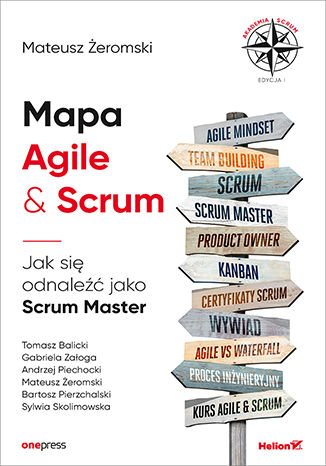
Lepiej, szybciej, skuteczniej! SCRUM, czyli zwinne (ang. Agile) podejście do wytwarzania usług i produktów, wymyślono po to, by realizować zadania w krótszym czasie, z użyciem mniejszej ilości zasobów i w jak najlepszym "dopasowaniu" do oczekiwań klienta. Zespoły pracujące w Scrumie, starzy agile'owi wyjadacze, zwykle sobie to podejście chwalą i chętnie korzystają z niego przy prowadzeniu kolejnych projektów. Niestety dla osoby, która dopiero zaczyna pracować w podejściu zwinnym, sprawa zwykle nie jest prosta. Wdrożenie się do "zwinności" wymaga czasu i wskazówek od doświadczonych Scrum Masterów. Skoro mowa o wskazówkach od bardziej doświadczonych praktyków Scrumu - książka, którą Ci proponujemy, stanowi świetny wstęp do tego, by zacząć działać zwinnie. Jej autor, sam znawca tematu, praktykujący Agile & Scrum oraz dzielący się tą wiedzą z uczestnikami szkoleń, zebrał w tej publikacji wskazówki własne i wielu innych Scrum Masterów. Poczynając od zupełnych podstaw i zasad Scruma, przez problemy, z jakimi spotkasz się w codziennej pracy nad projektami, aż po kwestie dyskusyjne, postrzegane z różnych punktów widzenia - niniejszy poradnik stanowi swego rodzaju kompendium praktycznej wiedzy na temat Scruma i Agile'a podany w przystępnej hasłowej formie. Dzięki temu będzie Ci się łatwo po nim poruszać. Książka składa się z dwóch głównych części. Pierwsza, napisana wspólnie przez praktyków, opiera się na naszych doświadczeniach. Nie boimy się poruszać ważnych tematów, nie pomijamy ich. Stworzyliśmy przewodnik, w którym poruszamy wiele różnych obszarów i wierzymy, że każdy otwarty czytelnik znajdzie coś dla siebie. Druga część jest transkrypcją kursu Agile & Scrum. Współautorzy pierwszej części książki: Bartosz Pierzchalski - Z wykształcenia pedagog resocjalizacyjny, zawodowo związany z branżą badawczą, w której zajmuje się usprawnianiem procesów i doskonaleniem firmowych produktów. Swoje kompetencje rozwijał jako menedżer projektów, coach mocnych stron, trener programów społecznych oraz instruktor sportów walki. Od 2020 r. związany z podejściem zwinnym, aktywnie propaguje wykorzystanie Scruma w przestrzeniach zawodowych i prywatnych. Sylwia Skolimowska - Posiada wieloletnie doświadczenie jako Kierownik Projektów IT w branży mediowej. W związku ze swoimi zainteresowaniami dotyczącymi projektów i poszerzaniem wiedzy w tym zakresie została Scrum Masterem. Obecnie wykorzystuje zdobytą wiedzę i doświadczenie w swoim środowisku zawodowym. Mateusz Żeromski - Niepoprawny optymista, który obrał sobie za cel popularyzowanie Agile'a i Scruma. Założyciel meet-upu Scrum Warsaw, autor dwóch książek oraz Akademii Scrum, w ramach której powstała ta książka. Wierzy w zespoły, w to, że w pracy można naładować baterie, odpocząć od codzienności, miło spędzić czas - ale tylko wtedy, gdy mamy dobry i mocny zespół. Niech #Scrum będzie z Wami! Gabriela Załoga - Wspiera organizacje w procesie budowania wartościowych produktów. Doświadczenie ze sportu wykorzystuje podczas budowania mistrzowskich zespołów. Balansuje pomiędzy biznesem a zespołami technologicznymi. Pasjonatka odkrywania i rozwijania produktów. Nie lubi marnotrawstwa, dlatego nieustannie kwestionuje status quo. Czerpie energię od ludzi, ceni wartościowe dyskusje, zwłaszcza te przy kawie. Prywatnie minimalistka. Lubi otaczać się dobrą sztuką i designem. Odpoczywa, spacerując z psem, czytając, medytując lub praktykując jogę. Andrzej Piechocki - Entuzjasta zwinności. Absolwent zarządzania i marketingu na Uniwersytecie im. A. Mickiewicza w Poznaniu, z doświadczeniem w różnych branżach. 100% Scrum Master licensed by PSM II /scrum.org/ Tomasz Balicki - Strategy & Operations Manager, specjalista w zakresie zarządzania projektami międzynarodowymi (Agile, Scrum Master), planowania marketingowego, strategii klienta i kreowania marki. Jest menedżerem operacyjnym z ponad 10-letnim międzynarodowym doświadczeniem zawodowym, zorientowanym na procesy, procedury i projekty w zakresie budowania nowych ścieżek rozwoju, zarządzania marką i rozwoju biznesu. Jego mocnymi stronami są efektywne realizowanie KPI związane z wdrażaniem innowacji w realizowanych kampaniach CRM, targetowanie, sekwencjonowanie, testy A/B.
Artur Krowiak
Poznaj interfejs programu i sposób wykonywania podstawowych działań w Maple’u Naucz się rozwiązywać złożone problemy z różnych dziedzin matematyki Dowiedz się, jak skutecznie wizualizować i prezentować uzyskane wyniki Poznaj Maple od podszewki! Maple to zintegrowane środowisko do przeprowadzania obliczeń symbolicznych i numerycznych oraz wizualizacji otrzymanych w ten sposób wyników. Ten bardzo wydajny system algebry komputerowej został wyposażony w bogaty zestaw poleceń, za pomocą których możliwe jest rozwiązywanie problemów z niemal każdej dziedziny matematyki. Aplikacja ułatwia przeprowadzanie obliczeń technicznych, inżynierskich i naukowych z użyciem jednostek, stałych fizycznych oraz własności pierwiastków chemicznych. Swoją popularność zawdzięcza wygodnemu interfejsowi użytkownika i możliwości łatwej współpracy z innymi programami obliczeniowymi, środowiskami CAD oraz językami programowania. Książka "Maple. Podręcznik " prezentuje aplikację od podstaw, dzięki czemu z powodzeniem mogą po nią sięgnąć zarówno początkujący użytkownicy, jak i osoby, które pragną tylko odświeżyć lub pogłębić swoją wiedzę na temat programu. Podręcznik przyda się zarówno studentom, jak i inżynierom czy naukowcom, którzy w codziennej pracy muszą sprawnie przetwarzać duże zbiory danych i wykonywać na nich skomplikowane operacje obliczeniowe. W książce przedstawiono sposoby i metodykę rozwiązywania wybranych zagadnień matematycznych, a także omówiono szeroki wachlarz możliwości graficznych i sposób tworzenia przejrzystego dokumentu. Bardziej wymagający użytkownicy znajdą w niej informacje dotyczące programowania w środowisku Maple, tworzenia dokumentów interaktywnych oraz projektowania indywidualnych interfejsów na potrzeby konkretnych zagadnień obliczeniowych. Interfejs użytkownika programu Podstawowe działania w tym środowisku Funkcje matematyczne i struktury danych Posługiwanie się wyrażeniami, jednostkami i stałymi Tworzenie i formatowanie wykresów Rozwiązywanie typowych problemów matematycznych Programowanie w środowisku Maple Tworzenie i formatowanie dokumentów Maplety i rozszerzenia programu Skomplikowane obliczenia? Nic prostszego!
Marinos Koutsomichalis
SuperCollider is an environment and programming language used by musicians, scientists, and artists who work with audio-files SuperCollider has built-in graphical features which are used in conjunction with the sound synthesis server to create audio-visual mapping and sound visualization. If you wish to create data visualizations by acquiring data from audio and visual sources, then this book is for you.Digital sound artists need to analyze, manipulate, map, and visualize data when working on a scientific or an artistic project. As an artist, this book, by means of its numerous code examples will provide you with the necessary knowledge of SuperCollider's practical applications, so that you can extract meaningful information from audio-files and master its visualization techniques. This book will help you to prototype and implement sophisticated visualizers, sonifiers, and complex mappings of your data.This book takes a closer look at SuperCollider features such as plotting and metering functionality to dispel the mysterious aura surrounding the more advanced mappings and animation strategies. This book also takes you through a number of examples that help you to create intelligent mapping and visualization systems. Throughout the course of the book, you will synthesize and optimize waveforms and spectra for scoping as well as extract information from an audio signal. The later sections of the book focus on advanced topics such as emulating physical forces, designing kinematic structures, and using neural networks to enable you to develop a visualization that has a natural motion with structures that respect anatomy and which come with an intelligent encoding mechanism. This book will teach you everything you need to work with intelligent audio-visual systems to extract and visualize audio-visual data.
Mapy drogowe produktu - nowe podejście. Wyznaczanie kierunków rozwoju w czasach niepewności
C. Todd Lombardo, Bruce McCarthy, Evan Ryan,...
Mapa drogowa produktu w konwencjonalnym ujęciu bywa obwiniana za wyznaczanie nierealnych celów, przeoczanie okazji czy rozwijanie przestarzałych funkcji. A przecież - jeśli jest dobra - łatwo staje się cennym narzędziem: stanowi jeden z najbardziej wpływowych dokumentów, jakie organizacja może opracować, wydać i stale aktualizować. Ten jeden dokument może nadać właściwy kierunek procesom realizacji strategii firmowej. Może być kluczem do harmonizowania wizji interesariuszy. Trzeba tylko popatrzeć na mapę drogową produktu z punktu widzenia wciąż zmieniającego się świata i traktować ją jako ciągle aktualizowaną pomoc komunikacyjną, którą ma się kierować zespół. Oto przystępny przewodnik prezentujący odświeżoną koncepcję map drogowych, które mają być nie tylko dokumentem strategicznym, ale także narzędziem przywództwa. Tworzenie map drogowych pokazano tu jako proces składający się z różnych działań, dzięki którym można określić sposób dostarczania klientowi jak największej wartości. Wymieniono kluczowe zasady budowy skutecznej mapy drogowej produktu, a następnie w kolejnych rozdziałach opisano sposoby realizacji poszczególnych działań. Znalazły się tu również liczne wskazówki i przykłady. Książka została napisana w taki sposób, aby uwzględnić szerokie spektrum potrzeb, branż i produktów, ma także ułatwić dostosowanie map drogowych do potrzeb i stopnia gotowości organizacji. Książka wyjaśnia, jak: inspirująco sformułować cele produktu racjonalnie wyznaczać priorytety i zapewnić sobie przychylność interesariuszy zapracować sobie na lojalność zespołu i zachęcić go do efektywnej pracy wykrywać okazje biznesowe i zawsze zachowywać przewagę stworzyć kompletną mapę drogową bez składania nierealnych obietnic Autorzy od lat zajmują się rozwojem produktu i różnymi podejściami do tego zagadnienia. Czas na mapę drogową, dzięki której produkt przetrwa starcie z rzeczywistością!
Daniel Bartholomew
A practical cookbook, filled with advanced recipes , and plenty of code and commands used for illustration,which will make your learning curve easy and quick. This book is for anyone who wants to learn more about databases in general or MariaDB in particular. Some familiarity with SQL databases is assumed, but the recipes are approachable to almost anyone with basic database skills.
Emilien Kenler
This book will take you through all the nitty-gritty parts of MariaDB, right from the creation of your database all the way to using MariaDB’s advanced features. At the very beginning, we show you the basics, that is, how to install MariaDB. Then, we walk you through the databases and tables of MariaDB, and introduce SQL in MariaDB. You will learn about all the features that have been added in MariaDB but are absent in MySQL.Moving on, you’ll learn to import and export data, views, virtual columns, and dynamic columns in MariaDB. Then, you’ll get to grips with full-text searches and queries in MariaDb. You’ll also be familiarized with the CONNECT storage engine. At the end of the book, you’ll be introduced to the community of MariaDB.

Pierre Mavro
This book is aimed at system administrators/architects or DBAs who want to learn more about how to grow their current infrastructure to support larger traffic. Before beginning with this book, we expect you to be well-practiced with MySQL/MariaDB for common usage. You will be able to get a grasp quickly if you are comfortable with learning and building large infrastructures for MariaDB using Linux.

Marka osobista w branży IT. Jak ją zbudować i rozwijać
Krzysztof Kempiński
Marka osobista specjalisty IT. Jak ją zbudować i rozwijać Witaj w świecie nieograniczonych możliwości zawodowych Jesteś specjalistą IT. I jesteś dobry w tym, co robisz. Masz wiedzę, doświadczenie, chcesz się nimi podzielić z innymi, pomóc im radzić sobie z problemami, które sam już dawno rozwiązałeś, może także zaprezentować się od tej strony przyszłym pracodawcom i zleceniodawcom, tylko... kto - poza Tobą - wie o tym, co potrafisz, w czym jesteś biegły? Koledzy z pracy? Klienci? Dziś, w dobie powszechnego dostępu do sieci, urządzeń i narzędzi pozwalających łatwo i szybko się zareklamować, dotarcie do osób, do których chcesz dotrzeć jako specjalista w danym obszarze IT, powinno być proste. Jednak nie każdy potrafi to zrobić ot tak. Naturalnie i bez znacznego nakładu pracy. Do zbudowania marki osobistej nie wystarczy znajomość technikaliów. Potrzebna jest wiedza dotycząca samej marki osobistej: czym jest, jakie są jej składowe. Warto także mieć świadomość korzyści wiążących się z jej posiadaniem. Potem można się skupić na metodach jej kreowania. Wreszcie dobrze będzie poznać historie osób powszechnie znanych w świecie rodzimego IT, by móc zaczerpnąć naukę z ich doświadczeń. Wszystko to znajdziesz w książce, która - w co mocno wierzy jej autor, ekspert w branży IT, bloger, youtuber i podcaster - pomoże Ci w stworzeniu silnej marki osobistej. Zobacz zapis z webinaru prowadzonego przez Krzysztofa Kempińskiego oraz Michała Kosiorka na temat: „Marka osobista na rynku pracy w IT” ⤵️

Market Research and Analysis. Mastering Market Research: Advanced Methods, Design, and Data Analysis
Mercury Learning and Information, Marcus Goncalves
This book offers an in-depth exploration of market research and analysis, guiding readers through the entire process from defining research objectives to communicating results. Begin by understanding the purpose and ethics of market research, laying a strong groundwork for your studies. Progress to defining precise research objectives and exploring secondary research methods to gather existing information.Next, engage with primary research methods, focusing on both quantitative and qualitative approaches. Learn how to develop and distribute surveys, choose the right sampling techniques, and utilize tools for data mining and web scraping. Gain insights into focus groups and observation studies, understanding how these qualitative methods can provide depth to your research.Finally, master the art of data analysis and result communication. Explore descriptive statistics, hypothesis testing, and inferential statistics to make sense of your data. Learn to effectively present your findings to stakeholders, ensuring your research translates into actionable insights. By the end of the course, you will be well-equipped to conduct thorough market research and communicate your results effectively.
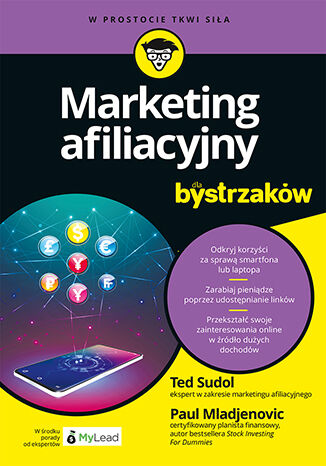
Marketing afiliacyjny dla bystrzaków
Ted Sudol , Paul Mladjenovic
Nie trać czasu na próby i błędy. Nasza książka nauczy Cię zarabiania online krok po kroku. Marketing afiliacyjny to doskonały sposób generowania przychodu w internecie. Aby było to możliwe, niezbędna jest jednak odpowiednia wiedza, która zebrana została w formie tego podręcznika. Z jego pomocą i poradami specjalistów z MyLead zdobędziesz kluczowe umiejętności, które w połączeniu z wytrwałością i zaangażowaniem pozwolą Ci osiągnąć sukces. Dzięki książce: dowiesz się, jak odkryć swoją niszę i przeprowadzić badanie słów kluczowych; poznasz narzędzia pozwalające zaoszczędzić czas i nakłady pracy; odkryjesz zaawansowane strategie osiągania większych zysków; nauczysz się unikać potencjalnych pułapek. Partner Wydania:
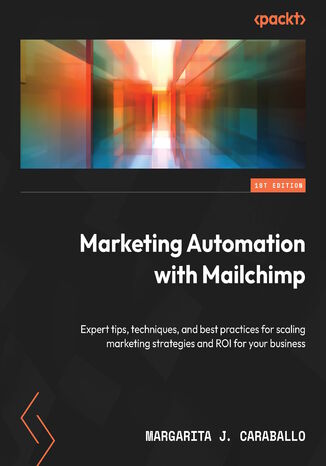
Margarita J. Caraballo
Are you looking for an all-in-one comprehensive guide to implementing Mailchimp channels and automation for your business? Then Marketing Automation with Mailchimp can be your go-to guide. You’ll start by learning common terms used in the Mailchimp environment, as well as about account setup and audience management for businesses. After that, you’ll find out how to set up channels, where you’ll actively interact with your contacts and begin to add new ones. Additionally, you’ll gain an understanding of how to set up a consistent marketing presence in the form of emails and websites and the benefits of determining a brand identity.You’ll also explore advanced Mailchimp features to optimize platform utilization using analytics, reporting, A/B and multivariate testing, the customer journey builder, and the Mailchimp e-commerce store. Toward the end, you’ll discover some important shopping, payment, and CRM integrations that can be connected to your Mailchimp platform for custom business needs. With this book, you’ll gain insights into real-world use cases to implement a marketing strategy to extend your existing work.By the end of this book, you’ll be well-equipped to implement Mailchimp marketing automation seamlessly into your business to grow your customer base and revenue.
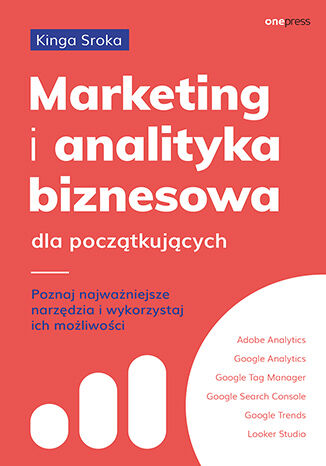
Kinga Sroka
Witaj w świecie fascynujących danych! Biznes nie istnieje bez twardych danych, założeń, KPI i ich realizacji. Także ta jego część, która jest związana z promocją. Szczególnie online. Dziś nie można być marketerem z prawdziwego zdarzenia i nie znać chociażby narzędzi oferowanych przez Google ― Analytics, Tag Manager, Search Console i Trends. Te nazwy kojarzą Ci się z czymś niezrozumiałym albo budzą obawy? Nie martw się i sięgnij po tę książkę! Dowiesz się z niej, jak efektywnie korzystać z internetowych rozwiązań analitycznych. Ten poradnik stanowi świetne wprowadzenie do marketingu i analityki biznesowej online dla osób, które dopiero zapoznają się z tym tematem. To nie tylko przegląd narzędzi współczesnego analityka. Autorka opisuje również kompetencje, które będą potrzebne osobom z branży w najbliższej przyszłości, wskazuje miejsca, gdzie już można je zdobywać, wreszcie podpowiada, jakie umiejętności trzeba mieć, by otrzymać wymarzoną pracę w firmach zajmujących się danymi cyfrowymi.
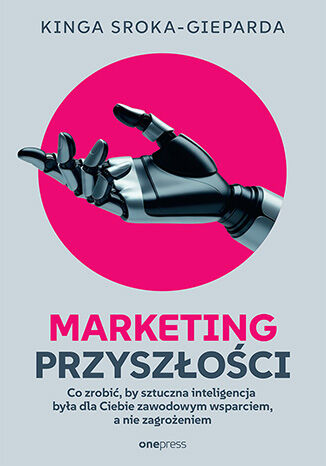
Kinga Sroka-Gieparda
Marketing w dobie sztucznej inteligencji Rewolucja AI, której jesteśmy świadkami, najprawdopodobniej odmieni nasz świat. Wpłynie także a może przede wszystkim na pracę. Pewne zawody znikną, inne znacznie się zmienią, pojawią się też zupełnie nowe stanowiska. Już dziś szeroko dyskutuje się na przykład o tym, że sztuczna inteligencja odbierze zajęcie marketerom. Czy naprawdę jest się czego bać? A może zamiast obawiać się rozwoju technologicznego, warto mu się przyjrzeć bliżej, poznać go i nauczyć się korzystać z nowych narzędzi po to, by wykonywać swoje zadania łatwiej, szybciej i skuteczniej? Celem, jaki postawiła sobie autorka tej książki, jest wprowadzenie czytelnika w zagadnienia rozwoju i historii AI, a także zapoznanie go z jej narzędziami: od modeli konwersacyjnych i służących do tworzenia treści po modele generujące kod i kreujące obrazy. Poradnik Kingi Sroki-Giepardy jest przeznaczony przede wszystkim dla osób działających w branżach marketingowej i technologicznej, jednak zawarta w nim wiedza przyda się każdemu, kto chce się zorientować, jak wyglądają bieżące możliwości narzędzi AI, i nauczyć się ich używać. Książka w mediach: annawolodko_mintconcept Instagram Magiczna.ja Sylwia Bookstagram Mamao.pl Instagram

Sean Scaplehorn
Modern mobile devices are capable of supporting video games of amazing quality but there are so many different devices and platforms how can you support them all? The answer is to use the Marmalade SDK to write your code once and deploy it to all popular mobile platforms at the touch of a button.Marmalade SDK Mobile Game Development Essentials will provide you with everything you need to know to transfer your existing C++ videogame programming knowledge to mobile devices. From graphics and sound to input methods and actual deployment to device, this book covers the lot.Learn how to make use of keys, touch screen and accelerometer inputs for controlling your game.Take the pain out of supporting a varied range of target devices, both across multiple platforms and multiple specifications.Step by step from Hello World to a complete game, this book will show how to use the Marmalade SDK to develop games for mobile devices.Learn how to make dazzling 2D and 3D games complete with fully animated characters, music and sound effects that can be deployed to all the leading mobile platforms, whilst ensuring it can run on a wide range of possible devices, from low specification to high end.If you want to join the exciting world of mobile videogames then Learning Mobile Game Development with Marmalade will show you how to do so, fast!
Sandro Pasquali, Kevin Faaborg
Node.js, a modern development environment that enables developers to write server- and client-side code with JavaScript, thus becoming a popular choice among developers.This book covers the features of Node that are especially helpful to developers creating highly concurrent real-time applications. It takes you on a tour of Node's innovative event non-blocking design, showing you how to build professional applications. This edition has been updated to cover the latest features of Node 9 and ES6. All code examples and demo applications have been completely rewritten using the latest techniques, introducing Promises, functional programming, async/await, and other cutting-edge patterns for writing JavaScript code. Learn how to use microservices to simplify the design and composition of distributed systems. From building serverless cloud functions to native C++ plugins, from chatbots to massively scalable SMS-driven applications, you'll be prepared for building the next generation of distributed software.By the end of this book, you'll be building better Node applications more quickly, with less code and more power, and know how to run them at scale in production environments.
Kurt Menke, GISP, Paolo Corti, Richard Smith...
QGIS is an open source solution to GIS. It is widely used by GIS professionals all over the world. It is the leading alternative to the proprietary GIS software. Although QGIS is described as intuitive, it is also by default complex. Knowing which tools to use and how to apply them is essential to producing valuable deliverables on time.Starting with a refresher on the QGIS basics, this book will take you all the way through to creating your first custom QGIS plugin. From the refresher, we will recap how to create, populate, and manage a spatial database. You’ll also walk through styling GIS data, from creating custom symbols and color ramps to using blending modes. In the next section, you will discover how to prepare vector, heat maps, and create live layer effects, labeling, and raster data for processing. You’ll also discover advanced data creation and editing techniques. The last third of the book covers the more technical aspects of QGIS such as using LAStools and GRASS GIS’s integration with the Processing Toolbox, how to automate workflows with batch processing, and how to create graphical models. Finally, you will see how to create and run Python data processing scripts and write your own QGIS plugin with pyqgis. By the end of the book, you will understand how to work with all the aspects of QGIS, and will be ready to use it for any type of GIS work.
Shyam Varan Nath, Ananya Simlai, Oguzhan Kara
We are living in an era where ultra-fast internet speed is not a want, but a necessity. As applications continue to evolve, they demand a reliable network with low latency and high speed. With the widespread commercial adoption of driverless cars, robotic factory floors, and AR/VR-based immersive sporting events, speed and reliability are becoming more crucial than ever before. Fortunately, the power of 5G technology enables all this and much more.This book helps you understand the fundamental building blocks that enable 5G technology. You’ll explore the unique aspects that make 5G capable of meeting high-quality demands, including technologies that back 5G, enhancements in the air interface, and packet core, which come together to create a network with unparalleled performance. As you advance, you’ll discover how to design and implement both 5G macro and private networks, while also learning about the various design and deployment options available and which option is best suited for specific use cases. After that, you’ll check out the operational and maintenance aspects of such networks and how 5G works together with fixed wireline and satellite technologies.By the end of this book, you’ll understand the theoretical and practical aspects of 5G, enabling you to use it as a handbook to establish a 5G network.
Dishan Francis
Active Directory is a centralized and standardized system that automates networked management of user data, security, and distributed resources and enables interoperation with other directories. If you are aware of Active Directory basics and want to gain expertise in it, this book is perfect for you. We will quickly go through the architecture and fundamentals of Active Directory and then dive deep into the core components, such as forests, domains, sites, trust relationships, OU, objects, attributes, DNS, and replication. We will then move on to AD schemas, global catalogs, LDAP, RODC, RMS, certificate authorities, group policies, and security best practices, which will help you gain a better understanding of objects and components and how they can be used effectively. We will also cover AD Domain Services and Federation Services for Windows Server 2016 and all their new features. Last but not least, you will learn how to manage your identity infrastructure for a hybrid-cloud setup. All this will help you design, plan, deploy, manage operations on, and troubleshoot your enterprise identity infrastructure in a secure, effective manner. Furthermore, I will guide you through automating administrative tasks using PowerShell cmdlets. Toward the end of the book, we will cover best practices and troubleshooting techniques that can be used to improve security and performance in an identity infrastructure.
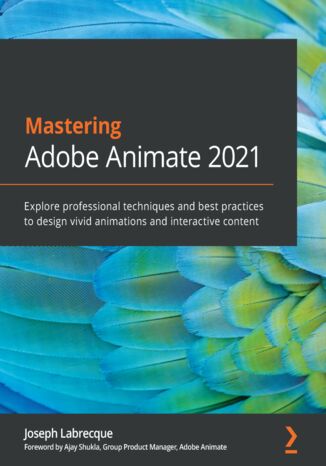
Joseph Labrecque
Adobe Animate is platform-agnostic asset creation, motion design, animation, and interactivity software. Complete with step-by-step explanations of essential concepts, practical examples, and hands-on walkthroughs, this book shows you how to use Adobe Animate to create immersive experiences by breaking through creative limitations across every medium.You will begin by getting up to speed with what you need to know about Adobe Animate quickly. Next, you will learn how to get started with Animate as a creative platform and explore the features introduced in the most recent version of the software. Moving on, you'll consume and produce media assets for multiple platforms through both the publish and export workflows. Following this, you’ll delve into advanced rigging techniques and discover how to create more dynamic animation with advanced depth and movement techniques. You’ll also find out how to build projects such as games, virtual reality experiences, and apps for various platforms. The book concludes with an examination of different methods used to extend the software for various needs.By the end of this book, you'll be able to produce a variety of media assets, motion design materials and animated artifacts, and interactive content pieces - all while targeting a variety of platforms including HTML5 Canvas, WebGL, and mobile devices.
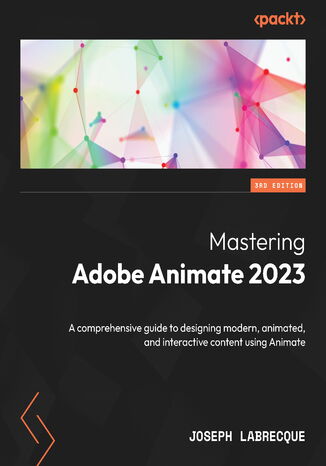
Joseph Labrecque
Adobe Animate is a platform-agnostic asset creation application that enables you to create motion design and vector animations while facilitating interactivity across other Adobe software such as After Effects, Photoshop, and Illustrator. This book comes packed with explanations of essential concepts and step-by-step walk-throughs of practical examples, guiding you in using Animate to create immersive experiences and breaking the walls of creative limitations.In this third edition, you’ll begin by getting up to speed with the features of Adobe Animate. You'll learn how to set up Animate as a creative platform and explore the enhancements introduced in its most recent versions. The book will show you how to consume and produce media assets for different platforms through the publish and export workflows. You'll explore advanced rigging workflows and discover how to create more dynamic animations with complex depth and movement techniques. As the book demonstrates different ways of channeling your creativity through Animate, you'll be able to build projects such as games, virtual reality experiences, generative art, and apps for various platforms. Finally, this graphic design book covers the different methods used to extend the software to meet various user requirements.By the end of this book, you'll be able to produce a variety of media assets, motion graphic designs, animated artifacts, and interactive content pieces for platforms such as HTML5 Canvas, WebGL, and mobile devices.
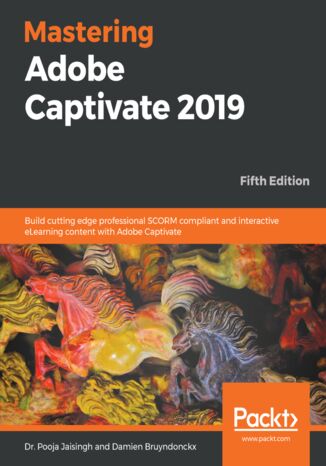
Dr. Pooja Jaisingh , Damien Bruyndonckx
Adobe Captivate is used to create highly engaging, interactive, and responsive eLearning content. This book takes you through the production of a few pieces of eLearning content, covering all the project types and workflows of Adobe Captivate. First, you will learn how to create a typical interactive Captivate project. This will give you the opportunity to review all Captivate objects and uncover the application's main tools. Then, you will use the built-in capture engine of Captivate to create an interactive software simulation and a Video Demo that can be published as an MP4 video. Then, you will approach the advanced responsive features of Captivate to create a project that can be viewed on any device. And finally, you will immerse your learners in a 360o environment by creating Virtual Reality projects of Adobe Captivate. At the end of the book, you will empower your workflow and projects with the newer and most advanced features of the application, including variables, advanced actions, JavaScript, and using Captivate 2019 with other applications.If you want to produce high quality eLearning content using a wide variety of techniques, implement eLearning in your company, enable eLearning on any device, assess the effectiveness of the learning by using extensive Quizzing features, or are simply interested in eLearning, this book has you covered!
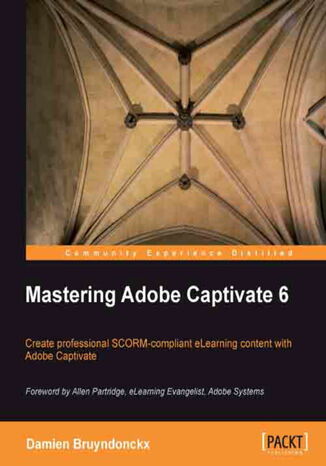
Damien Bruyndonckx
Adobe Captivate is the industry-leading solution for authoring E-learning content. With adobe Captivate one can capture the on-screen action, enhance e-Learning projects, insert SCORM and AICC-compliant quizzes and then, publish your work in various formats for easy deployment on virtually any desktop and mobile device. Mastering Adobe Captivate 6 is a comprehensive guide to creating SCORM-compliant demonstrations, simulations and quizzes with Adobe Captivate. The sample projects demonstrate each and every feature of Adobe Captivate giving you the expertise you need to create and deploy your own professionalquality e-learning courses. Mastering Adobe Captivate 6 will guide you through the creation of three e-learning projects including a demonstration, a simulation and a SCORM-compliant quiz. The first part of the book will drive you through the main three steps of the Captivate production process. In the first step, we will use the powerful capture engine of Captivate to generate the needed slides and screenshots. In the second step, we will enhance our slides and screenshots using the objects provided by Captivate. These objects include animations, interactions, videos and more. In the third step, we will make our project available to the outside world by publishing it in various formats including Adobe Flash PDF, video, and even HTML 5. The second part of the book will focus on the advanced tools of Captivate. These tools include the questions slides that make up a quiz, SCORM and AICC compliance, localization of your e-Learning content and widgets among others. In the last chapter, you we will unleash the true power of Captivate by using the variables and the advanced actions to create a unique e-Learning experience.