
Informatyka
Alex Clark, Clayton Parker
Plone is a highly extensible content management system built on Zope application server, which is written in Python. But, you need to have good programming skills to design and develop Plone web applications. Does that mean you can't have a Plone website if you don't have good programming skills? Of course not! You can develop your Plone websites through a graphical interface where you don't need to fiddle with code.This book will give you clear understanding of how to use Plone 3 to meet your content management needs. Starting from the basics, this book will walk you through the easy-to-use features of Plone and help you create a feature-rich website through its point-and-click feature.A variety of authors have contributed chapters to this book in the hope that you, the reader, will get a good understanding of Plone and be able to use it effectively. This beginners' guide will introduce the great CMS and its features and then take you further in web development. The book will introduce you to Plone's advanced UI features and show you how to create such a UI platform for your website. You will learn how to manage the contents like web pages, news items, and so on. Working with custom portlets will help you enhance the web components for your site. Each chapter will show you how to add features to your site and develop its functionality. Each chapter can be read independently; you need not go through the previous one to continue further. You can pick and choose the topics depending on your interest and requirement.
Ralph Winters
This is the go-to book for anyone interested in the steps needed to develop predictive analytics solutions with examples from the world of marketing, healthcare, and retail. We'll get startedwith a brief history of predictive analytics and learn about different roles and functions people play within a predictive analytics project. Then, we will learn about various ways of installing R along with their pros and cons, combined with a step-by-step installation of RStudio,and a description of the best practices for organizing your projects.On completing the installation, we will begin to acquire the skills necessary to input, clean, and prepare your data for modeling. We will learn the six specific steps needed to implement andsuccessfully deploy a predictive model starting from asking the right questions through model development and ending with deploying your predictive model into production. We will learn whycollaboration is important and how agile iterative modeling cycles can increase your chances of developing and deploying the best successful model.We will continue your journey in the cloud by extending your skill set by learning about Databricks and SparkR, which allow you to develop predictive models on vast gigabytes of data.
Shilpi Saxena, Selva raj Ramasamy, Prateek Bhati,...
With the rise of Big Data, there is an increasing need to process large amounts of data continuously, with a shorter turnaround time. Real-time data processing involves continuous input, processing and output of data, with the condition that the time required for processing is as short as possible.This book covers the majority of the existing and evolving open source technology stack for real-time processing and analytics. You will get to know about all the real-time solution aspects, from the source to the presentation to persistence. Through this practical book, you’ll be equipped with a clear understanding of how to solve challenges on your own.We’ll cover topics such as how to set up components, basic executions, integrations, advanced use cases, alerts, and monitoring. You’ll be exposed to the popular tools used in real-time processing today such as Apache Spark, Apache Flink, and Storm. Finally, you will put your knowledge to practical use by implementing all of the techniques in the form of a practical, real-world use case.By the end of this book, you will have a solid understanding of all the aspects of real-time data processing and analytics, and will know how to deploy the solutions in production environments in the best possible manner.
Adrian Bolboacă
Remote pair programming takes pair programming practices to the next level by allowing you and your team members to work effectively in distributed teams. This helps ensure that you continuously improve code quality, share equal ownership of the code, facilitate knowledge sharing, and reduce bugs in your code. If you want to adopt remote pair programming within your development team, this book is for you.Practical Remote Pair Programming takes you through various techniques and best practices for working with the wide variety of tools available for remote pair programming. You'll understand the significance of pair programming and how it can help improve communication within your team. As you advance, you’ll get to grips with different remote pair programming strategies and find out how to choose the most suitable style for your team and organization. The book will take you through the process of setting up video and audio tools, screen sharing tools, and the integrated development environment (IDE) for your remote pair programming setup. You'll also be able to enhance your remote pair programming experience with source control and remote access tools.By the end of this book, you'll have the confidence to drive the change of embracing remote pair programming in your organization and guide your peers to improve productivity while working remotely.
Practical Responsive Typography. A hands on guide to responsive typography
Dario Calonaci
Typography is an essential part of any website’s design. It can help you stand out from the crowd, communicate with clarity, and cultivate a distinctive identity.Practical Responsive Typography demonstrates how to use typography to greatest effect. With this book you won't underestimate it's importance - you'll be in complete control over this crucial component of web design. From scaling and optimizing screen spaces to using a range of different web fonts, you'll quickly get up to speed with the practical considerations behind successful typography.But more than the fundamentals, you'll also find out how to go further by customizing typography designs to suit your identity.
Lars Malmqvist
Agentforce is Salesforce’s next-generation framework for building autonomous AI agents that act intelligently on behalf of users. This book is your practical guide to leveraging Agentforce to create enterprise-grade agents that reason, plan, and execute across clouds.You'll begin by mastering core concepts, agent types, the Atlas Reasoning Engine, and the Einstein Trust Layer, before setting up your development environment and using Agent Builder to create your first agents. A full case study walks you through building a production-grade room booking agent, preparing you for more advanced implementations.In later chapters, you'll extend agents with Flow and Apex, build real-time intelligence using Data Cloud and semantic search, and secure your implementations. You'll then adopt DevOps practices to manage deployments, use the Command Center for performance insights, and integrate Agentforce across your enterprise landscape using MuleSoft and external services. By the end, you’ll design and run robust Agentforce solutions that automate complex workflows and deliver measurable business value.*Email sign-up and proof of purchase required

Tony Hsiang-Chih Hsu
Security automation is the automatic handling of software security assessments tasks. This book helps you to build your security automation framework to scan for vulnerabilities without human intervention.This book will teach you to adopt security automation techniques to continuously improve your entire software development and security testing. You will learn to use open source tools and techniques to integrate security testing tools directly into your CI/CD framework. With this book, you will see how to implement security inspection at every layer, such as secure code inspection, fuzz testing, Rest API, privacy, infrastructure security, and web UI testing. With the help of practical examples, this book will teach you to implement the combination of automation and Security in DevOps. You will learn about the integration of security testing results for an overall security status for projects.By the end of this book, you will be confident implementing automation security in all layers of your software development stages and will be able to build your own in-house security automation platform throughout your mobile and cloud releases.
Gabriel Baptista, Francesco Abbruzzese
From the authors of the Software Architecture with C# and .NET series comes this practical and grounded showcase of microservices using the .NET stack.Written for .NET developers entering the world of modern cloud and distributed applications, it shows you when microservices and serverless architectures are the right choice for building scalable enterprise solutions and when they’re not. You’ll gain a realistic understanding of their use cases and limitations. Rather than promoting microservices as a one-size-fits-all solution, it encourages thoughtful adoption based on real-world needs.Following a brief introduction and important setup, the book helps you prepare for practical application through examples such as a ride-sharing website. You’ll work with Docker, Kubernetes, Azure Container Apps, and the new .NET Aspire with considerations for security, observability, and cost management. The book culminates in a complete event-driven application that brings together everything you've covered.By the end of this microservices book, you’ll have a well-rounded understanding of cloud and distributed .NET—through the lens of two industry veterans.*Email sign-up and proof of purchase required
Pethuru Raj Chelliah, Shreyash Naithani, Shailender Singh
Site reliability engineering (SRE) is being touted as the most competent paradigm in establishing and ensuring next-generation high-quality software solutions.This book starts by introducing you to the SRE paradigm and covers the need for highly reliable IT platforms and infrastructures. As you make your way through the next set of chapters, you will learn to develop microservices using Spring Boot and make use of RESTful frameworks. You will also learn about GitHub for deployment, containerization, and Docker containers. Practical Site Reliability Engineering teaches you to set up and sustain containerized cloud environments, and also covers architectural and design patterns and reliability implementation techniques such as reactive programming, and languages such as Ballerina and Rust. In the concluding chapters, you will get well-versed with service mesh solutions such as Istio and Linkerd, and understand service resilience test practices, API gateways, and edge/fog computing.By the end of this book, you will have gained experience on working with SRE concepts and be able to deliver highly reliable apps and services.
John Callaway, Clayton Hunt
Test-Driven Development (TDD) is a methodology that helps you to write as little as code as possible to satisfy software requirements, and ensures that what you've written does what it's supposed to do. If you're looking for a practical resource on Test-Driven Development this is the book for you. You've found a practical end-to-end guide that will help you implement Test-Driven Techniques for your software development projects.You will learn from industry standard patterns and practices, and shift from a conventional approach to a modern and efficient software testing approach in C# and JavaScript. This book starts with the basics of TDD and the components of a simple unit test. Then we look at setting up the testing framework so that you can easily run your tests in your development environment. You will then see the importance of defining and testing boundaries, abstracting away third-party code (including the .NET Framework), and working with different types of test double such as spies, mocks, and fakes.Moving on, you will learn how to think like a TDD developer when it comes to application development. Next, you'll focus on writing tests for new/changing requirements and covering newly discovered bugs, along with how to test JavaScript applications and perform integration testing. You’ll also learn how to identify code that is inherently un-testable, and identify some of the major problems with legacy applications that weren’t written with testability in mind. By the end of the book, you’ll have all the TDD skills you'll need and you’ll be able to re-enter the world as a TDD expert!
Scott Faranello
Written in an easy-to-read style, this book provides real-world examples, a historical perspective, and a holistic approach to design that will ground you in the fundamental essentials of interactive design, allow you to make more informed design decisions, and increase your understanding of UX in order to reach the highest levels of UX maturity. As you will see, UX is more than just delighting customers and users. It is also about thinking like a UX practitioner, making time for creativity, recognizing good design when you see it, understanding Information Architecture as more than just organizing and labeling websites, using design patterns to influence user behavior and decision making, approaching UX from a business perspective, transforming your client’s and company’s fundamental understanding of UX and its true value, and so much more.This book is an invaluable resource of knowledge, perspective, and inspiration for those seeking to become better UX designers, increase their confidence, become more mature design leaders, and deliver solutions that provide measurable value to stakeholders, customers, and users regardless of project type, size, and delivery method.
Philippe Hong
Web design is the process of creating websites. It encompasses several different aspects, including webpage layout, content production, and graphic design. This book offers you everything you need to know to build your websites. The book starts off by explaining the importance of web design and the basic design components used in website development. It'll show you insider tips to work quickly and efficiently with web technologies such as HTML5, CSS3, and JavaScript, concluding with a project on creating a static site with good layout. Once you've got that locked down, we'll get our hands dirty by diving straight into learning JavaScript and JQuery, ending with a project on creating dynamic content for your website. After getting our basic website up and running with the dynamic functionalities you'll move on to building your own responsive websites using more advanced techniques such as Bootstrap. Later you will learn smart ways to add dynamic content, and modern UI techniques such as Adaptive UI and Material Design. This will help you understand important concepts such as server-side rendering and UI components. Finally we take a look at various developer tools to ease your web development process.
Practical WebAssembly. Explore the fundamentals of WebAssembly programming using Rust
Sendil Kumar Nellaiyapen
Rust is an open source language tuned toward safety, concurrency, and performance. WebAssembly brings all the capabilities of the native world into the JavaScript world. Together, Rust and WebAssembly provide a way to create robust and performant web applications. They help make your web applications blazingly fast and have small binaries. Developers working with JavaScript will be able to put their knowledge to work with this practical guide to developing faster and maintainable code.Complete with step-by-step explanations of essential concepts, examples, and self-assessment questions, you’ll begin by exploring WebAssembly, using the various tools provided by the ecosystem, and understanding how to use WebAssembly and JavaScript together to build a high-performing application. You’ll then learn binary code to work with a variety of tools that help you to convert native code into WebAssembly. The book will introduce you to the world of Rust and the ecosystem that makes it easy to build/ship WebAssembly-based applications.By the end of this WebAssembly Rust book, you’ll be able to create and ship your own WebAssembly applications using Rust and JavaScript, understand how to debug, and use the right tools to optimize and deliver high-performing applications.
Lloyd Watkin, Steven Watkin, David Koelle
XMPP (eXtensible Messaging and Presence Protocol) is a messaging protocol that enables communication between two or more devices via the Internet.With this book, developers will learn about the fundamentals of XMPP, be able to work with the core functionality both server-side and in the browser, as well as starting to explore several of the protocol extensions. You will not only have a solid grasp of XMPP and how it works, but will also be able to use the protocol to build real-world applications that utilize the power of XMPP. By the end of this book, you will know more about networking applications in general, and have a good understanding of how to extend XMPP, as well as using it in sample applications.

Pracuj dla pieniędzy, projektuj dla przyjemności. Podręcznik freelancera
David Airey
Uwolnij się od etatu! Jeżeli Twoja praca jest Twoją pasją, należysz do grona wyjątkowo szczęśliwych ludzi. Nie ma nic przyjemniejszego, niż poświęcać się ulubionemu zajęciu, a jednocześnie obserwować stale rosnący stan konta. Graficy to grupa osób, którym dość łatwo przychodzi osiągnięcie tego idealnego stanu. Mimo iż prowadzenie własnej działalności to ogromne wyzwanie, przyjemność i szansa na sukces są warte wielu wyrzeczeń. W tym fantastycznym przewodniku znajdziesz odpowiedzi na najczęściej zadawane pytania w zakresie zakładania i prowadzenia własnej pracowni graficznej. W trakcie lektury poznasz plusy i minusy własnej działalności gospodarczej (z tego miejsca jeszcze możesz się wycofać), a następnie rozpoczniesz przygotowania do wdrożenia swoich planów w życie. Dowiesz się, jak wybrać odpowiednią nazwę dla firmy, dlaczego warto prowadzić blog oraz na co zwracać uwagę przy nawiązywaniu współpracy z klientami. Ponadto sprawdzisz, jak ich właściwie dobierać oraz jak przygotować się do rozmowy z nimi. To obowiązkowa lektura dla każdego, kto chce wyrwać się z etatowego kieratu! Sięgnij po tę książkę i: poznaj zalety i wady własnej działalności wybierz właściwą nazwę dla swojej firmy dowiedz się, jak wyceniać swoją pracę odnieś sukces na rynku Dołącz do grona freelancerów!
Christian Nagel
Pragmatic Microservices with C# and Azure introduces .NET Aspire for microservices, focusing on defining an app model, utilizing service discovery, and integrating with Azure's native cloud services. Written by a Microsoft MVP and seasoned software architect with over two decades of experience in .NET, this book will help you get to grips with robust service development using .NET features like minimal APIs, gRPC, and SignalR for real-time communication. Aside from covering essential aspects of DevOps, including testing methodologies such as unit, integration, and load testing, you’ll also explore logging and monitoring including OpenTelemetry using tools like Azure Log Analytics, Application Insights, Prometheus, and Grafana. You'll learn about asynchronous communication leveraging queues and events through Azure Event Hub and Apache. Throughout the book, theoretical aspects will be complemented by practical skills gained from building and deploying a fully functional microservices-based application. By the end, you’ll possess a deep understanding of microservices architecture, hands-on experience with various .NET technologies and Azure services, and the ability to design, build, deploy, and manage microservices applications effectively in both on-premises and cloud environments.

Praktyczne lekcje zarządzania projektami
Michał Kopczewski
Tak się zarządza projektami! Kierowanie projektami może być naprawdę fascynujące. Wystarczy zerknąć do tej książki, aby się o tym przekonać. Oto dwanaście prawdziwych historii o przedsięwzięciach, które mimo początkowych trudności zakończyły się spektakularnym sukcesem. Rozmówcami Michała Kopczewskiego są znane osoby ze świata biznesu, sportu i życia publicznego, które podjęły się trudnych i niecodziennych zadań. Dziś dzielą się dobrymi pomysłami i lekcjami wyciągniętymi ze swoich doświadczeń. Otwarcie mówią też o potknięciach, które po drodze im się zdarzały. Masz wyjątkową okazję przyjrzeć się rozmaitym projektom: od wypraw na krańce Ziemi aż po organizację EURO 2012. Każde z opisywanych przedsięwzięć wydaje się całkiem inne, a jednak coś je łączy: wszystkie wymagały uporu i żelaznej konsekwencji. Ta książka to bezcenna lektura dla każdego kierownika projektu, ale stanowić może także inspirację dla wszystkich, którzy stają przed nietypowym i skomplikowanym zadaniem. Dowodzi ona, że stosowanie dobrych praktyk zarządzania projektami to niemal gwarancja sukcesu. Warto korzystać z dobrych wzorców. Michał Kopczewski - ekspert w dziedzinie zarządzania projektami i doskonalenia procesów biznesowych. Od kilkunastu lat pracuje jako konsultant i trener. Wdraża standardy zarządzania projektami w firmach i uczy menedżerów dobrych praktyk w tej dziedzinie. Jest założycielem firmy Processum, specjalizującej się w doradztwie z zakresu efektywności organizacji. Karierę doradczą rozpoczął w firmie Arthur Andersen, a następnie pracował dla PricewaterhouseCoopers, IBM i Trio Management. Współpracuje z ICAN Institute (wydawcą Harvard Business Review Polska). Jest autorem książki Alfabet zarządzania projektami (Onepress 2009). Prywatnie jest miłośnikiem nietypowych wypraw i sportów. Od biznesu odpoczywa… w biegu. Regularnie uczestniczy w biegach na orientację i maratonach. W 2003 roku, jako drugi Polak w historii, ukończył Marathon des Sables na Saharze.
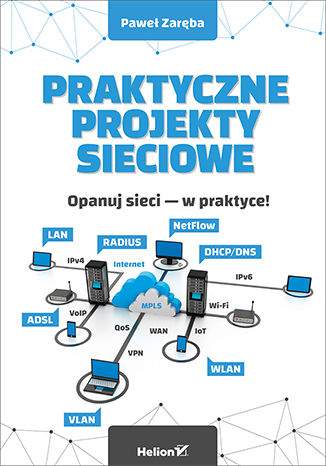
Paweł Zaręba
Opanuj sieci - w praktyce! Poznaj tajniki połączeń sieciowych Skonfiguruj sieć lokalną i dostęp do Internetu Zaimplementuj VoIP oraz zastosuj technologię VPN Kontroluj i monitoruj dom za pośrednictwem sieci Fale radiowe, światłowody, kable - sieci oplatają świat. Dziś komputer bez połączenia z Internetem stanowi właściwie tylko kosztowny kawałek elektronicznego złomu. To właśnie sieć sprawia, że otaczające nas zewsząd urządzenia cyfrowe zapewniają dostęp do interesujących treści, umożliwiają korzystanie z map, pozwalają monitorować otoczenie, słuchać strumieniowanej muzyki i oglądać filmy - słowem, dają nam wszystkie te możliwości, które kojarzymy z rewolucją informacyjną. Książka Praktyczne projekty sieciowe bezboleśnie wprowadzi Cię w świat współczesnych technologii sieciowych. Przedstawia najistotniejsze informacje na temat ich możliwości oraz ograniczeń. W niezwykle praktyczny sposób uczy, jak radzić sobie z zadaniami stawianymi przed projektantami i administratorami sieci. Prezentuje szereg konkretnych przykładów i projektów, które z pewnością przydadzą Ci się w pracy. Jeśli szukasz kompendium praktycznej wiedzy na temat sieci, lepiej nie można było trafić. Podstawowe informacje o typach sieci i technologiach sieciowych Zapewnianie dostępu do Internetu i tworzenie VLAN-ów Zestawianie lokalnych i globalnych połączeń VoIP Projektowanie sieci mobilnych oraz zastosowanie technologii MPLS i VPN Wykorzystanie IoT do monitorowania i zarządzania domem Praktyczne zastosowanie technologii QoS, NetFlow i RADIUS Administracja złożonej sieci Wi-Fi Zarządzanie sieciami i rozwiązywanie problemów Sieci? Z tą książką to nic trudnego!
Praktyczne zastosowanie narzędzi SEO w Twojej firmie
Paweł Cengiel
Zdobądź praktyczną wiedzę i zwiększ widoczność swojego serwisu w wyszukiwarce Google! Dzięki zebranym w poradniku wskazówkom, jak używać narzędzi stosowanych na co dzień w branży SEO, poznasz najważniejsze aspekty pozycjonowania. Opisano tu aż 32 aplikacje wraz z instrukcjami ich użycia - to solidna porcja wiedzy, która przygotuje Cię do wykonywania wielu zadań związanych z prowadzeniem kampanii SEO. Książka krok po kroku wprowadza w ten proces: od planowania kampanii, przez analizę własnego serwisu pod kątem technicznym, po naprawę występujących w nim błędów i optymalizację. Zawiera również zagadnienia dotyczące analizy konkurencji w wynikach organicznych wyszukiwarki Google i raportowania osiągniętych rezultatów. Nauczysz się, jak odnajdywać najpopularniejsze frazy wpisywane przez użytkowników do wyszukiwarki Google i tworzyć dzięki temu lepsze treści, a także jak docierać do źródeł pozyskiwania linków pozycjonujących. Dowiesz się też, jak analizować informacje o użytkownikach wchodzących do Twojego serwisu. Przygotowany przez autora zestaw porad i praktycznych wskazówek pomoże Ci skutecznie ograniczyć najczęściej popełniane błędy wynikające z niewłaściwej optymalizacji serwisu, uniknąć kary za techniki niezgodne ze wskazówkami Google dla webmasterów i zwiększyć liczbę wejść użytkowników z wyników organicznych. W mediach: Brief.pl: Praktyczne zastosowanie narzędzi SEO w Twojej firmie Nowymarketing.pl: Premiera książki Pawła Cengiela już 26 października! Nowymarketing.pl: Przeczytaj fragment książki Mobiletrends.pl: Google Trends oraz Google Keyword Planner - narzędzia każdego marketingowca Seo-www.pl: Co znajdziesz w nowej książce Pawła Cengiela?
Praktyczny kurs asemblera. Wydanie II
Eugeniusz Wróbel
Wejdź w świat programowania w języku asemblera Dowiedz się, kiedy użycie asemblera jest niezbędne Poznaj zasady programowania w asemblerze Napisz szybkie i wydajne programy dla DOS-a i Windows Zdobądź wiedzę o zasadach działania procesora i pamięci Uważasz, że możliwości języków programowania wysokiego poziomu nie pozwalają na napisanie programu, którego potrzebujesz? Chcesz stworzyć sterownik, program rezydentny, demo lub... wirusa? Interesuje Cię, co dzieje się w komputerze podczas wykonywania programu? Wykorzystaj potencjał asemblera! Programowanie w języku niskiego poziomu daje niemal nieograniczoną kontrolę nad sprzętem i działaniem aplikacji. Programy napisane w języku asemblera działają szybko, są niewielkie i zajmują mało pamięci. Są bardzo wydajne i otwierają dostęp do takich obszarów komputera, do których dostęp z poziomu C++ czy Visual Basica jest niemożliwy. Książka "Praktyczny kurs asemblera" wprowadzi Cię w świat programowania w tym języku. Dowiesz się, jak działa procesor, w jaki sposób komunikuje się z pamięcią i pozostałymi elementami komputera. Poznasz typy rozkazów procesora, tryby adresowania i zasady tworzenia programów w asemblerze. Lepiej poznasz swój komputer i dowiesz się, w jaki sposób zapamiętuje i przetwarza dane. Komputer przestanie być dla Ciebie "czarną skrzynką" wykonującą w czarodziejski sposób Twoje polecenia. Podstawowe wiadomości o architekturze procesorów Intel Organizacja pamięci i tryby adresowania Omówienie listy rozkazów procesora Narzędzia do tworzenia programów w języku asemblera Struktura programu w asemblerze Definiowanie zmiennych Tworzenie podprogramów i makrorozkazów Wykorzystanie funkcji BIOS-a oraz MS-DOS Programy w asemblerze uruchamiane w systemie Windows Optymalizacja kodu Tworzenie modułów dla innych języków programowania Po przeczytaniu tej książki przestaniesz postrzegać asemblera jako zbiór magicznych zaklęć, zrozumiałych jedynie dla brodatych guru pamiętających jeszcze czasy komputerów zajmujących powierzchnię sali gimnastycznej. Napiszesz programy, których uruchomienie nie będzie wymagało od użytkownika posiadania superkomputera. Poznasz wszystkie, nawet najgłębiej ukryte, możliwości komputera.
Praktyczny kurs Java. Wydanie III
Marcin Lis
Uniwersalna i niezastąpiona — Java na każdą okazję Poznaj podstawy — środowisko, struktura i kompilacja programu Dowiedz się więcej — instrukcje języka, wyjątki i programowanie obiektowe Wykorzystaj różne możliwości — system wejścia-wyjścia, kontenery, aplikacje i aplety Język Java nieprzerwanie święci triumfy na salonach profesjonalnych firm, zajmujących się programowaniem. Jest wykorzystywany zarówno w prostych programach dla telefonów komórkowych, jak i w skomplikowanych aplikacjach sieciowych. Jego główne zalety to duża przenośność i świetna, przemyślana konstrukcja, która pozwala łatwo opanować zasady programowania i szybko zacząć tworzyć własne, dobrze działające programy. Java ma jeszcze jedną cechę, istotną z punktu widzenia każdej osoby zajmującej się informatyką — po prostu nie wypada jej nie znać! Książka "Praktyczny kurs Java. Wydanie III " oferuje swoim czytelnikom możliwość łatwego i szybkiego zapoznania się z podstawami programowania w tym języku. Z jej pomocą w mig zainstalujesz odpowiednie środowisko programistyczne i poznasz reguły budowania aplikacji w Javie, typy danych oraz rodzaje zmiennych. Nauczysz się kontrolować przebieg wykonywania programu oraz wykorzystywać tablice. Zrozumiesz, na czym polega programowanie obiektowe i związane z nim podstawowe pojęcia, takie jak dziedziczenie i polimorfizm. Dowiesz się, jak obsługiwać i tworzyć wyjątki, jak działa system wejścia-wyjścia, co to są kontenery i typy uogólnione oraz czym różnią się aplikacje od apletów. A wszystko to w serii znakomitych, praktycznych ćwiczeń! Krótka historia Javy, jej narzędzia i wersje Instalacja JDK i podstawy programowania Zmienne, instrukcje sterujące i tablice Dziedziczenie, polimorfizm, interfejsy i klasy wewnętrzne Wyjątki System wejścia-wyjścia Kontenery i typy uogólnione Aplikacje i aplety Zanurz się w świecie Javy!
Danuta Mendrala, Marcin Szeliga
Wykorzystaj pełnię możliwości baz danych Na czym polega model relacyjny? W jaki sposób pobierać dane z bazy? Jak projektować bazy danych i tabele? Systemy zarządzania bazami danych to aplikacje, które spotkać można praktycznie w każdej firmie. Na rynku dostępnych jest wiele takich narzędzi, różniących się od siebie wydajnością, wymaganiami sprzętowymi, potencjalnymi zastosowaniami i - przede wszystkim -- ceną. Użytkownicy mogą wybierać zarówno wśród rozwiązań komercyjnych, jak i nieustępujących im rozwiązań bezpłatnych. Cechą łączącą wszystkie systemy zarządzania bazami danych jest język, na którym opiera się praca z nimi - SQL. To ustandaryzowany zbiór poleceń pozwalających na niemal dowolne manipulacje danymi zgromadzonymi w bazach, tworzenie nowych baz oraz administrowanie serwerami baz danych. Bez jego znajomości wykorzystanie pełni możliwości bazy danych jest praktycznie niemożliwe. "Praktyczny kurs SQL" to książka, dzięki której poznasz ten język. Czytając ją, dowiesz się, czym jest relacyjność w bazach danych, jak skonstruowane są takie bazy i czym są postaci normalne. Nauczysz się pobierać dane w oparciu o różne kryteria, przetwarzać uzyskane wyniki i wyświetlać je na ekranie w odpowiedni sposób. Poznasz funkcje pozwalające na modyfikację istniejących i dodawanie nowych danych, zastosujesz zapytania złożone i podzapytania oraz wykorzystasz mechanizmy transakcji. Przeczytasz także o projektowaniu baz danych oraz definiowaniu i nadawaniu uprawnień do korzystania z nich. Modele baz danych Postaci normalne w modelu relacyjnym Historia języka SQL Pobieranie danych za pomocą instrukcji SELECT Dobór kryteriów wybierania Przetwarzanie wyników zapytań Zapytania złożone i podzapytania Transakcje Modyfikowanie i dodawanie danych Projektowanie baz danych Uprawnienia Uzupełnieniem do książki jest udostępniona tutaj baza danych. Poznaj w praktyce język będący podstawą wszystkich nowoczesnych systemów zarządzania bazami danych.

Praktyczny kurs SQL. Wydanie II
Danuta Mendrala, Marcin Szeliga
Poznaj modele baz danych i standardy języka SQL. Naucz się korzystać z instrukcji pobierania i modyfikacji danych. Dowiedz się, jak tworzyć i zmieniać strukturę bazy oraz zarządzać jej użytkownikami. Opanuj język SQL w praktyce! Bazy danych są dosłownie wszędzie. Trudno sobie dziś bez nich wyobrazić funkcjonowanie nowoczesnej biblioteki, choćby najmniejszego sklepu internetowego, biura rachunkowego czy nawet niewielkiego serwisu WWW. Użytkownicy korzystający z baz danych często nie mają nawet pojęcia, w jaki sposób odbywa się dostęp do informacji i jaki mechanizm jest za to odpowiedzialny. Na ignorancję tę nie mogą sobie jednak pozwolić osoby odpowiedzialne za tworzenie, zarządzanie i konserwowanie baz danych. Powinny one znać przynajmniej jeden z popularnych serwerów bazodanowych i sprawnie posługiwać się językiem SQL stanowiącym standardowe narzędzie komunikacji z relacyjnymi bazami. Jeśli pragniesz dołączyć do ekskluzywnego grona administratorów baz danych lub chcesz zostać programistą aplikacji bazodanowych, lecz przeszkadza Ci brak znajomości SQL-a, sięgnij po książkę "Praktyczny kurs SQL. Wydanie II". W prosty i przystępny sposób prezentuje ona podstawowe pojęcia i zasady rządzące relacyjnym modelem baz danych, a także najważniejsze cechy i konstrukcje języka SQL oraz metody ich wykorzystywania. Lektura książki umożliwi Ci poznanie instrukcji odpowiedzialnych za odczytywanie danych z bazy i ich zapisywanie oraz modyfikację, jak również tworzenie baz i zmianę ich struktury. Poznasz też sposoby tworzenia ról i kont użytkowników oraz zarządzania ich uprawnieniami. Twoją wiedzę ugruntują praktyczne zadania kończące każdy rozdział, a zamieszczone na końcu książki rozwiązania pomogą skorygować ewentualne błędy. Teoretyczne podstawy funkcjonowania baz danych Historia języka SQL i obowiązujące standardy zapytań Odczytywanie, przeszukiwanie, łączenie i grupowanie danych Korzystanie z podzapytań Zapisywanie, modyfikacja i usuwanie danych Transakcje i równoległy dostęp do danych Tworzenie baz danych i modyfikacja ich struktury Korzystanie z widoków i indeksów Zarządzanie użytkownikami, rolami i prawami dostępu do baz danych Dowiedz się, jak tworzyć relacyjną bazę danych i zarządzać nią za pomocą języka SQL.

Praktyczny poradnik poligraficzny. Procesy
Andrzej Gołąb
Poznaj procesy poligraficzne w praktyce! W książce: Profesjonalne przygotowanie publikacji do druku Drukowanie przy użyciu różnych technologii Czynności introligatorskie, oprawa i uszlachetnianie publikacji Autorem, wydawcą i dystrybutorem rozmaitych publikacji dziś może być właściwie każdy. Stało się to możliwe dzięki niezwykle łatwemu dostępowi do odpowiednich narzędzi, takich jak wydajne komputery i specjalistyczne oprogramowanie, jak również do mniej lub bardziej profesjonalnych usług poligraficznych. Jednak to nie gwarantuje jeszcze sukcesu. Bez właściwego przygotowania, wiedzy, talentu i opanowania warsztatu efekty tego rodzaju działalności mogą okazać się niewystarczające, co niejednokrotnie przekłada się na niewielką sprzedaż i finansowe niepowodzenie całego przedsięwzięcia. Ta książka sprawi, że będziesz swobodnie poruszać się w świecie poligrafii i edycji oraz unikniesz niweczących wysiłek błędów. Poradnik przyda się osobom bezpośrednio zaangażowanym w procesy wydawnicze, grafikom komputerowym, projektantom, pracownikom działów promocji i marketingu oraz handlowcom, a także uczniom oraz studentom kierunków poligraficznych i artystycznych, wiążących z tą branżą swoją zawodową przyszłość. Dowiedz się, jak profesjonalnie przygotowywać, drukować i oprawiać publikacje!