
Informatyka
Zajrzyj do kategorii Informatyka w księgarni internetowej Ebookpoint. Znajdziesz tutaj bestsellerowe książki, ebooki i kursy video z branży IT. Sięgnij po najlepszą literaturę dla specjalistów i rozwijaj doświadczenie, które już posiadasz, lub rozpocznij swoją przygodę z programowaniem, cyberbezpieczeństwem lub grafiką komputerową. Pogłębiaj swoją wiedzę tak, jak Ci wygodnie - z tradycyjną książką, wygodnym ebookiem lub nowoczesnym videokursem. Sprawdź, jakie tytuły znajdziesz w kategorii Informatyka!
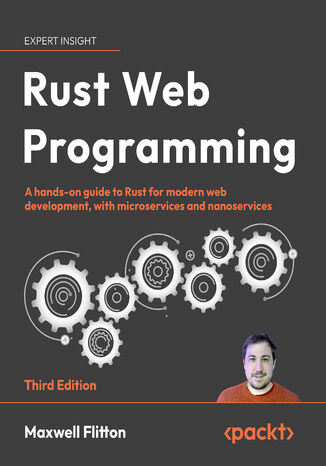
Maxwell Flitton
Rust is no longer just for systems programming. This book will show you why this safe and performant language is a crucial up-and-coming option for developing web applications, and get you on your way to building fully functional Rust web apps. You don’t need any experience with Rust to get started, and this new edition also comes with a shallower learning curve.You’ll get hands-on with emerging Rust web frameworks including Actix, Axum, Rocket, and Hyper. You’ll look at injecting Rust into the frontend with WebAssembly and HTTPS configuration with NGINX. Later, you’ll move on to more advanced async topics, exploring TCP and framing, and implementing async systems.As you work through the book, you’ll build a to-do application with authentication using a microservice architecture that compiles into one Rust binary, including the embedding of a frontend JavaScript application in the same binary. The application will have end-to-end atomic testing and a deployment pipeline.By the end of this book, you’ll fully understand the significance of Rust for web development. You’ll also have the confidence to build robust, functional, and scalable Rust web applications from scratch.
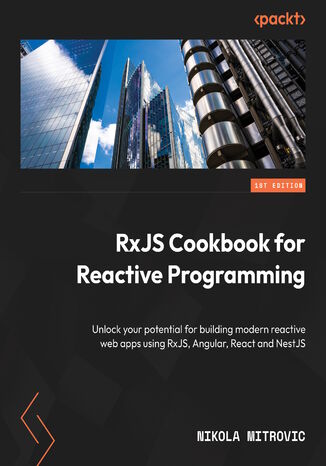
Nikola Mitrović , Santosh Yadav
Building modern web applications that are responsive and resilient is essential in this rapidly evolving digital world. Imagine effortlessly managing complex data streams and creating seamless user experiences—this book helps you do just that by adopting RxJS to boost your development skills and transform your approach to reactive programming.Written by a seasoned software engineer and consultant with a decade of industry experience, this book equips you to harness the power of RxJS techniques, patterns, and operators tailored for real-world scenarios. Each chapter is filled with practical recipes designed to tackle a variety of challenges, from managing side effects and ensuring error resiliency in client applications to developing real-time chat applications and event-driven microservices. You’ll learn how to integrate RxJS with popular frameworks, such as Angular and NestJS, gaining insights into modern web development practices that enhance performance and interactivity.By the end of this book, you’ll have mastered reactive programming principles, the RxJS library, and working with Observables, while crafting code that reacts to changes in data and events in a declarative and asynchronous way.
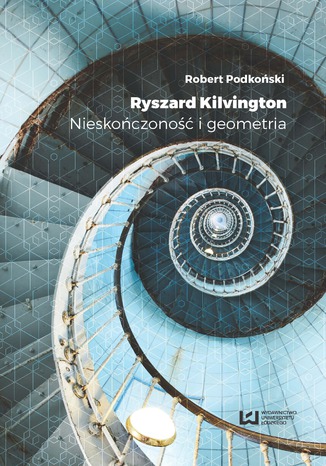
Ryszard Kilvington. Nieskończoność i geometria
Robert Podkoński
Już autorzy średniowiecznych tekstów zapoczątkowali proces, który zwykło się nazywać rewolucją naukową. Czy siedemnastowieczna rewolucja naukowa zaistniałaby bez poprzedzających ją scholastycznych dysput, których niektórzy uczestnicy doszukiwali się w pomysłach średniowiecznych przyrodników antycypacji idei nowożytnych fizyków. Inni natomiast stwierdzali, że nauka siedemnastowieczna w najmniejszym stopniu nie była kontynuacją filozofii przyrody wieków średnich, nawet pomimo tego, iż wiele jej elementów uderzająco przypominało koncepcje uznane przez fizykę nowożytną. Należy tutaj podkreślić, że zwolennicy zarówno jednej, jak i drugiej opcji za kryterium nowoczesności uznawali głównie wykorzystanie matematyki do opisu i rozwiązywania problemów fizycznych. Wysiłki historyków nauki próbujących rozwiązać tę kwestię ujawniły jednakże wiele zaskakujących i ciekawych aspektów średniowiecznej filozofii przyrody. Dzięki ich pracy wypełnionych zostało przynajmniej kilka pustych miejsc w skomplikowanej i wielopoziomowej układance, jaką jest obraz historii ludzkiego geniuszu. Celem niniejszej pracy jest zapełnienie kolejnej luki w tym obrazie.
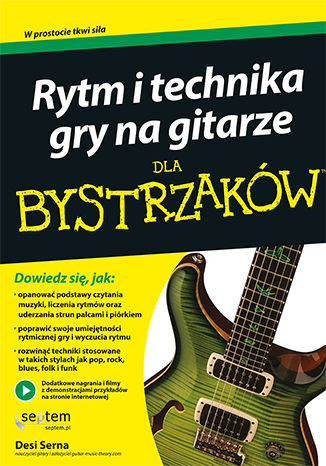
Rytm i technika gry na gitarze dla bystrzaków
Desi Serna
Dowiedz się, jak: opanować podstawy czytania muzyki, liczenia rytmów oraz uderzania strun palcami i piórkiem, poprawić swoje umiejętności rytmicznej gry i wyczucia rytmu, rozwinąć techniki stosowane w takich stylach, jak pop, rock, blues, folk i funk. Przygnębia Cię słaba gra rytmiczna? Mistrzowie gitary wyglądają, jakby granie nie sprawiało im wysiłku, ale opanowanie rytmu i technik wymaga naprawdę sporej dawki ćwiczeń. Ten przyjazny poradnik ułatwi Ci zrealizowanie marzenia o tym, by grać jak zawodowy muzyk. Znajdziesz tu mnóstwo praktycznych i szczegółowych instrukcji na każdy temat, od gry akordowej po palcowanie i piórkowanie. Znajdź swój rytm — naucz się czytać i grać podstawowe rytmy, popraw umiejętność bicia i graj z większym groove’em. Piórko lub kostka — poznaj zalety i wady gry piórkiem i opanuj crosspicking, sweeping oraz piórkowanie naprzemienne i ekonomiczne, aby piórko nie miało dla Ciebie tajemnic. Zrób to palcem — zagraj popularne schematy palcowania i aranżacje w stylu melodii z akordami oraz naucz się gry hybrydowej i perkusyjnego slappingu. Doszlifuj warsztat — poćwicz hammering, pull-off, slide i podciągnięcia strun, rozwijając przy tym zręczność i synchronizację palców. Poznaj lepiej dostępne narzędzia — dowiedz się, jak korzystać z piórka, rurki slide i wajchy tremolo. Rozwiń swoje umiejętności i poznaj wiele przydatnych technik gitarowych! W książce znajdziesz: tajniki utrzymywania rytmu, popularne schematy bicia, techniki ulepszania groove’u, sposoby artykulacji i ekspresji, mechanikę piórkowania, ćwiczenia rozwijające umiejętności czytania nut i gry na gitarze, piosenki i gitarzystów, którzy zainspirują Twój rozwój rytmiczny i techniczny, nagrania i filmiki dostępne na stronie poświęconej książce. Desi Serna jest twórcą prężnie działającej platformy internetowej, na której działa jako przekonujący i kontaktowy guru gitary. Ma na koncie ponad 10 000 godzin doświadczenia w prowadzeniu prywatnych lekcji i zajęć z gitary i został ochrzczony przez magazyn „Rolling Stone” „ekspertem teorii muzyki”.
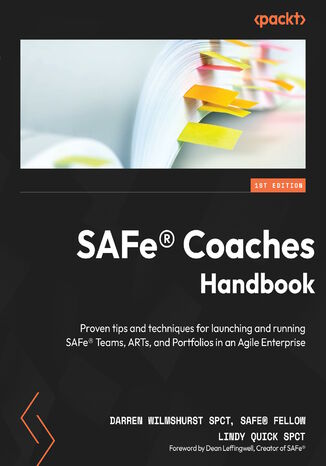
Darren Wilmshurst, Dean Leffingwell, Lindy Quick
The Scaled Agile Framework (SAFe®) is widely recognized as an eff ective methodology for implementing Agile practices at the Enterprise level. However, the complexity of SAFe® can make it challenging for Teams and organizations to determine which practices can be safely adapted to their unique needs. Although SAFe® is a framework rather than a set of rules, promoting adaptation, it’s crucial to understand why SAFe® practices are designed the way they are along with the consequences of modifying them.The SAFe® Coaches Handbook is a comprehensive resource that goes beyond a how-to guide, providing a deep understanding of SAFe® principles and practices. The chapters are designed in a way to teach you how to successfully implement SAFe® in your organization and eff ectively manage the Team’s Backlog while avoiding common pitfalls. You’ll discover optimal ways to create SAFe® Teams and run successful Events. You’ll also learn how to plan Agile Release Trains (ARTs), manage the ART Backlog, conduct PI Planning, and grasp the importance of Value Stream Identifi cation in driving value delivery.By the end of this book, you’ll be armed with practical tips and advice to help you successfully customize the Scaled Agile Framework to your Enterprise’s needs while preserving the aspects that make it work successfully.
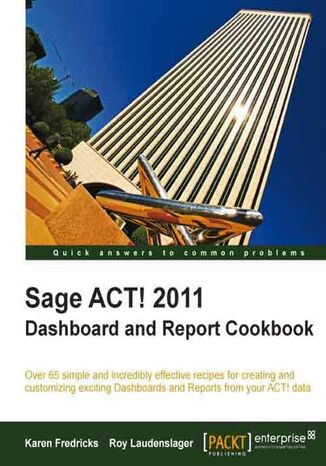
Karen Fredricks, Roy Laudenslager
Sage ACT! is the top selling CRM software application, and it helps businesses to centralize contact information, organize their calendars and notes, and ultimately maximize contact relationships to optimize business efficiency and profitability. In ACT! 2011, a variety of new dashboards and reports are available for producing graphical representations of client information and for measuring the success of your sales force.This cookbook is full of practical and immediately applicable recipes that will take you from being an ACT! report and dashboard novice to a report-writing pro in no time. The recipes will show you how to create custom dashboards and reports, as well as utilize the new templates available in recent ACT! versions. You will learn to use ACT!'s Report Editor and Dashboard Designer so that you will be able to easily view important information about your business and your sales force.The recipes begin by covering the most basic elements of the ACT! reports and continue to include several recipes that will guide you through creating brand-new reports. If you have an ACT! database, you need to be able to access it quickly and logically; this book will help you do just that.
Alan Mark Berg, Ian Dolphin
Sakai is a Collaboration and Learning environment that provides the means to manage users, courses, instructors, and facilities, as well as a spectrum of tools including assessment, grading, and messaging. Sakai is loaded with many handy features and tools, which make it uniquely the Learning system of the present as well as the future.This book is the officially endorsed Sakai guide and is an update to the previous book, Sakai Courseware Management: The Official Guide. From setting up and running Sakai for the first time to creatively using its tools and features, this book delivers everything you need to know.Written by Alan Berg, a Sakai fellow and former Quality Assurance Director of the Sakai Foundation and Ian Dolphin the Executive Director of the Sakai Foundation with significant contributions from the Sakai community, Sakai CLE Courseware Management: The Official Guide is a comprehensive study of how Sakai CLE should be used, managed, and maintained, with real world examples and practical explanations.The book opens with an overview of Sakai, its history and how to set up a demonstration version. Next, the underlying structures and tools are described. In using Sakai for Teaching and Collaboration, there is a detailed discussion of how to structure online courses for teaching and collaboration between groups of students, from creating course sites to understanding their use in different organizations around the world.
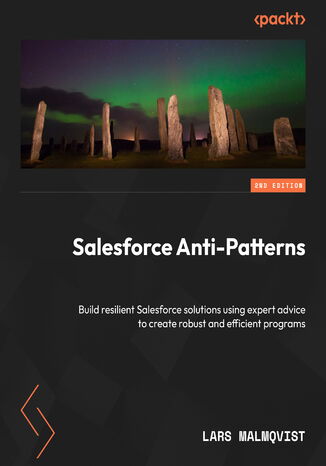
Lars Malmqvist
While Salesforce is a powerful platform, it is prone to common pitfalls that can result in suboptimal performance, increased costs, and reduced user satisfaction. Known as anti-patterns, these problems can arise from design flaws, poor implementation choices, or a lack of understanding of best practices.Written by a seasoned Salesforce professional and 33-time certified Salesforce Certified Technical Architect, this revised edition will teach you how to identify and avoid common issues, optimize your Salesforce architecture, and ensure successful implementation. This second edition is updated with a comprehensive exploration of Salesforce, along with the addition of the most common Salesforce anti-patterns, providing in-depth analysis and practical solutions. These key learnings will further refine your skills to help you build more robust, scalable, and efficient Salesforce architectures. The chapters offer an expanded coverage of emerging technology trends such as AI and DevOps, updated examples, and additional case studies to ensure that you have the latest information and insights.By the end of this book, you’ll have gained the confidence and expertise needed to design and implement effective Salesforce solutions.
Jakub Stefaniak
Are you ready to turn your million-dollar ideas into reality? Salesforce AppExchange Success Blueprint is your ultimate guide to becoming a successful ISV partner and publishing your Salesforce applications on the AppExchange. This book covers every facet of the application development process, from the initial partnership establishment to smoothly preparing for security review and managing app releases. Packed with real-world examples, case studies, and detailed guides, it’ll help you master AppExchange development.Throughout this experience, you’ll discover how to create customer-centric applications that seamlessly integrate with external systems, ensuring a frictionless user experience. You’ll also navigate the intricate process of preparing for security reviews and managing app releases. In addition, you’ll delve into the critical realm of business strategy, addressing essential elements such as maximizing profitability, achieving operational excellence, leveraging analytics to make data-driven decisions, and effectively handling technical debt to maintain your app's robustness and scalability.By the end of this journey, you’ll possess a deep understanding of AppExchange development from both technical and business standpoints, making you well-prepared to excel in the Salesforce ecosystem. Let's embark on this exciting path together!
Paul Goodey GP, Paul Goodey
This book is for administrators who want to develop and strengthen their Salesforce CRM skills in the areas of configuration and system management. Whether you are a novice or a more experienced administrator, this book aims to enhance your knowledge and understanding of the Salesforce CRM platform and features.
Paul Goodey
Salesforce CRM’s Winter ’17 release offers a host of new features for CRM designed to transform your sales and marketing requirements. With this comprehensive guide to implementing Salesforce CRM, administrators of all levels can easily acquire deep knowledge of the platform. The book begins by guiding you through setting up users and the security settings and then progresses to configuration, data management, and data analytics. We swiftly move on to the setting up of organization wide features that affect the look and feel of the application. Process automation and approval mechanisms are covered next, along with the functional areas of Sales Cloud, Service Cloud, Marketing Cloud, and Salesforce Chatter. This book details Salesforce CRM system administration in a practical way and is an invaluable reference for both new administrators and experienced professionals. At the end of the book, techniques to further enhance the system and improve the return on investment Salesforce mobile apps and mobile administration are covered, along with Salesforce Adoption Manager. Every chapter is complete with a section containing example questions of the type that you might encounter in the certification examination.
Paul Goodey, Paul Goodey GP
Salesforce CRM is a market-leading customer relationship management (CRM) application that is accessed over the Internet. It is a proven system which helps to manage large volumes of information across an organization and also improves communication between departments for exceptional customer service. The CRM application is available for the management of sales projections and orders, marketing plans, knowledge management, service and support, partner relationships, and data analytics. The application greatly enhances a company's sales performance, improves customer satisfaction, and provides a robust customer relationship management system for an organization. For optimum performance of the system, there are a lot of things for you as the Salesforce administrator to know and tackle, but there isn't a single book which focuses on the administrative aspect of Salesforce CRM.Salesforce CRM Admin Cookbook enables you to instantly extend and unleash the power of Salesforce CRM. It provides clear, comprehensive instructions along with detailed screenshots and code. Whether you are looking for solutions to enhance the core features or are looking for ideas for advanced customization techniques, this book will provide you with immediate, practical, and exciting real-world recipes.This book provides practical, step-by-step instructions that cover the use of hidden features, advanced user interface techniques, solutions for process automation, and data and systems integration in detail.This book guides you through interesting topics spanning a variety of functional areas. Recipes are provided that cover data quality and automation, approval and workflow processing, solutions to increase productivity, and the integration of Salesforce CRM with external tools and applications, such as Google and Microsoft Outlook.Salesforce CRM Admin Cookbook' provides practical, step-by-step instructions to deliver enhanced functionality and extend the power of Salesforce CRM.
Paul Goodey
Salesforce CRM is a market-leading customer relationship management (CRM) application that is accessed over the internet. This application greatly enhances a company's sales performance, improves customer satisfaction, and provides a robust customer relationship management system for an organization.Salesforce CRM Admin Cookbook, Second Edition enables you to instantly extend and unleash the power of Salesforce CRM and its Lightning Experience framework. It provides clear, comprehensive instructions along with detailed screenshots and code. Whether you are looking for solutions to enhance the core features, such as data management, process automation, data validation, and home page administration, or are looking for ideas on advanced customization techniques, this book will provide you with immediate, practical, and exciting real-world recipes. This book guides you through interesting topics spanning a variety of functional areas. Recipes are provided that allow you to configure, build and extend the capability of Salesforce CRM using the Lightning Experience framework.
Krzysztof Nowacki, Mateusz Twarożek
Do you aspire to be a successful Salesforce administrator or consultant? If yes, then this step-by-step guide is for you. Written by certified Salesforce professionals, the Salesforce CRM Administration Handbook will take you through the intricacies of Salesforce, covering objects, records, automation, and much more while also prepping you for the Salesforce certification exam.Starting with an overview of the capabilities and limitations of Salesforce, you’ll progress toward a holistic understanding of system architecture with real-world examples, including workarounds that enable the successful completion of projects. As you delve deeper, you’ll learn about the fundamental concepts of a CRM system, its purpose, and the pivotal role of an administrator in the Salesforce lifecycle. You’ll also explore the basic structures of the entire Salesforce system and navigate confidently through the intricacies of security, automation, and reporting in the Sales/Service Cloud.By the end of this book, you’ll have the confidence you need to navigate Salesforce’s backend seamlessly, implement configuration changes effortlessly, and communicate fluently in Salesforce terminology.
Paul Goodey, Paul Goodey GP
Salesforce CRM: The Definitive Admin Handbook is the complete guide to implementing Salesforce CRM. Whether you are looking to enhance the core features or you have already started customizing your Salesforce CRM system and are looking for guidance on advanced features. This book will show you how to get maximum benefit from this exciting product.Salesforce CRM is a market-leading customer relationship management (CRM) application that is accessed over the Internet. The CRM application provides facilities to manage sales projections and orders, marketing plans, business process automation and collaboration, service and support, and data analytics. The application greatly enhances a company's sales performance, improves team work and collaboration, and provides a robust customer relationship management strategy for an organization.Salesforce CRM: The Definitive Admin Handbook has been updated for the Spring '13 release and gives you all the information you need to administer this powerful CRM application.The book begins with the setup of users and security settings and then progresses to configuration, data management, and data analytics. Finally, the book covers the ways in which the core platform can be further extended and enhanced.Focused on the needs of the enterprise, this book provides a solution-driven approach for both business and IT specialists to get the most from the Salesforce CRM application. It begins with setting up of organization-wide features that affect the look-and-feel of the application. We will then move on to data management, analytics, process automation and approval mechanisms are then covered, along with the functional areas of Sales Cloud, Service Cloud, Marketing Cloud, and Salesforce Chatter. Finally, we will look into the methods used to further enhance the system and to improve the return on investment from the application.After reading Salesforce CRM: The Definitive Admin Handbook, you will feel comfortable with the administration features within Salesforce CRM and will have been presented with real-world scenarios to improve the setup and avoid some common pitfalls.
Aaron Allport
The Salesforce Data Architect is a prerequisite exam for the Application Architect half of the Salesforce Certified Technical Architect credential. This book offers complete, up-to-date coverage of the Salesforce Data Architect exam so you can take it with confidence.The book is written in a clear, succinct way with self-assessment and practice exam questions, covering all the topics necessary to help you pass the exam with ease. You’ll understand the theory around Salesforce data modeling, database design, master data management (MDM), Salesforce data management (SDM), and data governance. Additionally, performance considerations associated with large data volumes will be covered. You’ll also get to grips with data migration and understand the supporting theory needed to achieve Salesforce Data Architect certification.By the end of this Salesforce book, you'll have covered everything you need to know to pass the Salesforce Data Architect certification exam and have a handy, on-the-job desktop reference guide to re-visit the concepts.
Rob Cowell, Lars Malmqvist
Rob Cowell is a Salesforce DevOps Advocate with extensive experience as a Salesforce Developer and Architect, guiding best practices for Salesforce DevOps. Lars Malmqvist, a 32x certified Salesforce CTA, has 15 years of experience building advanced Salesforce solutions and is the author of two books, Architecting AI Solutions on Salesforce and Salesforce Anti-Patterns. As the Salesforce Platform evolves, architects face increasing demand for advanced solutions. This book serves as your definitive guide to mastering effective DevOps practices crucial for successful Salesforce projects. Beginning with cultivating a DevOps mindset focused on collaboration and communication, it emphasizes governance, visibility, and accountability. You'll delve into tools and techniques, leveraging the robust capabilities of SFDX to craft your strategy efficiently. This book stands out for its practical approach to Salesforce packaging and CI/CD stack creation, guiding you to build a seamless automated change delivery system with freely available software. It addresses critical operational concerns such as ticket management, backups, change monitoring, and data seeding. In the final chapters, you'll discover third-party solutions to expedite your Salesforce DevOps journey, empowering you to deliver sophisticated and efficient projects.
Kristian Margaryan Jorgensen, Tameem Bahri
With ever-growing digital transformation programs involving Salesforce, there is a greater need for a comprehensive overview of the phases and activities specific to Salesforce implementations. This book will act as a detailed guide for your Salesforce implementation journey, including common issues and pitfalls to mitigate and prevent errors.The Salesforce End-to-End Implementation Handbook starts with the pre-development phase. Here you’ll understand how to define the vision and nature of your project, determine your change management strategy and delivery methodology, learn to build a business case for your project, get insights on engaging with Salesforce and implementation partners, and learn to establish a governance framework.As you progress, you’ll gain insights on the necessary activities, milestones, and common issues faced in Salesforce implementation, along with strategies to mitigate them. At the end of each section, you’ll find evaluation checklists to assess the state of your Salesforce implementation.By the end of this book, you’ll be well-equipped to set up Salesforce projects and programs effectively and deliver maximum ROI.
Sharif Shaalan, Timothy Royer
The second edition of Salesforce for Beginners provides you with a holistic introduction to the Salesforce platform. Whether you need help with the lead generation process, Salesforce user management and data security, or automating tasks with Salesforce Flow, this book is for you.Throughout this new edition you will find real-world business use cases to demonstrate concepts, screenshots of the latest UI displayed for screen navigation, and exercises at the end of every chapter to test your newfound knowledge.Working with the world’s leading CRM software, you will learn how to create activities, manage leads, develop your prospects and sales pipeline using opportunities and accounts, and understand how you can enhance marketing activities using campaigns. You will be able to take your administration skills to the next level as you approach real-world user management topics such as ownership skew. You will learn about data security on the Salesforce platform, with an introduction to the role hierarchy, system and user permissions, and much more.In this new edition you'll get to explore the popular automation tool Salesforce Flow. You’ll learn about the different flow types to employ, how to construct your first flow, and how to extensively test your flow. This will allow you to come away from reading this book with a real, functional flow for your business processes.
Andrew Fawcett
Salesforce Lightning provides a secure and scalable platform to build, deploy, customize, and upgrade applications. This book will take you through the architecture of building an application on the Lightning platform to help you understand its features and best practices, and ensure that your app keeps up with your customers’ increasing needs as well as the innovations on the platform.This book guides you in working with the popular aPaaS offering from Salesforce, the Lightning Platform. You’ll see how to build and ship enterprise-grade apps that not only leverage the platform's many productivity features, but also prepare your app to harness its extensibility and customization capabilities. You'll even get to grips with advanced application architectural design patterns such as Separation of Concerns, Unit Testing and Dependency Integration. You will learn to use Apex and JavaScript with Lightning Web Components, Platform Events, among others, with the help of a sample app illustrating patterns that will ensure your own applications endure and evolve with the platform. Finally, you will become familiar with using Salesforce DX to develop, publish, and monitor a sample app and experience standard application life cycle processes along with tools such as Jenkins to implement CI/CD.By the end of this book, you will have learned how to develop effective business apps and be ready to explore innovative ways to meet customer demands.
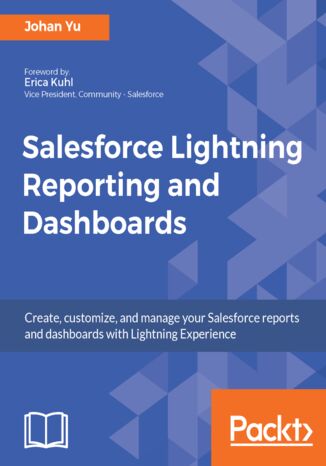
Johan Yu
Built on the Salesforce App Cloud, the new Lightning Experience combines the new Lightning Design System, Lightning App Builder, and Lightning Components to enable anyone to quickly and easily create modern enterprise apps.The book will start with a gentle introduction to the basics of Salesforce reports and dashboards. It will also explain how to access reports in depth. Then you will learn how to create and manage reports, to use Schedule Report, and create advanced report configurations. The next section talks about dashboards and will enable you to understand and compare various types of dashboard component and how you can benefit the most from each of them. Then we move on to advanced topics and explain tips and tricks related to reports and dashboards, including reporting snapshots, report parameters, and collaboration.Finally, we will discuss how to access dashboards and reports from the Salesforce1 mobile app.
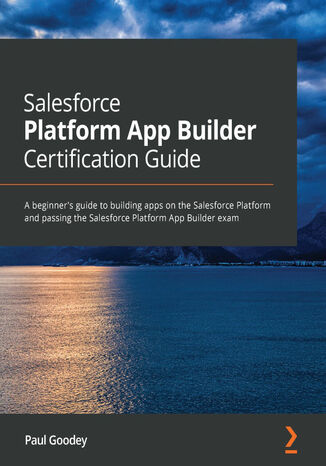
Paul Goodey GP, Paul Goodey
Do you want to be able to confidently design and build apps that support business processes within the Lightning Platform? Salesforce Platform App Builder Certification Guide not only helps you to do this, but also prepares you for the certification exam.The book starts by describing the core capabilities of the Lightning Platform. You'll learn techniques for data modeling to design, build, and deploy apps without writing code and achieve rapid results with the declarative capabilities that the Lightning Platform provides. Next, you'll explore utilities for importing and exporting data and the features available in the Lightning Platform to restrict and extend access to objects, fields, and records. You'll also be able to customize the Salesforce Lightning Experience user interface (UI) and build functionality for custom buttons, links, and actions. Later, this certification study guide will take you through reporting and the social and mobile features of the Lightning Platform. Finally, you’ll get to grips with Salesforce build environments and deployment options.By the end of this Salesforce book, you'll not only have learned how to build data models, enforce data security, and implement business logic and process automation, but also have gained the confidence to pass the Platform App Builder exam and achieve Salesforce certification.
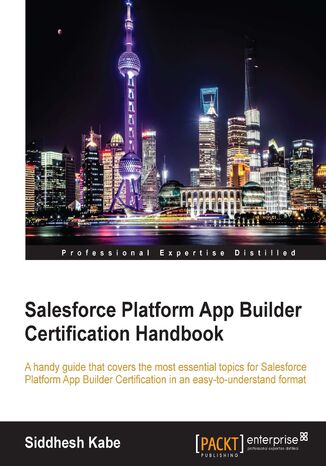
Siddhesh Kabe
The Salesforce Certified Platform App Builder exam is for individuals who want to demonstrate their skills and knowledge in designing, building, and implementing custom applications using the declarative customization capabilities of Force.com. This book will build a strong foundation in Force.com to prepare you for the platform app builder certification exam. It will guide you through designing the interface while introducing the Lightning Process Builder. Next, we will implement business logic using various point and click features of Force.com. We will learn to manage data and create reports and dashboards. We will then learn to administer the force.com application by configuring the object-level, field-level, and record-level security. By the end of this book, you will be completely equipped to take the Platform App Builder certification exam.
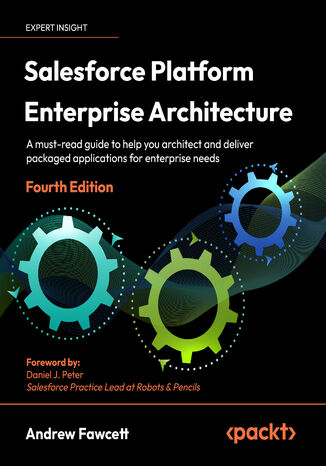
Andrew Fawcett
Salesforce makes architecting enterprise grade applications easy and secure – but you'll need guidance to leverage its full capabilities and deliver top-notch products for your customers.This fourth edition brings practical guidance to the table, taking you on a journey through building and shipping enterprise-grade apps.This guide will teach you advanced application architectural design patterns such as separation of concerns, unit testing, and dependency injection. You'll also get to grips with Apex and fflib, create scalable services with Java, Node.js, and other languages using Salesforce Functions and Heroku, and find new ways to test Lightning UIs. These key topics, alongside a new chapter on exploring asynchronous processing features, are unique to this edition. You'll also benefit from an extensive case study based on how the Salesforce Platform delivers solutions.By the end of this Salesforce book, whether you are looking to publish the next amazing application on AppExchange or build packaged applications for your organization, you will be prepared with the latest innovations on the platform.