
Informatyka
Agile. Programowanie zwinne: zasady, wzorce i praktyki zwinnego wytwarzania oprogramowania w C#
Robert C. Martin, Micah Martin
Poznaj nowoczesną metodykę wytwarzania oprogramowania w C# Jak stosować w praktyce zasady zwinnego wytwarzania oprogramowania? W jaki sposób wykorzystywać w projekcie diagramy UML? Jak korzystać z wzorców projektowych? W związku ze stale rosnącymi oczekiwaniami użytkowników oprogramowania produkcja systemów informatycznych wymaga dziś korzystania z usystematyzowanych metod zarządzania. Projekt informatyczny, przy którym nie używa się sensownej metodologii wytwarzania, jest skazany na porażkę - przekroczenie terminu, budżetu i niespełnienie wymagań funkcjonalnych. Kierowanie projektem zgodnie z określonymi zasadami również nie gwarantuje sukcesu, lecz znacznie ułatwia jego osiągnięcie. Na początku roku 2001 grupa ekspertów zawiązała zespół o nazwie Agile Alliance. Efektem prac tego zespołu jest metodologia zwinnego wytwarzania oprogramowania - Agile. Książka Agile. Programowanie zwinne: zasady, wzorce i praktyki zwinnego wytwarzania oprogramowania w C# to podręcznik metodologii Agile przeznaczony dla twórców oprogramowania korzystających z technologii .NET. Dzięki niemu poznasz podstawowe założenia i postulaty twórców Agile i nauczysz się stosować je w praktyce. Dowiesz się, jak szacować terminy i koszty, dzielić proces wytwarzania na iteracje i testować produkt. Zdobędziesz wiedzę na temat refaktoryzacji, diagramów UML, testów jednostkowych i wzorców projektowych. Przeczytasz także o publikowaniu kolejnych wersji oprogramowania. Techniki programowania ekstremalnego Planowanie projektu Testowanie i refaktoryzacja Zasady zwinnego programowania Modelowanie oprogramowania za pomocą diagramów UML Stosowanie wzorców projektowych Projektowanie pakietów i komponentów Przekonaj się, ile czasu i pracy zaoszczędzisz, stosując w projektach metodologię Agile.
Agile. Retrospektywy w zarządzaniu standardami
Marc Loeffler
Ostatnia z dwunastu zasad Manifestu Agile mówi o retrospektywach. W myśl tej reguły zespół programistów odbywa regularne spotkania, na których analizuje efekty pracy nad projektem, myśli nad możliwymi zmianami i odpowiednio dopasowuje działania. Retrospektywa po każdej iteracji projektu pozwala na niezwykle skuteczne optymalizowanie pracy zespołu - przeprowadzona odpowiednio gwarantuje, że zebrane wnioski i opinie członków grupy przyczyniają się do coraz lepszych wyników. Rzecz w tym, że rzetelne przygotowanie i przeprowadzenie retrospektywy wcale nie jest proste i oczywiste! W tej książce znajdziesz szereg praktycznych wskazówek, sprawdzonych praktyk i innowacji, dzięki którym sprawisz, że retrospektywy wniosą do Twojego zespołu prawdziwą wartość. Szybko się zorientujesz, że przedstawione tu techniki można stosować w dowolnym projekcie, w którym sukces zależy od zaangażowania i efektywności zespołu i gdy potrzebny jest proces ciągłego doskonalenia. W książce znalazło się sporo ciekawych informacji, dzięki którym łatwiej będzie rozpoznać i przezwyciężyć typowe problemy. Zapoznasz się z przełomowymi koncepcjami, takimi jak eksperymentowanie i uczenie się na bazie myślenia systemowego. Pozornie proste i oczywiste pomysły umożliwią Ci znakomitą poprawę wyników pracy Twojego zespołu! W tej książce: sukcesy i porażki jako źródło cennej informacji techniki facylitacji techniki przygotowania retrospektyw wykorzystywanie spostrzeżeń i opinii typowe problemy retrospektyw retrospektywy a wprowadzanie zmian o wielkiej skali Spójrz wstecz, zastanów się i idź do przodu!
Andrew Stellman, Jennifer Greene
Przekonaj się, jak bardzo metodyki zwinne ułatwią Ci pracę! Metodyki zwinne różnią się od standardowego prowadzenia projektów. Jeśli Twój zespół programistów nigdy nie pracował zgodnie z ideą Agile, najwyższy czas to zmienić, zwłaszcza że zwinność staje się niezwykle modna! Dzięki tej nietuzinkowej, innowacyjnej książce błyskawicznie zrozumiesz, co się kryje za tą nazwą i jak to się dzieje, że podejścia zwinne nie tylko zapewniają świetne rezultaty, ale sprawiają też, że praca w grupie staje się dużo przyjemniejsza. Jeśli jednak praktyka Agile sprawia trudności w Twoim zespole, być może trzeba zmienić jego nastawienie. Jak to osiągnąć? Tego też się nauczysz dzięki tej książce! Podobnie jak inne książki z serii "Rusz głową", również i ta została napisana z wykorzystaniem najnowszych zdobyczy nauki o poznawaniu i uczeniu się. Dzięki temu Twój mózg zaangażuje się w poznawanie nowych koncepcji i przyswoi je bez ociągania się. Zrozumiesz, na czym polegają i jakie zalety mają najpopularniejsze metodyki Agile: Scrum, XP, Lean i Kanban. Nauczysz się korzystać z dobrodziejstw metodyk zwinnych i sprawisz, że Twój zespół zacznie lepiej planować pracę, będzie pisać lepszy kod, poprawi się współpraca w grupie. Niepostrzeżenie idea Agile zwinnie zadomowi się w Twoim umyśle i w Twoim zespole. Co więcej, jeśli zechcesz podjąć wyzwanie i zdobyć certyfikat PMI-ACP, dzięki tej książce świetnie przygotujesz się do egzaminu!
Agile. Szybciej, łatwiej, dokładniej
Marek Krzemiński
Bądź sprawny, bądź zręczny, bądź zwinny! Bądź Agile! Jak wdrażać skuteczne i intuicyjne metodyki programowania w swojej firmie? Jak motywować zespół do działania i tworzyć najlepsze warunki pracy? Jak sprawiać, aby projekty kończyły się w założonym czasie i satysfakcjonowały klientów? Agile, czyli programowanie zwinne, to grupa metodyk wytwarzania oprogramowania z wykorzystaniem technik przyrostowych. Cieszy się ogromną — i ciągle rosnącą — popularnością zarówno wśród programistów, jak i osób zarządzających projektami informatycznymi. „Agile” znaczy „sprawny”, „zwinny”, „zręczny” i właśnie takie są w założeniu praktyki określane angielskim terminem Agile software development. Mają one przyspieszyć, uprościć i usprawnić proces tworzenia oprogramowania. Zapewniają wysoką jakość końcowego produktu i spełniają oczekiwania klienta, nawet jeśli w czasie trwania projektu jego wymagania ulegną znacznej zmianie. Książka Agile szybciej, prościej, dokładniej powstała z myślą o wszystkich, którzy rozpoczynają swoją przygodę z praktykami programowania zwinnego. Jest przeznaczona dla osób chcących wdrożyć je w zespole projektowym i dla osób należących do zespołu, w którym są one wdrażane. Dowiesz się z niej, jak zastosować metodyki Agile w codziennej pracy i jak przedkładać interakcje międzyludzkie ponad procedury, działające oprogramowanie nad obszerną dokumentację, współpracę z klientem nad negocjacje handlowe oraz reagowanie na zmiany nad realizację planu. Jeśli zastosujesz się do rad zawartych w tej książce, współpraca projektowa przebiegnie się bez przeszkód — efektywnie i satysfakcjonująco dla wszystkich członków zespołu. Od autorów dostaniesz także prezent w postaci gotowych szablonów, które możesz natychmiast wydrukować i wykorzystywać do woli w pracy z metodykami Agile. Dowiedz się, jak zarządzać zmianą z Agile i uniknąć najpopularniejszych błędów w zarządzaniu projektami! Przegląd metodyk Agile Zalety programowania zwinnego Zastosowanie technik Agile w praktyce Błędy, których można uniknąć Narzędzia ułatwiające pracę Przykłady z życia wzięte Przekonaj się, że tworzenie oprogramowania może być świetną zabawą!
Jeffrey Winesett
This book is a step by step tutorial in developing a real-world application using the incremental and iterative approach to software development. You learn about agile software development by leaning on the agile nature of the Yii application development framework. You touch on each aspect of the software development lifecycle by building a project task management application from concept through production deployment.After a brief, general introduction to the Yii framework and outlining the software development approach taken throughout the book, the chapters break down in the same way as software development iterations do in real-world projects. After the 1st iteration, you will have a working and tested application with a valid, tested connection to a database.In the 2nd and 3rd iterations, we flesh out our main database entities and domain object model and become familiar with Yii's object-relational-mapping (ORM) layer, Active Record. We also learn how to lean on Yii's auto-generation tools to automatically build our create/read/update/delete (CRUD) functionality against our newly created model. These iterations also focus on how Yii's form validation and submission model works. By the end of the third iteration you will have a working application that allows you to mange projects and issues (tasks) within those projects.The 4th and 5th iterations are dedicated to user management. We learn about the built-in authentication model within Yii to assist in application login and logout functionality. We then dive into the authorization model, first taking advantage of a Yii's simple access control model, then implementing the more sophisticated role-based access control (RBAC) framework that Yii provides.By the end of the 5th iteration, all of the basics of a task management application are in place. The next several iterations are focused on the nice-to-haves. We add user comment functionality, introducing a reusable content portlet architecture approach in the process. We add in an RSS Web feed and demonstrate how easy it is to integrate other third-party tools within a Yii application. We take advantage of Yii's theming structure to help streamline and design the application, and then introduce Yii's internationalization (I18N) features so the application can be adapted to various languages and regions without engineering changes.Finally, we turn our focus to production deployment. We introduce ways to optimize performance and security to prepare the application for a real-world production environment.
#AgileKtóryDziała. Pracuj zwinnie i skutecznie
Michał Dusiński, Tomasz Borowiec
Pracuj zwinnie - i skutecznie! Agile i Scrum, Scrum i Agile. Opanowawszy branżę IT, powoli, ale konsekwentnie, zdobywają inne biznesowe przyczółki i rozgaszczają się w firmach na dobre... Albo niedobre, gdy budzą niezrozumienie, protesty, a czasem nawet chęć ucieczki! Agile i Scrum brzmią tak nowocześnie, w teorii świetnie, w praktyce jednak często okazują się trudne, a co za tym idzie - rozczarowują. To przykre, ale prawda jest taka, że idee te, skądinąd słuszne i pożyteczne, w organizacjach nierzadko wdraża się na siłę i, co nawet gorsze, bez zrozumienia. Tymczasem zrozumienie zamysłu i celowości ich stosowania to podstawa w przypadku zarówno koncepcji zwinnego myślenia, jaką jest Agile, jak i narzędzi wspomagających, takich jak framework Scrum. Świadome podejście do założeń, które stoją za projektami realizowanymi zwinnie, pozwala samemu przekonać się o zaletach takiego sposobu myślenia i działania, wdrożyć się w nie i rozpocząć współpracę z podobnie myślącymi i działającymi osobami. I faktycznie, często nie jest to możliwe bez korzystania ze wsparcia takich narzędzi jak Scrum... lub Kanban. Bo gdzie Scrum nie może, tam Kanbana pośle. To książka napisana przez praktyków, którzy zjedli zęby na projektach i z niejednego pieca chleb jedli, pracując w firmach technologicznych i je rozwijając. Podzielili się w niej swoim bogatym doświadczeniem w używaniu i wdrażaniu metodyk zwinnych. To praktyczny zbiór doświadczeń, który pomoże przestawić się na zwinne myślenie i dostarczanie wartościowych produktów. Obowiązkowa pozycja dla menadżerów firm, Scrum Masterów, Product Ownerów i wszystkich, którzy chcieliby zacząć pracować zwinnie. Daniel Urban, CEO Sente
Noah Gift
Opanuj skuteczne, gotowe do użycia rozwiązania biznesowe dla sztucznej inteligencji i uczenia maszynowego AI podejście pragmatyczne pomaga rozwiązywać praktyczne problemy przy użyciu nowoczesnego uczenia maszynowego, sztucznej inteligencji i chmurowych narzędzi obliczeniowych. Noah Gift demistyfikuje wszelkie koncepcje i narzędzia potrzebne do osiągnięcia wyników nawet jeśli Czytelnik nie ma solidnego przygotowania z matematyki lub data science. Autor wyjaśnia skuteczne, gotowe do użycia rozwiązania udostępniane przez Amazon, Google i Microsoft oraz demonstruje sprawdzone techniki wykorzystujące ekosystem analizy danych oparty na języku Python. Proponowane podejścia i przykłady pomagają ukierunkować i uprościć każdy krok od wdrożenia po produkcję i budować rozwiązania o niezwykłych możliwościach skalowania. W miarę poznawania działania rozwiązań Machine Language (ML) będziesz uzyskiwać coraz bardziej intuicyjne zrozumienie tego, co można dzięki nim osiągnąć i jak zmaksymalizować ich wartość. Na tych podstawach autor krok po kroku prezentuje budowanie chmurowych aplikacji AI/ML do rozwiązywania realistycznych problemów w dziedzinie marketingu, zarządzania projektami, wyceniania produktów, nieruchomości i dużo więcej. Bez względu na to, czy jesteś profesjonalistą biznesowym, osobą decyzyjną, studentem czy programistą, eksperckie wskazówki autora i rozbudowane analizy przypadków przygotują cię do rozwiązywania problemów data science w niemal dowolnym środowisku. Uzyskaj i skonfiguruj wszystkie potrzebne narzędzia Szybko przejrzyj wszystkie funkcjonalności Pythona, których potrzebujesz do budowania aplikacji uczenia maszynowego Opanuj narzędzia AI i ML oraz cykl życia projektu Korzystaj z narzędzi analitycznych Pythona, takich jak IPython, Pandas, Numpy, Juypter Notebook i Sklearn Dołącz pragmatyczną pętlę zwrotną, która pozwoli nieustannie poprawiać wydajność naszych procedur i systemów Projektuj chmurowe rozwiązania AI oparte na Google Cloud Platform, uwzględniając usługi TPU, Colaboratory i Datalab Definiuj chmurowe przepływy pracy w Amazon Web Services, w tym wystąpienia punktowe, potoki kodu i inne Pracuj z API sztucznej inteligencji w Microsoft Azure Poznaj budowanie sześciu rzeczywistych aplikacji AI od początku do końca
AI Agents on AWS. Beginner's guide to building AI agents on AWS
Bunny Kaushik, Mona M, Randy DeFauw
Build reliable AI agents on AWS and move beyond prototypes with practical guidance. This book helps you design, deploy, and manage agentic systems that reason, use tools, and collaborate to solve real-world tasks.You start with the foundations of agentic AI, understanding how agents think, act, and interact. Design single-agent systems, extend them with tool and function calling, and add memory for context-aware behavior using Amazon Bedrock and SageMaker AI. You will also use LangGraph and Strands to structure agent workflows.As you progress, create multi-agent systems and orchestrate workflows where specialized agents collaborate. Learn how MCP and A2A enable communication, interoperability, and modular design across agent ecosystems.Focus on production readiness by deploying and scaling agents with Bedrock AgentCore, evaluating performance, and implementing observability, monitoring, and governance. By the end, you will be able to design and operate robust AI agent systems on AWS.
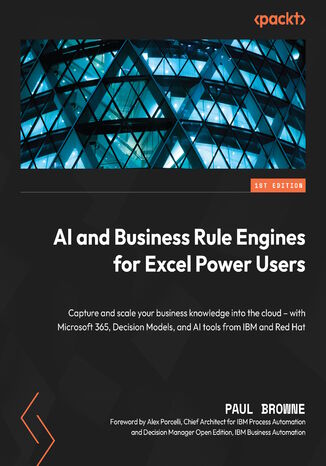
Paul Browne (GBP), ALEX PORCELLI
Microsoft Excel is widely adopted across diverse industries, but Excel Power Users often encounter limitations such as complex formulas, obscure business knowledge, and errors from using outdated sheets. They need a better enterprise-level solution, and this book introduces Business rules combined with the power of AI to tackle the limitations of Excel.This guide will give you a roadmap to link KIE (an industry-standard open-source application) to Microsoft’s business process automation tools, such as Power Automate, Power Query, Office Script, Forms, VBA, Script Lab, and GitHub. You’ll dive into the graphical Decision Modeling standard including decision tables, FEEL expressions, and advanced business rule editing and testing.By the end of the book, you’ll be able to share your business knowledge as graphical models, deploy and execute these models in the cloud (with Azure and OpenShift), link them back to Excel, and then execute them as an end-to-end solution removing human intervention. You’ll be equipped to solve your Excel queries and start using the next generation of Microsoft Office tools.
AI Blueprints. How to build and deploy AI business projects
Dr. Joshua Eckroth
AI Blueprints gives you a working framework and the techniques to build your own successful AI business applications. You’ll learn across six business scenarios how AI can solve critical challenges with state-of-the-art AI software libraries and a well thought out workflow. Along the way you’ll discover the practical techniques to build AI business applications from first design to full coding and deployment.The AI blueprints in this book solve key business scenarios. The first blueprint uses AI to find solutions for building plans for cloud computing that are on-time and under budget. The second blueprint involves an AI system that continuously monitors social media to gauge public feeling about a topic of interest - such as self-driving cars. You’ll learn how to approach AI business problems and apply blueprints that can ensure success.The next AI scenario shows you how to approach the problem of creating a recommendation engine and monitoring how those recommendations perform. The fourth blueprint shows you how to use deep learning to find your business logo in social media photos and assess how people interact with your products. Learn the practical techniques involved and how to apply these blueprints intelligently. The fifth blueprint is about how to best design a ‘trending now’ section on your website, much like the one we know from Twitter. The sixth blueprint shows how to create helpful chatbots so that an AI system can understand customers’ questions and answer them with relevant responses.This book continuously demonstrates a working framework and strategy for building AI business applications. Along the way, you’ll also learn how to prepare for future advances in AI. You’ll gain a workflow and a toolbox of patterns and techniques so that you can create your own smart code.
Hadelin de Ponteves
Welcome to the Robot World … and start building intelligent software now!Through his best-selling video courses, Hadelin de Ponteves has taught hundreds of thousands of people to write AI software. Now, for the first time, his hands-on, energetic approach is available as a book. Starting with the basics before easing you into more complicated formulas and notation, AI Crash Course gives you everything you need to build AI systems with reinforcement learning and deep learning. Five full working projects put the ideas into action, showing step-by-step how to build intelligent software using the best and easiest tools for AI programming, including Python, TensorFlow, Keras, and PyTorch.AI Crash Course teaches everyone to build an AI to work in their applications. Once you've read this book, you're only limited by your imagination.
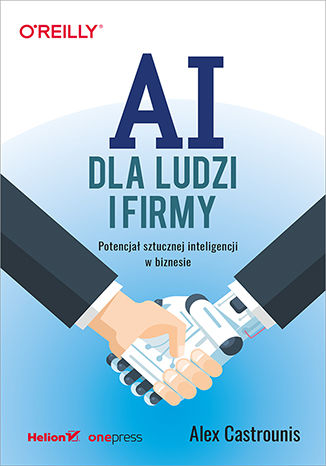
AI dla ludzi i firmy. Potencjał sztucznej inteligencji w biznesie
Alex Castrounis
Przedsiębiorstwa z branży technologicznej ciągle mierzą się z silną konkurencją. Nietrudno zrozumieć, co stanowi o przewadze firmy niezależnie od branży czy wielkości. Wygrywanie wymaga utrzymywania przewagi konkurencyjnej, jaką jest zdolność określania, wdrażania i osiągania poziomów wydajności nieosiągalnych dla konkurencji. Najczęściej przewaga konkurencyjna ma dwa źródła. Pierwszym jest dostarczanie funkcjonalnych rozwiązań, które dają radość użytkownikom. Drugim - wykorzystywanie właściwych danych do wdrażania odpowiedniej strategii, która wciąż podlega optymalizacji. Zastosowanie w tych działaniach rozwiązań z dziedziny sztucznej inteligencji znacznie przyczynia się do sukcesu firmy. To praktyczny przewodnik dla osób zainteresowanych wykorzystaniem AI w przedsiębiorstwie. Wyjaśniono tu dokładnie, czym jest AI i jakie kluczowe koncepcje się z nią wiążą, pokazano, w jaki sposób należy identyfikować związane z nią szanse, a także przedstawiono innowacyjny model AIPB, prezentujący całościowe podejście do prowadzenia inicjatyw AI. Opisano zasady tworzenia udanych strategii AI, które przynoszą korzyści zarówno pojedynczym osobom, jak i firmie. Istotną częścią książki są wskazówki dotyczące ryzyka, kluczowych kwestii, kompromisów i ograniczeń związanych z projektami AI. Podkreślono również znaczenie kierownictwa wykonawczego w innowacyjnych przedsięwzięciach związanych ze sztuczną inteligencją. W tej książce: koncepcje sztucznej inteligencji oraz potencjał AI dla biznesu wprowadzenie do modelu AIPB i przykłady zastosowań pogłębiona dyskusja na temat celów wdrażania rozwiązań AI koncepcja dojrzałości wobec sztucznej inteligencji i otwieranie się na innowacje budowa skutecznej strategii wdrażania AI przyszłość AI dla przedsiębiorstw: oczekiwania i zagrożenia AI: zmaterializuj swoje marzenia i nadzieje!
AI dla twórców wartości. Jak wyjść z roli zwykłego użytkownika generatywnej sztucznej inteligencji
Rob Thomas, Paul Zikopoulos, Kate Soule
Nie sposób przewidzieć, dokąd zmierza AI. Znajdujemy się w wyjątkowym momencie: przechodzimy od świata, w którym procesy realizowali ludzie za pomocą technologii, do świata, w którym technologie same będą prowadzić procesy, a ludzie będą je wspierać lub nadzorować. Gdzie chcesz się znaleźć w tym nowym świecie? Z tą książką rozwiniesz innowacje i skutecznie zareagujesz na kolejną falę rozwoju sztucznej inteligencji! Jessica Sibley, dyrektor generalna TIME Ta wnikliwa książka wykracza poza podstawy AI. Zawiera autentyczne historie sukcesów i konkretne wnioski z praktyki. Omawia sposób działania generatywnej AI i agentów, a także pokazuje możliwe kierunki przekształcania biznesu i społeczeństw dzięki tej technologii. Daje nową perspektywę perspektywę twórcy wartości AI. Udowadnia, że mimo niekorzystnych tendencji możesz osiągnąć sukces biznesowy, wykorzystując potencjał cyfrowej siły roboczej. Niezależnie od tego, czy dopiero zaczynasz, czy masz już doświadczenie, znajdziesz tu pełniejsze spojrzenie na znaczenie nowoczesnej strategii AI dla rozwoju Twojej firmy. Najciekawsze zagadnienia: potencjał transformacyjny sztucznej inteligencji w biznesie wyzwania etyczne i operacyjne związane z AI strategie integracji AI z kulturą organizacyjną rola twórcy wartości opartej na AI Podręcznik renesansu sztucznej inteligencji! will.i.am, dyrektor generalny FYI.AI
Andrzej Zybertowicz, Katarzyna Zybertowicz
"Andrzej Zybertowicz stworzył w tej książce przestrzeń dla rozmowy o AI, której wszyscy potrzebujemy. W dzisiejszym świecie przejrzystość w naszym dyskursie to kluczowe wymaganie. Ta książka powinna być lekturą dla każdego, kto pyta, czym AI jest dziś i czym może być w przyszłości. A must read." - Andrew A. Michta, Senior Fellow and Director, Scowcroft Strategy Initiative, The Atlantic Council of the United States "Książka AI Eksploracja zostawiła mnie z większą liczbą pytań niż miałam przed jej przeczytaniem. A mimo to właśnie dlatego warto po nią sięgnąć. Może stanowić ciekawy , inny punkt wyjścia, pretekst do dalszych rozważań na temat AI. Poznając bowiem lepiej tę technologię, paradoksalnie lepiej poznajemy samych siebie." - Natalia Hatalska, autorka książki Wiek paradoksów: Czy technologia nas ocali? "Komputery osobiste, Internet i smartfony, początkowo traktowane jako ciekawostka, głęboko zmieniły nasze życie. Brakuje nam wyobraźni socjologicznej, przewidywania skutków społecznych wprowadzania nowych technologii. Sztuczna inteligencja może mieć znacznie silniejszy wpływ niż rozwinięte wcześniej technologie. Rozważania prof. Zybertowicza na ten temat są kontrowersyjne, ale warto je krytycznie przemyśleć." - Prof. Włodzisław Duch, UMK
Laura Miller
The rapid rise of generative AI (GenAI) has led businesses to engage in discussions about ethical innovation, but these discussions often lack clear, practical guidance. AI Ethics in Action fills this gap with practical, actionable guidance from an award-winning ethicist and founder and CEO of NextGen Ethics.The book begins by laying a foundation in philosophical ethics, before setting a framework for responsible AI innovation, offering strategies for measurable, ethical decision-making. The chapters provide practical advice on navigating the complex regulatory landscape that organizations, especially global ones, face. You’ll get prepared for the inevitable disruptions AI will bring, with emphasis on the need for next-generation ethical considerations. You’ll also discover best practices and practical advice through an in-depth examination of lessons learned across various industries. Additionally, the book critically examines the expectations placed on those who develop and deploy AI, addressing the challenges of overcoming the pursuit of perfection.By the end of this book, you’ll be able to apply ethical frameworks to AI systems, tackle complex challenges, and make responsible decisions that build trust, transparency, and positive societal impact.
AI Explained. Uncovering the Reality, Risks, and Rewards of Artificial Intelligence
Nigel Poulton
This book leads readers on a comprehensive journey through artificial intelligence, beginning with an introduction to its foundational concepts. Early on, readers are guided through what AI is and why it’s becoming a transformative force in today’s world. They’ll then explore the technical processes behind AI creation, learning how data and algorithms power intelligent systems, making complex technology accessible and understandable.Further on, the book delves into practical applications and ethical considerations. Readers discover the positive ways AI is improving our lives, from breakthroughs in healthcare to innovations in everyday industries. Following this, it presents a balanced view of AI’s potential risks, discussing the ethical concerns and societal challenges that arise with misuse, encouraging thoughtful reflection on AI’s impact.Towards the end, the book tackles critical future challenges and solutions. It discusses the threat of rogue AI behaviors and highlights strategies to prevent AI from acting unpredictably. The final section offers an optimistic outlook on the responsible development of AI, encouraging readers to envision a future where AI can drive positive change. By journey’s end, readers will feel equipped with a nuanced understanding of AI, its real-world significance, and its ethical implications.
Oliver Theobald
The course begins with an engaging introduction to the world of Artificial Intelligence, making it approachable for absolute beginners. We unravel the mysteries of AI's evolution, from its historical roots to the cutting-edge technologies shaping our future. By explaining complex concepts in simple terms, this course aims to illuminate the path for those curious about how AI impacts our world.The course focuses on the core components of AI, including machine learning, deep learning, and natural language processing, before advancing to more specialized topics like generative AI and computer vision. Each module is designed to build a comprehensive understanding, emphasizing why these technologies are crucial for solving real-world problems and how they're transforming industries.The course wraps up by exploring the ethical considerations and privacy concerns associated with AI, along with a visionary look at the future of work in an AI-driven world. It offers a treasure trove of further resources, ensuring learners have everything they need to continue their exploration of AI.
AI for Anyone. The Beginner's Guide to AI
S. Huelswitt
Artificial intelligence is no longer limited to specialists. It is a practical tool that anyone can use to improve how they work, create, and solve problems. This book provides a clear path to understanding and applying AI tools without requiring technical expertise.You will start by learning how to access and navigate popular AI platforms, followed by a focused introduction to prompting techniques that turn vague requests into useful outputs. The book introduces structured methods such as goal definition, context setting, and iterative refinement to improve results.You will then explore practical applications, including drafting emails, summarizing content, generating visuals, brainstorming ideas, and organizing information. Each use case focuses on execution so you can apply AI immediately in real scenarios.The book also addresses responsible AI use. You will learn how to identify unreliable outputs, avoid common prompting mistakes, protect sensitive data, and apply ethical considerations.By the end, you will be able to use AI tools confidently, improve output quality through better prompts, and make informed decisions about when and how to use AI effectively.
Iain Anderson, Jeff Greenberg
AI for Creative Production is a practical, non-technical guide that helps digital creators, filmmakers, musicians, and writers embrace AI as a tool or collaborator—not a replacement.Beginning with a clear foundation in how modern AI works and its ethical implications, the book offers a hype-free perspective, showing where AI is genuinely useful and where it’s not. It breaks AI into three accessible categories. Starting with Utility AI, tools that help organize and enhance your work, identify the best shots, select image elements, transcribe and search videos, clean audio, and summarize text.You’ll then explore Generative AI, learning to create new text, images, video, and audio with creative control. GenAI doesn’t have to replace your work; you’ll discover tips for better prompting, tools for retouching, and fresh methods for brainstorming and ideation.Finally, you’ll uncover the potential of Automation AI to help edit videos, process photos, and build scripts that streamline your creative workflows.Packed with hands-on examples using accessible tools like Firefly, Runway, Sora, Photoshop, DaVinci Resolve, and ElevenLabs, this book equips you to integrate AI into your practice with clarity and confidence.By the end, you’ll know how to get the best from AI while preserving the unique value of human creativity in an AI-driven world.
AI For Everyday Automation. 7 AI Workflows to Save Hours at Work Every Week
Dipankar Sarkar
Most professionals get bogged down by repetitive work that eats up hours every week. Emails, meetings, reports, research, spreadsheets, and follow-ups quickly pile up, leaving little time for the work that actually matters. AI for Everyday Automation shows you how to use AI as a practical everyday assistant to handle these recurring tasks faster and more efficiently. Using tools like ChatGPT, Claude, and Perplexity, this book walks you through seven practical workflows for automating emails, meetings, research, reports, task tracking, spreadsheets, and communication. Each workflow includes prompts, templates, and simple step-by-step guidance that you can immediately apply to your own work. By the end of the book, you’ll have a set of repeatable AI-assisted systems that help you save time, reduce repetitive work, and get through your workday with far less friction.
AI Horizons. Shaping a Better Future Through Responsible Innovation and Human Collaboration
Mercury Learning and Information, Enamul Haque
As artificial intelligence continues to reshape industries and societies, understanding its broader implications is crucial. AI Horizons offers an in-depth exploration of the ethical challenges and social consequences associated with AI, such as privacy, bias, and the digital divide. The book underscores the importance of transparency, fairness, and accountability, stressing the need for a responsible approach to AI development.The book further examines how AI is being adopted across various sectors, including healthcare, education, and finance, providing real-world case studies that highlight its transformative power. However, it also considers the unique challenges emerging markets face and the potential of AI to address critical global issues like poverty and climate change.AI Horizons advocates for a collaborative partnership between humans and AI, promoting human-centric design and governance frameworks to ensure that AI enhances human intelligence rather than replacing it. Through a balanced approach, the book calls for informed dialogue, public literacy in AI, and robust policies to guide AI's development responsibly and equitably.
AI Networking Cookbook. Practical recipes for AI-assisted network automation and development
Eric Chou, John Capobianco
Transform your approach to network automation with the power of AI LLM assistants guided by hands-on recipes for building custom automation solutions quickly using artificial intelligence.You’ll learn tools and techniques such as Vibe coding for conversational development, OpenAI API scripts, prompt engineering for better outputs, local LLM fine-tuning, combining models with LangChain, and Streamlit-based frontends development. The book progresses from simple Python scripts to advanced AI-assisted automation techniques, including multi-vendor API integration, showing you how AI can enhance network configuration, monitoring, security, and troubleshooting.Each recipe presents realistic mock data, complete code examples, and step-by-step guidance, creating a safe environment for experimentation while building a solid foundation for future production use. Whether you want to automate routine configuration, implement AI-driven troubleshooting, or build compliance monitoring systems, this cookbook helps you connect your networking expertise with the capabilities of modern AI.
AI PRAKTYCZNE PODSTAWY CZĘŚĆ 1 WPROWADZENIE
Gołębiowski Dariusz
AI PRAKTYCZNE PODSTAWY - CZĘŚĆ 1: WPROWADZENIE 🤖📘 🔹 Słyszałeś/aś o sztucznej inteligencji, ale nie wiesz, od czego zacząć? 🔹 Myślisz, że AI to coś skomplikowanego i tylko dla specjalistów? 🔹 A może po prostu chcesz sprawdzić, jak może Ci ułatwić życie i pracę? Jeśli na którekolwiek z tych pytań odpowiedziałeś/aś TAK, to ten ebook jest dla Ciebie! Nie musisz być technologicznym guru, żeby skorzystać z dobrodziejstw AI. To pierwsza część praktycznego przewodnika, który w prosty i przystępny sposób pokaże Ci: ✅ Co to właściwie jest AI i jak działa? - bez zbędnego technobełkotu ✅ Jakie mity o sztucznej inteligencji warto obalić? - bo nie, AI nie chce przejąć świata! 😃 ✅ Jakie narzędzia AI są już dostępne i mogą Ci pomóc na co dzień? - w pracy, w domu, w życiu prywatnym ✅ Czy AI jest dla każdego, nawet jeśli technologia Cię onieśmiela? - podpowiedź: TAK! 🎯 Dla kogo jest ten ebook? 📌 Dla osób, które uważają, że "są za stare na AI" - to mit, który wspólnie obalimy! 📌 Dla każdego, kto chce zrozumieć AI bez skomplikowanej teorii i zacząć z niej korzystać od zaraz. 📌 Dla małych przedsiębiorców i freelancerów, którzy chcą pracować mądrzej, a nie ciężej. 📖 Napisany lekkim, przystępnym językiem, z humorem i kulinarnymi analogiami - bo AI to nie magia, a smaczny przepis na lepsze życie! ➡️ Nie czekaj! Otwórz ten ebook i zobacz, jak AI może stać się Twoim sprzymierzeńcem. 🚀 Cytat z recenzji zachwyconej Czytelniczki ⭐ "AI dla każdego! W końcu ktoś to wyjaśnił po ludzku!" ⭐ Nie sądziłam, że kiedykolwiek zrozumiem, co to właściwie jest ta cała sztuczna inteligencja... a już na pewno nie, że mogłabym jej używać! Zawsze myślałam, że AI to coś dla programistów i ludzi, którzy mówią dziwnym językiem pełnym kodów i algorytmów. Ten ebook kompletnie zmienił moje podejście! 📖 Co mi się najbardziej podobało? ✅ Prosty, przystępny język - żadnych niezrozumiałych technicznych pojęć! ✅ Humor! Autor porównuje AI do gotowania, a ja od razu to kupuję - w końcu każdy wie, że dobre przepisy są na wagę złota! 🍽️ ✅ Konkretne przykłady - teraz już wiem, jak AI może mi pomóc w codziennych sprawach i pracy. Nie ukrywam, bałam się, że to kolejna książka, w której po trzech stronach zacznę się gubić. A tu? Czytałam z przyjemnością i uśmiechem! Jeśli chcesz wreszcie przestać bać się sztucznej inteligencji i zacząć ją wykorzystywać na własnych zasadach - gorąco polecam! 💡
A.I. Revealed. Exploring AI foundations, advanced applications, and ethical considerations
Mercury Learning and Information, Erik Herman
Unlock the transformative power of artificial intelligence in this comprehensive journey through its foundational principles and practical applications. Start by grasping the essentials of AI and machine learning, progressing to advanced topics like deep learning, neural networks, and cutting-edge applications in natural language processing and computer vision. Each concept is delivered with real-world relevance, ensuring a clear understanding of the theory and its implementation.Dive deeper into the ethical dimensions of AI, exploring critical issues such as bias and fairness. Gain insights into how AI is revolutionizing industries through case studies, bridging the gap between theoretical knowledge and practical application. The course culminates with an exploration of emerging technologies and the future of AI, equipping you with foresight into its transformative potential.Whether you're taking your first steps in AI development or seeking to enhance your existing skills, this course offers a structured pathway to mastery. With hands-on guidance, you'll develop a robust foundation and confidence to contribute meaningfully in the rapidly evolving field of artificial intelligence.