
Informatyka
Zajrzyj do kategorii Informatyka w księgarni internetowej Ebookpoint. Znajdziesz tutaj bestsellerowe książki, ebooki i kursy video z branży IT. Sięgnij po najlepszą literaturę dla specjalistów i rozwijaj doświadczenie, które już posiadasz, lub rozpocznij swoją przygodę z programowaniem, cyberbezpieczeństwem lub grafiką komputerową. Pogłębiaj swoją wiedzę tak, jak Ci wygodnie - z tradycyjną książką, wygodnym ebookiem lub nowoczesnym videokursem. Sprawdź, jakie tytuły znajdziesz w kategorii Informatyka!
Ivo Balbaert
This book is for you if you are a data scientist or working on any technical or scientific computation projects. The book assumes you have a basic working knowledge of high-level dynamic languages such as MATLAB, R, Python, or Ruby.
Jonathan Baier
Kubernetes has continued to grow and achieve broad adoption across various industries, helping you to orchestrate and automate container deployments on a massive scale.This book will give you a complete understanding of Kubernetes and how to get a cluster up and running. You will develop an understanding of the installation and configuration process. The book will then focus on the core Kubernetes constructs such as pods, services, replica sets, replication controllers, and labels. You will also understand how cluster level networking is done in Kubernetes. The book will also show you how to manage deployments and perform updates with minimal downtime. Additionally, you will learn about operational aspects of Kubernetes such as monitoring and logging. Advanced concepts such as container security and cluster federation will also be covered. Finally, you will learn about the wider Kubernetes ecosystem with OCP, CoreOS, and Tectonic and explore the third-party extensions and tools that can be used with Kubernetes.By the end of the book, you will have a complete understanding of the Kubernetes platform and will start deploying applications on it.
Getting Started with MariaDB. Explore the powerful features of MariaDB with practical examples
Daniel Bartholomew
MariaDB is a database that has become very popular in the few short years that it has been around. It does not require a big server or expensive support contract. It is also powerful enough to be the database of choice for some of the biggest and most popular websites in the world, taking full advantage of the latest computing hardware available.From installing and configuring through basic usage and maintenance, each chapter in this revised and expanded guide leads on sequentially and logically from the one before it, introducing topics in their natural order so you learn what you need, when you need it. The book is based on the latest release of MariaDB and covers all the latest features and functions. By the end of this beginner-friendly book, not only will you have a running installation of MariaDB, but you will have practical, hands-on experience in the basics of how to install, configure, administer, use, and maintain it.
Isaac Strack
This book is for developers or students who have a working knowledge of JavaScript and HTML, and want to learn how to quickly develop full-stack web applications using pure JavaScript.
Fabrizio Volpe
Lync 2013 is a product that enables users to IM, and have audio and video conferences, including multi-party video. The mobile client permits the use of all the features in every device with an access-from-everywhere logic. The company’s Active Directory users, SharePoint documents, and Exchange objects integrate with Lync to deliver most of the advanced features.Getting Started with Microsoft Lync Server 2013 will give you all the relevant information you need to enable voice features, select the best Lync client in different scenarios, make your Lync services available to the external users, empower the collaborative environment of Persistent Chat Server rooms, and to build an affordable unified communication system.Getting Started with Microsoft Lync Server 2013 will explore all the concepts you need to administer and plan a Lync 2013 environment in a short time, explaining the background mechanisms of the system.It begins with the deployment of a Lync frontend and SQL mirroring solution, including all the requirements and tips clearly laid out. It proceeds with the Front End pairing, mobility, and mediation server deployment with media bypass. It covers a core chapter about Enterprise Voice with a closing part on Persistent Chat and on clients with their characteristics.Getting Started with Microsoft Lync Server 2013 will give you all the relevant information you need to enable voice features, and will help to select the best Lync client in different scenarios.
Getting Started with Nano Server. Automate multiple VMs and transform your datacenter
Charbel Nemnom
Nano Server allows developers and operations teams to work closely together and use containers that package applications so that the entire platform works as one. The aim of Nano Server is to help applications run the way they are intended to. It can be used to run and deploy infrastructures (acting as a compute host, storage host, container, or VM guest operating system) without consuming significant resources. Although Nano Server isn't intended to replace Server 2016 or 2012 R2, it will be an attractive choice for developers and IT teams.Want to improve your ability to deploy a new VM and install and deploy container apps within minutes? You have come to the right place! The objective of this book is to get you started with Nano Server successfully. The journey is quite exciting, since we are introducing you to a cutting-edge technology that will revolutionize today's datacenters. We'll cover everything from the basic to advanced topics. You'll discover a lot of added value from using Nano Server, such as hundreds of VM types on a single host through a small footprint, which could be a big plus for you and your company. After reading this book, you will have the necessary skills to start your journey effectively using Nano Server.
Nathanael J. Anderson
NativeScript allows you to build a fast cross-platform application that has a native UI. NativeScript is a true cross-platform framework that generates native speed applications using the native components of the host platform, all using JavaScript. Although NativeScript allows you to build your application in JavaScript, you have full access to the host OS from your code, allowing you to easily tweak or use new platform features instantly at native code speeds.Whether you have already developed multiple applications or zero applications, this book will help you to develop your next application in a cross-platform framework quickly, saving you a massive amount of time and money.This book concisely shows you NativeScript’s built-in framework that allows you to rapidly develop a fully-working compiled cross-platform application in just a few chapters. It starts by laying the foundation of NativeScript and working through the fundamentals to create a basic shell of the application. Moving on, you’ll see how to build a full-fledged application step by step. We’ll show you how to use plugins, and how to communicate with the native OS libraries easily so that you can customize your application as if your app was created in Java or Objective C. We then deal with the issues that arise from being cross platform and compensate for the different screen sizes, screen resolutions, and device abilities. Finally, we progress to testing and deploying your app.
Brandon Atkinson
nopCommerce is a powerful e-commerce engine that gives you the tools to build an online store and start making money. Starting your own e-commerce store can seem like a daunting task. However, with nopCommerce you can easily start selling products online in no time. nopCommerce comes loaded with everything you need to run a first class e-commerce storefront.Getting Started with nopCommerce walks you through all the steps to get your storefront up and running. You will learn how to download and install nopCommerce, as well as how to configure all the main components of the storefront. From learning about the public facing storefront to managing orders in the backend, you will have all the skills needed to run a successful store.Getting Started with nopCommerce is a step-by-step guide for creating your online store with nopCommerce, allowing you to build a feature-rich and customizable store to sell your products online. It guides you through installation, the public facing storefront, configuration, adding products, accepting payments, and processing orders. As you work through each chapter, your online store will grow in scope and functionality. By the time you finish this book, you will have a complete and working store.
Peter Boyd-Bowman, Bernard Wheeler
Oracle Data Integrator (ODI) is Oracle's strategic data integration platform for high-speed data transformation and movement between different systems. From high-volume, SOA-enabled data services, to trickle operations ñ ODI is a cutting-edge platform that offers heterogeneous connectivity, enterprise-level deployment, and strong administrative, diagnostic, and management capabilities.Getting Started with Oracle Data Integrator 11g: A Hands-On Tutorial provides you with everything you to get up and running with Oracle Data Integrator, and more! Following an example scenario, the book covers essential information about the ODI architecture and using ODI across different databases (Oracle, Microsoft SQL Server and MySQL), and file types such as XML, before covering Orchestrating Data Integration Workflows, Error Management, Operational Management and Monitoring, and beyond.Getting Started with Oracle Data Integrator 11g: A Hands-On Tutorial begins by describing the Oracle Data Integrator architecture and teaching you to install the product following best practices. You'll then be introduced to some of the key concepts of ODI such as the Knowledge Modules.Later topics include moving and transforming data from sources to targets including the Oracle Database, Microsoft SQL Server, MySQL, Flat files, and XML files, each with illustrated hands-on examples for the different technologies. Your learning experience will be made all the more rich with chapters introducing, explaining and leveraging additional ODI functionality such as variables, reusable procedures, temporary indexes and more.Finally ODI's workflow and task orchestration capabilities are explained before introducing you to Error Management with ODI's built-in 'error hospital' and 'error recycling' capabilities for non-compliant data, not to mention tackling ODI Studio, ODI Console and Enterprise Manager Fusion Middleware Control.
Biru Chattopadhayay
The client server or Tuxedo has existed for the past few decades and it is expanding every day! Today, Service Oriented Architecture (SOA) or Service Component Architecture (SCA) are considered to be the new approaches to build client server architecture, Tuxedo adopts this concept and can be extended very easily. Getting Started with Oracle Tuxedo shows how to develop distributed systems using Tuxedo and extend that to SOA or even a Cloud environment.The primary objective of this book is to show how to develop distributed systems using Tuxedo and extend that to a SOA environment. It also gives fundamentals of Exalogic machines and how Tuxedo application can leverage these new high end machines for enterprise needs. This book introduces you to the client server technology and how it has evolved in past decades. The book also covers various Tuxedo installation procedures, hardware and software requirements, and then how to configure Tuxedo application, all parameters with their syntax and relevant values. You will be introduced to various Tuxedo administrative tools, which are very important for a Tuxedo Administrator to perform his daily work, and with tuning suggestions and best practices. Next comes, Tuxedo APIs to build your applications, combining client and server modules. The book then covers the SALT component, which allows external web service applications to invoke Tuxedo services, and similarly Tuxedo applications can invoke external web services. At the end we discuss briefly the Exalogic machine and its architecture and how to configure and deploy Tuxedo application in this environment.
Fabio Mazanatti Nunes
Oracle WebLogic server has long been the most important, and most innovative, application server on the market. The updates in the 12c release have seen changes to the Java EE runtime and JDK version, providing developers and administrators more powerful and feature-packed functionalities.Getting Started with Oracle WebLogic Server 12c: Developer's Guide provides a practical, hands-on, introduction to the application server, helping beginners and intermediate users alike get up to speed with Java EE development, using the Oracle application server.Starting with an overview of the new features of JDK 7 and Java EE 6, Getting Started with Oracle WebLogic Server 12c quickly moves on to showing you how to set up a WebLogic development environment, by creating a domain and setting it up to deploy the application.Once set up, we then explain how to use the key components of WebLogic Server, showing you how to apply them using a sample application that is continually developed throughout the chapters. On the way, we'll also be exploring Java EE 6 features such as context injection, persistence layer and transactions.After the application has been built, you will then learn how to tune its performance with some expert WebLogic Server tips.
Andros T. Sturgeon, Shoban Kumar
Paint.NET is a free, reliable program that rivals the most expensive photo editing programs currently on the market.Paint.NET supports plugins, which add image adjustments, effects, and support for additional file types. They can be programmed using any .NET programming language, though they are most commonly written in C#.This book will teach you everything you need to know to edit and manipulate images. Written with very clear walkthroughs, hands-on tutorials,and amazing resources, this book will turn you into a photo wizard with Paint.NET. The book starts with simple tool-based tasks, introduces you to the workpane and then builds up to more complex areas taking a deep dive into the commonly-used features of Paint.NET.With this book, you will learn how to do everything from making simple adjustments to full artistic rendering with tools not available in any other program. Starting with the very basics of photo editing, you will gain an understanding of the basic principles of manipulating images. From layering to special effects, this book will give you all the knowledge you need to create images that leave a lasting impression.This book has everything you need to make amazing, artistic photos using completely free software. Filled with fun exercises and valuable information, you will learn how to master every tool and every effect in Paint.NET. Within minutes, you will be able to resize images, make adjustments to brightness and contrast, and apply color correction. By the end of this book, you will be working with layers and effects to create images that rival some of the most advised and expensive pieces of software.With simple exercises and information, this book will take you from absolute novice to an accomplished photo editor quickly and easily.
Aries beltran
PhantomJS is a headless WebKit browser with JavaScript API that allows you to create new ways to automate web testing. PhantomJS is currently being used by a large number of users to help them integrate headless web testing into their development processes. It also gives you developers a new framework to create web-based applications, from simple web manipulation to performance measurement and monitoring.A step step-by by-step guide that will help you develop new tools for solving web and testing problems in an effective and quick way. The book will teach you how to use and maximize PhantomJS to develop new tools for web scrapping, web performance measurement and monitoring, and headless web testing. This book will help you understand PhantomJS’ scripting API capabilities and strengths.This book starts by looking at PhantomJS’ JavaScript API, features, and basic execution of scripts. Throughout the book, you will learn details to help you write scripts to manipulate web documents and fully create a web scrapping tool.Through its practical approach, this book strives to teach you by example, where each chapter focuses on the common and practical usage of PhantomJS, and how to extract meaningful information from the web and other services.By the end of the book, you will have acquired the skills to enable you to use PhantomJS for web testing, as well as learning the basics of Jasmine, and how it can be used with PhantomJS.
Benjamin Baka
Qt is a cross-platform application framework and widget toolkit that is used to create GUI applications that can run on different hardware and operating systems. The main aim of this book is to introduce Qt to the reader. Through the use of simple examples, we will walk you through building blocks without focusing too much on theory.Qt is a popular tool that can be used for building a variety of applications, such as web browsers, media players such as VLC, and Adobe Photoshop. Following Qt installation and setup, the book dives straight into helping you create your first application.You will be introduced to Widgets, Qt's interface building block, and the many varieties that are available for creating GUIs. Next, Qt's core concept of signals and slots are well illustrated with sufficient examples. The book further teaches you how to create custom widgets, signals and slots, and how to communicate useful information via dialog boxes. To cap everything off, you will be taken through writing applications that can connect to databases in order to persist data.By the end of the book, you should be well equipped to start creating your own Qt applications and confident enough to pick up more advanced Qt techniques and materials to hone your skills.
Richard Grimmett
Raspberry Pi Zero is half the size of Raspberry Pi A, only with twice the utility. At just three centimeters wide, it packs in every utility required for full-fledged computing tasks. This practical tutorial will help you quickly get up and running with Raspberry Pi Zero to control hardware and software and write simple programs and games. You will learn to build creative programs and exciting games with little or no programming experience. We cover all the features of Raspberry Pi Zero as you discover how to configure software and hardware, and control external devices. You will find out how to navigate your way in Raspbian, write simple Python scripts, and create simple DIY programs.
Doel Sengupta, Manu Singhal, Danillo Corvalan
ReactJS, popularly known as the V (view) of the MVC architecture, was developed by the Facebook and Instagram developers. It follows a unidirectional data flow, virtual DOM, and DOM difference that are generously leveraged in order to increase the performance of the UI. Getting Started with React will help you implement the Reactive paradigm to build stateless and asynchronous apps with React. We will begin with an overview of ReactJS and its evolution over the years, followed by building a simple React component. We will then build the same react component with JSX syntax to demystify its usage. You will see how to configure the Facebook Graph API, get your likes list, and render it using React. Following this, we will break the UI into components and you’ll learn how to establish communication between them and respond to users input/events in order to have the UI reflect their state. You’ll also get to grips with the ES6 syntaxes. Moving ahead, we will delve into the FLUX and its architecture, which is used to build client-side web applications and complements React’s composable view components by utilizing a unidirectional data flow. Towards the end, you’ll find out how to make your components reusable, and test and deploy them into a production environment. Finally, we’ll briefly touch on other topics such as React on the server side, Redux and some advanced concepts.
Pradeep Subramaniaan
If you are a system administrator who is interested in implementing and managing open source virtualization infrastructures, this is the book for you. A basic knowledge of virtualization and basic Linux command line experience is needed.
Getting Started with RethinkDB. Absorb the knowledge required to utilize, manage, and deploy
Gianluca Tiepolo
RethinkDB is a high-performance document-oriented database with a unique set of features. This increasingly popular NoSQL database is used to develop real-time web applications and, together with Node.js, it can be used to easily deploy them to the cloud with very little difficulty.Getting Started with RethinkDB is designed to get you working with RethinkDB as quickly as possible. Starting with the installation and configuration process, you will learn how to start importing data into the database and run simple queries using the intuitive ReQL query language.After successfully running a few simple queries, you will be introduced to other topics such as clustering and sharding. You will get to know how to set up a cluster of RethinkDB nodes and spread database load across multiple machines. We will then move on to advanced queries and optimization techniques. You will discover how to work with RethinkDB from a Node.js environment and find out all about deployment techniques.Finally, we’ll finish by working on a fully-fledged example that uses the Node.js framework and advanced features such as Changefeeds to develop a real-time web application.
David S. Sellers
Owing to its ability to create models quickly and with high level of dimensional accuracy, SketchUp Pro has become a popular choice for many industries, including architecture, interior design, landscape architecture, and video game design. If you are seeking to adopt Trimble's exceptional design software, Getting Started with SketchUp Pro serves as an ideal primer to prepare and equip you for its use.This book will help you lay the foundation of a project from scratch, set up appropriate units, and follow a guided path to structure your 3D models. You’ll explore the workflows used for creating designs from sketches, making CAD drawings (DWG), and even updating your existing 3D models. Finally, you’ll work with extensions and 3D Warehouse to find new workflows and models to add to your skill set.By the end of this SketchUp book, you’ll be able to confidently create and share models of your design through CAD drawings and 3D views, and even take them online through the 3D Warehouse
Simon Lidberg
Analysis Services have been the number one OLAP engine for years. With the increased focus on business intelligence solutions, there is a shortage of professionals in this area. Start your journey into becoming a BI developer using the popular tools included in every SQL Server installation.Getting Started with SQL Server 2012 Cube Development teaches you through clear step-by-step exercises to create business intelligence solutions using Analysis Services. The knowledge gained through these practical examples can immediately be applied to your real-world problems.Getting Started with SQL Server 2012 Cube Development begins with an introduction to business intelligence and Analysis Services, the world's most-used cube engine. Guiding you through easy-to-understand examples to become a cube developer.Learn how to create a cube including all the advanced features such as KPIs, calculated measures, and time intelligence. Security and performance tuning will also be explored. You will learn how to perform and automate core tasks like deployment and processing. The main focus is on multidimensional cubes, but the creation of in-memory models will also be covered.You will learn everything you need to get started with cube development using SQL Server 2012.
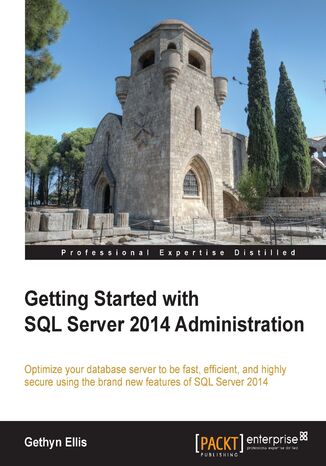
Gethyn Ellis
This is an easytofollow handson tutorial that includes real world examples of SQL Server 2014's new features. Each chapter is explained in a stepbystep manner which guides you to implement the new technology. If you want to create an highly efficient database server then this book is for you. This book is for database professionals and system administrators who want to use the added features of SQL Server 2014 to create a hybrid environment, which is both highly available and allows you to get the best performance from your databases.
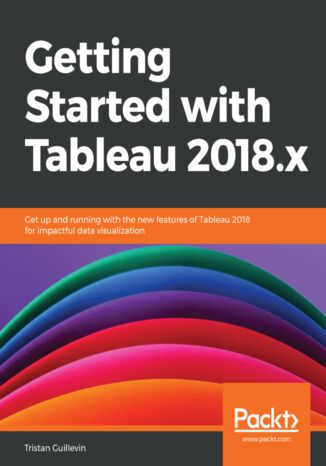
Tristan Guillevin
Tableau is one of the leading business intelligence tools used worldwide, in organizations of every scale. In its latest release, Tableau 2018 promises richer and more useful features related to visual analytics, reporting, dashboarding, and a host of other data visualization aspects. Getting Started with Tableau 2018.x will get you up and running with these features.The book starts with all the new functionalities of the different Tableau 2018 versions, along with concrete examples of how to use them. However, if you're new to Tableau, don't worry! The rest of the book will guide you through each major aspect of Tableau with examples. You'll learn how to connect to data, build a data source, visualize your data, build a dashboard, and share it online. In the final chapters, you'll also learn advanced techniques such as creating a cross-database join, data blending, and more.By the end of the book, you will have a firm understanding of how to effectively use Tableau to create quick, cost-effective, and business-efficient business intelligence solutions.
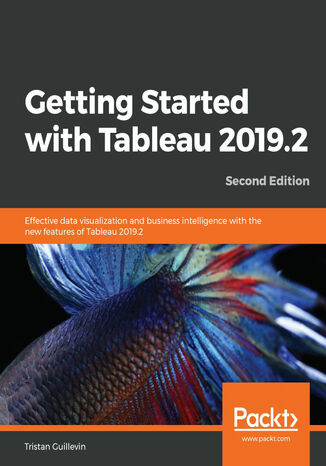
Tristan Guillevin
Tableau is one of the leading data visualization tools and is regularly updated with new functionalities and features. The latest release, Tableau 2019.2, promises new and advanced features related to visual analytics, reporting, dashboarding, and a host of other data visualization aspects. Getting Started with Tableau 2019.2 will get you up to speed with these additional functionalities.The book starts by highlighting the new functionalities of Tableau 2019.2, providing concrete examples of how to use them. However, if you're new to Tableau, you won't have to worry as the book also covers the major aspects of Tableau with relevant examples. You'll learn how to connect to data, build a data source, visualize your data, build a dashboard, and even share data online. In the concluding chapters, you'll delve into advanced techniques such as creating a cross-database join and data blending.By the end of this book, you will be able to use Tableau effectively to create quick, cost-effective, and business-efficient Business Intelligence (BI) solutions.
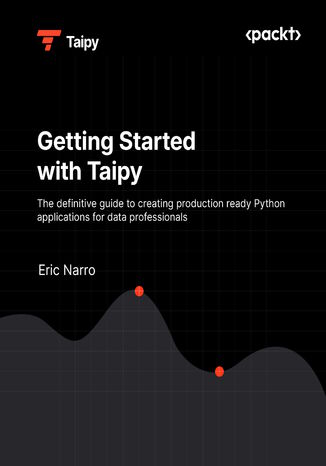
Eric Narro
While data analysts, data scientists, and BI experts have the tools to analyze data, build models, and create compelling visuals, they often struggle to translate these insights into practical, user-friendly applications that help end users answer real-world questions, such as identifying revenue trends, predicting inventory needs, or detecting fraud, without wading through complex code.This book is a comprehensive guide to overcoming this challenge. This book teaches you how to use Taipy, a powerful open-source Python library, to build intuitive, production-ready data apps quickly and efficiently. Instead of creating prototypes that nobody uses, you'll learn how to build faster applications that process large amounts of data for multiple users and deliver measurable business impact. Taipy does the heavy lifting to enable your users to visualize their KPIs, interact with charts and maps, and compare scenarios for better decision-making. You’ll learn to use Taipy to build apps that make your data accessible and actionable in production environments like the cloud or Docker.By the end of this book, you won’t just understand Taipy, you'll be able to transform your data skills into impactful solutions that address real-world needs and deliver valuable insights.*Email sign-up and proof of purchase required