
Informatyka

Generative AI with Python. Harness the Power of Python for Building Generative AI Models
Rheinwerk Publishing, Inc, Bert Gollnick
Generative AI with Python introduces readers to the fascinating world of AI model development. It begins with essential concepts in AI and deep learning, building a solid foundation for working with generative models. You will explore how to create models that generate text, images, and more, with clear, practical examples. The book provides an in-depth look at large language models and pretrained tools like Hugging Face, demonstrating how they can be leveraged in real-world applications. Each chapter blends theoretical concepts with hands-on coding exercises to ensure you understand both the principles and practical implementation of generative AI. Starting with the basics of natural language processing and deep learning, the book guides you to more advanced applications such as text summarization, image generation, and model fine-tuning. You'll also learn about optimizing AI models and deploying them in various environments. By the end of the book, you’ll be able to confidently build AI-driven applications with Python, capable of transforming business processes and enhancing consumer products.
Behram Irani, Rahul Sonawane
Many developers face the challenge of managing repetitive tasks and maintaining productivity. This book will help you tackle both these challenges with Amazon Q Developer, a generative AI-powered assistant designed to optimize coding and streamline workflows.This book takes you through the setup and customization of Amazon Q Developer, demonstrating how to leverage its capabilities for auto-code generation, code explanation, and transformation across multiple IDEs and programming languages. You'll learn to use Amazon Q Developer to enhance coding experiences, generate accurate code references, and ensure security by scanning for vulnerabilities. The book also shows you how to use Amazon Q Developer for AWS-related tasks, including solution building, applying architecture best practices, and troubleshooting errors. Each chapter provides practical insights and step-by-step guidance to help you fully integrate this powerful tool into your development process. You’ll get to grips with effortless code implementation, explanation, transformation, and documentation, helping you create applications faster and improve your development experience.By the end of this book, you’ll have mastered Amazon Q Developer to accelerate your software development lifecycle, improve code quality, and build applications faster and more efficiently.
Chris Fregly, Antje Barth, Shelbee Eigenbrode
Podczas projektowania aplikacji opartych na generatywnej AI trzeba dokonywać wielu wyborów decydujących o jakości danych dostarczanych przez aplikację, jej opłacalności, skalowalności i niezawodności. Decyzje te są tym trudniejsze, że świat generatywnej AI zmienia się niezwykle szybko, a mity i błędne przeświadczenia dotyczące tej technologii mają się świetnie. W tej niezwykle pragmatycznej książce, przeznaczonej dla dyrektorów technicznych, praktyków uczenia maszynowego, twórców aplikacji, analityków biznesowych, inżynierów i badaczy danych, znajdziesz skuteczne techniki używania sztucznej inteligencji. Zaznajomisz się z cyklem życia projektu opartego na generatywnej AI i jej zastosowaniami, a także metodami doboru i dostrajania modeli, generowania danych wspomaganego wyszukiwaniem, uczenia przez wzmacnianie na podstawie informacji zwrotnych od człowieka, kwantyzacji, optymalizacji i wdrażania modeli. Poznasz szczegóły różnych typów modeli, między innymi dużych językowych (LLM), multimodalnych generujących obrazy (Stable Diffusion) i odpowiadających na pytania wizualne (Flamingo/IDEFICS). Dowiedz się, jak: używać generatywnej AI w biznesie dobierać modele generatywnej AI stosować inżynierię monitu i uczenie kontekstowe dostrajać modele przy użyciu własnych zbiorów danych i techniki LoRA korzystać z agentów i akcji za pomocą bibliotek LangChain i ReAct tworzyć aplikacje na bazie usługi Amazon Bedrock To fascynująca książka, rewelacyjna kompozycja niezwykle ważnych informacji, a także szczegółowych, praktycznych kodów, skryptów i instrukcji! Jeff Barr, wiceprezes i główny popularyzator AWS
Valentina Alto
Generatywne modele językowe, takie jak ChatGPT udostępniony przez OpenAI, stały się przełomem ze względu na ich możliwości i łatwe użycie w szerokiej gamie zastosowań. Wszechstronność tych narzędzi pozwala podnieść produktywność i kreatywność na niespotykany wcześniej poziom. Wystarczy w tym celu użyć we własnych projektach ChatGPT lub któregoś z wyspecjalizowanych modeli. Dzięki tej przystępnej książce zrozumiesz metody działania wielkich modeli językowych i techniki szkolenia modeli generatywnych. Następnie zapoznasz się z przypadkami użycia, w których ChatGPT sprawdzi się najlepiej, a w efekcie zwiększy produktywność i kreatywność. Dowiesz się też, jak wchodzić w interakcje z ChatGPT, tworzyć lepsze prompty i korzystać z funkcji uczenia się. Znajdziesz tu rozdziały dla marketingowców, naukowców i programistów, ułatwiające szybkie zastosowanie nabytej wiedzy w praktyce. Przekonasz się również, jak w środowisku korporacyjnym stosować interfejsy API modeli OpenAI dostępne w infrastrukturze Azure. Dla każdego scenariusza podano kompletną implementację w Pythonie, korzystającą z bibliotek Streamlit i LangChain do integracji modeli AI z aplikacjami. W książce: koncepcja generatywnej AI i architektura GPT projektowanie optymalnych promptów prezentacja aplikacji i przypadków użycia ChatGPT używanie modeli i funkcji OpenAI za pośrednictwem wywołań API kod Pythona do budowania i wdrażania systemów generatywnej AI odpowiedzialność i etyka w systemach generatywnej AI Odkryj, jak łatwo model generatywnej AI zintegruje się z Twoją aplikacją!
Generatywne głębokie uczenie, wyd. II. Uczenie maszyn, jak malować, pisać, komponować i grać
David Foster
Generatywna sztuczna inteligencja (AI) jest dziś gorącym tematem w dziedzinie techniki. Ta praktyczna książka pokazuje inżynierom uczenia się maszyn, jak wykorzystywać TensorFlow i Keras, aby od zera tworzyć robiące wrażenie generatywne modele głębokiego uczenia, w tym wariacyjne autokodowanie (VAE), generatywne sieci przeciwstawne (GAN), transformery, przepływy normalizacyjne, modele oparte na energii i dyfuzyjne modele odszumiające. Książka zaczyna się od podstaw głębokiego uczenia i prowadzi do nowatorskich architektur. Dzięki wskazówkom i sztuczkom zrozumiesz, jak sprawić, aby nasze modele uczyły się bardziej skutecznie i stawały się bardziej kreatywne. - Dowiedz się, jak VAE pozwala zmienić wyraz twarzy na zdjęciu. - Naucz GAN generowania obrazów na podstawie własnego zbioru danych. - Zbuduj modele dyfuzyjne do tworzenia nowych odmian kwiatów. - Wyszkol swój własny GPT, aby generował tekst. - Dowiedz się jak są szkolone duże modele językowe jak ChatGPT. - Przeanalizuj najnowocześniejsze architektury jak StyleGAN2 i ViT-VQGAN - Skomponuj muzykę polifoniczną wykorzystując transformery i MuseGAN - Zrozum jak generatywne modele świata mogą rozwiązać zadania uczenia przez wzmacnianie. - Zanurz się w multimodalnych modelach jak DALL.E 2, Imagen i Stable Diffusion Książka ta analizuje także przyszłą generacyjną sztuczną inteligencję i sposób, w jaki ludzie i firmy mogą proaktywnie zacząć wykorzystywać tę niezwykłą nową technikę, aby zyskiwać przewagę konkurencyjną. "Generatywne głębokie uczenie to dostępne wprowadzenie do narzędzi głębokiego uczenia dla celów modelowania generatywnego. Jeśli jesteście kreatywnymi praktykami, kochającymi bawić się kodem i chcecie zastosować głębokie uczenie w swojej pracy, ta książka jest dla was." -David Ha Szef strategii, Stability AT "Doskonała książka, która zagłębia się wprost w podstawowe technik stanowiące aktualną wiedzę o generacyjnym głębokim nauczaniu. Jest to ekscytująca analiza jednej z najbardziej fascynujących dziedzin w ramach sztucznej inteligencji!" -Francois Chollet Twórca Keras

Andrzej Jankowski
Tekst napisany ponad czterdzieści lat temu pozostaje bardzo aktualny. Nie wydaje się, aby w języku polskim istniał podręcznik o podobnej konstrukcji i języku, obejmujący taki fragment geometrii różniczkowej. Zastosowano nowoczesny język geometrii różniczkowej, wprowadzony w drugiej połowie XX wieku i używany obecnie powszechnie. W tym przypadku jest to język wiązek wektorowych, operatorów różniczkowych i algebry tensorowej. Podręcznik ten może być przydatny dla studentów, i pracowników naukowych, kierunków matematycznych, fizycznych i ogólnie ścisłych, zarówno uniwersytetów, jak i politechnik.
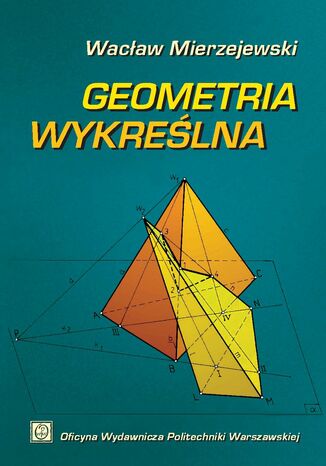
Wacław Mierzejewski
Część wstępna opracowania zawiera wskazówki praktyczne, przypomnienie relacji równoległości i prostopadłości oraz pojęcie rzutu równoległego. W części głównej podano merytoryczne treści dotyczące metody rzutowania prostokątnego na dwie i więcej rzutni. Zaletą podręcznika jest stopniowanie trudności w zamieszczonych przykładach - zawsze ilustrowanych rysunkiem. Podręcznik został napisany z myślą o studentach mechanikach, ale może być wykorzystywany na innych kierunkach studiów politechnicznych.
GeoServer Beginner's Guide. Share and edit geospatial data with this open source software server
Stefano Iacovella, Brian Youngblood
GeoServer is an open source server-side software written in Java that allows users to share and edit geospatial data. Designed for interoperability, it publishes data from any major spatial data source using open standards. GeoServer allows you to display your spatial information to the world. Implementing the Web Map Service (WMS) standard, GeoServer can create maps in a variety of output formats. OpenLayers, a free mapping library, is integrated into GeoServer, making map generation quick and easy. GeoServer is built on Geotools, an open source Java GIS toolkit.GeoServer Beginner's Guide gives you a kick start to build custom maps using your data without the need for costly commercial software licenses and restrictions. Even if you do not have prior GIS knowledge, you will be able to make interactive maps after reading this book.You will install GeoServer, access your data from a database, style points, lines, polygons, and labels to impress site visitors with real-time maps.Follow along through a step-by-step guide that installs GeoServer in minutes. Explore the web-based administrative interface to connect to backend data stores such as MySQL, PostGIS, MSSQL, and Oracle. Display your data on web-based interactive maps, style lines, points, polygons, and embed images to visualize this data for your web visitors. Walk away from this book with a working application ready for production.After reading the GeoServer Beginner's Guide, you will have beautiful, custom maps on your website built using your geospatial data.
GeoServer Beginner's Guide. Share geospatial data using Open Source standards - Second Edition
Stefano Iacovella
GeoServer is an opensource server writtenin Java that allows users to share, process,and edit geospatial data. This book willguide you through the new featuresand improvements of GeoServer and willhelp you get started with it. GeoServerBeginner's Guide gives you the impetus tobuild custom maps using your data withoutthe need for costly commercial softwarelicenses and restrictions. Even if you donot have prior GIS knowledge, you will beable to make interactive maps after readingthis book.You will install GeoServer, access your datafrom a database, and apply style points,lines, polygons, and labels to impress sitevisitors with real-time maps. Then youfollow a step-by-step guide that installsGeoServer in minutes. You will explorethe web-based administrative interfaceto connect to backend data stores suchas PostGIS, and Oracle. Going ahead, youcan display your data on web-basedinteractive maps, use style lines, points,polygons, and embed images to visualizethis data for your web visitors. You willwalk away from this book with a workingapplication ready for production.After reading GeoServer Beginner's Guide,you will be able to build beautiful custommaps on your website using your geospatialdata.
Geospatial Data Analytics on AWS. Discover how to manage and analyze geospatial data in the cloud
Scott Bateman, Janahan Gnanachandran, Jeff DeMuth
Managing geospatial data and building location-based applications in the cloud can be a daunting task. This comprehensive guide helps you overcome this challenge by presenting the concept of working with geospatial data in the cloud in an easy-to-understand way, along with teaching you how to design and build data lake architecture in AWS for geospatial data.You’ll begin by exploring the use of AWS databases like Redshift and Aurora PostgreSQL for storing and analyzing geospatial data. Next, you’ll leverage services such as DynamoDB and Athena, which offer powerful built-in geospatial functions for indexing and querying geospatial data. The book is filled with practical examples to illustrate the benefits of managing geospatial data in the cloud. As you advance, you’ll discover how to analyze and visualize data using Python and R, and utilize QuickSight to share derived insights. The concluding chapters explore the integration of commonly used platforms like Open Data on AWS, OpenStreetMap, and ArcGIS with AWS to enable you to optimize efficiency and provide a supportive community for continuous learning.By the end of this book, you’ll have the necessary tools and expertise to build and manage your own geospatial data lake on AWS, along with the knowledge needed to tackle geospatial data management challenges and make the most of AWS services.
Devangana
If you want to learn network analysis and visualization along with graph concepts from scratch, then this book is for you. This is ideal for those of you with little or no understanding of Gephi and this domain, but will also be beneficial for those interested in expanding their knowledge and experience.
Samadrita Ghosh
Procreate is robust, industry-grade painting software that is extremely versatile yet an affordable alternative to subscription-based applications. If you're new to Procreate, Get Set Procreate 5 will help you get up to speed with creating professional illustrations in no time.Complete with step-by-step instructions, detailed explanations, and practical application guidelines, this easy-to-follow guide will cover the ins and outs of Procreate 5.2 and show you how to use each feature effectively. You'll learn how to draw using assistive tools, apply effects, create animations, and develop amazing artwork by implementing the skills learned throughout the book. Once you've got to grips with the new features of Procreate 5 for creating beautiful illustrations, animations, and graphics, you'll be able to explore the tools at your disposal and even create your own brushes, shortcuts, and menus to work efficiently.By the end of this Procreate book, you'll be able to navigate the application confidently and take your artwork to a new level.
Samadrita Ghosh
Complete with step-by-step instructions, easy to follow descriptions and practical application guidelines, this easy-to-follow guide will teach you the ins and outs of Procreate and how you can use them effectively.You’ll learn how to use the new features of Procreate 5 to create beautiful illustrations, animations and graphics. The book will allow you to harness the tools at your disposal and allow you to create your own brushes, shortcuts and menus, and work efficiently.By the end of the book you will be able to confidently navigate the application and achieve desired results.
Tom Hombergs, Gernot Starke
Building for maintainability is key to keep development costs low (and developers happy). The second edition of Get Your Hands Dirty on Clean Architecture is here to equip you with the essential skills and knowledge to build maintainable software.Building upon the success of the first edition, this comprehensive guide explores the drawbacks of conventional layered architecture and highlights the advantages of domain-centric styles such as Robert C. Martin's Clean Architecture and Alistair Cockburn's Hexagonal Architecture. Then, the book dives into hands-on chapters that show you how to manifest a Hexagonal Architecture in actual code. You'll learn in detail about different mapping strategies between the layers of a Hexagonal Architecture and see how to assemble the architecture elements into an application. The later chapters demonstrate how to enforce architecture boundaries, what shortcuts produce what types of technical debt, and how, sometimes, it is a good idea to willingly take on those debts.By the end of this second edition, you'll be armed with a deep understanding of the Hexagonal Architecture style and be ready to create maintainable web applications that save money and time. Whether you're a seasoned developer or a newcomer to the field, Get Your Hands Dirty on Clean Architecture will empower you to take your software architecture skills to new heights and build applications that stand the test of time.
Minko Gechev
Want to build quick and robust web applications with Angular? This book is the quickest way to get to grips with Angular and take advantage of all its new features.
Bethany Hiitola
Using the Audacity software as the starting off point, we discuss what the software is, what it can do, how you can use it, and where you go to get started installing it. All of this information is grounded in some basic audio editing terminology and background for those that aren't so technology inclined.Then we'll start digging into a sample project! You'll learn about how to set up a project, create a voice track, record an interview with Skype, and basic audio editing techniques. All of this done in an easy to follow, task based approach with lots of examples. Here, we plan to go a step further, we teach how to wrap all of these steps together and create a podcast that can be posted on your own website or blog.There's always more you can do with Audacity! The last portion of the book is dedicated to just that - discussing more advanced editing and mixing techniques, using affects, adding music, adding additional plug-ins to the software. All still incorporating examples and easy to follow tasks you can try on your own audio projects.
Karthik Bharathy, Jon Fancey
A practical book that acts as a clear and concise introduction to BizTalk Services. Full of real-world scenarios, each area of BizTalk Services is explained in detail, essentially enabling you to smoothly design your own integration solutions with minimal effort. This book is intended for those who want to understand BizTalk Services, what it can do, and how to build integration solutions using it in their organizations. If you are a developer, architect, or project manager, this book will quickly get you acquainted with this powerful cloud integration technology. It would be helpful to have some experience with BizTalk Server; however, this is neither required nor assumed. It is recommended to have a subscription with Windows Azure to try out the examples in the book.
Puthiyavan Udayakumar
This practical guide helps you to administer Citrix Provisioning Services. Each chapter is structured in way to help you easily understand the various features, with accompanying practical examples that help beginners to quickly understand the product. This book is a useful guide for an admin/engineer who is new to the Citrix virtualization solution and provisioning service, and who is looking to get a good grounding in Citrix PVS. It’s assumed that you will have some understanding of the basics of virtualization already, but that's all you need to know!
Guillermo Musumeci
XenApp is the leader in application hosting and virtualization delivery, allowing users from different platforms such Windows, Mac, Linux, and mobile devices to connect to their business applications. Using XenApp, you can deploy secure applications quickly to thousands of users.XenApp 6.5 brings with it exciting new features such as a brand new management console, Instant App access, Multi-stream ICA, Single Sign-on and SmartAuditor enhancements, and more.Getting Started with Citrix XenApp 6.5 provides comprehensive details on how to design, implement, and maintain Citrix farms based on XenApp 6.5. Additionally, you will learn to use management tools and scripts for daily tasks such as managing servers, published resources, printers, and connections.Getting Started with Citrix XenApp 6.5 starts by introducing the basics and new features of the brand new version such as installing servers and configuring components, and then teaches you how to publish applications and resources on the client device before moving on to configuring content redirection. Author Guillermo Musumeci includes a use case throughout the book to explain advanced topics like creating management scripts and deploying and optimizing XenApp for Citrix XenServer, VMware ESX, and Microsoft Hyper-V virtual machines. It will guide you through an unattended installation of XenApp and components on physical servers. By the end of this book you will have enough knowledge to successfully design and manage your own XenApp 6.5 Farms.
Getting Started with Citrix XenApp?? 7.6. Getting Started with Citrix XenApp 7.6
Konstantin Cvetanov
If you want to effectively deploy the various components of Citrix XenApp to create an enterprise environment for application and desktop delivery, this hands-on guide is perfect for you. You start off by understanding the need and benefits of Citrix XenApp with respect to Virtualization technology. After this, you will get to grips with the requirement analysis and designing aspect of building XenApp systems and all the necessary installation and configuration procedures for Citrix XenApp, StoreFront and NetScalar Gateway are explained one by one in detail. Step-by-step, you will learn to deploy your first XenApp with the Machine Creation Services method and Provisioning Services method. After this, you will explore the administering part of applications and systems, followed by printing in the XenApp environment. Next, you will learn all the trips and tricks required to troubleshoot and support the XenApp environment. By the end of this book, you will be ready to go live with your new XenApp environment.
Dr. Gabriel N. Schenker, Hideto Saito, Hui-Chuan...
Kubernetes is an open source orchestration platform for managing containers in a cluster environment. This Learning Path introduces you to the world of containerization, in addition to providing you with an overview of Docker fundamentals. As you progress, you will be able to understand how Kubernetes works with containers. Starting with creating Kubernetes clusters and running applications with proper authentication and authorization, you'll learn how to create high-availability Kubernetes clusters on Amazon Web Services (AWS), and also learn how to use kubeconfig to manage different clusters. Whether it is learning about Docker containers and Docker Compose, or building a continuous delivery pipeline for your application, this Learning Path will equip you with all the right tools and techniques to get started with containerization.By the end of this Learning Path, you will have gained hands-on experience of working with Docker containers and orchestrators, including SwarmKit and Kubernetes.This Learning Path includes content from the following Packt products:• Kubernetes Cookbook - Second Edition by Hideto Saito, Hui-Chuan Chloe Lee, and Ke-Jou Carol Hsu• Learn Docker - Fundamentals of Docker 18.x by Gabriel N. Schenker
Nigel Poulton
This hands-on guide is designed to take you from zero to Docker-ready, combining clear explanations with practical examples. You’ll begin by exploring the fundamentals of containers, Docker architecture, and key concepts like images, registries, and the role of containers in microservices and AI. Early chapters lay a strong foundation, demystifying industry jargon and highlighting how containers differ from traditional virtual machines.Once the basics are in place, the book moves into real-world usage. You’ll install Docker, run your first containers, and learn how to manage them with Docker Desktop. You’ll then containerize a simple web app, push images to Docker Hub, and build multi-container microservices applications using Docker Compose. These hands-on labs build both confidence and competency through guided, project-based learning.This newly updated edition adds a dedicated chapter on AI integration using the new Docker Model Runner. You'll deploy local AI models, integrate with Open WebUI, and see how Docker now powers modern AI workflows. This book is ideal for anyone looking to master Docker while also gaining experience in deploying containerized AI solutions.
Getting Started with Docker. Master the Art of Containerization with Docker
Nigel Poulton
Embark on an exciting journey into the realm of Docker, where you'll discover the transformative potential of containerization. The course begins with an introduction to containers, providing a solid foundation for understanding their importance in modern software development. You'll then learn how to install Docker, setting up your environment for success.As you progress, you'll run your first container, gaining hands-on experience with Docker's core functionalities. The course delves into containerizing applications, offering practical insights into creating and managing Docker images. You'll explore Docker registries, learning how to store and share your images efficiently.The adventure continues with multi-container applications using Docker Compose. You'll master the skills needed to orchestrate complex applications, ensuring smooth integration and deployment. The course also introduces Docker's integration with WebAssembly, showcasing cutting-edge techniques to further enhance your development process. By the end, you'll be equipped with the knowledge and confidence to take your containerization skills to the next level.
Alex Chow
So, your company has made the wise decision to use Dynamics NAV as its main business software for all its enterprise resource planning. Dive in and learn the ins and outs of the software from a development standpoint and unlock the software's full potential.The book will walk you through creating an application from start to finish. Once you know how to create a working application that users can access, you will have the knowledge and the resources needed to create other applications based on the tutorials covered in this guide.You will start by obtaining a free trial version of Dynamics NAV and then be introduced to the world of analyzing and deriving user problems into a requirements list. Finally, you will be shown how to use the software to knock out these requirements.You will learn everything you need in order to begin creating your own applications, from translating the user's requirements to creating and modifying your system applications. Use Dynamics NAV's capability to create an application and address the user's needs, while also learning best practices and simple solutions.Getting Started with Dynamics NAV 2013 Application Development will help you on your way to becoming a great developer!