
Informatyka
Traci Lynn Ruthkoski
There's a lot of data in our world, and visual representations are often the best method of making sense of it all. Yet, it should not take an army of programmers and analysts to create visualizations in order to make data useful. The Google Visualization API is accessible to novice and advanced programmers alike, making data useful to more people.Google Visualization API Essentials will show you how to create interactive data displays with very little code. The API, combined with Google Spreadsheets and Fusion Tables, is a complete system, from data management to analytical displays. Not only is it simple to learn, but the Google Visualization API can also be viewed as a first step to learning additional Google APIs.Google Visualization API Essentials uses both methodology overviews and hands-on examples with real data to introduce chart and graph creation on the Google platform. Topics are presented from various aspects, including Google Spreadsheets and Fusion Tables, and Graphic User Interfaces. An overview of the various API development environments available to developers is also covered. Basic and advanced charts, data source connectivity, style formatting, and publishing options are also explored in depth.Google Visualization API Essentials brings the arsenal of Google Visualizations into the web developer toolkit.
Shamsuddin Ahammad
GWT 2 radically improves web experience for users by using existing Java tools to build no-compromise AJAX for any modern browser. It provides a solid platform so that other great libraries can be built on top of GWT. Creating web applications efficiently and making them impressive, however, is not as easy as it sounds. Writing web applications for multiple browsers can be quite tasking. In addition, building, reusing, and maintaining large JavaScript code bases and AJAX components can be difficult. GWT 2 Application Development Cookbook eases these burdens by allowing developers to quickly build and maintain complex yet highly efficient JavaScript front-end applications in the Java programming language . It tells you how to make web experience all the more thrilling and hassle free, using various tools along with GWT SDK.This book starts with developing an application from scratch. Right from creating the layout of the home page to home page elements including left and right sidebars, to placing tree like navigational menu, menu bars, tool bars, banners, footers are discussed with examples.You will see how to create forms using the Ext GWT library widgets and handle different types of events. Then you will move on to see how to design a database for sales processing systems and learn to create the database in MySQL with the help of easy–to-follow recipes.One of the interesting topics of this book is using JPA in GWT. Using the JPA object in GWT is a challenge. To use them perfectly, a mechanism to convert the JPA object into plain object and vice versa is required. You will see recipes to use entity classes, entity managers, and controller classes in GWT application. You will efficiently create reports with parameters, variables and subreports, and get the report output in both HTML and PDF format using real-world recipes.You will then learn to configure the GlassFish server to deploy a GWT application with database. Finally, learn how to trace speed and improve perfomance in web applications using tracing techniques.
Nigel King, Adil Khan
It seems that every year since the Enron collapse there has been a fresh debacle that refuses to lower the spotlight from corporate Governance, Risk, and Compliance management.Before Sarbanes Oxely forced company managers to become risk conscious, if you asked a chief executive whether he thought he had adequate internal controls, the most likely answer would have been What is an internal control? This is clearly no longer the case. Every week some story breaks detailing a lack of good governance, a failure to plan for a foreseeable catastrophe or a failure to comply with an important law or regulation. These stories bring GRC themes into public view, and public scrutiny, and make management and directors keen to show they have put their best efforts forward to govern their companies well, manage risks to the enterprise, and to comply with all applicable laws.Perhaps only Oracle and SAP are in a position to really address all three aspects. The mission of GRC applications is to ensure that the managers and directors of Enterprises that run such applications have a strong defensible position. Written by industry experts with more than 30 years combined experience, this book covers the Governance, Risk Management and Compliance Management of a large modern enterprise and how the IT Infrastructure, in particular the Oracle IT Infrastructure, can assist in that governance. This book is not an implementation guide for GRC products rather it shows you how those products participate in the governance process, how they introduce or mitigate risk, and how they can be brought into compliance with best practice, as well as applicable laws and regulations.The book is divided into three major sections:Governance ñ where we discuss the strategic management of the enterprise, setting plans for managers, making disclosures to investors, and ensuring that the board knows that the enterprise is meeting its goals and staying within its policies.Risk Management ñ where we discuss audit disciplines. This is where we work out what can go wrong, document what we have to do to prevent it from going wrong and check that what we think prevents it going wrong - actually works! We move through the various sub-disciplines within the audit profession and show what tools are best suited from within the Oracle family to assist.Compliance Management ñ where we map the tools and facilities that we have discovered in the first two sections to frameworks and legislations. We give this from an industry and geography agnostic viewpoint, and then drill into some specific industries and countries.We neither stay in the narrow definition of GRC applications, nor limit ourselves to the Business Applications but take you to the most appropriate places in the full Oracle footprint. The book is written from the perspective of big GRC. It is not an implementation manual for the GRC products, although we hope you can get the best out of the GRC products after reading this book. We discuss many applications and technology products that are not in the GRC product family.
GPT-3. The Ultimate Guide To Building NLP Products With OpenAI API
Sandra Kublik, Shubham Saboo
GPT-3 has made creating AI apps simpler than ever. This book provides a comprehensive guide on how to utilize the OpenAI API with ease. It explores imaginative methods of utilizing this tool for your specific needs and showcases successful businesses that have been established through its use.The book is divided into two sections, with the first focusing on the fundamentals of the OpenAI API. The second part examines the dynamic and thriving environment that has arisen around GPT-3.Chapter 1 sets the stage with background information and defining key terms. Chapter 2 goes in-depth into the API, breaking it down into its essential components, explaining their functions and offering best practices. Chapter 3, you will build your first app with GPT-3.Chapter 4 features interviews with the founders of successful GPT-3-based products, who share challenges and insights gained. Chapter 5 examines the perspective of enterprises on GPT-3 and its potential for adoption. The problematic consequences of widespread GPT-3 adoption, such as misapplication and bias, are addressed along with efforts to resolve these issues in Chapter 6. Finally, Chapter 7 delves into the future by exploring the most exciting trends and possibilities as GPT-3 becomes increasingly integrated into the commercial ecosystem.
Paulo Motta
Written by Paulo Motta, a senior researcher with decades of experience, this comprehensive GPU programming book is an essential guide for leveraging the power of parallelism to accelerate your computations. The first section introduces the concept of parallelism and provides practical advice on how to think about and utilize it effectively. Starting with a basic GPU program, you then gain hands-on experience in managing the device. This foundational knowledge is then expanded by parallelizing the program to illustrate how GPUs enhance performance.The second section explores GPU architecture and implementation strategies for parallel algorithms, and offers practical insights into optimizing resource usage for efficient execution.In the final section, you will explore advanced topics such as utilizing CUDA streams. You will also learn how to package and distribute GPU-accelerated libraries for the Python ecosystem, extending the reach and impact of your work.Combining expert insight with real-world problem solving, this book is a valuable resource for developers and researchers aiming to harness the full potential of GPU computing. The blend of theoretical foundations, practical programming techniques, and advanced optimization strategies it offers is sure to help you succeed in the fast-evolving field of GPU programming.
Shelley Powers
Spraw, by Twoja strona wyglądała profesjonalnie! Jaki format wybrać dla plików graficznych? Jak tworzyć grafikę użytkową? Jak wykorzystać grafikę wektorową? Wszyscy doskonale wiemy o tym, że o wartości strony internetowej świadczą treści na niej umieszczone. Nie da się jednak zaprzeczyć, że forma, w jakiej są one podane, również ma znaczenie. Osiągnięcie równowagi w tym zakresie nie jest rzeczą łatwą. Jak sprawić, żeby nie doszło do przerostu formy nad treścią? Jak zapewnić optymalny stosunek jakości użytych grafik do ich objętości (w końcu przepustowość łączy nie jest nieskończona)? Przy dużej liczbie odwiedzających różnica kilku kilobajtów może przełożyć się na ogromny wzrost obciążenia łączy, a co za tym idzie, wzrost kosztów utrzymania strony. Wydawałoby się, że te i wiele innych kwestii mogą rozwiązać tylko profesjonaliści. Jednak wcale nie musi tak być! Każdy, kto przeczyta tę książkę, będzie czuł się swobodnie w zagadnieniach związanych z publikacją i wykorzystaniem grafiki w Internecie! Dzięki książce "Grafika w internecie" poznasz wszystkie aspekty pracy z obrazami umieszczanymi w globalnej sieci. Shelley Powers przedstawi Ci wykorzystywane formaty plików graficznych oraz pokaże, do czego każdy z nich nadaje się najlepiej. Zdobędziesz wiedzę na temat dostępnych narzędzi do obróbki grafiki -- zarówno tych płatnych, jak i darmowych. Ponadto nauczysz się tworzyć miniatury zdjęć i układać zdjęcia na stronie. Dowiesz się, jak tworzyć grafikę użytkową, jakie zasady obowiązują przy pracy z grafiką wektorową oraz jakie możliwości drzemią w formacie SVG. Na koniec zapoznasz się z tematami związanymi z projektowaniem stron internetowych -- zrozumiesz, jak wykorzystać kaskadowe arkusze stylów (CSS), jak przygotować dobrą i przejrzystą stronę oraz jak dynamicznie zmieniać właściwości grafiki! Jeżeli myślisz, że praktyczne wykorzystanie grafiki na stronach WWW to wiedza tajemna, ta książka z pewnością to zmieni! Formaty plików graficznych i ich zastosowanie Przygotowanie zdjęć do publikacji w Internecie Narzędzia do obróbki grafiki -- płatne i darmowe Edytory obrazów dostępne online Tworzenie miniatur Sposoby układania zdjęć na stronie Narzędzia do automatycznego generowania galerii oraz pokazów slajdów Tworzenie grafiki użytkowej Wykorzystanie grafiki wektorowej i formatu SVG Zastosowanie kaskadowych arkuszy stylów (CSS) Zasady tworzenia dobrych stron WWW Narzędzia ułatwiające projektowanie stron WWW Dynamiczna modyfikacja grafik Automatyzacja obróbki grafiki -- narzędzie ImageMagick oraz obróbka za pomocą PHP/GD Sposób wykorzystania serwisów Google Maps oraz Yahoo! Maps Łączenie danych z grafiką Poznaj wszystkie aspekty praktycznego wykorzystania grafiki w Internecie!
Grails 1.1 Web Application Development. Reclaiming Productivity for faster Java Web Development
Jon Dickinson
Web development is trickyóeven a simple web application has a number of context changes ready to trip up the unwary. Grails takes the everyday pain out of web application development, allowing us to focus on delivering real application logic and create seamless experiences that will address the needs of our users. This book will take the pain out of Grails by showing you exactly how to build a web application with a minimum of fuss.With this book, even if you are new to Grails, you will be up and running before you know it. You will be able to code faster and your code will be better. This clear and concise book is packed with examples and clear instructions to help you build your first Grails application and gives you the skills to speed up your application development by adding a different angle for learning about the topic. After a brief introduction to the dynamic JVM-based Groovy programming language, which teaches you enough about Groovy to understand the relationship between Grails and the Groovy scripting language, it shows how to use Grails and a number of key plug-ins to deliver valuable web applications. It also takes you through creating, developing, testing, and deploying an example team collaboration application in Grails.Using an incremental and iterative approach you will learn how to build a basic web application with secure authentication and different levels of authorization. You will learn how to handle file upload allowing users to share files. Some advanced features of object-oriented persistence will be introduced through adding tags for messages and files to giving users a robust categorization system.You will then build on the basic application to enhance the user experience through AJAX and the RichUI plug-in. You will take a further step into the world of Web 2.0 by adding an RSS feed and a REST service to the application. Once the entire application is up and running, you will learn how to create your own plug-in for tagging. Finally, you will learn how to deploy this application to a production environment.
Gary Hutson, Matt Jackson
Graphs have become increasingly integral to powering the products and services we use in our daily lives, driving social media, online shopping recommendations, and even fraud detection. With this book, you’ll see how a good graph data model can help enhance efficiency and unlock hidden insights through complex network analysis.Graph Data Modeling in Python will guide you through designing, implementing, and harnessing a variety of graph data models using the popular open source Python libraries NetworkX and igraph. Following practical use cases and examples, you’ll find out how to design optimal graph models capable of supporting a wide range of queries and features. Moreover, you’ll seamlessly transition from traditional relational databases and tabular data to the dynamic world of graph data structures that allow powerful, path-based analyses. As well as learning how to manage a persistent graph database using Neo4j, you’ll also get to grips with adapting your network model to evolving data requirements.By the end of this book, you’ll be able to transform tabular data into powerful graph data models. In essence, you’ll build your knowledge from beginner to advanced-level practitioner in no time.
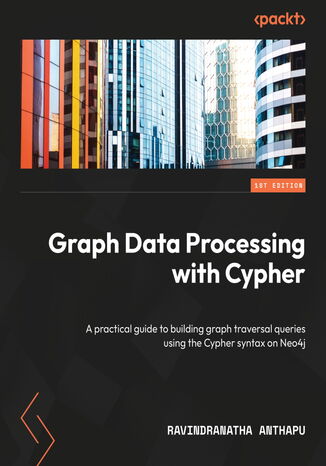
Ravindranatha Anthapu
While it is easy to learn and understand the Cypher declarative language for querying graph databases, it can be very difficult to master it. As graph databases are becoming more mainstream, there is a dearth of content and guidance for developers to leverage database capabilities fully. This book fills the information gap by describing graph traversal patterns in a simple and readable way.This book provides a guided tour of Cypher from understanding the syntax, building a graph data model, and loading the data into graphs to building queries and profiling the queries for best performance. It introduces APOC utilities that can augment Cypher queries to build complex queries. You’ll also be introduced to visualization tools such as Bloom to get the most out of the graph when presenting the results to the end users.After having worked through this book, you’ll have become a seasoned Cypher query developer with a good understanding of the query language and how to use it for the best performance.
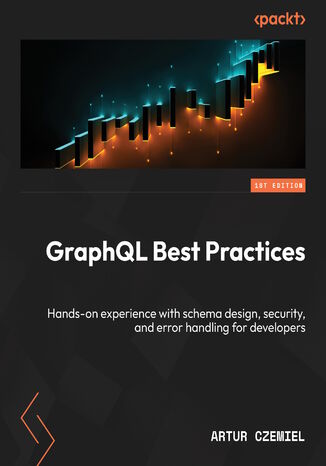
GraphQL Best Practices. Gain hands-on experience with schema design, security, and error handling
Artur Czemiel
In the ever-evolving landscape of web development, GraphQL has emerged as a powerful query language that addresses the limitations of traditional REST APIs. This guide delves deep into GraphQL, starting with its foundational principles and swiftly advancing to complex topics that will equip you with the skills you need to understand this technology.As you progress, you’ll cover advanced concepts such as schema design, security enhancements, and error handling. You'll also explore essential topics such as federation and the transition from REST to GraphQL, gaining a comprehensive understanding of these critical areas. The book helps you learn through practical examples in TypeScript, guiding you through building scalable and secure GraphQL backends. Additionally, you’ll get up to speed with the intricacies of frontend integration.By the end of this book, you’ll have the skills you need to implement real-world GraphQL solutions, creating efficient and robust applications that meet modern web development demands.

Green IT w zrównoważonym biznesie
Anita Fajczak-Kowalska, Anna Misztal
Prezentowane opracowanie poświęcone jest wybranym zagadnieniom związanym ze zrównoważonym rozwojem i rolą zielonych technologii informacyjnych w jego kształtowaniu. Wpisuje się ono w nurt analiz dotyczących zarządzania współczesną, otwartą organizacją, dla której ekologia jest jednym z podstawowych elementów rozwoju, a technologie IT są narzędziem ją wspierającym. Prezentowana praca jest wycinkiem szerokiej, złożonej oraz podlegającej ciągłej ewolucji problematyki prowadzenia działalności gospodarczej ukierunkowanej na zrównoważony rozwój. Zaprezentowane metody, narzędzia i technologie dotyczą wybranych zagadnień bardzo szerokiej problematyki. Autorki podjęły próbę omówienia materii szczególnie istotnej z punktu widzenia ekonomii i informatyki. Opracowanie może stanowić kompendium wiedzy o funkcjonowaniu przedsiębiorstw w zgodzie ze środowiskiem naturalnym. W tym znaczeniu książka ma charakter podręcznika akademickiego. Publikacja adresowana jest do szerokiego grona odbiorców, w tym przede wszystkim do młodzieży akademickiej kierunków ekonomicznych, zarządzania i ochrony środowiska naturalnego, a także wszystkich zainteresowanych omawianą problematyką, którzy chcą zdobyć i wykorzystać wiedzę na temat wpływu zielonych technologii informacyjnych na zrównoważony rozwój przedsiębiorstw.
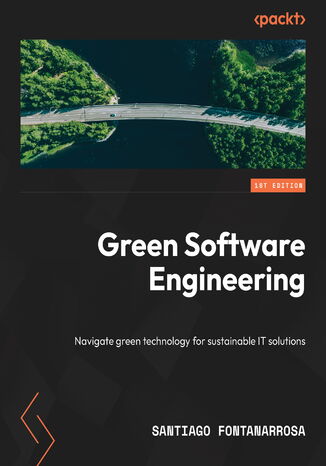
Green Software Engineering. Exploring Green Technology for Sustainable IT Solutions
Santiago Fontanarrosa
Embark on a transformative journey toward sustainable software engineering, exploring the vital intersection of technology and environmental responsibility. Authored by Santiago Fontanarrosa, a Green Software Foundation member with 20+ years in software engineering, this book explores practical strategies and use cases to help you assess and mitigate digital product environmental impact.Through real-world examples and hands-on experiences, you’ll gain the skills you need to craft environmentally responsible solutions aligned with green software engineering principles. As you progress, you’ll assess and optimize software architecture for sustainability within a sustainable software delivery framework schema. Beyond technical insights, the book delves into ethical implications and societal impacts, fostering a deeper understanding of the broader implications of technology usage.As you approach the conclusion, you’ll have gained the ability to comprehend, measure, and craft energy-efficient digital solutions aligned with green software engineering principles.
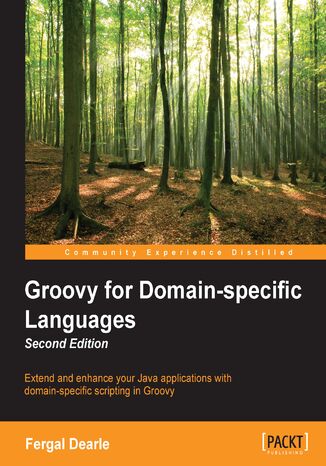
Fergal Dearle
The times when developing on the JVM meant you were a Java programmer have long passed. The JVM is now firmly established as a polyglot development environment with many projects opting for alternative development languages to Java such as Groovy, Scala, Clojure, and JRuby. In this pantheon of development languages, Groovy stands out for its excellent DSL enabling features which allows it to be manipulated to produce mini languages that are tailored to a project’s needs.A comprehensive tutorial on designing and developing mini Groovy based Domain Specific Languages, this book will guide you through the development of several mini DSLs that will help you gain all the skills needed to develop your own Groovy based DSLs with confidence and ease.Starting with the bare basics, this book will focus on how Groovy can be used to construct domain specific mini languages, and will go through the more complex meta-programming features of Groovy, including using the Abstract Syntax Tree (AST). Practical examples are used throughout this book to de-mystify these seemingly complex language features and to show how they can be used to create simple and elegant DSLs. Packed with examples, including several fully worked DSLs, this book will serve as a springboard for developing your own DSLs.
Eve Chen
In the dynamic landscape of modern product management, professionals face a myriad of challenges, spanning customer acquisition, monetization, user retention, competition, and technical expertise. To overcome these hurdles, this book crystalizes growth strategies that revolve around harnessing the power of data, experimentation, and user insights to drive growth for a product.This handbook serves as your guide to exploring the essential growth product management models and their applications in various contexts, unveiling their role in enhancing revenue performance and customer retention. Along the way, actionable steps will steer you in implementing these models while helping you better understand your users, experiment with new features and marketing strategies, and measure the impact of your efforts, ultimately guiding you to achieve your customer retention and lifetime customer goals.By the end of this book, you’ll have gained advanced insights into growth product management, models, and growth strategies, and when and how to use them to achieve customer-for-life goals and optimized revenue performance.

Piotr Kosowicz
Dzieci + zapałki = zabawa! Nie igraj z ogniem, ale z zapałkami - możesz. Oczywiście pod warunkiem że wykorzystasz je w dobrym celu. Najlepiej równocześnie edukacyjnym i rozrywkowym. Aby świetnie się bawić, a przy tym rozwijać wyobraźnię, ćwiczyć się w spostrzegawczości i logicznym myśleniu, nie trzeba inwestować ani w zaawansowaną elektronikę, ani nawet w planszówki czy gry karciane. Wystarczą paczka zapałek i książka, którą przygotował dla Ciebie Piotr Kosowicz. Na Gry i zabawy z zapałkami składa się zestaw autorskich zadań, jakich nie znajdziesz w żadnym podręczniku. Adresowane są one przede wszystkim do uczniów starszych klas szkoły podstawowej, choć z pewnością przy rozwiązywaniu tych zagadnień nie będą się nudzić ani nastolatki, ani ich rodzice i dziadkowie. Wiedza matematyczna na poziomie podstawowym może okazać się przydatna, choć nie raz, nie dwa potrzebne będzie także podejście całkowicie niematematyczne, a nawet amatematyczne. To jak, zaczynamy? Na dobry początek wyjmij z pudełka trzy zapałki i ułóż je na stole tak, by powstał kwadrat.
Grywalizacja. Mechanika gry na stronach WWW i w aplikacjach mobilnych
Gabe Zichermann, Christopher Cunningham
Zakoduj grywalizację w umysłach swoich klientów! Na rynku aplikacji jest już tak ciasno, że nowy produkt musi być zaskakujący, nowatorski i atrakcyjny, a ponadto gwarantować dużo przyjemności z użytkowania. Dopiero wtedy ma szansę konkurować z innymi, dostępnymi wcześniej. Warto więc zastanowić się nad tym, co sprawia, że jedna aplikacja zdobywa popularność, a druga o identycznej funkcjonalności nie może się przebić. Wszyscy autorzy pragną, aby ich dzieło należało do tej pierwszej kategorii. Jak to osiągnąć? Wszyscy wiedzą, jak gry potrafią wciągać. Często już po pierwszym uruchomieniu gracze mają problem, żeby zakończyć rozrywkę, i wracają do niej w każdej wolnej chwili. A gdyby zastosować mechanizmy stosowane w grach także w aplikacjach? Czy użytkownicy też mogliby się od nich uzależnić? Oczywiście! Proces ten nazywa się grywalizacją i jest powszechnie stosowany! W tej książce znajdziesz wiedzę niezbędną do wykorzystania tych elementów w Twojej aplikacji. Dzięki temu łatwiej osiągniesz sukces! Niezależnie od tego, czy jesteś producentem, projektantem, kierownikiem czy deweloperem gier, książka ta pozwoli Ci zrozumieć, jak tworzyć mechanikę gry zapewniającą lojalność klientów. Odkryj system motywacyjny stosowany przez projektantów gier do angażowania różnych typów klientów Poznaj podstawowe elementy mechaniki gry: punkty, odznaczenia, poziomy, wyzwania i tabele wyników Skuś klientów odpowiednią strukturą nagród, pozytywnym wzmocnieniem lub pętlami informacji zwrotnych Połącz grę z elementami społecznymi i działaniami takimi, jak zbieractwo, heroizm, chwalenie się lub dawanie prezentów Poznaj opisy systemów grywalizacji stosowanych przez Nike i Yahoo! oraz przeanalizuj rozwiązania firm Google, Facebook i Zynga Zaprojektuj i zaimplementuj grywalizację na prostej witrynie Gabe Zichermann to jeden z najlepszych ekspertów od grywalizacji. Jest przewodniczącym Gamification Summit and Workshops ( https://GSummit.com ). Christopher Cunningham to przedsiębiorca i ekspert od technologii informatycznych, który pomógł odkryć jedno z pierwszych rozwiązań dotyczących grywalizacji. Zachęć użytkowników do korzystania z Twojej aplikacji na okrągło!
Marcelo Guerra Hahn
Developing graphical user interfaces in C# can feel overwhelming with so many frameworks and tools to choose from. This book simplifies the journey by teaching GUI fundamentals through small, structured, and practical examples.You start with core GUI concepts, event driven programming, and basic interface design. Then you build simple web apps using Blazor and WebAssembly, learning about components, rendering, and data binding. Next, you explore cross platform development with .NET MAUI, working with XAML, layouts, controls, and basic app logic. Finally, you create Windows desktop applications with WinUI 3, using common controls and foundational patterns such as MVVM and data binding.Rather than focusing on complex enterprise architecture, the book builds your skills step by step. Each chapter reinforces key ideas through clear examples designed to build confidence and practical understanding.Written by Marcelo, a developer with over 18 years of experience in C#, C++, Azure, and data driven systems, this book helps you gain clarity in GUI development. By the end, you will be able to create simple, well structured web and desktop interfaces in C# and understand the core concepts behind them.
Gaston C. Hillar, Daron Yöndem
Cosmos DB is a NoSQL database service included in Azure that is continuously adding new features and has quickly become one of the most innovative services found in Azure, targeting mission-critical applications at a global scale. This book starts off by showing you the main features of Cosmos DB, their supported NoSQL data models and the foundations of its scalable and distributed architecture. You will learn to work with the latest available tools that simplify your tasks with Cosmos DB and reduce development costs, such as the Data Explorer in the Azure portal, Microsoft Azure Storage Explorer, and the Cosmos DB Emulator.Next, move on to working with databases and document collections. We will use the tools to run schema agnostic queries against collections with the Cosmos DB SQL dialect and understand their results. Then, we will create a first version of an application that uses the latest .NET Core SDK to interact with Cosmos DB. Next, we will create a second version of the application that will take advantage of important features that the combination of C# and the .NET Core SDK provides, such as POCOs and LINQ queries. By the end of the book, you will be able to build an application that works with a Cosmos DB NoSQL document database with C#, the .NET Core SDK, LINQ, and JSON.

Hacking and Security. The Comprehensive Guide to Penetration Testing and Cybersecurity
Rheinwerk Publishing, Inc, Michael Kofler, Klaus Gebeshuber,...
This book provides a comprehensive guide to cybersecurity, covering hacking techniques, tools, and defenses. It begins by introducing key concepts, distinguishing penetration testing from hacking, and explaining hacking tools and procedures. Early chapters focus on security fundamentals, such as attack vectors, intrusion detection, and forensic methods to secure IT systems.As the book progresses, readers explore topics like exploits, authentication, and the challenges of IPv6 security. It also examines the legal aspects of hacking, detailing laws on unauthorized access and negligent IT security. Readers are guided through installing and using Kali Linux for penetration testing, with practical examples of network scanning and exploiting vulnerabilities.Later sections cover a range of essential hacking tools, including Metasploit, OpenVAS, and Wireshark, with step-by-step instructions. The book also explores offline hacking methods, such as bypassing protections and resetting passwords, along with IT forensics techniques for analyzing digital traces and live data. Practical application is emphasized throughout, equipping readers with the skills needed to address real-world cybersecurity threats.
Hadoop 2.x Administration Cookbook. Administer and maintain large Apache Hadoop clusters
Aman Singh
Hadoop enables the distributed storage and processing of large datasets across clusters of computers. Learning how to administer Hadoop is crucial to exploit its unique features. With this book, you will be able to overcome common problems encountered in Hadoop administration.The book begins with laying the foundation by showing you the steps needed to set up a Hadoop cluster and its various nodes. You will get a better understanding of how to maintain Hadoop cluster, especially on the HDFS layer and using YARN and MapReduce. Further on, you will explore durability and high availability of a Hadoop cluster. You’ll get a better understanding of the schedulers in Hadoop and how to configure and use them for your tasks. You will also get hands-on experience with the backup and recovery options and the performance tuning aspects of Hadoop. Finally, you will get a better understanding of troubleshooting, diagnostics, and best practices in Hadoop administration.By the end of this book, you will have a proper understanding of working with Hadoop clusters and will also be able to secure, encrypt it, and configure auditing for your Hadoop clusters.
Gerald Turkington
Data is arriving faster than you can process it and the overall volumes keep growing at a rate that keeps you awake at night. Hadoop can help you tame the data beast. Effective use of Hadoop however requires a mixture of programming, design, and system administration skills.Hadoop Beginner's Guide removes the mystery from Hadoop, presenting Hadoop and related technologies with a focus on building working systems and getting the job done, using cloud services to do so when it makes sense. From basic concepts and initial setup through developing applications and keeping the system running as the data grows, the book gives the understanding needed to effectively use Hadoop to solve real world problems.Starting with the basics of installing and configuring Hadoop, the book explains how to develop applications, maintain the system, and how to use additional products to integrate with other systems.While learning different ways to develop applications to run on Hadoop the book also covers tools such as Hive, Sqoop, and Flume that show how Hadoop can be integrated with relational databases and log collection.In addition to examples on Hadoop clusters on Ubuntu uses of cloud services such as Amazon, EC2 and Elastic MapReduce are covered.
Danil Zburvisky
Big Data is the hottest trend in the IT industry at the moment. Companies are realizing the value of collecting, retaining, and analyzing as much data as possible. They are therefore rushing to implement the next generation of data platform, and Hadoop is the centerpiece of these platforms.This practical guide is filled with examples which will show you how to successfully build a data platform using Hadoop. Step-by-step instructions will explain how to install, configure, and tie all major Hadoop components together. This book will allow you to avoid common pitfalls, follow best practices, and go beyond the basics when building a Hadoop cluster.This book will walk you through the process of building a Hadoop cluster from the ground up. By using practical examples and command samples, you will be able to get a cluster up and running in no time, and you will also gain a deep understanding of how various Hadoop components work and interact with each other.You will learn how to pick the right hardware for different types of Hadoop clusters and about the differences between various Hadoop distributions. By the end of this book, you will be able to install and configure several of the most popular Hadoop ecosystem projects including Hive, Impala, and Sqoop, and you will also be given a sneak peek into the pros and cons of using Hadoop in the cloud.
Hadoop. Komplety przewodnik. Analiza i przechowywanie danych
Tom White
Analiza danych z Hadoopem — i wszystko staje się prostsze! Podstawy Hadoopa i model MapReduce Praca z Hadoopem, budowa klastra i zarządzanie platformą Dodatki zwiększające funkcjonalność Hadoopa Platforma Apache Hadoop to jedno z zaawansowanych narzędzi informatycznych. Dzięki niej można przeprowadzać różne operacje na dużych ilościach danych i znacznie skrócić czas wykonywania tych działań. Wszędzie tam, gdzie potrzebne jest szybkie sortowanie, obliczanie i archiwizowanie danych — np. w dużych międzynarodowych sklepach internetowych, serwisach społecznościowych lub wyszukiwarkach, takich jak Amazon, Facebook, Yahoo!, Apache Hadoop sprawdza się znakomicie. Jeśli potrzebne Ci narzędzie do poważnej analizy dużych zbiorów danych, nie znajdziesz lepszego rozwiązania! Tę książkę napisał wytrawny znawca i współtwórca Hadoopa. Przedstawia w niej wszystkie istotne mechanizmy działania platformy i pokazuje, jak efektywnie jej używać. Dowiesz się stąd, do czego służą model MapReduce oraz systemy HDFS i YARN. Nauczysz się budować aplikacje oraz klastry. Poznasz dwa formaty danych, a także wykorzystasz narzędzia do ich pobierania i transferu. Sprawdzisz, jak wysokopoziomowe narzędzia do przetwarzania danych współdziałają z Hadoopem. Zorientujesz się, jak działa rozproszona baza danych i jak zarządzać konfiguracją w środowisku rozproszonym. Przeczytasz również o nowinkach w Hadoopie 2 i prześledzisz studia przypadków ilustrujące rolę Hadoopa w systemach służby zdrowia i przy przetwarzaniu danych o genomie. Hadoop i model MapReduce Systemy HDFS i YARN Operacje wejścia – wyjścia w platformie Hadoop Typy, formaty, funkcje i budowa aplikacji w modelu MapReduce Zarządzanie platformą Hadoop Avro, Parquet, Flume i Sqoop — metody pracy z danymi Pig, Hive, Crunch i Spark — wysokopoziomowe narzędzia do przetwarzania danych HBase i ZooKeeper — praca w środowisku rozproszonym Integrowanie danych w firmie Cerner Nauka o danych biologicznych Cascading Hadoop — rozwiązanie na miarę wyzwań globalnych! Tom White — jeden z czołowych ekspertów w zakresie obsługi platformy Hadoop. Członek organizacji Apache Software Foundation, inżynier oprogramowania w firmie Cloudera.
Tanmay Deshpande
Big data is the current requirement. Most organizations produce huge amount of data every day. With the arrival of Hadoop-like tools, it has become easier for everyone to solve big data problems with great efficiency and at minimal cost. Grasping Machine Learning techniques will help you greatly in building predictive models and using this data to make the right decisions for your organization. Hadoop Real World Solutions Cookbook gives readers insights into learning and mastering big data via recipes. The book not only clarifies most big data tools in the market but also provides best practices for using them. The book provides recipes that are based on the latest versions of Apache Hadoop 2.X, YARN, Hive, Pig, Sqoop, Flume, Apache Spark, Mahout and many more such ecosystem tools. This real-world-solution cookbook is packed with handy recipes you can apply to your own everyday issues. Each chapter provides in-depth recipes that can be referenced easily. This book provides detailed practices on the latest technologies such as YARN and Apache Spark. Readers will be able to consider themselves as big data experts on completion of this book. This guide is an invaluable tutorial if you are planning to implement a big data warehouse for your business.