
Informatyka
Zajrzyj do kategorii Informatyka w księgarni internetowej Ebookpoint. Znajdziesz tutaj bestsellerowe książki, ebooki i kursy video z branży IT. Sięgnij po najlepszą literaturę dla specjalistów i rozwijaj doświadczenie, które już posiadasz, lub rozpocznij swoją przygodę z programowaniem, cyberbezpieczeństwem lub grafiką komputerową. Pogłębiaj swoją wiedzę tak, jak Ci wygodnie - z tradycyjną książką, wygodnym ebookiem lub nowoczesnym videokursem. Sprawdź, jakie tytuły znajdziesz w kategorii Informatyka!
Onur Yilmaz
Before plunging into how Kubernetes works, this book introduces you to the world of container orchestration and describes the recent changes in application development. You'll understand problems that Kubernetes solves and get to grips with using Kubernetes resources to deploy applications. In addition to this, you'll learn to apply the security model of Kubernetes clusters.Kubernetes Design Patterns and Extensions describes how services running in Kubernetes can leverage the platform's security features. Once you've grasped all this, you'll explore how to troubleshoot Kubernetes clusters and debug Kubernetes applications. You also discover how to analyze the networking model and its alternatives in Kubernetes, and apply best practices with design patterns.By the end of this book, you'll have studied all about using the power of Kubernetes for managing your containers.
Joseph Heck
Kubernetes is documented and typically approached from the perspective of someone running software that has already been built. Kubernetes may also be used to enhance the development process, enabling more consistent testing and analysis of code to help developers verify not only its correctness, but also its efficiency. This book introduces key Kubernetes concepts, coupled with examples of how to deploy and use them with a bit of Node.js and Python example code, so that you can quickly replicate and use that knowledge.You will begin by setting up Kubernetes to help you develop and package your code. We walk you through the setup and installation process before working with Kubernetes in the development environment. We then delve into concepts such as automating your build process, autonomic computing, debugging, and integration testing. This book covers all the concepts required for a developer to work with Kubernetes.By the end of this book, you will be in a position to use Kubernetes in developmentecosystems.
Ashok Srirama, Sukirti Gupta, Rajdeep Saha
Generative AI (GenAI) is revolutionizing industries, from chatbots to recommendation engines to content creation, but deploying these systems at scale poses significant challenges in infrastructure, scalability, security, and cost management.This book is your practical guide to designing, optimizing, and deploying GenAI workloads with Kubernetes (K8s) the leading container orchestration platform trusted by AI pioneers. Whether you're working with large language models, transformer systems, or other GenAI applications, this book helps you confidently take projects from concept to production. You’ll get to grips with foundational concepts in machine learning and GenAI, understanding how to align projects with business goals and KPIs. From there, you'll set up Kubernetes clusters in the cloud, deploy your first workload, and build a solid infrastructure. But your learning doesn't stop at deployment. The chapters highlight essential strategies for scaling GenAI workloads in production, covering model optimization, workflow automation, scaling, GPU efficiency, observability, security, and resilience.By the end of this book, you’ll be fully equipped to confidently design and deploy scalable, secure, resilient, and cost-effective GenAI solutions on Kubernetes.
Russ McKendrick
Kubernetes has established itself as the standard platform for container management, orchestration, and deployment. It has been adopted by companies such as Google, its original developers, and Microsoft as an integral part of their public cloud platforms, so that you can develop for Kubernetes and not worry about being locked into a single vendor.This book will initially start by introducing serverless functions. Then you will configure tools such as Minikube to run Kubernetes. Once you are up-and-running, you will install and configure Kubeless, your first step towards running Function as a Service (FaaS) on Kubernetes. Then you will gradually move towards running Fission, a framework used for managing serverless functions on Kubernetes environments. Towards the end of the book, you will also work with Kubernetes functions on public and private clouds. By the end of this book, we will have mastered using Function as a Service on Kubernetes environments.
Scott Surovich, Marc Boorshtein
Technologie Kubernetes i Docker szybko zdobyły zaufanie dużych firm i dziś są standardową infrastrukturą pozwalającą na tworzenie, testowanie i uruchamianie aplikacji. W porównaniu z wcześniej stosowanymi rozwiązaniami wymagają jednak zupełnie innego podejścia do budowy i wdrażania oprogramowania. Oznacza to, że jeśli korporacja chce w pełni skorzystać z potencjału Kubernetesa i Dockera, musi znaleźć osoby dysponujące wiedzą i umiejętnościami pozwalającymi na zintegrowanie klastrów Kubernetes z istniejącymi systemami organizacji. To książka przeznaczona dla osób, które chcą poszerzyć swoją wiedzę i umiejętności potrzebne do pracy z klastrami. Omówiono tu podstawy dotyczące konteneryzacji, Dockera i Kubernetesa, jednak więcej miejsca poświęcono bardziej zaawansowanym zagadnieniom, między innymi integracji kontenera z platformą chmury czy integracji z takimi narzędziami jak MetalLB, ExternalDNS i OpenID Connect (OICD). Zaprezentowano również zasady stosowania Pod Security Policy (PSP), Open Policy Agent (OPA), Falco i Velero, a także sposób, w jaki przebiega wdrażanie całej platformy w chmurze z użyciem mechanizmów ciągłej integracji i ciągłego wdrażania (CI/CD). Dowiesz się też, jak testować aplikacje i komponenty Kubernetes i jak implementować różne rozwiązania open source. Najciekawsze zagadnienia: Tworzenie wielowęzłowego klastra Kubernetes za pomocą KinD Implementacja narzędzi: Ingress, MetalLB i ExternalDNS Konfiguracja klastra OIDC i uwierzytelnianie w Kubernetesie Zabezpieczanie i audyty klastrów Wdrażanie platformy z użyciem projektów: Tekton, GitLab i Argo CD Kubernetes i Docker: tak działają systemy najpotężniejszych korporacji!
Kubernetes on AWS. Deploy and manage production-ready Kubernetes clusters on AWS
Ed Robinson
Docker containers promise to radicalize the way developers and operations build, deploy, and manage applications running on the cloud. Kubernetes provides the orchestration tools you need to realize that promise in production.Kubernetes on AWS guides you in deploying a production-ready Kubernetes cluster on the AWS platform. You will then discover how to utilize the power of Kubernetes, which is one of the fastest growing platforms for production-based container orchestration, to manage and update your applications. Kubernetes is becoming the go-to choice for production-grade deployments of cloud-native applications. This book covers Kubernetes from first principles. You will start by learning about Kubernetes' powerful abstractions - Pods and Services - that make managing container deployments easy. This will be followed by a guided tour through setting up a production-ready Kubernetes cluster on AWS, while learning the techniques you need to successfully deploy and manage your own applications.By the end of the book, you will have gained plenty of hands-on experience with Kubernetes on Amazon Web Services. You will also have picked up some tips on deploying and managing applications, keeping your cluster and applications secure, and ensuring that your whole system is reliable and resilient to failure.
Kubernetes. Receptury. Aplikacje natywne dla środowiska chmurowego. Wydanie II
Sameer Naik, Sébastien Goasguen, Jonathan Michaux
Kubernetes stał się standardem orkiestracji kontenerów i zarządzania rozproszonymi aplikacjami. Obecnie pozwala na uzyskiwanie automatyzacji, rozszerzalności i przenośności na wysokim poziomie, a sama praca z nim jest efektywna i satysfakcjonująca. Niekiedy jednak tworzenie i wdrażanie aplikacji Kubernetes sprawia problemy nawet zaawansowanym użytkownikom. To książka przeznaczona dla osób pracujących z systemami Kubernetes. Poszczególne zagadnienia przedstawiono w niej w przejrzystym formacie problem - rozwiązanie - omówienie, dzięki czemu szybko znajdziesz rozwiązanie konkretnego problemu, a to z kolei pozwoli Ci na korzystanie ze wszystkich zalet tej platformy w codziennej pracy. Znalazło się tu ponad 100 praktycznych receptur obejmujących takie tematy jak konfigurowanie klastra, zarządzanie obciążeniem w kontenerach przy użyciu obiektów Kubernetes API, użycie pamięci masowej indeksowanej wartościami klucz-wartość, konfigurowanie zabezpieczeń i wiele innych. Każda receptura jest niezależna od innych, a materiał został zorganizowany w sposób maksymalnie ułatwiający szybkie odnalezienie interesującego Cię zagadnienia. W książce między innymi: tworzenie klastra i interfejs wiersza poleceń Kubernetes zarządzanie obciążeniami i usługami interfejs API Kubernetes skalowanie na poziomie klastra i aplikacji zabezpieczanie aplikacji i jej monitorowanie utrzymywanie systemów w środowisku chmury i rozwiązywanie problemów Kubernetes w praktyce. Znajdź szybkie rozwiązania dla każdego wyzwania!
Emmanouil Gkatziouras, Chris Jenkins, Rom Adams, Chen...
Securing Secrets in containerized apps poses a significant challenge for Kubernetes IT professionals. This book tackles the critical task of safeguarding sensitive data, addressing the limitations of Kubernetes encryption, and establishing a robust Secrets management system for heightened security for Kubernetes.Starting with the fundamental Kubernetes architecture principles and how they apply to the design of Secrets management, this book delves into advanced Kubernetes concepts such as hands-on security, compliance, risk mitigation, disaster recovery, and backup strategies. With the help of practical, real-world guidance, you’ll learn how to mitigate risks and establish robust Secrets management as you explore different types of external secret stores, configure them in Kubernetes, and integrate them with existing Secrets management solutions.Further, you'll design, implement, and operate a secure method of managing sensitive payload by leveraging real use cases in an iterative process to enhance skills, practices, and analytical thinking, progressively strengthening the security posture with each solution.By the end of this book, you'll have a rock-solid Secrets management solution to run your business-critical applications in a hybrid multi-cloud scenario, addressing operational risks, compliance, and controls.
Kubernetes. Tworzenie natywnych aplikacji działających w chmurze
Michael Hausenblas, Stefan Schimanski
Mimo że w 2018 roku Kubernetes zyskał reputację standardowego narzędzia do zarządzania kontenerami, wciąż należy traktować tę technologię jako znajdującą się w dość wczesnej fazie rozwoju. Możliwości tej platformy z czasem rosną i stają się coraz ciekawsze. Standardowym działaniem jest uruchamianie klastrów w Kubernetesie, jednak o wiele bardziej interesujące wydaje się samodzielne rozszerzanie tej platformy o własne kontrolery i rozbudowa API Kubernetesa w celu dostosowania do swoich wymagań. W przypadku niektórych złożonych projektów programowanie potrzebnych komponentów jest jedynym racjonalnym rozwiązaniem. To książka przeznaczona dla programistów, którzy chcą maksymalnie wykorzystać możliwości Kubernetesa, również poprzez pisanie własnych zasobów. W praktyczny sposób pokazuje, jak rozwijać natywne, działające w chmurze aplikacje dla Kubernetesa. Wyjaśnia, w jaki sposób działa biblioteka API client-go i jak należy budować zasoby niestandardowe. Znalazło się tu obszerne i szczegółowe omówienie interfejsu programowania i działania platformy Kubernetes, a także pisania stabilnego oprogramowania w języku Go. Nie zabrakło szeregu wskazówek dotyczących samego pisania kodu oraz przeprowadzania testów. Dużo uwagi poświęcono niestandardowym zasobom, kontrolerom, webhookom i niestandardowym serwerom API oraz wzorcom rozszerzania Kubernetesa. W tej książce między innymi: zasady programowania dla Kubernetesa API Kubernetesa i client-go korzystanie z niestandardowych zasobów pisanie i udostępnianie operatorów tworzenie niestandardowych serwerów API Kubernetes: wykorzystaj w pełni jego potencjał!
Kubernetes. Tworzenie niezawodnych systemów rozproszonych. Wydanie II
Brendan Burns, Joe Beda, Kelsey Hightower
Kubernetes jest czymś więcej niż platformą do orkiestracji kontenerów. W ciągu zaledwie kilku lat stał się najpopularniejszym i najbogatszym narzędziem do tworzenia, wdrażania i utrzymywania aplikacji w chmurze. Tak radykalna zmiana sposobu funkcjonowania systemów informatycznych wymaga przemodelowania podejścia i stylu pracy zespołów programistycznych. Jeśli jednak wypróbujesz Kubernetesa, przekonasz się, że bardzo upraszcza on tworzenie, wdrażanie i utrzymywanie systemów rozproszonych. Jego twórcy, bazując na własnych wieloletnich doświadczeniach, zaprojektowali go od podstaw, aby zapewnić inżynierom wydajną, efektywną i przyjemną pracę. Ta książka jest przeznaczona dla początkujących i zaawansowanych użytkowników Kubernetesa. Dzięki niej osiągniesz nowe poziomy prędkości, zwinności, niezawodności i wydajności budowanych systemów. Opisano tu, jak działa orkiestrator klastrów Kubernetes oraz jak wykorzystać jego narzędzia i interfejsy API do usprawnienia procesów rozwoju, dostarczania i utrzymywania rozproszonych aplikacji. Wyjaśniono niezbędne szczegóły dotyczące aplikacji kontenerowych, uruchamiania i obsługi klastrów oraz wdrażania aplikacji w Kubernetesie. Przedstawiono sposoby integracji magazynów danych i rozszerzania platformy. Przydatnym podsumowaniem treści zawartych w książce jest kilka praktycznych przykładów tworzenia i wdrażania rzeczywistych aplikacji w Kubernetesie, a także omówienie metod organizowania aplikacji w systemie kontroli źródła. Najciekawsze zagadnienia: tworzenie i uruchamianie klastrów Kubernetesa projektowanie aplikacji: kapsuły, usługi, narzędzia Ingress i obiekty ReplicaSet integracja magazynów danych z kontenerowymi mikrousługami obiekty specjalne: DaemonSet, Job, ConfigMap i tajne dane praktyczne przykłady tworzenia i wdrażania rzeczywistych aplikacji w Kubernetesie Kubernetes: systemy rozproszone mogą być skalowalne i niezawodne!
Kubernetes. Tworzenie niezawodnych systemów rozproszonych. Wydanie III
Brendan Burns, Joe Beda, Kelsey Hightower, Lachlan...
Kubernetes jest ważnym narzędziem do tworzenia, wdrażania i utrzymywania aplikacji w chmurze. Obecnie pozwala na uzyskiwanie prędkości, zwinności, niezawodności i wydajności na wysokim poziomie, a samo tworzenie i utrzymywanie systemów rozproszonych jest proste, efektywne i satysfakcjonujące. Trzeba tylko zrozumieć, na czym polega abstrakcja kontenerów i interfejsów API orkiestracji kontenerów i poświęcić trochę czasu na zapoznanie się z samym Kubernetesem. Oto podstawowe źródło wiedzy na temat systemu Kubernetes, okraszone przykładami, które umożliwiają samodzielne poznawanie tego produktu! Liz Rice To trzecie wydanie przewodnika autorstwa twórców Kubernetesa. Zostało starannie zaktualizowane i wzbogacone o tak ważne zagadnienia jak bezpieczeństwo, dostęp do Kubernetesa za pomocą kodu napisanego w różnych językach programowania czy tworzenie aplikacji wieloklastrowych. Dzięki książce poznasz podstawy funkcjonowania Kubernetesa, a naukę rozpoczniesz od budowy prostej aplikacji. Później dowiesz się, jak używać narzędzi i interfejsów API do automatyzacji skalowalnych systemów rozproszonych, w tym usług internetowych, aplikacji do uczenia maszynowego czy klastrów komputerów Raspberry Pi. Omówiono tu również zaawansowane zagadnienia, takie jak obiekty specjalne czy siatki usług i system kontroli źródła. Najciekawsze zagadnienia: budowa i działanie Kubernetesa na podstawie prostego przykładu specjalne obiekty, takie jak DaemonSet, Job, ConfigMap i tajne dane cykl życia kompletnej aplikacji rozproszonej zabezpieczanie wdrażanych aplikacji aplikacje wieloklastrowe i dostęp do Kubernetesa za pomocą własnego kodu Poznaj przyszłość infrastruktury!
Dan Cederholm
Tylko krok dzieli Cię od idealnej witryny! Każdego dnia w sieci pojawiają się tysiące nowych witryn. Niejednokrotnie są one perfekcyjne merytorycznie i interesujące wizualnie. Niestety, wiele z nich nie odniesie sukcesu, bo nie trafi do szerokiego grona odbiorców. Konkurencja jest dziś tak ogromna, że Twoje rozwiązanie musi się wyróżniać nie pod jednym, a pod kilkoma względami. Jedną z najważniejszych zalet dobrej strony jest lekki, poprawny kod, korzystający z nowości języka HTML5 i CSS3 oraz dostępny dla różnych urządzeń (stacjonarnych i mobilnych). W trakcie lektury kolejnej edycji tej wyjątkowej książki dowiesz się, jak zagwarantować czytelność i atrakcyjność Twojej strony, nawet jeśli nie masz dostępu do elementów graficznych i CSS. Ponadto zobaczysz, jak sobie radzić z rozmiarem czcionek czy ograniczoną przestrzenią. Każdy rozdział rozpoczyna się opisem rozwiązania, które nie jest kuloodporne. Rozwiązanie takie przeważnie opiera się na tradycyjnych technikach i zwykłym kodzie HTML. Dan Cederholm, autor tej bestsellerowej pozycji, rozkłada je na czynniki pierwsze i pokazuje przy okazji różne ograniczenia. Następnie proponuje zastosowanie wariantu alternatywnego, opracowanego przy użyciu HTML-a oraz CSS. Ten wariant umożliwia zastąpienie opasłego źródła odchudzonym, strukturalnym kodem oraz przemyślnie opracowanymi regułami CSS. W rezultacie otrzymany projekt jest lekki i dostępny dla wielu użytkowników. Na koniec Dan prezentuje proces tworzenia kompletnej strony internetowej z komponentów omówionych w poprzednich rozdziałach. Ten sposób naprawdę pozwala się wiele nauczyć! Skalowanie tekstu za pomocą słów kluczowych, wartości procentowych oraz jednostek em, dające użytkownikowi pełną kontrolę nad czytelnością projektu Uwzględnianie elastycznego wydłużania poziomych komponentów strony w pionie Zastosowanie elementów pływających do opracowania struktur tabelarycznych Zapewnienie czytelności strony nawet wtedy, gdy brak obrazków i obsługi CSS Rozdzielanie warstwy prezentacyjnej i kodu w tradycyjnych tabelach oraz odtwarzanie ich wyglądu za pomocą CSS Zastosowanie filozofii stopniowego ulepszania projektów dzięki HTML5 oraz CSS3 Sięgnij po tę książkę i twórz niezawodne strony w sieci!

Kurs matematyki dla chemików. Wyd. 5. popr
Joanna Ger
Skrypt jest przeznaczony dla słuchaczy studiów uniwersyteckich kierunku chemia. Mogą z niego również korzystać wszyscy zainteresowani wykładem matematyki jako przedmiotu pomocniczego. Autorka zamieściła w podręczniku treści niezbędne do właściwego rozumienia i stosowania metod matematycznych w czasie studiów chemicznych. Oprócz treści wykładanych w skrypcie znajdują się też dowody twierdzeń oraz zestawy zadań. Każdy rozdział zawiera liczne przykłady (rozwiązane) ilustrujące teorię. W podręczniku przedstawiono następujące zagadnienia: elementy logiki matematycznej i teorii mnogości; liczby rzeczywiste i zespolone; funkcje elementarne; elementy algebry liniowej; ciągi i szeregi; granicę i ciągłość odwzorowań; rachunek różniczkowy funkcji jednej zmiennej; całka oznaczona na prostej; rachunek różniczkowy funkcji wielu zmiennych; wielowymiarowa całka oznaczona Riemanna; całka krzywoliniowa; całka powierzchniowa; elementy teorii równań różniczkowych zwyczajnych.

Kurs matematyki dla chemików. Wydanie szóste poprawione
Joanna Ger
Skrypt jest przeznaczony dla słuchaczy studiów uniwersyteckich kierunku chemia. Mogą z niego również korzystać wszyscy zainteresowani wykładem matematyki jako przedmiotu pomocniczego. Autorka zamieściła w podręczniku treści niezbędne do właściwego rozumienia i stosowania metod matematycznych w czasie studiów chemicznych. Oprócz treści wykładanych w skrypcie znajdują się też dowody twierdzeń oraz zestawy zadań. Każdy rozdział zawiera liczne przykłady (rozwiązane) ilustrujące teorię. W podręczniku przedstawiono następujące zagadnienia: elementy logiki matematycznej i teorii mnogości; liczby rzeczywiste i zespolone; funkcje elementarne; elementy algebry liniowej; ciągi i szeregi; granicę i ciągłość odwzorowań; rachunek różniczkowy funkcji jednej zmiennej; całka oznaczona na prostej; rachunek różniczkowy funkcji wielu zmiennych; wielowymiarowa całka oznaczona Riemanna; całka krzywoliniowa; całka powierzchniowa; elementy teorii równań różniczkowych zwyczajnych. Jest to wydanie szóste poprawione.
Jerzy Kluczewski, Damian Strojek
Książka „Kwalifikacja: INF.02 i INF.07 – Administrowanie sieciami komputerowymi w symulatorze Packet Tracer w przykładach i ćwiczeniach Część II” jest podręcznikiem wspomagającym nauczanie w zawodach: Technik Informatyk i Technik Teleinformatyk. Jest kontynuacją pierwszej części książki o tym samym tytule. Może być wykorzystywana na przedmiotach poruszających zagadnienia projektowania, zarządzania i administrowania sieciami komputerowymi obejmującymi zagadnienia: podstawy konfigurowania następujących protokołów, usług i technik sieciowych: routing dynamiczny RIP, EIGRP, OSPF, eBGP, routing statyczny, listy kontroli dostępu, VoIP, STP, RSTP, VTP, FRAME RELAY, PPP, uwierzytelnianie PAP i CHAP, RADIUS, NETFLOW, NAT, L2NAT, VPN, tunelowanie, przełączniki wielowarstwowe 3560-24PS i 3650-24PS. Zawiera ćwiczenia praktyczne oraz wskazówki do rozwiązań zadań w postaci plików do samodzielnego pobrania. Zasada przyjęta przez autorów książki była następująca „Minimum teorii – maksimum przykładów praktycznych”, które można wdrożyć zarówno w środowisku symulacyjnym podczas zajęć lekcyjnych jako rozszerzenie teorii oraz w formie zadań domowych, których wykonanie możemy zlecić uczniom. Ponadto dysponując sprzętem i laboratorium sieciowym, swobodnie możemy scenariusze ćwiczeń i przykładów wykorzystać do konfiguracji fizycznego sprzętu. Autorzy tej książki to zespół międzypokoleniowy i interdyscyplinarny. Utalentowany uczeń Zespołu Szkół Łączności w Gdańsku, Damian Strojek. Jego pasją są sieci komputerowe, posiada certyfikaty CCNA R&S oraz CCNA Security. Jerzy Kluczewski, długoletni instruktor Akademii CISCO CCNA. W swoim dorobku autorskim posiada już kilka publikacji książkowych na temat symulatora Packet Tracer. Swoje doświadczenie zdobywał podczas pracy w przemyśle, obecnie jest wykładowcą w Wyższej Szkole Bankowej w Gdańsku.
Jerzy Kluczewski, Damian Strojek, Robert Wszelaki, Marek...
Książka „Kwalifikacja: INF.02 i INF.07 – Administrowanie sieciami komputerowymi w symulatorze Packet Tracer w przykładach i ćwiczeniach Część I” jest podręcznikiem wspomagającym nauczanie w zawodach Technik Informatyk i Technik Teleinformatyk. Może być wykorzystywana podczas poruszania zagadnień z projektowania, zarządzania i administrowania sieciami komputerowymi. Wykorzystując symulację komputerową pomaga zrozumieć konfigurację usług, protokołów oraz urządzeń sieciowych. W części końcowej książki znajduje się zadanie projektowe, a także test sprawdzający wiadomości teoretyczne oraz lista plików będącymi rozwiązaniami ćwiczeń kontrolnych. Zasada przyjęta przez autorów książki była następująca „Minimum teorii – maksimum przykładów praktycznych”, które można wdrożyć zarówno w środowisku symulacyjnym podczas zajęć lekcyjnych jako rozszerzenie teorii oraz w formie zadań domowych, których wykonanie możemy zlecić uczniom. Ponadto dysponując sprzętem i laboratorium sieciowym, swobodnie możemy scenariusze ćwiczeń i przykładów wykorzystać do konfiguracji fizycznego sprzętu. Autorzy tej książki to zespół międzypokoleniowy i interdyscyplinarny. Utalentowany uczeń Zespołu Szkół Łączności w Gdańsku, Damian Strojek. Jego pasją są sieci komputerowe, posiada komplet certyfikatów CCNA R&S oraz jest w trakcie ścieżki dydaktycznej CCNA Security. Jerzy Kluczewski, długoletni instruktor Akademii CISCO CCNA. W swoim dorobku autorskim posiada już kilka publikacji książkowych na temat symulatora Packet Tracer. Swoje doświadczenie zdobywał podczas pracy w przemyśle, obecnie jest wykładowcą w Wyższej Szkole Bankowej w Gdańsku. Robert Wszelaki to pasjonat zagadnień sieciowych i programowania. Ukończył pełny kurs Cisco CCNA. Jest absolwentem ZS1 w Piekarach Śląskich, obecnie studiuje informatykę na wydziale Automatyki, Elektroniki i Informatyki Politechniki Śląskiej. Marek Smyczek to doświadczony nauczyciel przedmiotów informatycznych i elektrycznych, a zarazem instruktor programu Cisco CCNA. Jest autorem i redaktorem kilkudziesięciu publikacji z dziedzin elektroniki i informatyki.
Laboratorium sygnałów, modulacji i systemów
Mateusz Malanowski
Skrypt jest przeznaczony dla uczestników przedmiotu Sygnały, modulacje i systemy (SYMSE), prowadzonego na trzecim semestrze na Wydziale Elektroniki i Technik Informacyjnych Politechniki Warszawskiej, ale może być także wykorzystywany na innych uczelniach i wydziałach. W opracowaniu omówiono pięć ćwiczeń laboratoryjnych ściśle powiązanych z treścią wykładu. Dotyczą one: szeregu Fouriera, badania analogowych układów liniowych, próbkowania sygnałów i ich odtwarzania z probek, badania dyskretnych układów liniowych oraz stabilności układów analogowych i modulacji.
LangChain i LangGraph. Projektowanie aplikacji opartych na dużych modelach językowych w praktyce
Mayo Oshin, Nuno Campos
Jak zacząć tworzyć aplikacje AI, które potrafią wnioskować i wyszukiwać zewnętrzne dane w celu zapewniania odpowiedniego kontekstu? Sięgnij po LangChain! To popularne narzędzie programistyczne służy do tworzenia, uruchamiania aplikacji LLM, a także zarządzania nimi. LangChain jest używany przez wiele znanych firm, a jego popularność dynamicznie rośnie. To lektura obowiązkowa dla programistów, którzy chcą przesuwać granice możliwości LangChain! Tom Taulli, konsultant IT i autor książek Jeśli znasz Pythona lub JavaScript i chcesz rozpocząć przygodę z aplikacjami AI ta książka jest dla Ciebie! Krok po kroku zbudujesz agenta AI korzystającego ze wskazanego źródła danych, wyposażysz go w mechanizmy autoryzacji działań i umożliwisz mu zdobywanie dodatkowych informacji lub wyjaśnień. Dowiesz się, jak przygotować go do pracy w środowisku produkcyjnym z uwzględnieniem kwestii opóźnień, niezawodności i bezpieczeństwa. Nauczysz się również monitorować i stale ulepszać swoje aplikacje. Najciekawsze zagadnienia: zwiększanie dokładności LLM za pomocą techniki RAG inteligentna komunikacja aplikacji AI z użytkownikami architektura agentowa z wykorzystaniem LangGraph integracja z interfejsami API i narzędziami firm trzecich monitorowanie, testowanie i ewaluacja aplikacji AI praktyczne zastosowanie biblioteki LangChain Ta książka sprawia, że nauka LangChain jest interesująca i zabawna! Rajat K. Goel, IBM
LangChain in your Pocket. LangChain Essentials: From Basic Concepts to Advanced Applications
Mehul Gupta
LangChain in your Pocket offers a detailed exploration into the LangChain framework, designed to enhance your skills in developing sophisticated language understanding models and applications. This book begins with the basics, introducing you to the fundamental concepts of LangChain through a simple Hello World example. As you progress, you'll delve into various LangChain modules, learning how to create agents, manage memory, and utilize output parsers effectively.The journey continues as you explore the RAG Framework, vector databases, and their applications in natural language processing, providing you with the tools to tackle common NLP problems efficiently. The book also addresses critical aspects of working with large language models (LLMs), such as prompt engineering, handling hallucinations, and evaluating model outputs. Advanced topics like autonomous AI agents and the integration of LangSmith and LangServe are covered, giving you a holistic view of what you can achieve with LangChain.By the end of this book, you will not only understand the technical aspects of LangChain but also how to apply these principles in real-world scenarios, making it an essential resource for anyone looking to advance their capabilities in AI and language processing.
Laravel 4. Podstawy tworzenia aplikacji w PHP
Raphaël Saunier
Przewodnik dla początkujących! Laravel to szkielet aplikacji dla języka PHP, zdobywający w ostatnim czasie ogromną popularność. Powody są dwa: obszerna i przejrzysta dokumentacja oraz podstawowe założenie autorów, że tworzenie aplikacji z wykorzystaniem Laravela ma być po prostu przyjemne. I tak jest! Łatwe zarządzanie bazą danych, przyjazny system szablonów, intuicyjna konfiguracja to tylko niektóre z zalet tego szkieletu. Jeżeli chcesz poznać w pełni jego potencjał i wykorzystać go w trakcie tworzenia kolejnej strony WWW lub aplikacji internetowej, to trafiłeś na doskonałą książkę. Sięgnij po nią i już wkrótce bez problemu przygotujesz swoje środowisko pracy, zainstalujesz najnowszą wersję za pomocą narzędzia Composer, a następnie rozpoczniesz prace nad swoim projektem. Przekonaj się, jak tworzyć ścieżki, konfigurować bazę danych oraz zabezpieczać dostęp do wybranych stron. W kolejnych rozdziałach nauczysz się tworzyć testy automatyczne oraz korzystać z narzędzia Artisan, które ułatwi Ci codzienne zadania! Ponadto dowiesz się, w jaki sposób tworzyć serwisy typu REST oraz generować formularze. Książka ta jest doskonałą pozycją dla wszystkich programistów PHP szukających frameworka, który spełni ich oczekiwania! Dzięki tej książce: poznasz narzędzie Composer pobierzesz najnowszą wersję szkieletu Laravel przygotujesz ścieżki dostępu do stron przetestujesz stworzony kod błyskawicznie zbudujesz pierwszą aplikację WWW Tworzenie aplikacji w PHP jeszcze nigdy nie było takie proste!
Terry Matula
When creating a web application, there are many PHP frameworks from which to choose. Some are very easy to set up, and some have a much steeper learning curve. Laravel offers both paths. You can do a quick installation and have your app up-and-running in no time, or you can use Laravel's extensibility to create an advanced and fully-featured app.Laravel Application Development Cookbook provides you with working code examples for many of the common problems that web developers face. In the process, it will also allow both new and existing Laravel users to expand their knowledge of the framework.This book will walk you through all aspects of Laravel development. It begins with basic set up and installation procedures, and continues through more advanced use cases. You will also learn about all the helpful features that Laravel provides to make your development quick and easy. For more advanced needs, you will also see how to utilize Laravel's authentication features and how to create a RESTful API.In the Laravel Application Development Cookbook, you will learn everything you need to know about a great PHP framework, with working code that will get you up-and-running in no time.
Laravel. Tworzenie aplikacji. Receptury
Terry Matula
Najlepsze przepisy na aplikacje w Laravel! Laravel to szkielet aplikacji dla języka PHP. W ostatnim czasie podbija on serca programistów, głównie dzięki przejrzystej dokumentacji, a także dzięki temu, że tworzenie aplikacji za jego pomocą jest wyjątkowo łatwe i przyjemne. Błyskawiczna konfiguracja i tak samo szybkie uruchomienie środowiska oraz przyjazny system szablonów to tylko niektóre z zalet tego szkieletu. Książka, którą trzymasz w rękach, zawiera omówienie ponad 90 zagadnień dotyczących pracy z Laravelem. Sięgnij po nią i przekonaj się, jak błyskawicznie rozpocząć pracę, uwierzytelnić użytkowników, przetestować aplikację, a następnie wdrożyć ją w środowisku produkcyjnym. W kolejnych rozdziałach znajdziesz kompletny kod służący do pobierania danych wejściowych, przeszukiwania baz danych, tworzenia REST-owego API; jest tu także system szablonów Blade. Ponadto dowiesz się, jak sprytnie używać Composera, stworzyć Autoloader oraz zapewnić sprawny routing. Książka ta jest genialną lekturą dla wszystkich programistów korzystających ze szkieletu Laravel w codziennej pracy! Po przeczytaniu książki dowiesz się jak... Skonfigurować wirtualne hosty oraz środowisko developerskie na serwerze Apache Przygotować system uwierzytelniania użytkowników Wykorzystywać kontrolery RESTowe Debugować i profilować aplikację Przechowywać i pobierać treści z chmury Wykorzystywać narzędzie linii poleceń Artisan Zintegrować skrypty JavaScript i jQuery z aplikacją w Laravelu Pisać testy jednostkowe w Laravelu Sprawdź, jak przyjemne może być tworzenie aplikacji!
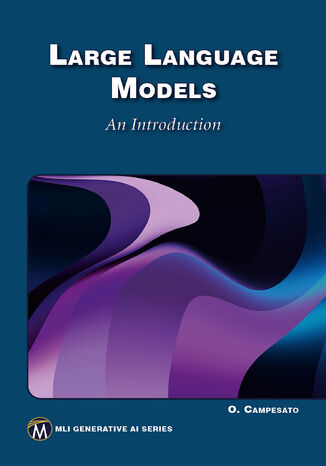
Mercury Learning and Information, Oswald Campesato
This book provides a comprehensive overview of large language models (LLMs) and generative AI, covering foundational principles, advanced concepts, and practical applications. It begins with an introduction to the generative AI landscape, examining key features, popular techniques, and its influence on industries like art, business, and technology. The book also explores prominent models like ChatGPT and GPT-4, detailing their architectures, capabilities, and applications in text generation, code assistance, and conversational AI.Additionally, the book traces the evolution of LLMs, particularly focusing on the BERT family and its wide-ranging applications in natural language processing, translation, and multilingual tasks. Readers will also gain expertise in prompt engineering, learning practical tips and examples to interact more effectively with LLMs.In later chapters, the book tackles advanced topics such as fine-tuning LLMs, working with SVG, and concepts like few-shot learning and reinforcement learning. It concludes with discussions on ethical issues, biases in generative AI, and emerging trends like AI’s integration with IoT, quantum computing, and neuromorphic computing. This guide equips professionals and enthusiasts with a thorough understanding of generative AI's present and future.
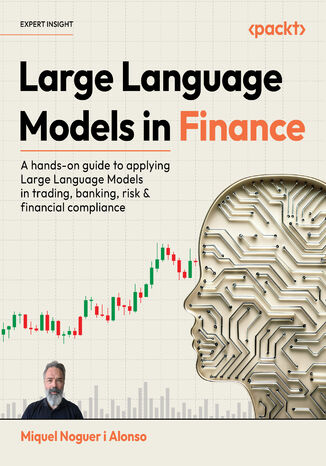
Miquel Noguer i Alonso
Large language models are revolutionizing finance from market analysis to compliance automation but applying them in practice can be challenging. LLMs in Finance is a step-by-step guide that demystifies these powerful models and shows you how to implement them in real financial projects. You'll begin with the fundamentals of how LLMs work, including the transformer architecture, prompt engineering, and fine-tuning for financial data. Next, you'll build applications: intelligent agents for trading; tools for banking tasks like credit scoring and fraud detection; and automated solutions for risk management and regulatory compliance. To deploy these solutions, you'll learn how to scale LLM implementations, from choosing the right hardware to adopting effective cloud strategies. You'll also explore advanced methods to improve model performance, including reinforcement learning for fine-tuning. Finally, learn how to address AI bias and ensure your LLM solutions comply with ethical and regulatory requirements. Real-world case studies illustrate how financial organizations are leveraging LLMs in trading systems, customer service chatbots, and more. By the end of the book, you'll have the expertise to build LLM-powered applications and pick up on trends such as multimodal AI