
Informatyka
Zajrzyj do kategorii Informatyka w księgarni internetowej Ebookpoint. Znajdziesz tutaj bestsellerowe książki, ebooki i kursy video z branży IT. Sięgnij po najlepszą literaturę dla specjalistów i rozwijaj doświadczenie, które już posiadasz, lub rozpocznij swoją przygodę z programowaniem, cyberbezpieczeństwem lub grafiką komputerową. Pogłębiaj swoją wiedzę tak, jak Ci wygodnie - z tradycyjną książką, wygodnym ebookiem lub nowoczesnym videokursem. Sprawdź, jakie tytuły znajdziesz w kategorii Informatyka!
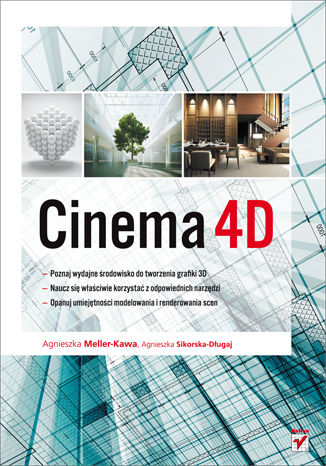
Agnieszka Meller-Kawa, Agnieszka Sikorska-Długaj
Książka opisuje polską wersję programu. Grafika trójwymiarowa? Animacje? Renderingi? Z pakietem Cinema 4D to nic trudnego! Poznaj wydajne środowisko do tworzenia grafiki 3D Naucz się właściwie korzystać z odpowiednich narzędzi Opanuj umiejętności modelowania i renderowania scen Cinema 4D to jeden z najpopularniejszych programów do tworzenia grafiki i animacji 3D. Środowisko to umożliwia wydajne i łatwe modelowanie obiektów oraz scen, odpowiednie ich oświetlanie, przypisywanie powierzchniom materiałów, animowanie postaci i przedmiotów, a także tworzenie wysokiej jakości renderingów, które z powodzeniem wykorzystywane są zarówno w produkcjach filmowych czy grach komputerowych, jak i w profesjonalnych wizualizacjach architektonicznych. Książka Cinema 4D wprowadzi Cię w arkana tego środowiska graficznego oraz zaprezentuje sposoby używania narzędzi wchodzących w jego skład. Bez zbędnej teorii, za to z pomocą wielu bardzo praktycznych przykładów, autorzy przedstawiają metody i techniki wykorzystywane przy budowaniu, oświetlaniu oraz teksturowaniu różnego rodzaju obiektów i scen, z którymi na co dzień mają do czynienia profesjonalni graficy, projektanci, dekoratorzy i architekci. Przegląd środowiska pracy grafika i dostępnych narzędzi Podstawy tworzenia i edytowania obiektów oraz scen Metody wykorzystywane w modelowaniu precyzyjnym Tworzenie materiałów i ich używanie Modelowanie z wykorzystaniem obiektów NURBS Operacje tworzenia i edycji splajnów Sposoby oświetlania obiektów i scen Tworzenie animacji i ustawianie kamer Renderowanie obrazów statycznych i animacji Wkrocz w wirtualny świat 3D z realną wiedzą i prawdziwymi umiejętnościami!
Hemang Doshi, Javen Khoo Ai Wee
Following on from the success of its bestselling predecessor, this third edition of the CISA - Certified Information Systems Auditor Study Guide serves as your go-to resource for acing the CISA exam. Written by renowned CISA expert Hemang Doshi, this guide equips you with practical skills and in-depth knowledge to excel in information systems auditing, setting the foundation for a thriving career.Fully updated to align with the 28th edition of the CISA Official Review Manual, this guide covers the latest exam objectives and provides a deep dive into essential IT auditing areas, including IT governance, systems development, and asset protection. The book follows a structured, three-step approach to solidify your understanding. First, it breaks down the fundamentals with clear, concise explanations. Then, it highlights critical exam-focused points to ensure you concentrate on key areas. Finally, it challenges you with self-assessment questions that reflect the exam format, helping you assess your knowledge.Additionally, you’ll gain access to online resources, including mock exams, interactive flashcards, and invaluable exam tips, ensuring you’re fully prepared for the exam with unlimited practice opportunities.By the end of this guide, you’ll be ready to pass the CISA exam with confidence and advance your career in auditing.
Stuart Fordham
Over 90 recipes to maximize automated solutions and policy-drive application profiles using Cisco ACIAbout This BookConfidently provision your virtual and physical infrastructure for application deploymentIntegrate Cisco ACI with hypervisors and other third party devicesPacked with powerful recipes to automate your IT operationsWho This Book Is ForIf you are a network administrator, system administrator, or engineer and are aware of the basics of Cisco ACI but want to start using it to automate your tasks, then this book is for youWhat You Will LearnMaster the Cisco ACI architectureDiscover the ACI fabric with easy-to-follow stepsSet up quality of service within ACIConfigure external networks with Cisco ACIIntegrate with VMware and track VMware virtual machinesConfigure apply and verify access policiesExtend or migrate a VMware virtual-machine LAN inside the ACI fabricMonitor ACI with third party tools and troubleshoot issuesIn DetailCisco Application Centric Infrastructure (ACI) is a tough architecture that automates IT tasks and accelerates data-center application deployments.This book focuses on practical recipes to help you quickly build, manage, and customize hybrid environment for your organization using Cisco ACI. You will begin by understanding the Cisco ACI architecture and its major components. You will then configure Cisco ACI policies and tenants. Next you will connect to hypervisors and other third-party devices. Moving on, you will configure routing to external networks and within ACI tenants and also learn to secure ACI through RBAC. Furthermore, you will understand how to set up quality of service and network programming with REST, XML, Python and so on. Finally you will learn to monitor and troubleshoot ACI in the event of any issues that arise.By the end of the book, you will gain have mastered automating your IT tasks and accelerating the deployment of your applications.Style and approachA set of exciting recipes to automate your IT operations related to datacenters, the Cloud, and networking tasks
Tanner Ezell
Cisco Unified Communications Manager (CUCM) is a software-based call-processing system developed by Cisco Systems. CUCM tracks all active VoIP network components; these include phones, gateways, conference bridges, transcoding resources, and voicemail boxes among others. This scalable, distributable, highly-available enterprise-class system delivers voice, video, mobility, and presence services. It connects up to 30,000 users of IP phones, media processing devices, VoIP gateways, mobile devices, and multimedia applications. With this cookbook you will learn all the important aspects of administering Cisco Unified Communications Manager.Cisco Unified Communications Manager 8: Expert Administration Cookbook is filled with many advanced recipes to effectively and efficiently configure and manage Cisco Unified Communications Manager. This book covers everything an administrator needs during and after Cisco Unified Communications Manager implementation.This practical cookbook contains detailed step-by-step instructions with clear and informative screenshots that cover all the important and advanced aspects of administering Cisco Unified Communications Manager.The book starts with introducing Call Routing and E.164. It then covers configuration and design information for the various call admission control technologies and Media Resources. The book also dives deep into troubleshooting, upgrades, disaster recovery, user management and much more.
Andy Paul
If you are a Citrix® engineer, a virtualization consultant, or an IT project manager with prior experience of using Citrix XenApp® and related technologies for desktop virtualization and want to further explore the power of XenApp® for flawless desktop virtualization, then this book is for you.
Luca Dentella
If you are an IT architect or system administrator who works with Citrix® XenApp® and need an agile, practical guide to tune and optimize the performance of your XenApp® architecture, this is the book for you. Citrix®, Citrix Systems®, XenApp®, XenDesktop® and CloudPortal™ are trademarks of Citrix Systems, Inc. and/or one or more of its subsidiaries, and may be registered in the United States Patent and Trademark Office and in other countries.
Luca Dentella
Citrix XenApp is an application virtualization product that allows users to connect to their corporate applications from any device. XenApp can host applications on central servers and allows users to interact with them remotely or stream and deliver them to user devices for local execution.Citrix XenApp Performance Essentials is a practical guide that provides you guidelines, best practices, and real world examples that will help you to improve the performance of your farm, identifying and solving possible bottlenecks and using advanced features including the new features provided by XenApp 6.5.Citrix XenApp is widely used to deliver enterprise applications to end users. This book covers the whole process of optimizing a XenApp farm, starting from the design phase all the way to tuning for remote users and connecting via geographic links.With your farm in production, you will understand what to monitor and how to optimize your farm, as well as how to use an open-source tool, WANem, to test the applications' behavior with different link conditions. You will also learn which settings and features XenApp offers to optimize CPU and memory utilization.This book will help you to prevent or solve performance problems and make your users happy working with published applications.
Gaspare Silvestri
Over 40 engaging recipes that will help you implement a full-featured XenDesktop® 7.6 architecture and its main satellite componentsAbout This BookImplement, configure, and optimize the migration from a physical to a VDI architecture using XenDesktop 7.6Publish desktops and applications to the end user devices, optimizing their performance and increasing the security for the delivered resourcesA pragmatic guide that helps you to explore the XenDesktop 7.6 architecture and its related components to implement a service-oriented architecture based on the Citrix FlexCast approachWho This Book Is ForIf you are a system administrator or an experienced IT professional who wants to refer to a centralized container of procedures and advanced tasks in XenDesktop, this is the book for you.Experience of the virtualized environment and an understanding of the general concepts of desktop virtualization (VDI) are required.What You Will LearnUpgrade from XenDesktop 5.6 / 7.x to XenDesktop 7.6Configure and deploy virtual machines for XenDesktop 7.6Perform configuration and optimization operations for desktop and server OS images for future deploymentsPlan and configure XenDesktop user experienceExecute desktop environment administration tasks, including catalog creation, power management, and resource allocationUnderstand how to publish the hosted applications, Local Access Apps (LAA), and applications using Microsoft App-VWork with XenDesktop PowerShell to reduce the time required to perform the management tasks by the creation of the PowerShell scriptsImplement the two-factor hardware and software authentication for XenDesktopInstall and configure Citrix Netscaler Gateway 10.5 and Citrix XenMobile 10 to improve the quality, the performance, and the manageability of your Virtual Desktop Infrastructure (VDI) architectureIn DetailIn the era of Bring Your Own Device (BYOD) and consecration of the mobile devices, Citrix has strengthened its position in this market, powering its desktop and application virtualization platforms, integrating the ability to publish virtual and physical desktops with the capability to assign applications and contents in a secure manner on any device, anywhere, more than previous versions. The XenDesktop 7.6 version is a more integrated platform, which permits the use and interaction with mobility and cloud platforms leaders in the market.This book will help you understand how to implement, configure, and optimize migration from a physical to a VDI architecture, moving from a standard application approach to a centralized and more secure way to assign and release resources to the end users.The book begins with the upgrade and installation procedures for the core infrastructural components, along with an explanation of how to deploy and optimize procedures for desktop virtual machines. Moving on, you will perform desktop and applications deployment through the XenDesktop core plus integrated publishing platforms, such as Microsoft App-V.Finally, the book explains how to install and configure important collateral platforms such as the Citrix Netscaler, Citrix CloudBridge and Citrix XenMobile platforms, along with execution of the most advanced activities and configurations.Style and approachThis book is a step-by-step course that includes standard and high-level tasks oriented to deploy a full-functioning Citrix environment. This practical approach is based on both GUI and command-line operations, which gives IT professionals an alternative on the way to operate, where possible.