
Informatyka
Zajrzyj do kategorii Informatyka w księgarni internetowej Ebookpoint. Znajdziesz tutaj bestsellerowe książki, ebooki i kursy video z branży IT. Sięgnij po najlepszą literaturę dla specjalistów i rozwijaj doświadczenie, które już posiadasz, lub rozpocznij swoją przygodę z programowaniem, cyberbezpieczeństwem lub grafiką komputerową. Pogłębiaj swoją wiedzę tak, jak Ci wygodnie - z tradycyjną książką, wygodnym ebookiem lub nowoczesnym videokursem. Sprawdź, jakie tytuły znajdziesz w kategorii Informatyka!
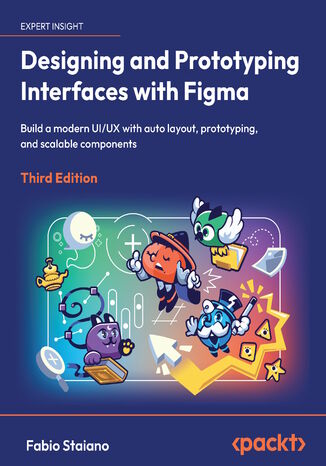
Fabio Staiano
Figma has evolved, and so should your workflow. In this fully updated third edition of Designing and Prototyping Interfaces with Figma, you will explore the platform’s most powerful additions, including Variables, Conditional Prototyping, and a redesigned interface that reshapes how you work. This edition is built around a new, real-world project that takes you from brief to handoff and anchors every concept in practical, day-to-day design tasks.Across the project, you will create responsive layouts with Auto Layout, components, and variants; build scalable design systems; and prototype realistic, branched flows with conditional interactions. You will test on devices, collect feedback, and iterate with confidence, applying patterns and checklists that translate directly to team workflows and real product constraints.Collaboration gets equal focus. You will learn how Dev Mode bridges the work of designers and developers for a smoother, more structured handoff with clear specs and variable-aware inspection. The book closes with a pragmatic look at emerging AI-powered tools, helping you evaluate where they might add value without replacing your creative judgment. Whether you are new to UI/UX design or sharpening your practice, you will come away with a proven workflow to ship adaptive, production-ready designs.
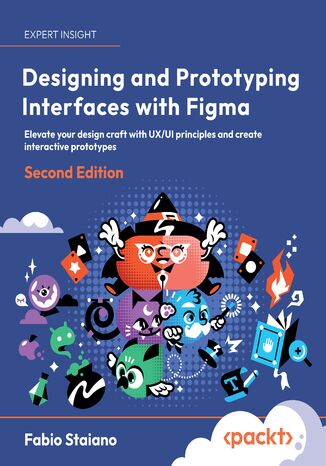
Fabio Staiano
Are you a UI/UX designer eager to learn the art of creating compelling interfaces using Figma? Look no further! The highly anticipated new edition is here to transform your creative journey.Explore Figma's latest features and delve into the power of variables and conditional Prototyping. Get ready to transform your static designs into dynamic, interactive prototypes, offering users and stakeholders an immersive experience. Stay at the forefront of design innovation with insights into integrating AI capabilities and optimizing your workflow with the latest Figma plugins. With user-centric design at its core, this book guides you through mastering design thinking, enabling you to tackle complex design challenges with ease. One unique aspect of this edition is its focus on effective communication. Learn how to convey your design vision clearly to both technical and non-technical audiences. In the rapidly changing world of UI/UX design, iteration is key. This book will teach you how to gather user feedback and iterate on your designs by creating interactive prototypes.Whether you're new to Figma or a seasoned pro, this comprehensive guide equips you with the skills to create captivating interfaces, fosters creativity and problem-solving, and makes you an indispensable, forward-thinking designer.
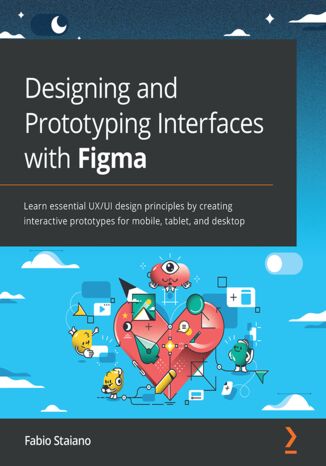
Fabio Staiano
A driving force of the design tools market, Figma makes it easy to work with classic design features while enabling unique innovations and opening up real-time collaboration possibilities. It comes as no surprise that many designers decide to switch from other tools to Figma.In this book, you'll be challenged to design a user interface for a responsive mobile application having researched and understood user needs. You'll become well-versed with the process in a step-by-step manner by exploring the theory first and gradually moving on to practice. You'll begin your learning journey by covering the basics of user experience research with FigJam and the process of creating a complete design using Figma tools such as Components, Variants, Auto Layout, and much more. You'll also learn how to prototype your design and explore the potential of community resources such as templates and plugins.By the end of this Figma book, you'll have a solid understanding of the user interface workflow, managing essential Figma tools, and organizing your workflow.
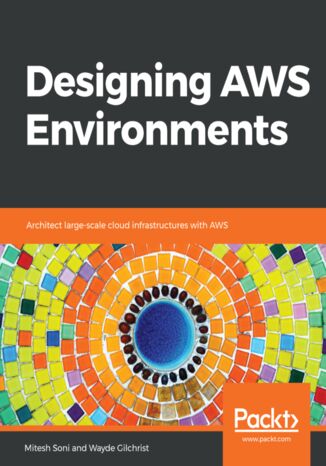
Designing AWS Environments. Architect large-scale cloud infrastructures with AWS
Mitesh Soni, Wayde Gilchrist
Amazon Web Services (AWS) provides trusted,cloud-based solutions to help you meet your business needs. Running your solutions in the AWS Cloud can help you get your applications up and running faster while providing the security to meet your compliance requirements. This book begins by familiarizing you with the key capabilities to architect and host applications, websites, and services on AWS. We explain the available options for AWS free tier with virtual instances and demonstrate how you can launch and connect them. Using practical examples, you’ll be able to design and deploy networking and hosting solutions for large deployments. Finally, the book focuses on security and important elements of scalability and high availability using AWS VPC, Elastic Load Balancing, and Auto scaling. By the end of this book, you will have handson experience of working with AWS instances,VPC, Elastic Load Balancing, and Auto scalingrelated tasks on Amazon Web Services.
Davi Vieira
Hexagonal architecture enhances developers' productivity by decoupling business code from technology code, making the software more change-tolerant, and allowing it to evolve and incorporate new technologies without the need for significant refactoring. By adhering to hexagonal principles, you can structure your software in a way that reduces the effort required to understand and maintain the code.This book starts with an in-depth analysis of hexagonal architecture's building blocks, such as entities, use cases, ports, and adapters. You'll learn how to assemble business code in the Domain hexagon, create features by using ports and use cases in the Application hexagon, and make your software compatible with different technologies by employing adapters in the Framework hexagon. Moving on, you'll get your hands dirty developing a system based on a real-world scenario applying all the hexagonal architecture's building blocks. By creating a hexagonal system, you'll also understand how you can use Java modules to reinforce dependency inversion and ensure the isolation of each hexagon in the architecture. Finally, you'll get to grips with using Quarkus to turn your hexagonal application into a cloud-native system.By the end of this hexagonal architecture book, you'll be able to bring order and sanity to the development of complex and long-lasting applications.
Davi Vieira
We live in a fast-evolving world with new technologies emerging every day, where enterprises are constantly changing in an unending quest to be more profitable. So, the question arises — how to develop software capable of handling a high level of unpredictability. With this question in mind, this book explores how the hexagonal architecture can help build robust, change-tolerable, maintainable, and cloud-native applications that can meet the needs of enterprises seeking to increase their profits while dealing with uncertainties. This book starts by uncovering the secrets of the hexagonal architecture’s building blocks, such as entities, use cases, ports, and adapters. You’ll learn how to assemble business code in the domain hexagon, create features with ports and use cases in the application hexagon, and make your software compatible with different technologies by employing adapters in the framework hexagon. In this new edition, you’ll learn about the differences between a hexagonal and layered architecture and how to apply SOLID principles while developing a hexagonal system based on a real-world scenario. Finally, you’ll get to grips with using Quarkus to turn your hexagonal application into a cloud-native system.By the end of this book, you’ll be able to develop robust, flexible, and maintainable systems that will stand the test of time.
Sandro Paganotti
CSS3 unveils new possibilities for frontend web developers: things that would require JavaScript, such as animation and form validation, or even third party plugins, such as 3D transformations, are now accessible using this technology.Designing Next Generation Web Projects with CSS3 contains ten web projects fully developed using cutting edge CSS3 techniques. It also covers time saving implementation tips and tricks as well as fallback, polyfills, and graceful degradation approaches.This book draws a path through CSS3; it starts with projects using well supported features across web browsers and then it moves to more sophisticated techniques such as multi polyfill implementation and creating a zooming user interface with SVG and CSS. React to HTML5 form validation, target CSS rules to specific devices, trigger animations and behavior in response to user interaction, gain confidence with helpful tools like SASS, learn how to deal with old browsers and more.Designing Next Generation Web Projects with CSS3 is a helpful collection of techniques and good practices designed to help the implementation of CSS3 properties and features.
Designing Purpose-Built Drones for Ardupilot Pixhawk 2.1. Build drones with Ardupilot
Ty Audronis
The Ardupilot platform is an application ecosystem that encompasses various OS projects for drone programming, flight control, and advanced functionalities.The Ardupilot platform supports many Comms and APIs, such as DroneKit, ROS, and MAVLink. It unites OS drone projects to provide a common codebase. With the help of this book, you will have the satisfaction of building a drone from scratch and exploring its many recreational uses (aerial photography, playing, aerial surveillance, and so on). This book helps individuals and communities build powerfulUAVs for both personal and commercial purposes. You will learn to unleash the Ardupilot technology for building,monitoring, and controlling your drones.This is a step-by-step guide covering practical examples and instructions for assembling a drone, building ground control unit using microcontrollers, QgroundControl, and MissionPlanner.You can further build robotic applications on your drone utilizing critical software libraries and tools from the ROS framework. With the help of DroneKit and MAVLink (for reliable communication), you can customize applications via cloud and mobile to interact with your UAV.