
Informatyka
IT Governance Publishing, Claire Agutter
This book offers a comprehensive exploration of ITIL® 4 Direct, Plan and Improve (DPI), beginning with key concepts of governance, risk management, continual improvement, and organizational change management. It introduces the essentials of direction, planning, and improvement, guiding readers in aligning strategic goals with actionable steps. The core methods, risks, and controls crucial for effective DPI practices are explored.As you progress, the book delves into governance, risk, and compliance, emphasizing how to align objectives and establish clear decision-making frameworks. You'll learn to craft policies and controls, ensuring a robust and adaptable service management strategy. A strong focus on continual improvement equips you with practical strategies for assessing and enhancing service quality.The book also covers organizational change management (OCM), providing techniques to manage emotional and social aspects of change while aligning with business goals. You’ll gain strategies for stakeholder communication, feedback mechanisms, and values-based change management. Finally, the book discusses measurement, reporting, and optimization, showing how to map value streams, optimize workflows, and measure performance. By the end, you’ll be ready to lead DPI initiatives and drive transformation within your organization.
IT Governance Publishing, Claire Agutter
The book explores the essential practices and strategies for driving stakeholder value, focusing on the ITIL® 4 framework. It begins with an in-depth analysis of the customer journey, including how to design and improve value streams, ensuring customer satisfaction and service quality. The book moves into targeting markets and stakeholders, offering methods for market segmentation and defining strategies for better customer engagement.In subsequent chapters, the book delves into building strong relationships with both suppliers and customers, a cornerstone of service management success. The exploration of service offerings and demand management provides actionable insights into shaping and delivering services that meet customer needs and expectations. The process of aligning expectations through value co-creation and service agreements also becomes a focus, preparing readers to manage all stages of the service lifecycle effectively.With detailed discussions on onboarding and offboarding, continual value co-creation, and service value measurement, the book provides a holistic approach to creating sustainable value for all stakeholders. This text is invaluable for professionals seeking to understand and apply ITIL® 4’s principles in real-world scenarios.

ITIL(R) 4 Essentials. Your essential guide for the ITIL® 4 Foundation exam and beyond
IT Governance Publishing, Claire Agutter
The ITIL® 4 Essentials guide offers a comprehensive introduction to IT service management, focusing on ITIL® 4 practices and principles. Readers gain an understanding of the four dimensions of service management—organizations, people, information, technology, partners, and suppliers—which are key to delivering effective IT services.The guide highlights ITIL® 4’s seven guiding principles, such as focusing on value, collaborating, and working holistically. These principles are essential for creating effective service management strategies. Readers will learn how to integrate these principles into their daily operations, leading to enhanced service delivery and better alignment with business goals. Additionally, the book explores the importance of the Service Value System (SVS) and the Service Value Chain, offering a detailed look at how these frameworks drive continuous improvement and value creation.Lastly, the book covers essential ITIL® 4 practices like continual improvement, change management, and incident management. Each practice is explored in depth, providing practical guidance for implementation. The final chapters offer exam preparation tips, ensuring readers are ready for the ITIL® Foundation exam, with sample questions and strategies for success.
IT Governance Publishing, Claire Agutter
This book guides readers through the core principles and practices of High-Velocity IT, offering a comprehensive approach to modern IT service management. It begins with foundational concepts, introducing High-Velocity IT and the essential behaviors needed for success in dynamic environments. Readers are then introduced to the digital product lifecycle and the ITIL® operating model, which emphasize the importance of service value systems and value streams in driving business outcomes.The book delves into key behaviors that support continuous improvement, including adaptability, trust, and commitment to learning. It also covers various principles and models, such as Lean, Agile, and Design Thinking, offering practical techniques to enhance IT performance.In the later chapters, the focus shifts to ensuring valuable investments, fast development, resilient operations, and co-created value. It presents techniques for achieving these objectives while aligning with ITIL® 4 practices. The final chapter prepares readers for the HVIT certification exam, consolidating key learnings and providing a solid foundation for future success in High-Velocity IT environments. This book offers both theory and practical guidance for those seeking to thrive in fast-paced, value-driven IT operations.

ITIL(R) Foundation Essentials ITIL(R) 4 Edition. The ultimate revision guide
IT Governance Publishing, Claire Agutter
This book offers a detailed introduction to IT service management and the ITIL® 4 framework by covering key concepts such as value, service management, and co-creation, providing a solid foundation for understanding ITIL®. Readers are introduced to the four dimensions of service management and how they apply to organizational success. The book also explores the various roles involved in service management, from service providers to consumers, and the essential relationships that drive value.The book further explains ITIL®’s guiding principles, such as focusing on value, thinking and working holistically, and simplifying processes. These principles form the core of ITIL® 4’s approach, emphasizing flexibility, iterative progress, and stakeholder collaboration. With practical examples and clear explanations, readers will learn how to integrate these principles into their service management practices.Lastly, the book dives deep into the Service Value System and Service Value Chain, detailing how each component contributes to delivering business value. It also explores essential ITIL® practices, such as continual improvement and incident management. The final sections provide valuable exam preparation tips to ensure readers are well-equipped to pass the ITIL® Foundation exam with confidence.
J2ME. Praktyczne projekty. Wydanie II
Krzysztof Rychlicki-Kicior
Naucz się efektywnie wykorzystywać możliwości oferowane przez J2ME! Zainstaluj najnowszą wersję środowiska Java ME SDK Poznaj zasady tworzenia aplikacji mobilnych Rozwiń swoje umiejętności w oparciu o praktyczne projekty z wykorzystaniem J2ME J2ME, czyli Java 2 Micro Edition, to uproszczona wersja platformy Java, opracowana przez firmę Sun Microsystems specjalnie dla potrzeb programowania urządzeń przenośnych, takich jak telefony komórkowe czy palmtopy. Umożliwia tworzenie ciekawych i wydajnych aplikacji mobilnych, które bez większych problemów można uruchamiać na sprzęcie o stosunkowo słabych parametrach technicznych. Pozwala to osobom zainteresowanym produkcją gier, programów multimedialnych czy narzędzi sieciowych swobodnie rozwinąć skrzydła w tej dziedzinie. "J2ME. Praktyczne projekty. Wydanie II " to przydatny przewodnik po zaawansowanych zagadnieniach, związanych z tworzeniem różnego rodzaju aplikacji mobilnych przy użyciu środowiska Java. Autor pokrótce przedstawia w nim podstawowe informacje na temat projektowania i kodowania programów działających na urządzeniach przenośnych, aby szybko przejść do konkretnych przykładów zastosowania zdobytej wiedzy. Dzięki nim nauczysz się tworzyć gry, aplikacje komunikacyjne, programy multimedialne i narzędzia GPS. Jeśli chcesz szybko opanować J2ME, tej książki nie może zabraknąć na Twojej półce! Instalacja środowiska programisty J2ME Podstawowe informacje o platformie i sposobach jej używania Obsługa zaawansowanych wyświetlaczy Tworzenie aplikacji sieciowych i komunikacyjnych Przetwarzanie i wykorzystywanie danych XML Tworzenie aplikacji multimedialnych i obsługa kamer Projektowanie i programowanie gier Tworzenie aplikacji GPS Dołącz do elitarnego grona programistów aplikacji mobilnych!
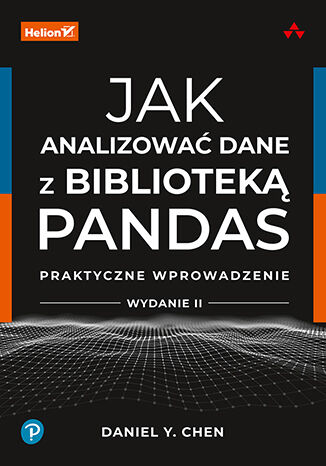
Jak analizować dane z biblioteką Pandas. Praktyczne wprowadzenie. Wydanie II
Daniel Y. Chen
Wprawny analityk potrafi się posługiwać zbiorami danych o wysokiej dynamice i różnorodności. Działanie to ułatwia biblioteka open source Pandas, która pozwala, przy użyciu języka Python, zrealizować niemal każde zadanie wymagające analizy danych. Pandas może pomóc w zapewnieniu wiarygodności danych, wizualizowaniu ich pod kątem efektywnego podejmowania decyzji i analizowaniu wielu zbiorów danych. Oto drugie, zaktualizowane i uzupełnione wydanie przewodnika po bibliotece Pandas. Dzięki tej przystępnej książce nauczysz się w pełni korzystać z możliwości oferowanych przez bibliotekę, nawet jeśli dopiero zaczynasz przygodę z analizą danych w Pythonie. Naukę rozpoczniesz z użyciem rzeczywistego zbioru danych, aby wkrótce rozwiązywać złożone problemy danologii, takie jak obsługa brakujących danych, stosowanie regularyzacji czy też używanie metod nienadzorowanego uczenia maszynowego do odnajdywania podstawowej struktury w zbiorze danych. Pracę z poszczególnymi zagadnieniami ułatwia to, że zostały one zilustrowane prostymi, ale praktycznymi przykładami. W książce: importowanie i eksportowanie danych, przygotowywanie ich zbiorów tworzenie wykresów za pomocą bibliotek matplotlib, seaborn i Pandas konwersja typów danych skalowanie operacji przetwarzania danych zaawansowane możliwości biblioteki Pandas powiązane z datami i czasem dopasowywanie modeli liniowych przy użyciu bibliotek statsmodels i scikit-learn Analizuj zbiory danych i odkrywaj ukrytą w nich wiedzę!

Aleksander Binsztok, Tymoteusz Zuzański
Towar dobrze podany to towar sprzedany! Czym jest merchandising? Definicje są bardzo różne i skomplikowane, jednak najprościej można powiedzieć, że jest to dziedzina marketingu skupiona na zaprezentowaniu klientowi towaru w taki sposób, by ten go kupił. Trudno jednoznacznie określić, kiedy narodził się merchandising. Można jednak pokusić się o stwierdzenie, iż pojawił się w momencie powstania pierwszych sklepów samoobsługowych. Dlaczego wtedy? Bo od tej chwili klient może stanąć przed regałem, zastanowić się, czy woli mąkę A czy B, i wybrać jedną z nich. Dziś, gdy konkurencja między producentami jest ogromna, a klient wybredny i świadomy własnych potrzeb, odpowiedni sposób prezentacji towaru może okazać się czynnikiem decydującym o sukcesie rynkowym firmy. Albo o jej porażce… Ta książka w sposób kompleksowy wprowadzi Cię w świat merchandisingu. Lekturę zaczniesz od definicji pojęcia, jego historii oraz trendów rozwojowych w Polsce i na świecie. Następnie spojrzysz na swój towar oczami klienta - poznasz mechanizmy psychologiczne decydujące o zakupie lub odrzuceniu produktu, wnikniesz w serce, duszę i portfel konsumenta. Uzbrojony w tę wiedzę, nauczysz się w dyskretny sposób namawiać potencjalnego klienta do zakupu - już przy sklepowej półce! Wreszcie zrozumiesz, jak „robią to” najlepsi. I najgorsi. Wszak najlepiej uczyć się od mistrzów oraz na cudzych błędach. Zatem zacznij działać! Sięgnij po tę książkę. Teraz albo nigdy. Póki jeszcze masz okazję, bo za chwilę już jej nie dostaniesz! Aleksander Binsztok - doktor nauk ekonomicznych, wykładowca Uniwersytetu Ekonomicznego we Wrocławiu oraz współpracownik innych renomowanych uczelni w kraju i za granicą; właściciel Firmy Szkoleniowo-Usługowej „Binsztok i Partnerzy”. Trener komunikacji i biznesu, znany w wąskich kręgach specjalistów jako ekspert i doradca, który podczas swoich szkoleń i warsztatów potrafi wzbudzić olbrzymie zainteresowanie wśród uczestników i wywołać w nich różne stany emocjonalne. Tymoteusz Zuzański - absolwent Uniwersytetu Ekonomicznego we Wrocławiu; trener merchandisingu w Firmie Szkoleniowo-Usługowej „Binsztok i Partnerzy”. Na swoim koncie posiada wiele praktycznych wdrożeń dla sieci detalicznych i banków. Jest autorem wielu prac poświęconych między innymi marketingowi czy szeroko pojętej komunikacji w procesach biznesowych.