
Informatyka
Zajrzyj do kategorii Informatyka w księgarni internetowej Ebookpoint. Znajdziesz tutaj bestsellerowe książki, ebooki i kursy video z branży IT. Sięgnij po najlepszą literaturę dla specjalistów i rozwijaj doświadczenie, które już posiadasz, lub rozpocznij swoją przygodę z programowaniem, cyberbezpieczeństwem lub grafiką komputerową. Pogłębiaj swoją wiedzę tak, jak Ci wygodnie - z tradycyjną książką, wygodnym ebookiem lub nowoczesnym videokursem. Sprawdź, jakie tytuły znajdziesz w kategorii Informatyka!
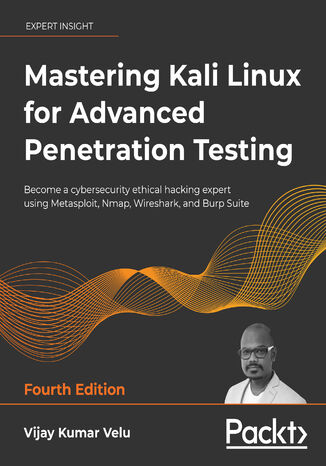
Vijay Kumar Velu
Remote working has given hackers plenty of opportunities as more confidential information is shared over the internet than ever before. In this new edition of Mastering Kali Linux for Advanced Penetration Testing, you’ll learn an offensive approach to enhance your penetration testing skills by testing the sophisticated tactics employed by real hackers. You’ll go through laboratory integration to cloud services so that you learn another dimension of exploitation that is typically forgotten during a penetration test. You'll explore different ways of installing and running Kali Linux in a VM and containerized environment and deploying vulnerable cloud services on AWS using containers, exploiting misconfigured S3 buckets to gain access to EC2 instances. This book delves into passive and active reconnaissance, from obtaining user information to large-scale port scanning. Building on this, different vulnerability assessments are explored, including threat modeling. See how hackers use lateral movement, privilege escalation, and command and control (C2) on compromised systems. By the end of this book, you’ll have explored many advanced pentesting approaches and hacking techniques employed on networks, IoT, embedded peripheral devices, and radio frequencies.
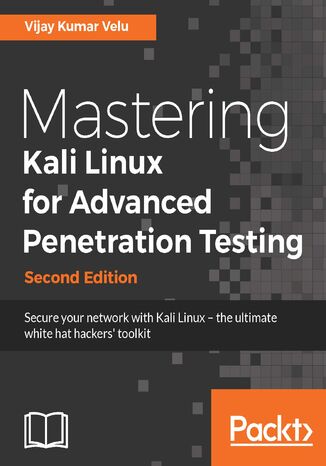
Vijay Kumar Velu
This book will take you, as a tester or security practitioner through the journey of reconnaissance, vulnerability assessment, exploitation, and post-exploitation activities used by penetration testers and hackers. We will start off by using a laboratory environment to validate tools and techniques, and using an application that supports a collaborative approach to penetration testing. Further we will get acquainted with passive reconnaissance with open source intelligence and active reconnaissance of the external and internal networks. We will also focus on how to select, use, customize, and interpret the results from a variety of different vulnerability scanners. Specific routes to the target will also be examined, including bypassing physical security and exfiltration of data using different techniques. You will also get to grips with concepts such as social engineering, attacking wireless networks, exploitation of web applications and remote access connections. Later you will learn the practical aspects of attacking user client systems by backdooring executable files. You will focus on the most vulnerable part of the network—directly and bypassing the controls, attacking the end user and maintaining persistence access through social media.You will also explore approaches to carrying out advanced penetration testing in tightly secured environments, and the book's hands-on approach will help you understand everything you need to know during a Red teaming exercise or penetration testing
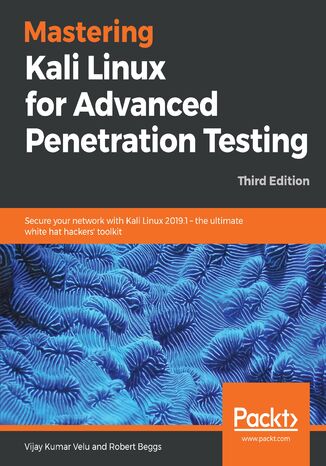
Vijay Kumar Velu, Robert Beggs
This book takes you, as a tester or security practitioner, through the reconnaissance, vulnerability assessment, exploitation, privilege escalation, and post-exploitation activities used by pentesters.To start with, you'll use a laboratory environment to validate tools and techniques, along with an application that supports a collaborative approach for pentesting. You'll then progress to passive reconnaissance with open source intelligence and active reconnaissance of the external and internal infrastructure. You'll also focus on how to select, use, customize, and interpret the results from different vulnerability scanners, followed by examining specific routes to the target, which include bypassing physical security and the exfiltration of data using a variety of techniques. You'll discover concepts such as social engineering, attacking wireless networks, web services, and embedded devices.Once you are confident with these topics, you'll learn the practical aspects of attacking user client systems by backdooring with fileless techniques, followed by focusing on the most vulnerable part of the network – directly attacking the end user. By the end of this book, you'll have explored approaches for carrying out advanced pentesting in tightly secured environments, understood pentesting and hacking techniques employed on embedded peripheral devices.
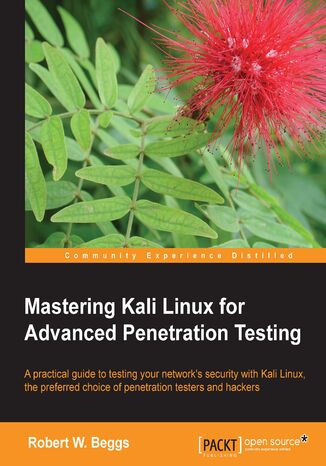
Robert Beggs
This book provides an overview of the kill chain approach to penetration testing, and then focuses on using Kali Linux to provide examples of how this methodology is applied in the real world. After describing the underlying concepts, step-by-step examples are provided that use selected tools to demonstrate the techniques.If you are an IT professional or a security consultant who wants to maximize the success of your network testing using some of the advanced features of Kali Linux, then this book is for you. This book will teach you how to become an expert in the pre-engagement, management, and documentation of penetration testing by building on your understanding of Kali Linux and wireless concepts.
Mastering Kibana 6.x. Visualize your Elastic Stack data with histograms, maps, charts, and graphs
Anurag Srivastava
Kibana is one of the popular tools among data enthusiasts for slicing and dicing large datasets and uncovering Business Intelligence (BI) with the help of its rich and powerful visualizations.To begin with, Mastering Kibana 6.x quickly introduces you to the features of Kibana 6.x, before teaching you how to create smart dashboards in no time. You will explore metric analytics and graph exploration, followed by understanding how to quickly customize Kibana dashboards. In addition to this, you will learn advanced analytics such as maps, hits, and list analytics. All this will help you enhance your skills in running and comparing multiple queries and filters, influencing your data visualization skills at scale.With Kibana’s Timelion feature, you can analyze time series data with histograms and stats analytics. By the end of this book, you will have created a speedy machine learning job using X-Pack capabilities.
MASTERING KNOCKOUTJS. Use and extend Knockout to deliver feature-rich, modern web applications
Timothy Moran
If you are an experienced JavaScript developer who is looking for new tools to build web applications and get an understanding of core elements and applications, this is the book for you. A basic knowledge of DOM, JavaScript, and KnockoutJS is assumed.
Gigi Sayfan
Kubernetes is an open source system that is used to automate the deployment, scaling, and management of containerized applications. If you are running more containers or want automated management of your containers, you need Kubernetes at your disposal. To put things into perspective, Mastering Kubernetes walks you through the advanced management of Kubernetes clusters.To start with, you will learn the fundamentals of both Kubernetes architecture and Kubernetes design in detail. You will discover how to run complex stateful microservices on Kubernetes including advanced features such as horizontal pod autoscaling, rolling updates, resource quotas, and persistent storage backend. Using real-world use cases, you will explore the options for network configuration, and understand how to set up, operate, and troubleshoot various Kubernetes networking plugins. In addition to this, you will get to grips with custom resource development and utilization in automation and maintenance workflows.To scale up your knowledge of Kubernetes, you will encounter some additional concepts based on the Kubernetes 1.10 release, such as Promethus, Role-based access control, API aggregation, and more. By the end of this book, you’ll know everything you need to graduate from intermediate to advanced level of understanding Kubernetes.
Alexandru Calcatinge, Julian Balog
Harness the power of Linux in modern data center management, leveraging its unparalleled versatility for efficiently managing your workloads in on-premises and cloud environments. In this second edition, you'll find updates on the latest advancements in Linux administration including containerization, shell scripting, and hypervisors. Written by an experienced Linux trainer, this book will start you off with Linux installation on on-premises systems. As you progress, you’ll master the Linux command line, files, packages, and filesystems. You'll explore essential Linux commands and techniques to secure your Linux environment. New to this edition is a chapter on shell scripting, providing structured guidance on using shell programming for basic Linux automation. This book also delves into the world of containers, with two new chapters dedicated to Docker containers and hypervisors, including KVM virtual machines. Once adept with Linux containers, you'll learn about modern cloud technologies, managing and provisioning container workloads using Kubernetes, and automating system tasks using Ansible. Finally, you'll get to grips with deploying Linux to the cloud using AWS and Azure-specific tools. By the end of this Linux book, you'll have mastered everyday administrative tasks, seamlessly navigating workflows spanning from on-premises to the cloud.