
Informatyka
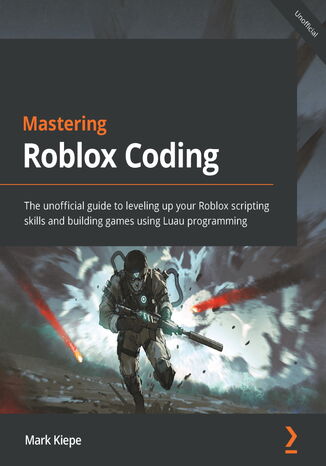
Mark Kiepe
Roblox is a game platform with over 47 million daily active users. Something unique to Roblox is that you’re playing games made by other gamers! This means that you can make your own games, even if you have no experience. In addition, Roblox provides a free engine that allows you to create and publish a simple game in less than five minutes and get paid while at it.Most Roblox games require programming. This book starts with the basics of programming in Roblox Luau. Each chapter builds on the previous one, which eventually results in you mastering programming concepts in Lua. Next, the book teaches you complex technologies that you can implement in your game. Each concept is explained clearly and uses simple examples that show you how the technology is being used. This book contains additional exercises for you to experiment with the concepts you’ve learned. Using best practices, you will understand how to write and build complex systems such as databases, user input controls, and all device user interfaces. In addition, you will learn how to build an entire game from scratch.By the end of this book, you will be able to program complex systems in Roblox from the ground up by learning how to write code using Luau and create optimized code.
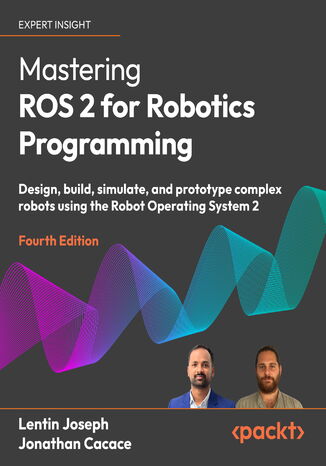
Lentin Joseph, Jonathan Cacace
The rising demand for advanced robotics software has made proficiency in frameworks like ROS 2 essential for engineers and enthusiasts alike.Lentin Joseph, co-founder of RUNTIME Robotics, and Jonathan Cacace, PhD in robotics, help you grasp the foundational concepts and practical applications in this comprehensive fourth edition updated to cover the latest LTS release from 2024—ROS 2 Jazzy. Starting with a solid introduction to ROS 2, including core components and tools, the chapters get you ready to start programming and using its key features confidently. Building on this, the book focuses on 3D robot modeling and simulation with the new Gazebo Sim, supported by ROS 2 controllers. You’ll explore high-level features such as Nav2 for navigation and MoveIt 2 for manipulation, which are crucial for developing advanced systems. You'll also dive into aerial robotics with ROS 2 and learn how to build real-world robots using Micro-ROS. The concluding chapters cover advanced topics like CI/CD workflows, interfacing ROS 2 with large language model (LLM) agents for intelligent planning, and applying deep reinforcement learning for autonomy.By the end of this book, you'll have a strong foundation in ROS 2, along with the skills needed to build sophisticated, real-world robotic applications.
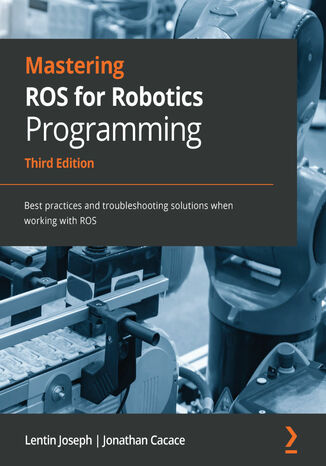
Lentin Joseph, Jonathan Cacace
The Robot Operating System (ROS) is a software framework used for programming complex robots. ROS enables you to develop software for building complex robots without writing code from scratch, saving valuable development time. Mastering ROS for Robotics Programming provides complete coverage of the advanced concepts using easy-to-understand, practical examples and step-by-step explanations of essential concepts that you can apply to your ROS robotics projects.The book begins by helping you get to grips with the basic concepts necessary for programming robots with ROS. You'll then discover how to develop a robot simulation, as well as an actual robot, and understand how to apply high-level capabilities such as navigation and manipulation from scratch. As you advance, you'll learn how to create ROS controllers and plugins and explore ROS's industrial applications and how it interacts with aerial robots. Finally, you'll discover best practices and methods for working with ROS efficiently.By the end of this ROS book, you'll have learned how to create various applications in ROS and build your first ROS robot.
Lentin Joseph, Jonathan Cacace
In this day and age, robotics has been gaining a lot of traction in various industries where consistency and perfection matter. Automation is achieved via robotic applications and various platforms that support robotics. The Robot Operating System (ROS) is a modular software platform to develop generic robotic applications. This book focuses on the most stable release of ROS (Kinetic Kame), discusses advanced concepts, and effectively teaches you programming using ROS.We begin with aninformative overview of the ROS framework, which will give you a clear idea of how ROS works. During the course of this book, you’ll learn to build models of complex robots, and simulate and interface the robot using the ROS MoveIt! motion planning library and ROS navigation stacks. Learn to leverage several ROS packages to embrace your robot models.After covering robot manipulation and navigation, you’ll get to grips with the interfacing I/O boards, sensors, and actuators of ROS. Vision sensors are a key component of robots, and an entire chapter is dedicated to the vision sensor and image elaboration, its interface in ROS and programming. You’ll also understand the hardware interface and simulation of complex robots to ROS and ROS Industrial.At the end of this book, you’ll discover the best practices to follow when programming using ROS.
Rahul Sharma, Vesa Kaihlavirta
Rust is an empowering language that provides a rare combination of safety, speed, and zero-cost abstractions. Mastering Rust – Second Edition is filled with clear and simple explanations of the language features along with real-world examples, showing you how you can build robust, scalable, and reliable programs. This second edition of the book improves upon the previous one and touches on all aspects that make Rust a great language. We have included the features from latest Rust 2018 edition such as the new module system, the smarter compiler, helpful error messages, and the stable procedural macros. You’ll learn how Rust can be used for systems programming, network programming, and even on the web. You’ll also learn techniques such as writing memory-safe code, building idiomatic Rust libraries, writing efficient asynchronous networking code, and advanced macros. The book contains a mix of theory and hands-on tasks so you acquire the skills as well as the knowledge, and it also provides exercises to hammer the concepts in. After reading this book, you will be able to implement Rust for your enterprise projects, write better tests and documentation, design for performance, and write idiomatic Rust code.
Mastering Salesforce CRM Administration. An Advanced Administration Certification Handbook
Rakesh Gupta
The book starts by refreshing your knowledge of common admin tasks. You will go over Lightning Experience and various security aspects. You will be shown how to implement territory management in your organization and make use of custom objects.From here, the book progresses to advanced configuration, data management, and data analytics before swiftly moving on to setting up advanced organization-wide features that affect the look and feel of the application. Extend the capabilities of your organization’s Salesforce implementation by optimizing and extending Sales Cloud, Salesforce1, and Service Cloud applications. This guide will equip you with the tools you need to build a successful career in Salesforce.
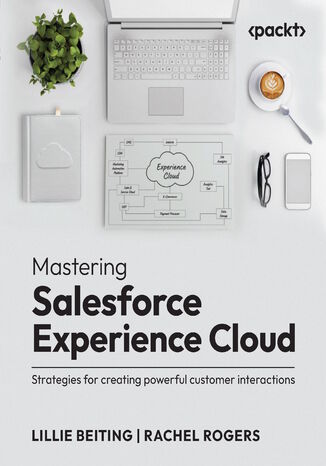
Mastering Salesforce Experience Cloud. Strategies for creating powerful customer interactions
Lillie Beiting, Rachel Rogers
Empowering your target audience to interact effortlessly with you and your product offerings is a critical aspect of business in the modern era. Users expect easy, professional digital experiences when engaging with organizations. However, creating engagement applications from scratch is challenging, and connecting user behavior with your organization’s data is even more complex. Enter Salesforce Experience Cloud sites, website portals built on the Salesforce data model that seamlessly connects your user data to your user experience. Mastering Salesforce Experience Cloud focuses on the human-centric nature of this product, beginning with a comprehensive guide on designing for your organization’s desired users and ensuring success for both internal teams and end users. After exploring the real-world applications of Experience Cloud and reviewing license models, this book provides a beginning-to-end guide to mastering the technical backend of this product, covering both out-of-the-box settings and customization techniques. By the end of this book, you’ll have gained a deep understanding of the Experience Cloud data model and customization options to create engaging, user-centric digital experiences that deliver value to your organization and stakeholders.
Mastering Sass. An expert's guide to practical knowledge on leveraging SASS and COMPASS
Luke Watts
CSS and Sass add elegance and excellence to the basic language, and consist of a CSS-compatible syntax that allows you to use variables, nested rules, mixins, inline imports, and much more.This book will start with an overview of the features in Sass and Compass, most of which you'll already be familiar; however, this will ensure you know what’s expected as the book goes deeper into Sass and Compass. Next you will learn CSS and HTML concepts that are vital to a good Sass workflow. After all, Sass exists to simplify writing CSS, but it won’t teach you how to make clean, scalable, reusable CSS. For that, you need to understand some basic concepts of OOCSS, SMACCS, and Atomic Design.Once you’ve brushed up on the important concepts, it’s time to write some Sass. Mainly you’ll write a few functions and mixins that really leverage control flow using @if / @else loops and you’ll learn how to figure out when and why things are going wrong before they bring you to a stop. Moving further, you’ll learn how to use @debug, @warn and @error to properly handle errors. You’ll also learn about Gulp and how to use it to automate your workflow and reduce your repetitive tasks. And finally you’ll learn about sourcemaps. With sourcemaps, you’ll be able to write, debug, and view your Sass and Compass all from within the browser. It’ll even LiveReload too! As a bonus, you’ll take a look at that funky Flexbox, currently all the rage! You’ll learn how powerful and flexible it really is, and how you can use it with Compass. Best of all, it falls back very gracefully indeed! In fact, you’ll be able to apply it to any existing project without having to change a line of the original CSS.