
Informatyka
Anupama Murali, Pethuru Raj, Harihara Subramanian J,...
Enterprise Architecture (EA) is typically an aggregate of the business, application, data, and infrastructure architectures of any forward-looking enterprise. Due to constant changes and rising complexities in the business and technology landscapes, producing sophisticated architectures is on the rise. Architectural patterns are gaining a lot of attention these days.The book is divided in three modules. You'll learn about the patterns associated with object-oriented, component-based, client-server, and cloud architectures. The second module covers Enterprise Application Integration (EAI) patterns and how they are architected using various tools and patterns. You will come across patterns for Service-Oriented Architecture (SOA), Event-Driven Architecture (EDA), Resource-Oriented Architecture (ROA), big data analytics architecture, and Microservices Architecture (MSA). The final module talks about advanced topics such as Docker containers, high performance, and reliable application architectures. The key takeaways include understanding what architectures are, why they're used, and how and where architecture, design, and integration patterns are being leveraged to build better and bigger systems.
Muhammad Umer
The Linux storage stack serves as a prime example of meticulously coordinated layers. Embark on a journey through the kernel code with Architecture and Design of the Linux Storage Stack, crafted for anyone seeking in-depth knowledge about the layered design of Linux storage and its landscape.You’ll explore the Linux storage stack and its various concepts. You’ll unlock the secrets of the virtual filesystem and the actual filesystem and the differences in their implementation, the role of the block layer, the Multi-Queue and Device Mapper frameworks, I/O schedulers, physical storage layout, and how to analyze all the layers in the storage stack.By the end of this book, you’ll be acquainted with how a simple I/O request from a process travels down through all the layers and ends up in physical storage.
Architectures for the Intelligent AI-Ready Enterprise. Building real-world solutions with MongoDB
Boris Bialek, Sebastian Rojas Arbulu, Taylor Hedgecock,...
AI is reshaping industries, yet most organizations struggle to scale beyond pilots. Architectures for the Intelligent AI-Ready Enterprise bridges this gap with practical frameworks for building AI-ready architectures that deliver lasting business value.The book helps you explore System of Action databases and see why they're revolutionizing real-time decision-making. Through real-world applications across industries, from manufacturing and healthcare to financial services and retail, you'll discover how leading organizations transform their operations. You'll learn semantic data protection techniques that enable AI in regulated industries, as well as master advanced patterns including agentic AI and multi-agent orchestration.Written by MongoDB and industry practitioners, this book combines strategy with technical depth and proven business value. You’ll modernize by enabling AI innovation while preserving existing investments, implement trustworthy AI with governance frameworks, and build scalable solutions using a unified data platform like MongoDB that delivers measurable ROI and transformation.Whether you're architecting next-generation systems or modernizing legacy infrastructure, this book provides the patterns, case studies, and expert guidance to build enterprises that’ll thrive in an intelligent future.
Architektura Lean w projektach Agile
James O. Coplien, Gertrud Bjornvig
Programuj i organizuj kod z metodyką Lean! Tempo rozwoju aplikacji wymusza stosowanie elastycznych sposobów wytwarzania oprogramowania. Książka ta została poświęcona architekturze Lean, która usprawni ten proces dzięki nowatorskiemu podejściu. Wykorzystaj je i przygotuj swoją aplikację na zmiany funkcjonalne, by użytkownicy mogli w pełni wykorzystać jej potencjał! W trakcie lektury zapoznasz się z duchem Agile i Lean oraz przydzielisz najważniejsze role członkom projektu. Po tym niezwykle interesującym wstępie rozpoczniesz pasjonującą podróż po świecie architektury Lean. Dowiesz się, czym jest system, jak podzielić projekt na części i wybrać jego styl. W kolejnych rozdziałach zorganizujesz swój kod i przetestujesz zaprojektowaną architekturę. Znajdziesz tu wiele przykładów, które w najlepszy sposób przedstawiają założenia i intencje architektury Lean, z dużym naciskiem na sam kod. To obowiązkowa lektura dla wszystkich programistów i projektantów systemów informatycznych. Dzięki tej książce: poznasz filozofię Agile i Lean zbudujesz kod odporny na zmiany zrozumiesz paradygmat DCI poznasz współczesne metody wytwarzania oprogramowania! Twój przewodnik po architekturze Lean!
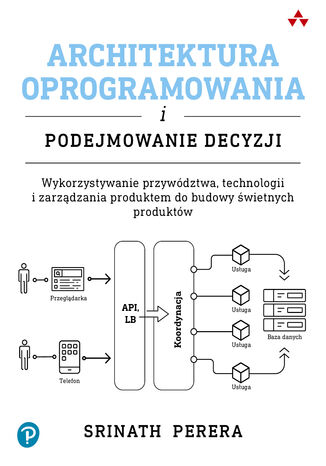
Srinath Perera
Nadrzędnym celem systemów oprogramowania (a więc i architektury oprogramowania) jest budowanie systemów spełniających standardy jakości i zapewniających najwyższy zwrot z inwestycji (ROI) w dłuższej perspektywie lub w określonym przedziale czasu. Świetny produkt wymaga połączenia technologii, przywództwa i zarządzania produktem (wliczając w to UX). Przywództwo polega przede wszystkim na zarządzaniu niepewnością i dokonywaniu prawidłowej oceny sytuacji. Aby tworzyć świetne produkty, liderzy techniczni muszą łączyć technologię, przywództwo i wiedzę z zakresu zarządzania produktem, a także podejmować właściwe decyzje. Wiele błędów technicznych wynika z luki między wiedzą na temat tych trzech elementów i oceną sytuacji. W książce Architektura oprogramowania i podejmowanie decyzji Srinath Perera wyjaśnia zasady i koncepcje, które architekci oprogramowania muszą dogłębnie zrozumieć, oraz sposoby stosowania tych zasad do zarządzania niepewnością. Pytania i zasady omówione w tej książce pomagają zarządzać niepewnością podczas tworzenia architektury oprogramowania i zapewniają ramy do podejmowania decyzji. Ta książka jest przeznaczona dla wszystkich liderów technicznych w branży oprogramowania, którzy dokonują całościowej oceny budowanych przez siebie systemów, jak również dla przyszłych liderów uczących się tego rzemiosła. Zrozum znaczenie podejmowania zdecydowanych decyzji na przykładach wielkich liderów technicznych, takich jak bracia Wright i Kelly Johnson Wykorzystaj pięć kluczowych pytań i siedem ważnych zasad, aby zrozumieć niepewności podczas projektowania i podjąć strategiczne decyzje architektoniczne Podejdź do projektu systematycznie, najpierw na poziomie makro, a następnie na poziomie indywidualnej usługi Wykorzystaj wiedzę z zakresu przywództwa, aby podejmować lepsze decyzje dotyczące architektury oprogramowania. Myśl głęboko, ale implementuj powoli. Srinath Perera jest głównym architektem w WSO2. Przez ostatnich 20 lat był deweloperem rozwiązań open source Apache. Srinath odegrał znaczącą rolę w projektowaniu Apache Axis2, Apache Airavata, WSO2 CEP (Siddhi) i WSO2 Choreo. Zrecenzował architektury dla ponad 10 projektów i ponad 100 wydań.
Architektura oprogramowania w praktyce. Wydanie IV
Len Bass, Paul Clements, Rick Kazman
To kompletny, praktyczny i sprawdzony przewodnik po tworzeniu architektury nowoczesnego oprogramowania, w pełni zaktualizowany o nowe materiały poświęcone rozwiązaniom mobilnym, chmurze, zarządzaniu energią, podejściu DevOps, przetwarzaniu kwantowemu i innym zagadnieniom. Zaktualizowana o 11 nowych rozdziałów książka Architektura oprogramowania w praktyce, wydanie czwarte dokładnie wyjaśnia, czym jest architektura oprogramowania, dlaczego ma ona znaczenie, a także jak ją projektować, tworzyć, analizować i modyfikować oraz jak nią zarządzać w zdyscyplinowany i skuteczny sposób. Trzech poważanych architektów oprogramowania omawia cały cykl życia, prezentując praktyczne wskazówki, metody stosowane przez ekspertów i sprawdzone modele przydatne w każdym projekcie niezależnie od poziomu jego złożoności. Dowiesz się, jak za pomocą architektury radzić sobie z coraz większymi wymaganiami i systemami oraz wyższym poziomem abstrakcji, a także jak uzyskiwać emergentne atrybuty jakościowe, gdy systemy są dynamicznie łączone na nowe sposoby. W tym podręczniku znajdziesz informacje na temat optymalizowania za pomocą architektury najważniejszych atrybutów jakościowych (w tym wydajności, modyfikowalności, zabezpieczeń, dostępności, współdziałania, testowalności, użyteczności, łatwości wdrażania itd.), co pomoże Ci zrozumieć, jak zarządzać istniejącymi architekturami, dopracowywać je, przekształcać w celu rozwiązywania nowych problemów i tworzyć architektury wielokrotnego użytku, które stają się strategicznymi aktywami biznesowymi. Zobacz, jak architektura wpływa na środowisko techniczne, cykle życia projektów, profile biznesowe i Twoją pracę, a także jak te czynniki wpływają na architekturę. Wykorzystaj sprawdzone wzorce, interfejsy i praktyki do optymalizowania jakości za pomocą architektury. Twórz architekturę z myślą o rozwiązaniach mobilnych, chmurze, uczeniu maszynowym i przetwarzaniu kwantowym. Projektuj systemy pod kątem coraz ważniejszych atrybutów takich jak wydajność energetyczna i bezpieczeństwo. Skaluj systemy, odkrywając czynniki istotne architektonicznie, stosując podejście DevOps i potoki wdrażania oraz zarządzając długiem architektonicznym. Poznaj rolę architektury w organizacji, co pozwoli Ci tworzyć bardziej wartościowe rozwiązania.

Archiwizacja i odzyskiwanie danych
W. Curtis Preston
Optymalizacja procesu archiwizacji dla administratorów i nie tylko Jak archiwizować i odtwarzać system oraz dane? Jak wybrać optymalną metodę archiwizacji? Jak ograniczyć koszty związane z procesem archiwizacji? Wdrożenie systemu archiwizacji jest podstawową czynnością, jaką administrator powinien wykonać. Cel tej procedury jest oczywisty, tak jak cena, jaką przyjdzie zapłacić za brak takiego systemu. Utrata danych lub krach systemu wcale nie muszą oznaczać dla firmy długiego postoju i narażać jej na wielkie straty; wtedy to właśnie wysiłek, jaki włożył administrator w system archiwizacji, jest doceniany przez pracodawców i współpracowników. Jakie urządzenia i narzędzia należy zastosować, aby ten proces był sprawny i szybki, a jednocześnie zmieścił się w wyznaczonym do tego celu budżecie? Opisane oprogramowanie i rady udzielone przez autora tej książki pomogą Ci dokonać właściwego wyboru. "Archiwizacja i odzyskiwanie danych" to przewodnik po darmowych narzędziach do archiwizacji i odzyskiwania danych, przeznaczony głównie dla administratorów. W. Curtis Preston, specjalista w dziedzinie ochrony danych, zwrócił uwagę, że środki przeznaczone na system archiwizacji są często zbyt małe, by zapewnić mu wysoką skuteczność. Przyglądając się bliżej bezpłatnym narzędziom, odkrył ich duże możliwości; swoje spostrzeżenia i uwagi na ich temat zapisał w tej książce. Prędzej czy później każdy administrator staje przed koniecznością odbudowania systemu lub odzyskania danych i właśnie lektura tej książki sprawi, że będzie na to przygotowany! Narzędzia do archiwizacji i odtwarzania danych Przegląd programów komercyjnych i darmowych Urządzenia archiwizujące Przywracanie komputera od podstaw z wybranym systemem operacyjnym Archiwizacja i odtwarzanie baz danych Sposoby zabezpieczania archiwum i magazynów danych Wykorzystanie wirtualnych maszyn w procesie archiwizacji Poszerz swoją wiedzę i archiwizuj dane we właściwy, a także sprawdzony sposób!
ArcPy and ArcGIS. Automating ArcGIS for Desktop and ArcGIS Online with Python - Second Edition
Silas Toms, Jerry Davis, Dara OBeirne
ArcGIS allows for complex analyses of geographic information. The ArcPy module is used to script these ArcGIS analyses, providing a productive way to perform geo-analyses and automate map production.The second edition of the book focuses on new Python tools, such as the ArcGIS API for Python. Using Python, this book will guide you from basic Python scripting to advanced ArcPy script tools.This book starts off with setting up your Python environment for ArcGIS automation. Then you will learn how to output maps using ArcPy in MXD and update feature class in a geodatabase using arcpy and ArcGIS Online. Next, you will be introduced to ArcREST library followed by examples on querying, updating and manipulating ArcGIS Online feature services. Further, you will be enabling your scripts in the browser and directly interacting with ArcGIS Online using Jupyter notebook. Finally, you can learn ways to use of ArcPy to control ArcGIS Enterprise and explore topics on deployments, data quality assurances, data updates, version control, and editing safeguards.By the end of the book, you will be equipped with the knowledge required to create automated analysis with administration reducing the time-consuming nature of GIS.