
Informatyka
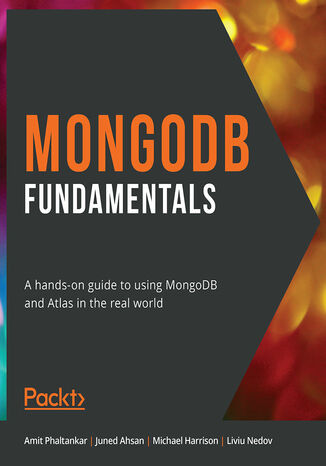
MongoDB Fundamentals. A hands-on guide to using MongoDB and Atlas in the real world
Amit Phaltankar , Juned Ahsan , Michael...
MongoDB is one of the most popular database technologies for handling large collections of data. This book will help MongoDB beginners develop the knowledge and skills to create databases and process data efficiently.Unlike other MongoDB books, MongoDB Fundamentals dives into cloud computing from the very start – showing you how to get started with Atlas in the first chapter. You will discover how to modify existing data, add new data into a database, and handle complex queries by creating aggregation pipelines. As you progress, you'll learn about the MongoDB replication architecture and configure a simple cluster. You will also get to grips with user authentication, as well as techniques for backing up and restoring data. Finally, you'll perform data visualization using MongoDB Charts.You will work on realistic projects that are presented as bitesize exercises and activities, allowing you to challenge yourself in an enjoyable and attainable way. Many of these mini-projects are based around a movie database case study, while the last chapter acts as a final project where you will use MongoDB to solve a real-world problem based on a bike-sharing app.By the end of this book, you'll have the skills and confidence to process large volumes of data and tackle your own projects using MongoDB.
Afshin Mehrabani
This book has a perfect balance of concepts and their practical implementation along with solutions to make a highly available MongoDB server with clear instructions and guidance. If you are using MongoDB in a production environment and need a solution to make a highly available MongoDB server, this book is ideal for you. Familiarity with MongoDB is expected so that you understand the content of this book.
Kyle Banker, Peter Bakkum, Shaun Verch, Doug...
Bazy danych są kluczowymi elementami systemów informatycznych. Choć zwykle pojęcie to kojarzy się z relacyjnymi bazami danych i skomplikowanymi zapytaniami pisanymi w języku SQL, istnieją również zupełnie inne, bardzo wartościowe rozwiązania. Właśnie takim jest MongoDB — rozwijany na zasadach open source nierelacyjny system zarządzania bazą danych napisany w języku C++. Dane są tu składowane jako obiekty JSON, co umożliwia intuicyjne, bezproblemowe ich przetwarzanie w aplikacji. MongoDB jest dynamicznie rozwijanym projektem. Charakteryzuje się dużą skalowalnością, elastycznością i wszechstronnością. Książka ta jest przeznaczona dla programistów i administratorów baz danych, którzy chcą poznać MongoDB 3.0 od podstaw. Ten świetnie napisany przewodnik okaże się również bezcenną pomocą dla średnio zaawansowanych użytkowników systemu. Przedstawiono tu zarówno podstawy MongoDB, jak i zaawansowane metody optymalizacji, skalowania bazy i administrowania nią. Nie brakło opisu dobrych praktyk dotyczących wdrażania aplikacji MongoDB i rozwiązywania problemów. Zamieszczono liczne przykłady kodu napisanego w językach JavaScript, Ruby i powłoki MongoDB. Zagadnienia omówione w książce: podstawowe informacje na temat bazy danych MongoDB, jej budowy, przeznaczenia i funkcjonowania tworzenie aplikacji wykorzystujących MongoDB indeksowanie i optymalizacja zapytań silnik magazynu danych WiredTiger i obsługa wtyczek zapewnienie wysokiej dostępności danych i skalowalność systemu najlepsze praktyki wdrażania instalacji MongoDB, administrowania nimi i rozwiązywania problemów Przekonaj się, jaka moc drzemie w MongoDB! Kyle Banker brał udział w rozwijaniu MongoDB. Obecnie pracuje w startupie. Peter Bakkum jest programistą o dużym doświadczeniu w pracy z MongoDB. Shaun Verch był członkiem zespołu, który przygotował podstawowy serwer dla MongoDB. Inżynier firmy Genentech Doug Garrett jest jednym ze zwycięzców MongoDB Innovation Award for Analytics. Tim Hawkins jest architektem oprogramowania. Kierował zespołem, który rozwijał funkcję wyszukiwania w Yahoo! Europe.
Simon Holmes
Mongoose is all about putting the data model where it should be: in your application. You can control everything from within your application in JavaScript, eliminating the need to work with the database or a separate management system.Mongoose for Application Development is a practical, hands-on guide that takes you from installing the technology stack through the steps of developing a web application. It covers the key features of Mongoose and how to use them to rapidly develop a Node.js and MongoDB application.This book introduces the full technology stack of Node.js, MongoDB, Express, and Mongoose. It will take you through the process of building an application on this stack with a focus on how Mongoose makes the process quicker and easier.You will see how Mongoose removes a layer of complexity when dealing with MongoDB whilst giving you more control over your data from your application. You will learn how to define schemas and models for your data in JavaScript. Using these schemas and models, you will learn how to build the cornerstone of any web application that will include CRUD operations (creating, reading, updating, and deleting data). If you want to learn how to build applications quickly and efficiently using Node.js, then Mongoose and this book are ideal for you.Using practical examples throughout, Mongoose for Application Development not only teaches you about the concepts of Mongoose, but walks through how to use them to build a real-life application.
Russ McKendrick
This book will show you how monitoring containers and keeping a keen eye on the working of applications helps improve the overall performance of the applications that run on Docker. With the increased adoption of Docker containers, the need to monitor which containers are running, what resources they are consuming, and how these factors affect the overall performance of the system has become the need of the moment.This book covers monitoring containers using Docker's native monitoring functions, various plugins, as well as third-party tools that help in monitoring. Well start with how to obtain detailed stats for active containers, resources consumed, and container behavior. We also show you how to use these stats to improve the overall performance of the system. Next, you will learn how to use SysDig to both view your containers performance metrics in real time and record sessions to query later. By the end of this book, you will have a complete knowledge of how to implement monitoring for your containerized applications and make the most of the metrics you are collecting
Dan Noble
ElasticSearch is a distributed search server similar to Apache Solr with a focus on large datasets, a schema-less setup, and high availability. This schema-free architecture allows ElasticSearch to index and search unstructured content, making it perfectly suited for both small projects and large big data warehouses with petabytes of unstructured data.This book is your toolkit to teach you how to keep your cluster in good health, and show you how to diagnose and treat unexpected issues along the way. You will start by getting introduced to ElasticSearch, and look at some common performance issues that pop up when using the system. You will then see how to install and configure ElasticSearch and the ElasticSearch monitoring plugins. Then, you will proceed to install and use the Marvel dashboard to monitor ElasticSearch. You will find out how to troubleshoot some of the common performance and reliability issues that come up when using ElasticSearch. Finally, you will analyze your cluster’s historical performance, and get to know how to get to the bottom of and recover from system failures.This book will guide you through several monitoring tools, and utilizes real-world cases and dilemmas faced when using ElasticSearch, showing you how to solve them simply, quickly, and cleanly.
Monitoring w organizacji a ochrona wizerunku - 20 praktycznych rozwiązaniach
Michał Kowalski
"Monitoring w organizacji a ochrona wizerunku - 20 praktycznych rozwiązań" to przewodnik dla firm i instytucji, które chcą stosować monitoring zgodnie z prawem, nie narażając się na naruszenia wizerunku pracowników i klientów. Publikacja omawia podstawy prawne przetwarzania danych z monitoringu, udostępnianie nagrań, zasady nagrywania pomieszczeń wrażliwych, szatni czy przestrzeni publicznych, a także kwestie geolokalizacji i nagrywania dźwięku. Czytelnik otrzymuje konkretne wskazówki, które pozwalają wprowadzić skuteczny monitoring przy jednoczesnym poszanowaniu prywatności i wizerunku.

Monitorowanie otoczenia z Arduino
Emily Gertz, Patrick Di Justo
Zbuduj własne urządzenia pomiarowe z platformą Arduino! Arduino to niesamowita platforma, która otworzyła przed światem elektroniki mnóstwo nowych możliwości. Dzięki prostocie obsługi zdobyła rzeszę zwolenników, a to przełożyło się na ilość dostępnych w sieci materiałów i publikacji. Dla platformy Arduino opracowano liczne akcesoria, które pozwalają użytkownikowi rozbudować każdy układ. Dodatkowo istnieje też możliwość połączenia jej z kolejną popularną platformą — Raspberry Pi. Z tym duetem osiągniesz wszystko! Ten fantastyczny podręcznik pokaże Ci, jak wykorzystać Arduino do zbierania informacji o otaczającym świecie. Pomiar poziomu hałasu, temperatury i wilgotności to tylko część projektów, które możesz zrealizować dzięki tej platformie. W trakcie lektury dowiesz się, jak wykorzystać moduł sieciowy oraz zaprezentować zebrane dane na wyświetlaczu. Chciałbyś mieć swój własny licznik Geigera? To cudo jest w Twoim zasięgu! Podczas realizacji przedstawionych tu projektów poznasz platformę Arduino i zaczniesz tworzyć własne układy. Sięgnij po tę książkę i zanurz się w świat układów elektronicznych. Zbuduj swój własny: termometr miernik hałasu licznik Geigera wymarzony układ z platformą Arduino! Arduino — Twoja przepustka do świata elektroniki!