
Informatyka
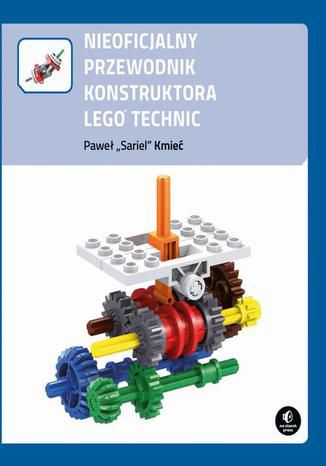
Nieoficjalny przewodnik konstruktora Lego Technic
Paweł Kmieć
INSPIRUJĄCE MODELE, WYCZERPUJĄCE PORADY DLA KONSTRUKTORÓW ORAZ INSTRUKCJE BUDOWANIA PONAD 40 MECHANIZMÓW System LEGO(R) Technic to nowe możliwości budowania. Dzięki zastosowaniu silników elektrycznych, kół zębatych, mechanizmów pneumatycznych, krążków, prostowodów oraz innych elementów możemy projektować modele LEGO, które naprawdę działają. Książka Nieoficjalny przewodnik konstruktora LEGO Technic jest pełna wskazówek pomagających budować mocne, a równocześnie dobrze wyglądające maszyny i mechanizmy przy użyciu systemu Technic. Jej autor, Paweł "Sariel" Kmieć, uczy podstaw konstruowania z klocków LEGO Technic, od prostych maszyn do zaawansowanych mechanizmów, aż po informacje jak tworzyć realistyczne modele w odpowiedniej skali. Sariel, światowej sławy ekspert LEGO Technic, oferuje unikalny wgląd w zasady mechaniki dotyczące momentu obrotowego, mocy i przełożenia, a wszystko to przy użyciu klocków Technic. Dowiedz się, jak: - Tworzyć mocne połączenia odporne na duży nacisk. - Odtwarzać specjalistyczne części LEGO, takie jak obejmy i przeguby Cardana, oraz budować własne rozwiązania, takie jak łączniki Schmidta i Oldhama, gdy żadne standardowe części nie wystarczają. - Budować własne dyferencjały, układy zawieszenia, skrzynie biegów i układy kierownicze. - Dobierać silniki do zadań - i przekształcać ich właściwości według potrzeb. - Łączyć techniki budowania ze studami i bez studów, aby Twoje modele wyglądały lepiej. - Tworzyć zdalnie sterowane pojazdy, systemy oświetlenia, kompresory napędzane silnikiem elektrycznym oraz silniki pneumatyczne. Ta wspaniale ilustrowana, kolorowa książka inspiruje pomysłami budowy tak zdumiewających pojazdów, jak czołgi z zawieszeniem gąsienicowym, supersamochody, dźwigi, buldożery i wiele innych. Twoja przygoda z LEGO Technic właśnie się zaczyna! o autorze Paweł "Sariel" Kmieć (https://sariel.pl/) konstruuje i opisuje modele Technic. Jest najpopularniejszym konstruktorem LEGO Technic w serwisie YouTube oraz gościnnie publikuje na oficjalnym blogu LEGO Technic, był także Ambasadorem LEGO na Polskę w kadencji 2012.
Alexander Osterwalder, Yves Pigneur, Alan Smith, Frederic...
Miejsc na szczytach rankingów przedsiębiorstw nie zajmują przypadkowe firmy. Wielki sukces wymaga dużej wiedzy i umiejętności dostrzegania zjawisk niedostrzegalnych dla innych. Trzeba też wiedzieć, jaki obszar jest wart działania i jakie decyzje strategiczne podjąć. Strategia rozwoju, kultura innowacji czy wybór modelu biznesowego nie należą do łatwych zagadnień. Jeśli jednak chcesz zbudować wybitną, niepokonaną firmę, nie masz wyjścia - potrzebujesz sprawdzonych narzędzi. To kolejny tom z serii Strategyzer przeznaczonej dla wizjonerów biznesu. Skorzystają z niej przedsiębiorcy, kierownictwo dużych organizacji oraz liderzy innowacji. Znalazły się tu opisy kluczowych narzędzi pozwalających budować modele biznesowe odporne na destabilizację, zarządzać portfelem przedsięwzięć biznesowych i tworzyć w firmie kulturę innowacyjności. Wyjaśniono także, w jaki sposób takie firmy jak Amazon, IKEA, Airbnb, Microsoft czy Logitech zmieniały swoje branże i wprowadzały innowacje we własnych modelach biznesowych. W książce pokazano zasady tworzenia nowych silników wzrostu, wprowadzania zmian w dostarczaniu produktów i usług oraz wyciągania maksymalnych zysków z każdego typu modelu biznesowego: wszystko, aby zaprojektować niezwyciężoną firmę! Dzięki tej książce dowiesz się, jak: zbudować niezawodną strategię rozwoju nieustannie kontrolować ryzyko i stale wyprzedzać konkurencję działać według najlepszych modeli biznesowych świata oceniać modele biznesowe i własną gotowość do innowacji Zwyciężaj dzięki najlepszym modelom biznesowym!
NIST CSF 2.0. Your essential introduction to managing cybersecurity risks
IT Governance Publishing, Andrew Pattison
This comprehensive guide introduces the origins, aims, and components of the NIST Cybersecurity Framework (CSF) 2.0. It explores the core structure including functions, categories, subcategories, and profiles, and provides detailed implementation tiers and examples.Readers are then guided through a deep dive into all six framework categories—from Govern to Recover—and learn how to develop and apply risk management strategies within an organization. The content covers NIST SP 800-53, informative references, and practical quick-start guides to help translate theory into action.The final sections offer a seven-step implementation roadmap, including gap analysis, target profiles, and continuous improvement. The book concludes by mapping the CSF to international standards like ISO 27001 and ISO 22301, offering a well-rounded and interoperable cybersecurity strategy.
Paulino Calderon
This is the second edition of ‘Nmap 6: Network Exploration and Security Auditing Cookbook’. A book aimed for anyone who wants to master Nmap and its scripting engine through practical tasks for system administrators and penetration testers. Besides introducing the most powerful features of Nmap and related tools, common security auditing tasks for local and remote networks, web applications, databases, mail servers, Microsoft Windows machines and even ICS SCADA systems are explained step by step with exact commands and argument explanations. The book starts with the basic usage of Nmap and related tools like Ncat, Ncrack, Ndiff and Zenmap. The Nmap Scripting Engine is thoroughly covered through security checks used commonly in real-life scenarios applied for different types of systems. New chapters for Microsoft Windows and ICS SCADA systems were added and every recipe was revised. This edition reflects the latest updates and hottest additions to the Nmap project to date. The book will also introduce you to Lua programming and NSE script development allowing you to extend further the power of Nmap.
Node Cookbook. Actionable solutions for the full spectrum of Node.js 8 development - Third Edition
Matteo Collina, David Mark Clements, Peter Elger,...
Today's web demands efficient real-time applications and scalability. Asynchronous event-driven programming is ideal for this, and this is where Node.js comes in. Server-side JavaScript has been here since the 90s, but Node got it right.With Node for tooling and server-side logic, and a browser-based client-side UI, everything is JavaScript. This leads to rapid, fluid development cycles. The full-stack, single language experience means less context-switching between languages for developers, architects and whole teams.This book shows you how to build fast, efficient, and scalable client-server solutions using the latest versions of Node. The book begins with debugging tips and tricks of the trade, and how to write your own modules. Then you'll learn the fundamentals of streams in Node.js, discover I/O control, and how to implement the different web protocols. You'll find recipes for integrating databases such as MongoDB, MySQL/MariaDB, Postgres, Redis, and LevelDB. We also cover the options for building web application with Express, Hapi and Koa.You will then learn about security essentials in Node.js and advanced optimization tools and techniques.By the end of the book you will have acquired the level of expertise to build production-ready and scalable Node.js systems.The techniques and skills you will learn in this book are based on the best practices developed by nearForm, one of the leaders in Node implementations, who supported the work of the authors on this book.
David Mark Clements
The principles of asynchronous event-driven programming are perfect for today's web, where efficient real-time applications and scalability are at the forefront. Server-side JavaScript has been here since the 90's but Node got it right. With a thriving community and interest from Internet giants, it could be the PHP of tomorrow.Node Cookbook shows you how to transfer your JavaScript skills to server side programming. With simple examples and supporting code, Node Cookbook talks you through various server side scenarios often saving you time, effort, and trouble by demonstrating best practices and showing you how to avoid security faux pas.Beginning with making your own web server, the practical recipes in this cookbook are designed to smoothly progress you to making full web applications, command line applications, and Node modules. Node Cookbook takes you through interfacing with various database backends such as MySQL, MongoDB and Redis, working with web sockets, and interfacing with network protocols, such as SMTP. Additionally, there are recipes on correctly performing heavy computations, security implementations, writing, your own Node modules and different ways to take your apps live.
David Mark Clements
In Node Cookbook Second Edition, each chapter focuses on a different aspect of working with Node. Following a Cookbook structure, the recipes are written in an easy-to-understand language. Readers will find it easier to grasp even the complex recipes which are backed by lots of illustrations, tips, and hints. If you have some knowledge of JavaScript and want to build fast, efficient, scalable client-server solutions, then Node Cookbook Second Edition is for you. Knowledge of Node will be an advantage but is not required. Experienced users of Node will be able to improve their skills.
Mario Casciaro, Luciano Mammino
Node.js is a massively popular software platform that lets you use JavaScript to easily create scalable server-side applications. It allows you to create efficient code, enabling a more sustainable way of writing software made of only one language across the full stack, along with extreme levels of reusability, pragmatism, simplicity, and collaboration. Node.js is revolutionizing the web and the way people and companies create their software.In this book, we will take you on a journey across various ideas and components, and the challenges you would commonly encounter while designing and developing software using the Node.js platform. You will also discover the Node.js way of dealing with design and coding decisions.The book kicks off by exploring the basics of Node.js describing it's asynchronous single-threaded architecture and the main design patterns. It then shows you how to master the asynchronous control flow patterns,and the stream component and it culminates into a detailed list of Node.js implementations of the most common design patterns as well as some specific design patterns that are exclusive to the Node.js world.Lastly, it dives into moreadvanced concepts such as Universal Javascript,and scalability' and it's meant to conclude the journey by giving the reader all the necessary concepts to be able to build an enterprise grade application using Node.js.