
Informatyka
Zajrzyj do kategorii Informatyka w księgarni internetowej Ebookpoint. Znajdziesz tutaj bestsellerowe książki, ebooki i kursy video z branży IT. Sięgnij po najlepszą literaturę dla specjalistów i rozwijaj doświadczenie, które już posiadasz, lub rozpocznij swoją przygodę z programowaniem, cyberbezpieczeństwem lub grafiką komputerową. Pogłębiaj swoją wiedzę tak, jak Ci wygodnie - z tradycyjną książką, wygodnym ebookiem lub nowoczesnym videokursem. Sprawdź, jakie tytuły znajdziesz w kategorii Informatyka!
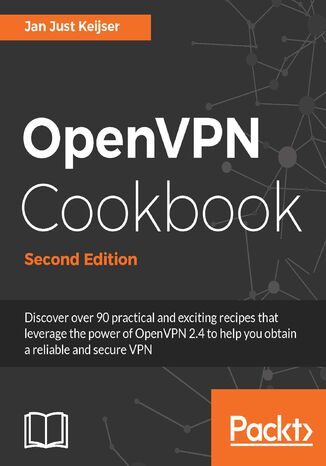
OpenVPN Cookbook. Get the most out of OpenVPN by exploring it's advanced features. - Second Edition
Jan Just Keijser
OpenVPN provides an extensible VPN framework that has been designed to ease site-specific customization, such as providing the capability to distribute a customized installation package to clients, and supporting alternative authentication methods via OpenVPN’s plugin module interface. This book provides you with many different recipes to help you set up, monitor, and troubleshoot an OpenVPN network. You will learn to configure a scalable, load-balanced VPN server farm that can handle thousands of dynamic connections from incoming VPN clients. You will also get to grips with the encryption, authentication, security, extensibility, and certifications features of OpenSSL. You will also get an understanding of IPv6 support and will get a demonstration of how to establish a connection via IPv64. This book will explore all the advanced features of OpenVPN and even some undocumented options, covering all the common network setups such as point-to-point networks and multi-client TUN-style and TAP-style networks. Finally, you will learn to manage, secure, and troubleshoot your virtual private networks using OpenVPN 2.4.
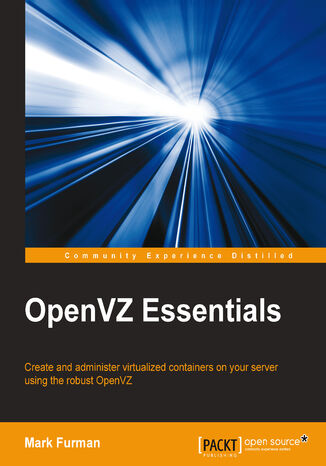
Mark Furman
If you are a system administrator or Linux professional who wants to learn to set up, install, and manage OpenVZ containers on a server to implement OS-level virtualization, then this book is for you. Along with elementary knowledge of Linux programming, you need to have a conceptual understanding of system components and functions.
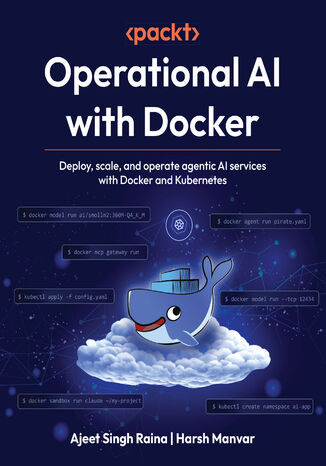
Ajeet Singh Raina, Harsh Manvar
Modern AI systems don’t fail at modeling; they fail in production. Moving from experiments to reliable, scalable systems requires more than notebooks and scripts. It requires infrastructure.Operational AI with Docker shows you how to build, deploy, and operate AI systems that work beyond a single machine. You’ll learn how to use Docker as a consistent runtime for machine learning workflows, package models as reproducible artifacts, and run them reliably across environments.Starting with containerized machine learning, you’ll progress to model serving, AI deployment, and scalable infrastructure using Kubernetes. You’ll implement production-ready patterns for resource management, autoscaling, observability, and performance tuning, ensuring your AI workloads remain stable under real-world conditions.The book goes beyond traditional MLOps by introducing agentic AI systems, including autonomous agents, multi-agent architectures, and secure execution environments. You’ll also explore modern integration patterns using the Model Context Protocol (MCP), enabling AI systems to interact safely with tools, APIs, and data sources.By the end of this book, you’ll be able to design and operate production AI systems that are reproducible, scalable, and ready for real-world deployment using Docker and Kubernetes.
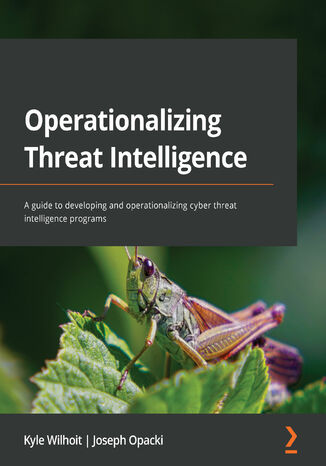
Kyle Wilhoit, Joseph Opacki
We’re living in an era where cyber threat intelligence is becoming more important. Cyber threat intelligence routinely informs tactical and strategic decision-making throughout organizational operations. However, finding the right resources on the fundamentals of operationalizing a threat intelligence function can be challenging, and that’s where this book helps.In Operationalizing Threat Intelligence, you’ll explore cyber threat intelligence in five fundamental areas: defining threat intelligence, developing threat intelligence, collecting threat intelligence, enrichment and analysis, and finally production of threat intelligence. You’ll start by finding out what threat intelligence is and where it can be applied. Next, you’ll discover techniques for performing cyber threat intelligence collection and analysis using open source tools. The book also examines commonly used frameworks and policies as well as fundamental operational security concepts. Later, you’ll focus on enriching and analyzing threat intelligence through pivoting and threat hunting. Finally, you’ll examine detailed mechanisms for the production of intelligence.By the end of this book, you’ll be equipped with the right tools and understand what it takes to operationalize your own threat intelligence function, from collection to production.
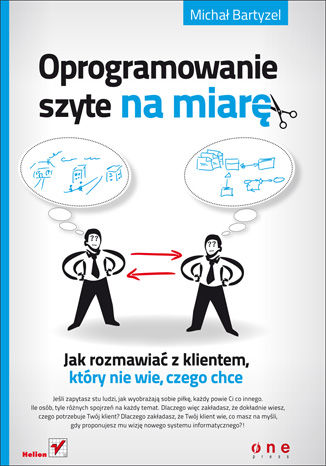
Oprogramowanie szyte na miarę. Jak rozmawiać z klientem, który nie wie, czego chce
Michał Bartyzel
Jeśli zapytasz stu ludzi, jak wyobrażają sobie piłkę, każdy powie Ci co innego. Ile osób, tyle różnych spojrzeń na każdy temat. Dlaczego więc zakładasz, że dokładnie wiesz, czego potrzebuje Twój klient? Dlaczego zakładasz, że Twój klient wie, co masz na myśli, gdy proponujesz mu wizję nowego systemu informatycznego??? Między biznesem a IT W wynikach badań na temat przyczyn porażek projektów IT najczęściej przewijają się trzy najważniejsze czynniki: problemy komunikacyjne, niekompletne wymagania i brak zaangażowania użytkowników. Projekty nie udają się wcale nie dlatego, że temat jest trudny i nie ze względu na kłopoty techniczne czy finanse. Najwięcej problemów powstaje wtedy, gdy klient i usługodawca nie są w stanie się porozumieć. Punktem wyjścia dla każdego systemu są wymagania klientów i użytkowników. Wiele już napisano o zarządzaniu wymaganiami, klasyfikowaniu wymagań, diagramach i niezliczonej ilości narzędzi informatycznych. Jednak aby wymaganiami zarządzać, trzeba je najpierw zebrać. Ta książka koncentruje się na etapie kompletowania wymagań. Podsuwa sposoby takiego zbierania informacji, aby w trakcie wywiadu z klientem lub użytkownikiem bardzo dokładnie zrozumieć ich problemy i potrzeby. To jedyny sposób, aby stworzyć dla nich oprogramowanie na miarę. W branży IT jak dogmat powtarza się przekonanie, że "klient nie wie, czego chce". Przyszedł czas, aby się z nim zmierzyć. Michał Bartyzel - konsultant i trener w firmie szkoleniowo-doradczej BNS IT. Zajmuje się doskonaleniem programistów i zespołów programistycznych, wdrażaniem metodyk pracy oraz rozwijaniem kompetencji pracowników branży IT. Prowadzi szkolenia oraz konsultacje z zakresu inżynierii oprogramowania, zwiększania efektywności zespołów projektowych i zarządzania projektami programistycznymi.

Michał Bartyzel
Przy tworzeniu projektów informatycznych ludzie muszą umieć się dogadać. Brak wspólnej wizji, świadomości istnienia innych perspektyw czy zrozumienia potrzeb pomiędzy współpracującymi stronami zawsze prowadzi do porażki. Tym bardziej w środowisku Agile, gdzie ludzie ze świata biznesu i developerzy pracują razem, zdolność do skutecznej komunikacji staje się niezwykle ważna. Można nawet powiedzieć, że umiejętności miękkie mają tam większe znaczenie niż umiejętności techniczne, które łatwiej zdobyć. Skuteczna komunikacja to taka sama umiejętność jak jazda samochodem czy programowanie. Michał Bartyzel doskonale to pokazuje, rozkładając cały proces rozmowy na proste elementy. Dzięki temu czytelnik może nauczyć się rozpoznawać wzorce i dopasowywać odpowiednie techniki do kontekstu rozmowy. Autor posługuje się prostym i zrozumiałym językiem, uważnie wybiera najważniejsze aspekty tematów z pogranicza psychologii i coachingu. Narzędzia, które czytelnik dostaje do ręki, można od razu wykorzystać w pracy. Oprogramowanie szyte na miarę wyróżnia się spośród pozycji o podobnej tematyce skupieniem na ludzkiej stronie tematu - w miejsce proponowania kolejnych szablonów i metod. Nie jest to kolejne tłumaczenie z języka angielskiego, ani próba zastosowania amerykańskich technik w polskich realiach. Liczne przykłady zaczerpnięte prosto z życia pokazują, jakie błędy popełniamy w codziennych rozmowach i jak można ich uniknąć. Gwarantuję, że niejeden raz uśmiechniesz się podczas czytania zapisów rozmów. Jest to książka promująca pierwszy punkt Manifestu Agile: ludzie i ich interakcje ponad procesy i narzędzia. Polecam ją gorąco wszystkim osobom zaangażowanym w pracę nad projektami informatycznymi wytwarzanymi w relacji klient-dostawca albo na wewnętrzne potrzeby organizacji. Krystian Kaczor, Agile Coach, trener, autor książki Scrum i nie tylko
Craig Thomas Ellrod
Citrix XenDesktop is a suite of desktop virtualization tools designed to provide users with fast and convenient access to their Windows desktops and applications through any device. Virtual desktops mean that rather than setting up hundreds or thousands of individual computers in an enterprise, companies can instead opt to create servers with large amounts of memory, disk, and processing resources, and use virtualization to offer these resources to end users. The result of this is that users are provided with an experience that appears to be identical to having an individual desktop PC. Each user has some disk space, processor time, and memory allocated to them, as though it is present on their own physical machine, when in reality, the resources are physically present on a centralized server.This book starts by answering the basic questions you need to ask when considering XenDesktop, followed by methods of how you can properly size your server infrastructure for XenDesktop. You’ll discover how to optimize the virtual machines used in XenDesktop, how to optimize your network for XenDesktop, and how to optimize the hypervisor and the cloud. You’ll also learn how to monitor XenDesktop to maximize performance.By the end of the book, you will be able to plan, design, build, and deploy high performance XenDesktop Virtualization systems in enterprises. You will also know how to monitor and maintain your systems to ensure smooth operation.
Rithin Skaria
It’s easy to learn and deploy resources in Microsoft Azure, without worrying about resource optimization. However, for production or mission critical workloads, it’s crucial that you follow best practices for resource deployment to attain security, reliability, operational excellence and performance. Apart from these aspects, you need to account for cost considerations, as it’s the leading reason for almost every organization’s cloud transformation.In this book, you’ll learn to leverage Microsoft Well-Architected Framework to optimize your workloads in Azure. This Framework is a set of recommended practices developed by Microsoft based on five aligned pillars; cost optimization, performance, reliability, operational excellence, and security. You’ll explore each of these pillars and discover how to perform an assessment to determine the quality of your existing workloads. Through the book, you’ll uncover different design patterns and procedures related to each of the Well-Architected Framework pillars.By the end of this book, you’ll be well-equipped to collect and assess data from an Azure environment and perform the necessary upturn of your Azure workloads.