
Informatyka

Poradnik dla dozoru i elektromonterów zdających egzamin kwalifikacyjny URE Grupy G1. Wydanie II
Stanisław Paciorek
Z tym poradnikiem przygotujesz się do egzaminu potwierdzającego Twoje kwalifikacje Jeżeli jesteś pracownikiem dozoru lub elektromonterem albo po ukończeniu nauki planujesz zajmować się eksploatacją urządzeń elektroenergetycznych u pracodawcy lub w ramach własnej działalności, musisz posiadać odpowiednie kwalifikacje. Świadectwa kwalifikacyjne uprawniające Cię do samodzielnej eksploatacji urządzeń elektroenergetycznych "E" lub sprawowania dozoru nad ich eksploatacją "D" możesz uzyskać po pozytywnym zdaniu egzaminu kwalifikacyjnego URE Grupy 1. Ta książka ma za zadanie pomóc Ci się do niego przygotować. Poradnik zawiera materiał wspomagający proces przygotowania osób dozoru i elektromonterów do egzaminu kwalifikacyjnego. Omawia problematykę regulowaną przepisami Kodeksu pracy, Prawa energetycznego i Prawa budowlanego, a także kwestie wynikające z Prawa geologicznego i górniczego. Znajdziesz tu również przykładowe pytania, jakich możesz się spodziewać w trakcie egzaminu, wraz z odpowiedziami. Wydanie drugie zostało uaktualnione pod kątem prawnym, dodano do niego ponadto nowe treści z zakresu elektrotermii i elektrolizy, fotowoltaiki, magazynowania energii i trakcji elektrycznej.
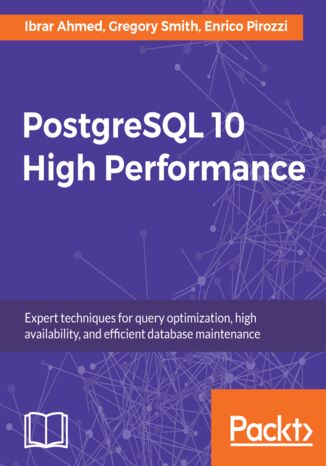
Enrico Pirozzi
PostgreSQL database servers have a common set of problems that they encounter as their usage gets heavier and requirements get more demanding. Peek into the future of your PostgreSQL 10 database's problems today. Know the warning signs to look for and how to avoid the most common issues before they even happen.Surprisingly, most PostgreSQL database applications evolve in the same way—choose the right hardware, tune the operating system and server memory use, optimize queries against the database and CPUs with the right indexes, and monitor every layer, from hardware to queries, using tools from inside and outside PostgreSQL. Also, using monitoring insight, PostgreSQL database applications continuously rework the design andconfiguration. On reaching the limits of a single server, they break things up; connection pooling, caching, partitioning, replication, and parallel queries can all help handle increasing database workloads.By the end of this book, you will have all the knowledge you need to design, run, and manage your PostgreSQL solution while ensuring high performance and high availability
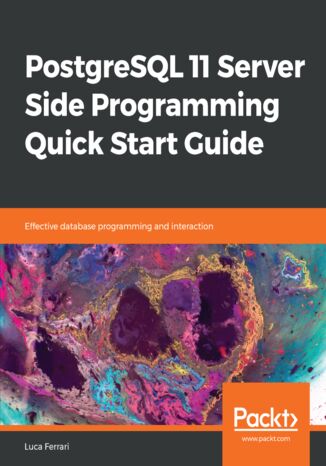
Luca Ferrari
PostgreSQL is a rock-solid, scalable, and safe enterprise-level relational database. With a broad range of features and stability, it is ever increasing in popularity.This book shows you how to take advantage of PostgreSQL 11 features for server-side programming. Server-side programming enables strong data encapsulation and coherence.The book begins with the importance of server-side programming and explains the risks of leaving all the checks outside the database. To build your capabilities further, you will learn how to write stored procedures, both functions and the new PostgreSQL 11 procedures, and create triggers to perform encapsulation and maintain data consistency.You will also learn how to produce extensions, the easiest way to package your programs for easy and solid deployment on different PostgreSQL installations.
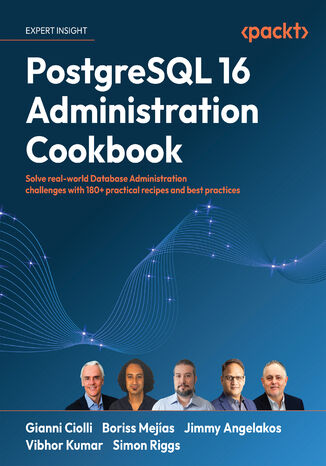
Gianni Ciolli, Boriss Mejías, Jimmy Angelakos, Vibhor...
PostgreSQL has seen a huge increase in its customer base in the past few years and is becoming one of the go-to solutions for anyone who has a database-specific challenge. This PostgreSQL book touches on all the fundamentals of Database Administration in a problem-solution format. It is intended to be the perfect desk reference guide.This new edition focuses on recipes based on the new PostgreSQL 16 release. The additions include handling complex batch loading scenarios with the SQL MERGE statement, security improvements, running Postgres on Kubernetes or with TPA and Ansible, and more. This edition also focuses on certain performance gains, such as query optimization, and the acceleration of specific operations, such as sort. It will help you understand roles, ensuring high availability, concurrency, and replication. It also draws your attention to aspects like validating backups, recovery, monitoring, and scaling aspects. This book will act as a one-stop solution to all your real-world database administration challenges.By the end of this book, you will be able to manage, monitor, and replicate your PostgreSQL 16 database for efficient administration and maintenance with the best practices from experts.
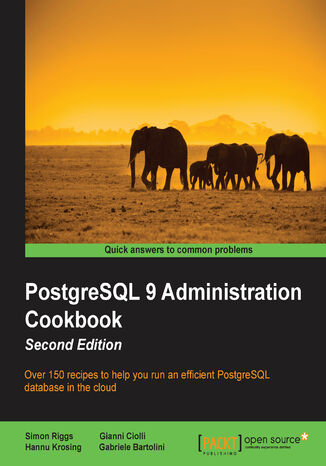
Simon Riggs, GIANNI CIOLLI, Hannu Krosing, Gabriele...
Through example-driven recipes, with plenty of code, focused on the most vital features of the latest PostgreSQL version (9.4), both administrators and developers will follow short, specific guides to understand and leverage useful Postgre functionalities to create better and more efficient databases.
PostgreSQL 9 Administration Cookbook LITE: Configuration, Monitoring and Maintenance
Simon Riggs, Hannu Krosing
Written in the cookbook style, this book offers learning and techniques through recipes. It contains step-by-step instructions for administrators and developers to manage databases in PostgreSQL. The book is designed in such a way that you can read it chapter by chapter or refer to recipes in no particular order. This book is for Sysadmins, Database Administrators, Architects, Developers, and anyone with an interest in planning for or running live production databases. The book assumes that you are familiar with the basic operation of PostgreSQL.
Shaun Thomas
A comprehensive series of dependable recipes to design, build, and implement a PostgreSQL server architecture free of common pitfalls that can operate for years to come. Each chapter is packed with instructions and examples to simplify even highly complex database operations. If you are a PostgreSQL DBA working on Linux systems who want a database that never gives up, this book is for you. If you've ever experienced a database outage, restored from a backup, spent hours trying to repair a malfunctioning cluster, or simply want to guarantee system stability, this book is definitely for you.
Hans-Jürgen Schönig
If you are a database administrator who needs to get to grips with PostgreSQL quickly and efficiently, then this book is for you. This book will also be highly beneficial if you are a project leader or a developer who is interested in knowing more about database systems or bottleneck detection, as it will enable you to work more closely and cooperatively with your administrators.