
Informatyka
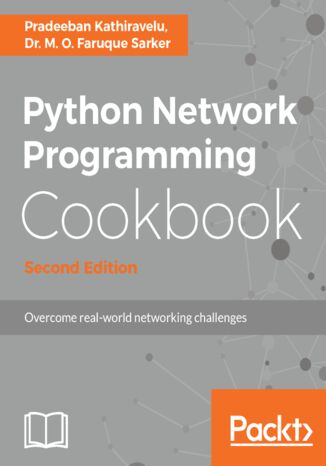
Pradeeban Kathiravelu, Dr. M. O. Faruque Sarker
Python Network Programming Cookbook - Second Edition highlights the major aspects of network programming in Python, starting from writing simple networking clients to developing and deploying complex Software-Defined Networking (SDN) and Network Functions Virtualization (NFV) systems. It creates the building blocks for many practical web and networking applications that rely on various networking protocols. It presents the power and beauty of Python to solve numerous real-world tasks in the area of network programming, network and system administration, network monitoring, and web-application development.In this edition, you will also be introduced to network modelling to build your own cloud network. You will learn about the concepts and fundamentals of SDN and then extend your network with Mininet. Next, you’ll find recipes on Authentication, Authorization, and Accounting (AAA) and open and proprietary SDN approaches and frameworks. You will also learn to configure the Linux Foundation networking ecosystem and deploy and automate your networks with Python in the cloud and the Internet scale.By the end of this book, you will be able to analyze your network security vulnerabilities using advanced network packet capture and analysis techniques.
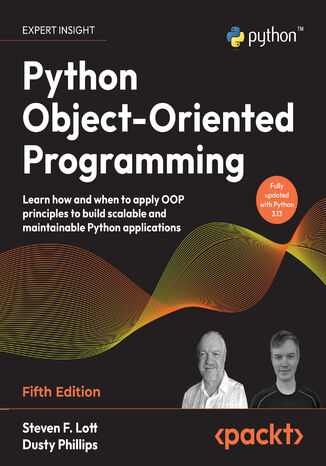
Steven F. Lott, Dusty Phillips
Learn to write effective, maintainable, and scalable Python applications by mastering object-oriented programming with this updated fifth edition. Whether you’re transitioning from scripting to structured development or refining your OOP skills, this book offers a clear, practical path forward.You’ll explore Python’s approach to OOP, from class creation and inheritance to polymorphism and abstraction, while discovering how to make smarter decisions about when and how to use these tools. You’ll apply what you learn through hands-on examples and exercises.Updated for Python 3.13, this edition simplifies complex topics such as abstract base classes, testing with unittest and pytest, and async programming with asyncio. It introduces a new chapter on Python’s type hinting ecosystem—crucial for modern Python development.Written by long-time Python experts Steven Lott and Dusty Phillips, this edition emphasizes clarity, testability, and professional software engineering practices. It helps you move beyond scripting to building well-structured, production-ready Python systems.By the end of this book, you’ll be confident in applying OOP principles, design patterns, type hints, and concurrency tools to create robust and maintainable Python applications.
Python Penetration Testing Essentials. Employ the power of Python to get the best out of pentesting
Mohit Raj
If you are a Python programmer or a security researcher who has basic knowledge of Python programming and want to learn about penetration testing with the help of Python, this book is ideal for you. Even if you are new to the field of ethical hacking, this book can help you find the vulnerabilities in your system so that you are ready to tackle any kind of attack or intrusion.
Christopher Duffy, Mohit Raj, Cameron Buchanan, Andrew...
Cybercriminals are always one step ahead, when it comes to tools and techniques. This means you need to use the same tools and adopt the same mindset to properly secure your software. This course shows you how to do just that, demonstrating how effective Python can be for powerful pentesting that keeps your software safe. Comprising of three key modules, follow each one to push your Python and security skills to the next level.In the first module, we’ll show you how to get to grips with the fundamentals. This means you’ll quickly find out how to tackle some of the common challenges facing pentesters using custom Python tools designed specifically for your needs. You’ll also learn what tools to use and when, giving you complete confidence when deploying your pentester tools to combat any potential threat.In the next module you’ll begin hacking into the application layer. Covering everything from parameter tampering, DDoS, XXS and SQL injection, it will build on the knowledge and skills you learned in the first module to make you an even more fluent security expert.Finally in the third module, you’ll find more than 60 Python pentesting recipes. We think this will soon become your trusted resource for any pentesting situation.This Learning Path combines some of the best that Packt has to offer in one complete, curated package. It includes content from the following Packt products:? Learning Penetration Testing with Python by Christopher Duffy? Python Penetration Testing Essentials by Mohit? Python Web Penetration Testing Cookbook by Cameron Buchanan,Terry Ip, Andrew Mabbitt, Benjamin May and Dave Mound
Srihari Yamanoor, Sai Yamanoor
Raspberry Pi Zero is a super-small and super-affordable product from Raspberry Pi that is packed with a plethora of features and has grabbed the notice of programmers, especially those who use Python. This step-by-step guide will get you developing practical applications in Python using a Raspberry Pi Zero. It will become a valuable resource as you learn the essential details of interfacing sensors and actuators to a Raspberry Pi, as well as acquiring and displaying data. You will get started by writing a Python program that blinks an LED at 1-second intervals. Then you will learn to write simple logic to execute tasks based upon sensor data (for example, to control a motor) and retrieve data from the web (such as to check e-mails to provide a visual alert). Finally, you will learn to build a home automation system with Python where different appliances are controlled using the Raspberry Pi. The examples discussed in each chapter of this book culminate in a project that help improve the quality of people’s lives.
Python. Programuj szybko i wydajnie
Micha Gorelick, Ian Ozsvald
Wydajne aplikacje w języku Python! Python to skryptowy język programowania istniejący na rynku od wielu lat — jego pierwsza wersja pojawiła się w 1991 roku. Przejrzystość kodu źródłowego była jednym z głównych celów Guida van Rossuma, twórcy tego języka. Dziś Python cieszy się dużą popularnością, co z jednej strony świadczy o jego przydatności, a z drugiej gwarantuje użytkownikom szerokie wsparcie społeczności programistów języka. Python jest elastyczny, dopuszcza różne style programowania, a dzięki temu znajduje zastosowanie w wielu miejscach świata IT. Jeżeli chcesz w pełni wykorzystać możliwości Pythona i tworzyć wydajne rozwiązania, to koniecznie zaopatrz się w tę książkę! Dzięki niej dowiesz się, jak wykorzystać profilowanie do lokalizowania „wąskich gardeł”, oraz poznasz efektywne techniki wyszukiwania danych na listach, w słownikach i zbiorach. Ponadto zdobędziesz wiedzę na temat obliczeń macierzowych i wektorowych oraz zobaczysz, jak kompilacja do postaci kodu C wpływa na wydajność Twojego rozwiązania. Osobne rozdziały zostały poświęcone współbieżności oraz modułowi multiprocessing. Opanowanie tych zagadnień pozwoli Ci ogromnie przyspieszyć działanie Twojej aplikacji. Na sam koniec nauczysz się tworzyć klastry i kolejki zadań oraz optymalizować zużycie pamięci RAM. Rozdział dwunasty to gratka dla wszystkich — zawiera najlepsze porady specjalistów z branży! Książka ta jest obowiązkową lekturą dla wszystkich programistów chcących tworzyć wydajne rozwiązania w języku Python. Poznaj lepiej narzędzia numpy i Cython, a także narzędzia profilujące Dowiedz się, jak w języku Python dokonywana jest abstrakcja bazowej architektury komputera. Użyj profilowania do znajdowania „wąskich gardeł” związanych z wykorzystaniem czasu procesora i pamięci. Utwórz wydajne programy, wybierając odpowiednie struktury danych. Przyspiesz obliczenia oparte na macierzach i wektorach. Zastosuj narzędzia do kompilacji kodu Python do postaci kodu maszynowego. Zarządzaj jednocześnie wieloma operacjami obliczeniowymi i operacjami wejścia-wyjścia. Przekształć kod przetwarzania współbieżnego w celu uruchomienia go w klastrze lokalnym lub zdalnym. Rozwiąż duże problemy, używając mniej pamięci RAM. Wyciśnij z Pythona siódme poty!
Python Real-World Projects. Craft your Python portfolio with deployable applications
Steven F. Lott
In today's competitive job market, a project portfolio often outshines a traditional resume. Python Real-World Projects empowers you to get to grips with crucial Python concepts while building complete modules and applications. With two dozen meticulously designed projects to explore, this book will help you showcase your Python mastery and refine your skills. Tailored for beginners with a foundational understanding of class definitions, module creation, and Python's inherent data structures, this book is your gateway to programming excellence. You’ll learn how to harness the potential of the standard library and key external projects like JupyterLab, Pydantic, pytest, and requests. You’ll also gain experience with enterprise-oriented methodologies, including unit and acceptance testing, and an agile development approach. Additionally, you’ll dive into the software development lifecycle, starting with a minimum viable product and seamlessly expanding it to add innovative features. By the end of this book, you’ll be armed with a myriad of practical Python projects and all set to accelerate your career as a Python programmer.
Python. Receptury. Wydanie III
David Beazley, Brian K. Jones
Python to język programowania z ponad 20-letnią historią. Opracowany na początku lat 90. ubiegłego wieku, błyskawicznie zdobył sympatię programistów. Jest używany zarówno do pisania przydatnych skryptów czy małych narzędzi, jak i do pracy nad dużymi projektami. Korzysta z automatycznego zarządzania pamięcią oraz pozwala na podejście obiektowe i funkcyjne do tworzonego programu. Wokół języka Python skupiona jest bardzo silna społeczność programistów. Ta książka to sprawdzone źródło informacji na temat Pythona i jego najczęstszych zastosowań. Należy ona do cenionej serii „Receptury”, w której znajdziesz najlepsze sposoby rozwiązywania problemów. Przekonaj się, jak wydajnie operować na strukturach danych, łańcuchach znaków, tekście i liczbach. Zobacz, jak korzystać z iteratorów i generatorów. Ponadto naucz się tworzyć własne klasy i funkcje oraz sprawdź, jak uzyskać dostęp do plików i sieci. Te i dziesiątki innych receptur opisano w tej książce. To obowiązkowa pozycja na półce każdego programisty pracującego z językiem Python. Dzięki tej książce: rozwiążesz w optymalny sposób najczęstsze problemy napiszesz program korzystający z puli wątków będziesz lepszym programistą Pythona! Najlepsze rozwiązania typowych problemów!