
Informatyka
Zajrzyj do kategorii Informatyka w księgarni internetowej Ebookpoint. Znajdziesz tutaj bestsellerowe książki, ebooki i kursy video z branży IT. Sięgnij po najlepszą literaturę dla specjalistów i rozwijaj doświadczenie, które już posiadasz, lub rozpocznij swoją przygodę z programowaniem, cyberbezpieczeństwem lub grafiką komputerową. Pogłębiaj swoją wiedzę tak, jak Ci wygodnie - z tradycyjną książką, wygodnym ebookiem lub nowoczesnym videokursem. Sprawdź, jakie tytuły znajdziesz w kategorii Informatyka!
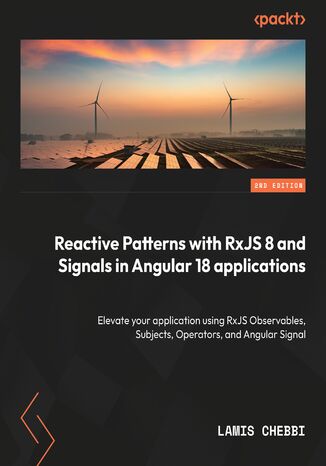
Lamis Chebbi, Aristeidis Bampakos
RxJS is a powerful reactive extension for JavaScript, specializing in asynchronous and event-driven programming, but you don’t find many books on using RxJS in Angular applications. Written by an industry expert with over a decade of experience, this book helps you navigate reactive patterns, efficient data management, and the streamlined implementation of common features with minimal code.This second edition aligns with the latest version of Angular, introducing new reactive patterns based on Angular Signals, which play a pivotal role in enabling fine-grained reactivity within Angular and enhancing change detection and user interface rendering. Throughout the book, you’ll construct a complete application that incorporates the latest Angular features, such as standalone components, new built-in control flow, deferrable views, and more. You’ll also focus on cultivating skills to handle data reactively, thus improving the application's overall quality, user experience, and developer productivity. The book covers best practices for testing asynchronous streams and optimizing app performance.By the end of this RxJS and Angular book, you’ll not only be able to develop Angular applications by implementing reactive patterns, but also grasp all the best practices, ensuring a well-rounded understanding of RxJS within the Angular framework.
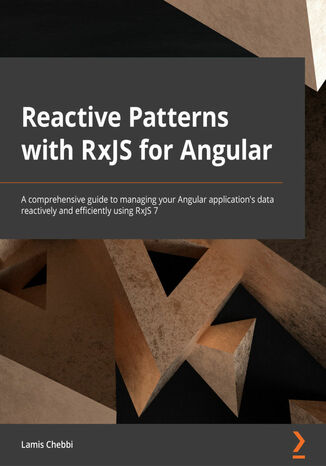
Lamis Chebbi
RxJS is a fast, reliable, and compact library for handling asynchronous and event-based programs. It is a first-class citizen in Angular and enables web developers to enhance application performance, code quality, and user experience, so using reactive patterns in your Angular web development projects can improve user interaction on your apps, which will significantly improve the ROI of your applications.This book is a step-by-step guide to learning everything about RxJS and reactivity. You'll begin by understanding the importance of the reactive paradigm and the new features of RxJS 7. Next, you'll discover various reactive patterns, based on real-world use cases, for managing your application’s data efficiently and implementing common features using the fewest lines of code.As you build a complete application progressively throughout the book, you'll learn how to handle your app data reactively and explore different patterns that enhance the user experience and code quality, while also improving the maintainability of Angular apps and the developer's productivity. Finally, you'll test your asynchronous streams and enhance the performance and quality of your applications by following best practices.By the end of this RxJS Angular book, you'll be able to develop Angular applications by implementing reactive patterns.
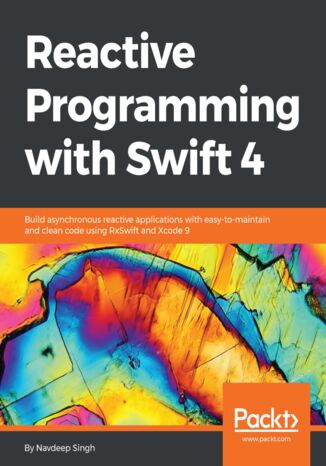
Navdeep Singh
RxSwift belongs to a large family of Rx implementations in different programming languages that share almost identical syntax and semantics. Reactive approach will help you to write clean, cohesive, resilient, scalable, and maintainable code with highly configurable behavior.This book will introduce you to the world of reactive programming, primarily focusing on mobile platforms. It will tell how you can benefit from using RxSwift in your projects, existing or new. Further on, the book will demonstrate the unbelievable ease of configuring asynchronous behavior and other aspects of the app that are traditionally considered to be hard to implement and maintain. It will explain what Rx is made of, and how to switch to reactive way of thinking to get the most out of it. Also, test production code using RxTest and the red/ green approach. Finally, the book will dive into real-world recipes and show you how to build a real-world app by applying the reactive paradigm.By the end of the book, you’ll be able to build a reactive swift application by leveraging all the concepts this book takes you through.
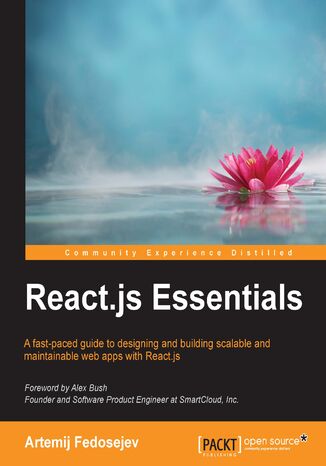
Artemij Fedosejev
Building web applications with maintainable and performant user interfaces is a challenge that many have faced for more than a decade, but no one has risen to this challenge quite like React.js. Today React.js is used by Facebook, Instagram, Khan Academy, and Imperial College London, to name a few. Many new users recognize the benefits of React.js and adopt it in their own projects, forming a fast-growing community. The speed at which React.js has evolved promises a bright future for those who invest in learning it today.React.js Essentials will take you on a fast-paced journey through building your own maintainable React.js application. Begin by exploring how you can create single and multiple user interface elements. Create stateless and stateful components and make them reactive, learn to interact between your components and lifecycle methods and gauge how to effectively integrate your user interface components with other JavaScript libraries. Delve deep into the core elements of the Flux architecture and learn how to manage your application using stores. Finish by going that extra mile with the Jest test framework, running multiple tests on your application and find solutions to scale it further without complexity.
Vinay Singh
SAP HANA is an in-memory database created by SAP. SAP HANA breaks traditional database barriers to simplify IT landscapes, eliminating data preparation, pre-aggregation, and tuning. SAP HANA and in-memory computing allow you to instantly access huge volumes of structured and unstructured data, including text data, from different sources.Starting with data modeling, this fast-paced guide shows you how to add a system to SAP HANA Studio, create a schema, packages, and delivery unit. Moving on, you’ll get an understanding of real-time replication via SLT and learn how to use SAP HANA Studio to perform this. We’ll also have a quick look at SAP Business Object DATA service and SAP Direct Extractor for Data Load. After that, you will learn to create HANA artifacts—Analytical Privileges and Calculation View. At the end of the book, we will explore the SMART DATA access option and AFL library, and finally deliver pre-packaged functionality that can be used to build information models faster and easier.
Rajnish Harjika
Agile implementation of enterprise architecture (EA) in the cloud is a powerful organizational tool, but it is challenging, particularly for architects who are used to on-premises environments. This in-depth guide will tell you all you need to know to reap the benefits of applying EA in your organization to achieve operational efficiency.Starting with an overview of the foundations of enterprise architecture, you'll see how it can be applied to AWS as well as explore the frameworks AWS provides for EA, such as the AWS Well-Architected Framework. That's not all – the book shows you how these frameworks align with The Open Group Architecture Framework (TOGAF) architecture development method (ADM) and the Zachman Framework so that you can choose the right fit for your organization. As you advance, you'll learn how to apply SAFe to make your organization agile as well as efficient. Once you've gotten to grips with the theory, you can explore use cases and take a quiz at the end of the book to test yourself and see how EA is applied in practice.By the end of this enterprise architecture book, you'll have the skills and knowledge required to apply EA in the cloud with AWS and drive your organization to become super-efficient and agile.
Chad Troftgruben
Adobe Character Animator is a power app for non-animators that provides easy rigging and easy-to- understand tools that enable you to create entertainment or business videos in no time.This guide to Character Animator gives you a comprehensive overview of the app, helping you learn the entire process—from importing a character designed in Adobe Photoshop to animating a sequence. Complete with background art, multiple character rigs and Character Animator project files, this book will show you how to animate a scene in Character Animator from start to finish.Starting with a character PSD from another artist, you’ll organize and condense the file to prepare it for rigging and animation. From there, you’ll systematically rig the character while exploring advanced behaviors and triggers to animate a complex scene that takes advantage of the app’s best features.By the end of this book, you’ll be able to create appealing animations in Character Animator for any purpose.
Real-Time Big Data Analytics. Design, process, and analyze large sets of complex data in real time
Shilpi Saxena
Enterprise has been striving hard to deal with the challenges of data arriving in real time or near real time.Although there are technologies such as Storm and Spark (and many more) that solve the challenges of real-time data, using the appropriate technology/framework for the right business use case is the key to success. This book provides you with the skills required to quickly design, implement and deploy your real-time analytics using real-world examples of big data use cases.From the beginning of the book, we will cover the basics of varied real-time data processing frameworks and technologies. We will discuss and explain the differences between batch and real-time processing in detail, and will also explore the techniques and programming concepts using Apache Storm.Moving on, we’ll familiarize you with “Amazon Kinesis” for real-time data processing on cloud. We will further develop your understanding of real-time analytics through a comprehensive review of Apache Spark along with the high-level architecture and the building blocks of a Spark program. You will learn how to transform your data, get an output from transformations, and persist your results using Spark RDDs, using an interface called Spark SQL to work with Spark.At the end of this book, we will introduce Spark Streaming, the streaming library of Spark, and will walk you through the emerging Lambda Architecture (LA), which provides a hybrid platform for big data processing by combining real-time and precomputed batch data to provide a near real-time view of incoming data.