
Informatyka
Theofanis Despoudis
Design patterns are the foundation of many world-class software applications, from commercial solutions to open-source projects. This guide equips you with the skills to architect robust, scalable, and maintainable TypeScript 5 applications. Whether you're looking to master modern TypeScript or apply proven software architecture patterns effectively, this book is your go-to resource.Written by Theofanis Despoudis, a recognized TypeScript expert, this second edition is fully updated with TypeScript 5’s latest features, including improved type inference, union enums, and decorators. These updates will help you write cleaner, more maintainable code that adapts to future changes. You’ll dive into classic Gang of Four design patterns through both traditional and modern real-world implementations, gaining hands-on experience with practical applications. You’ll also gain a clear understanding of the power of functional and reactive programming patterns specifically designed for idiomatic TypeScript development.By the end of this book, you’ll be able to identify and apply the right design pattern for any scenario and craft well-structured, maintainable, and testable code.*Email sign-up and proof of purchase required
Edgars Karlsons, Inese Liberte
The popularity of online shopping has increased drastically over the past few years. TYPO3 is fully equipped to meet all the challenges of modern electronic commerce. TYPO3 can be enlarged afrom a pure content-based online catalog to a fully-grown shop system with a variety of extensions. It may be easy to plan a website but when it comes to implementing the design and developing a successful e-commerce site, you might come across a lot of difficulties.This book teaches all the aspects of quickly setting up a feature-packed, easy-to-build e-commerce site—from basic installation and configuration of TYPO3 through adding features step-by-step to an example website. It demonstrates the setting up of an online TYPO3 e-commerce site from scratch and walks you through lucrative tips on attracting customers and maximizing profit.This book takes you through the creation of an appealing online shop in steps. It starts with the basics of TYPO3 and TYPO3 installation and shows how to use its standard features to begin construction of an online shop. It will help you improve the selling interface and handling of orders with new modules and other customizations. It discusses various template configurations and plugins. You will learn how to build attractive product catalogs, profiles for registered and unregistered users, and online shop SEO. You will also learn to provide effective search facilities for systematic navigation of your site. Further, various modules for payment and delivery will be discussed. Finally, you will learn how to manage and market your site.
Dan Osipov
TYPO3 is one of the world's leading open source content management systems, written in PHP, which can be used to create and customize your web site. Along with text content, you can display high quality images, audio, and video to your site's visitors by using TYPO3. It is essential to manage various types of multimedia files in content management systems for both editors and the users on the frontend of the site.The book gives you a step-by-step process for organizing an effective multimedia system. It also gives solutions to commonly encountered problems, and offers a variety of tools for dealing with multimedia content. The author's experience in large-scale systems enables him to share his effective solutions to these problems.If you choose to work through all the recipes from the beginning, you will start by setting up a basic web site set up, aimed at future expansion and scalability. Next, you will cover the basics of digital asset management—a major topic important in all enterprises. You can organize user groups because next you will be creating accounts for users and assigning permissions. Then you will jump into metadata—text information describing the multimedia objects—and learn how it can be manipulated in TYPO3. You will embed multimedia on your site when you have read the various methods for embedding mentioned in this book. Before you finish the book you will learn about some advanced topics, such as external API integrations and process automation.

U mnie działa. Język branży IT
Paweł Baszuro
Nie rozumiesz języka branży IT? Sięgnij po tę książkę! Opanuj słownik informatyków Poznaj cykl życia oprogramowania Naucz się komunikacji z branżą IT Kto choć raz miał do czynienia z informatykami, wie, że rozmowy z nimi często przypominają kontakty z przybyszami z innej galaktyki. Posługują się specjalistycznym żargonem, są mocno skupieni na aspektach technicznych, bywa, że się niecierpliwią, gdy otoczenie nie nadąża za ich tokiem rozumowania. Jeśli rozmówca nie jest zorientowany w branży IT, zwykle trudno mu znaleźć wspólny język z przedstawicielami środowiska i może mieć nie lada kłopot, gdy będzie musiał coś z nimi załatwić. Ta książka będzie prawdziwym objawieniem dla wszystkich, którzy współpracują z osobami zatrudnionymi w IT. Jej celem jest zaprezentowanie podstawowych terminów używanych w tej dziedzinie, przedstawienie procesu wytwarzania i utrzymania oprogramowania oraz wsparcie w zrozumieniu zagadnień i problemów, które dla informatyków stanowią codzienność. Lektura pomoże tym, którzy chcą poznać specyfikę branży lub są na różne sposoby zaangażowani w projekty IT. Terminologia używana w świecie informatycznym Etapy wytwarzania i wdrażania oprogramowania Definiowanie wymagań i zrozumienie procesu Komunikacja z przedstawicielami środowiska Praktyczne przykłady z życia codziennego Opanuj informatyczny żargon w mgnieniu oka!

U mnie działa. Język branży IT. Wydanie II
Paweł Baszuro
Przeczytaj i zrozum - język branży IT dla każdego Informatyczny żargon dla przeciętnego odbiorcy Praktyczna wiedza o wytwarzaniu oprogramowania Skuteczna komunikacja z przedstawicielami branży IT Jeśli nie mieszkasz w jaskini na końcu świata, komputery prawdopodobnie opanowały już niemal każdy obszar Twojego życia. Otaczają Cię dosłownie ze wszystkich stron i pomagają w wielu codziennych czynnościach. Z pewnością używasz ich do komunikacji, rozrywki, pracy i nauki, robisz za ich pomocą zakupy i planujesz wakacje. Dzięki komputerom Twoja codzienność jest prostsza i przyjemniejsza... do czasu, gdy musisz coś załatwić z kimś, kto odpowiada za ich programowanie. W tym momencie wszystko się komplikuje, a Ty przestajesz cokolwiek rozumieć. Jeśli w takich chwilach zadajesz sobie pytanie, o co temu człowiekowi chodzi, a takie terminy jak release, agile, repozytorium, ticket, legacy, implementacja, merge, request, storyboard, bug, backend, branch, log czy mock wywołują u Ciebie dreszcz przerażenia - spieszymy z pomocą! Dzięki tej książce nie tylko poznasz terminologię informatyczną, lecz również zdobędziesz wiedzę o procesie projektowania, tworzenia i utrzymywania oprogramowania komputerowego, a także dowiesz się, jak się skutecznie komunikować z zaangażowanymi w to osobami. Przy użyciu prostego języka i na praktycznych przykładach autor wprowadzi Cię w świat IT i sprawi, że przestaniesz się pocić na widok informatyka. Nauka każdego języka wymaga słownika - oto Twój słownik! Terminologia używana w świecie informatyków Etapy wytwarzania i wdrażania oprogramowania Definiowanie wymagań i zrozumienie procesu Komunikacja z przedstawicielami środowiska informatycznego Praktyczne przykłady z codziennego życia Dowiedz się, jak się porozumieć z programistą!
Uday Sawant
Ubuntu is one of the most secure operating systems and defines the highest level of security as compared other operating system. Ubuntu server is a popular Linux distribution and the first choice when deploying a Linux server. It can be used with a $35 Raspberry Pi to top-notch, thousand-dollar-per-month cloud hardware. Built with lists that there are 4 million + websites built using Ubuntu. With its easy-to-use package management tools and availability of well-known packages, we can quickly set up our own services such as web servers and database servers using Ubuntu.This book will help you develop the skills required to set up high performance and secure services with open source tools. Starting from user management and an in-depth look at networking, we then move on to cover the installation and management of web servers and database servers, as well as load balancing various services. You will quickly learn to set up your own cloud and minimize costs and efforts with application containers. Next, you will get to grips with setting up a secure real-time communication system. Finally, we’ll explore source code hosting and various collaboration tools. By the end of this book, you will be able to make the most of Ubuntu’s advanced functionalities.
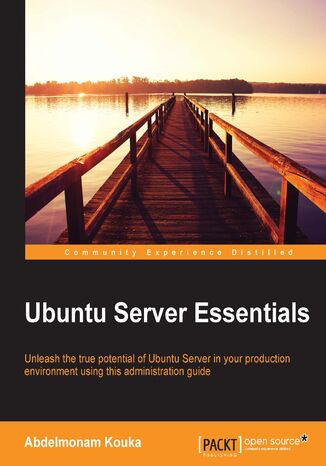
Abdelmonam Kouka
Ubuntu is a Debian-based Linux operating system built on top of the Debian architecture. It is used to make operating systems for multiple platforms, including phones, desktops, TVs and mobiles. It has made some serious progress in the realms of efficiency and user friendliness.With evolving technology trends, demands on software have changed, with more and more skilled users. Over the past few years, services such as Facebook, Twitter, and push notifications on smartphones mean that users are used to being up to date with everything that happens all the time. With SignalR, the applications stay connected and will generate notifications when something happens either from the system or by other users. This provides new opportunities for the system administrators, to enter this new and exciting world of real-time application development.This is a concise and a cost-friendly guide, packed with up-to-date essentials on Ubuntu Server fundamentals. It will guide you through deploying and configuring Ubuntu servers in your office environments. You’ll start by installing Ubuntu Server, then move to the most useful aspect —the command-line interface inside it. You’ll extend your knowledge by learning how to administrate and configure Ubuntu Server. You will also see how to deploy services on Ubuntu Server and find out how to secure it. You’ll get to grips with the virtualization and cloud computing facilities provided by Ubuntu, and finally, you’ll gain some very useful tips.

Michał Heller
Jednym z najbardziej osobistych doświadczeń człowieka jest doświadczenie zanurzenia w strumień czasu. Michał Heller przedstawia zagadnienie czasu w perspektywie historycznej mając na uwadze dzisiejszy stan nauk: matematyki, fizyki i kosmologii. Możemy śledzić pasjonującą historię myśli ludzkiej zmagającej się z uchwyceniem czegoś tak dobrze nam znanego z codziennego, a jednocześnie tak trudnego do zwerbalizowania, jak przemijanie. Przeszłość to ogromny obszar, który już był, przyszłość to nieskończone pole możliwości, a chwila teraźniejsza jest punktem, nicością, odgradzająca przeszłość od przyszłości, ale równocześnie jest ona czymś najbardziej rzeczywistym – rzeczywistym, bo jedynym, co naprawdę istnieje. Przeszłości już nie ma, przyszłości jeszcze nie ma, jedynie teraźniejszość JEST. Michał Heller Michał Heller – kosmolog, filozof i teolog, Laureat Nagrody Templetona i założyciel Centrum Kopernika Badań Interdyscyplinarnych w Krakowie. Autor m.in. książek Bóg i geometria (CCPress 2015), Moralność myślenia (CCPress 2015), Ważniejsze niż Wszechświat (CCPress 2018).