
Informatyka
Yik Yang, Behzad Ehsani
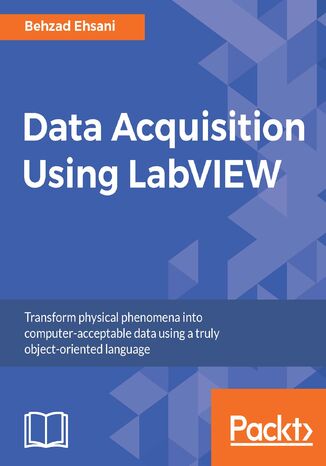
NI LabVIEW's intuitive graphical interface eliminates the steep learning curve associated with text-based languages such as C or C++. LabVIEW is a proven and powerful integrated development environment to interact with measurement and control hardware, analyze data, publish results, and distribute systems. This hands-on tutorial guide helps you harness the power of LabVIEW for data acquisition. This book begins with a quick introduction to LabVIEW, running through the fundamentals of communication and data collection. Then get to grips with the auto-code generation feature of LabVIEW using its GUI interface. You will learn how to use NI-DAQmax Data acquisition VIs, showing how LabVIEW can be used to appropriate a true physical phenomenon (such as temperature, light, and so on) and convert it to an appropriate data type that can be manipulated and analyzed with a computer. You will also learn how to create Distribution Kit for LabVIEW, acquainting yourself with various debugging techniques offered by LabVIEW to help you in situations where bugs are not letting you run your programs as intended.By the end of the book, you will have a clear idea how to build your own data acquisition system independently and much more.
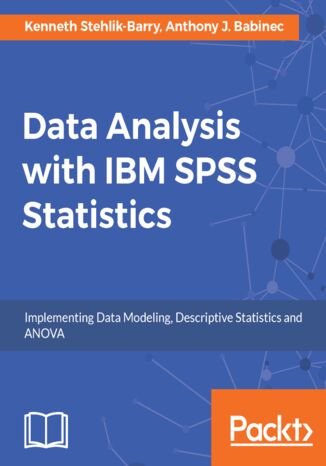
Data Analysis with IBM SPSS Statistics. Implementing data modeling, descriptive statistics and ANOVA
James C. Mott, Ken Stehlik-Barry, James Sugrue,...
SPSS Statistics is a software package used for logical batched and non-batched statistical analysis. Analytical tools such as SPSS can readily provide even a novice user with an overwhelming amount of information and a broad range of options for analyzing patterns in the data. The journey starts with installing and configuring SPSS Statistics for first use and exploring the data to understand its potential (as well as its limitations). Use the right statistical analysis technique such as regression, classification and more, and analyze your data in the best possible manner. Work with graphs and charts to visualize your findings. With this information in hand, the discovery of patterns within the data can be undertaken. Finally, the high level objective of developing predictive models that can be applied to other situations will be addressed. By the end of this book, you will have a firm understanding of the various statistical analysis techniques offered by SPSS Statistics, and be able to master its use for data analysis with ease.
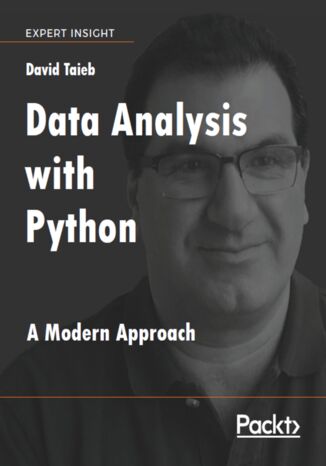
Data Analysis with Python. A Modern Approach
David Taieb
Data Analysis with Python offers a modern approach to data analysis so that you can work with the latest and most powerful Python tools, AI techniques, and open source libraries. Industry expert David Taieb shows you how to bridge data science with the power of programming and algorithms in Python. You'll be working with complex algorithms, and cutting-edge AI in your data analysis. Learn how to analyze data with hands-on examples using Python-based tools and Jupyter Notebook. You'll find the right balance of theory and practice, with extensive code files that you can integrate right into your own data projects.Explore the power of this approach to data analysis by then working with it across key industry case studies. Four fascinating and full projects connect you to the most critical data analysis challenges you’re likely to meet in today. The first of these is an image recognition application with TensorFlow – embracing the importance today of AI in your data analysis. The second industry project analyses social media trends, exploring big data issues and AI approaches to natural language processing. The third case study is a financial portfolio analysis application that engages you with time series analysis - pivotal to many data science applications today. The fourth industry use case dives you into graph algorithms and the power of programming in modern data science. You'll wrap up with a thoughtful look at the future of data science and how it will harness the power of algorithms and artificial intelligence.
Data Analysis with Python. A Modern Approach
David Taieb
Data Analysis with Python offers a modern approach to data analysis so that you can work with the latest and most powerful Python tools, AI techniques, and open source libraries. Industry expert David Taieb shows you how to bridge data science with the power of programming and algorithms in Python. You'll be working with complex algorithms, and cutting-edge AI in your data analysis. Learn how to analyze data with hands-on examples using Python-based tools and Jupyter Notebook. You'll find the right balance of theory and practice, with extensive code files that you can integrate right into your own data projects.Explore the power of this approach to data analysis by then working with it across key industry case studies. Four fascinating and full projects connect you to the most critical data analysis challenges you’re likely to meet in today. The first of these is an image recognition application with TensorFlow – embracing the importance today of AI in your data analysis. The second industry project analyses social media trends, exploring big data issues and AI approaches to natural language processing. The third case study is a financial portfolio analysis application that engages you with time series analysis - pivotal to many data science applications today. The fourth industry use case dives you into graph algorithms and the power of programming in modern data science. You'll wrap up with a thoughtful look at the future of data science and how it will harness the power of algorithms and artificial intelligence.
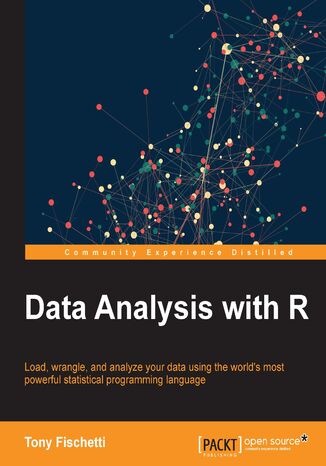
Data Analysis with R. Click here to enter text
Tony Fischetti, Tony Fischetti
Frequently the tool of choice for academics, R has spread deep into the private sector and can be found in the production pipelines at some of the most advanced and successful enterprises. The power and domain-specificity of R allows the user to express complex analytics easily, quickly, and succinctly. With over 7,000 user contributed packages, it’s easy to find support for the latest and greatest algorithms and techniques.Starting with the basics of R and statistical reasoning, Data Analysis with R dives into advanced predictive analytics, showing how to apply those techniques to real-world data though with real-world examples.Packed with engaging problems and exercises, this book begins with a review of R and its syntax. From there, get to grips with the fundamentals of applied statistics and build on this knowledge to perform sophisticated and powerful analytics. Solve the difficulties relating to performing data analysis in practice and find solutions to working with “messy data”, large data, communicating results, and facilitating reproducibility.This book is engineered to be an invaluable resource through many stages of anyone’s career as a data analyst.
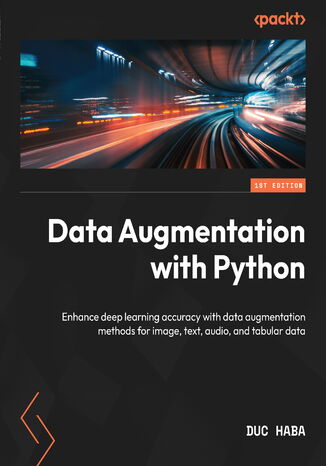
Duc Haba
Data is paramount in AI projects, especially for deep learning and generative AI, as forecasting accuracy relies on input datasets being robust. Acquiring additional data through traditional methods can be challenging, expensive, and impractical, and data augmentation offers an economical option to extend the dataset.The book teaches you over 20 geometric, photometric, and random erasing augmentation methods using seven real-world datasets for image classification and segmentation. You’ll also review eight image augmentation open source libraries, write object-oriented programming (OOP) wrapper functions in Python Notebooks, view color image augmentation effects, analyze safe levels and biases, as well as explore fun facts and take on fun challenges. As you advance, you’ll discover over 20 character and word techniques for text augmentation using two real-world datasets and excerpts from four classic books. The chapter on advanced text augmentation uses machine learning to extend the text dataset, such as Transformer, Word2vec, BERT, GPT-2, and others. While chapters on audio and tabular data have real-world data, open source libraries, amazing custom plots, and Python Notebook, along with fun facts and challenges.By the end of this book, you will be proficient in image, text, audio, and tabular data augmentation techniques.