
Informatyka
Zajrzyj do kategorii Informatyka w księgarni internetowej Ebookpoint. Znajdziesz tutaj bestsellerowe książki, ebooki i kursy video z branży IT. Sięgnij po najlepszą literaturę dla specjalistów i rozwijaj doświadczenie, które już posiadasz, lub rozpocznij swoją przygodę z programowaniem, cyberbezpieczeństwem lub grafiką komputerową. Pogłębiaj swoją wiedzę tak, jak Ci wygodnie - z tradycyjną książką, wygodnym ebookiem lub nowoczesnym videokursem. Sprawdź, jakie tytuły znajdziesz w kategorii Informatyka!
Vedat Ozan Oner
ESP32, a low-cost and energy-efficient system-on-a-chip microcontroller, has become the backbone of numerous WiFi devices, fueling IoT innovation. This book offers a holistic approach to building an IoT system from the ground up, ensuring secure data communication from sensors to cloud platforms, empowering you to create production-grade IoT solutions using the ESP32 SoC.Starting with IoT essentials supported by real-world use cases, this book takes you through the entire process of constructing an IoT device using ESP32. Each chapter introduces new dimensions to your IoT applications, covering sensor communication, the integration of prominent IoT libraries like LittleFS and LVGL, connectivity options via WiFi, security measures, cloud integration, and the visualization of real-time data using Grafana. Furthermore, a dedicated section explores AI/ML for embedded systems, guiding you through building and running ML applications with tinyML and ESP32-S3 to create state-of-the-art embedded products.This book adopts a hands-on approach, ensuring you can start building IoT solutions right from the beginning. Towards the end of the book, you'll tackle a full-scale Smart Home project, applying all the techniques you've learned in real-time.Embark on your journey to build secure, production-grade IoT systems with ESP32 today!
Claudio Eduardo de Oliveira, Alex Antonov
Spring Framework has become the most popular framework for Java development. It not only simplifies software development but also improves developer productivity. This book covers effective ways to develop robust applications in Java using Spring.The course is up made of three modules, each one having a take-away relating to building end-to-end java applications. The first module takes the approach of learning Spring frameworks by building applications.You will learn to build APIs and integrate them with popular fraemworks suh as AngularJS, Spring WebFlux, and Spring Data. You will also learn to build microservices using Spring's support for Kotlin. You will learn about the Reactive paradigm in the Spring architecture using Project Reactor. In the second module, after getting hands-on with Spring, you will learn about the most popular tool in the Spring ecosystem-Spring Boot. You will learn to build applications with Spring Boot, bundle them, and deploy them on the cloud. After learning to build applications with Spring Boot, you will be able to use various tests that are an important part of application development. We also cover the important developer tools such as AMQP messaging, websockets, security, and more. This will give you a good functional understanding of scalable development in the Spring ecosystem with Spring Boot. In the third and final module, you will tackle the most important challenges in Java application development with Spring Boot using practical recipes. Including recipes for testing, deployment, monitoring, and securing your applications. This module will also address the functional and technical requirements for building enterprise applications.By the end of the course you will be comfortable with using Spring and Spring Boot to develop Java applications and will have mastered the intricacies of production-grade applications.
Claudio Eduardo de Oliveira, Alex Antonov
Spring Framework has become the most popular framework for Java development. It not only simplifies software development but also improves developer productivity. This book covers effective ways to develop robust applications in Java using Spring.The course is up made of three modules, each one having a take-away relating to building end-to-end java applications. The first module takes the approach of learning Spring frameworks by building applications.You will learn to build APIs and integrate them with popular fraemworks suh as AngularJS, Spring WebFlux, and Spring Data. You will also learn to build microservices using Spring's support for Kotlin. You will learn about the Reactive paradigm in the Spring architecture using Project Reactor. In the second module, after getting hands-on with Spring, you will learn about the most popular tool in the Spring ecosystem-Spring Boot. You will learn to build applications with Spring Boot, bundle them, and deploy them on the cloud. After learning to build applications with Spring Boot, you will be able to use various tests that are an important part of application development. We also cover the important developer tools such as AMQP messaging, websockets, security, and more. This will give you a good functional understanding of scalable development in the Spring ecosystem with Spring Boot. In the third and final module, you will tackle the most important challenges in Java application development with Spring Boot using practical recipes. Including recipes for testing, deployment, monitoring, and securing your applications. This module will also address the functional and technical requirements for building enterprise applications.By the end of the course you will be comfortable with using Spring and Spring Boot to develop Java applications and will have mastered the intricacies of production-grade applications.
Leslie Vail
Microsoft Dynamics GP is a sophisticated Enterprise Resource Planning (ERP) application with a multitude of features and options. Microsoft Dynamics GP can also be used to develop dynamic, mission critical applications.In Developing Microsoft Dynamics GP Business Applications you will learn how to create and customize Dynamics GP Applications. This hands-on guide will take you through the initial steps of setting up a development environment through to customizing and developing an example application using tools such as Dexterity, VSTools and sanScript.Developing Microsoft Dynamics GP Business Applications will take you through the complex steps of creating and customizing Microsoft Dynamics GP applications. Starting with an overview of Microsoft Dynamics GP architecture you'll then move onto setting up your development environment.You will learn how to make your application come to life with Dexterity and sanScript. You will create table operations and ranges as well as object triggers to make powerful and practical business applications. You will deploy your Dexterity solution before moving onto customization with Modifier and VBA.This book will also take you through ways of enhancing and extending your application without code using the SmartList Builder and Excel Report Builder. Using these highly flexible tools you'll be able to create data connections that will increase the usability and functionality of your ERP applications.
Abdalla Mahmoud
Middleware is the infrastructure in software based applications that enables businesses to solve problems, operate more efficiently, and make money. As the use of middleware extends beyond a single application, the importance of having it written by experts increases substantially. This book will help you become an expert in developing middleware for a variety of applications. The book starts off by exploring the latest Java EE 8 APIs with newer features and managing dependencies with CDI 2.0. You will learn to implement object-to-relational mapping using JPA 2.1 and validate data using bean validation. You will also work with different types of EJB to develop business logic, and with design RESTful APIs by utilizing different HTTP methods and activating JAX-RS features in enterprise applications. You will learn to secure your middleware with Java Security 1.0 and implement various authentication techniques, such as OAuth authentication. In the concluding chapters, you will use various test technologies, such as JUnit and Mockito, to test applications, and Docker to deploy your enterprise applications. By the end of the book, you will be proficient in developing robust, effective, and distributed middleware for your business.
Abdalla Mahmoud
Middleware is the infrastructure in software based applications that enables businesses to solve problems, operate more efficiently, and make money. As the use of middleware extends beyond a single application, the importance of having it written by experts increases substantially. This book will help you become an expert in developing middleware for a variety of applications. The book starts off by exploring the latest Java EE 8 APIs with newer features and managing dependencies with CDI 2.0. You will learn to implement object-to-relational mapping using JPA 2.1 and validate data using bean validation. You will also work with different types of EJB to develop business logic, and with design RESTful APIs by utilizing different HTTP methods and activating JAX-RS features in enterprise applications. You will learn to secure your middleware with Java Security 1.0 and implement various authentication techniques, such as OAuth authentication. In the concluding chapters, you will use various test technologies, such as JUnit and Mockito, to test applications, and Docker to deploy your enterprise applications. By the end of the book, you will be proficient in developing robust, effective, and distributed middleware for your business.
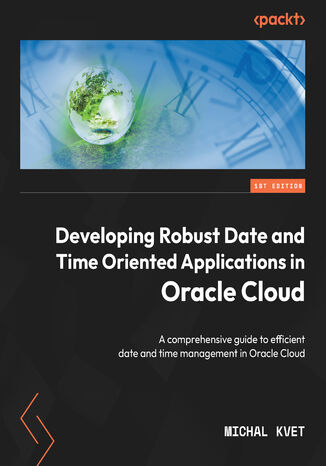
Michal Kvet
Proper date and time management is critical for the development and reliability of Oracle Databases and cloud environments, which are among the most rapidly expanding technologies today. This knowledge can be applied to cloud technology, on premises, application development, and integration to emphasize regional settings, UTC coordination, or different time zones. This practical book focuses on code snippets and discusses the existing functionalities and limitations, along with covering data migration to the cloud by emphasizing the importance of proper date and time management.This book helps you understand the historical background and evolution of ANSI standards. You’ll get to grips with data types, constructor principles, and existing functionalities, and focus on the limitations of regional parameters and time zones, which help in expanding business to other parts of the world. You’ll also explore SQL injection threats, temporal database architecture, using Flashback Technology to reconstruct valid database images from the past, time zone management, and UTC synchronization across regions.By the end of this book, you’ll be able to create and manage temporal systems, prevent SQL injection attacks, use existing functionalities and define your own robust solutions for date management, and apply time zone and region rules.
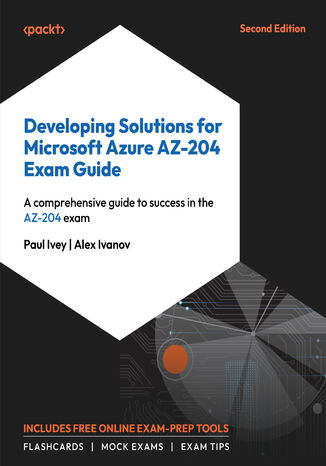
Paul Ivey, Alex Ivanov
Get ready to delve into Microsoft Azure and build efficient cloud-based solutions with this updated second edition. Authored by seasoned Microsoft trainers, Paul Ivey and Alex Ivanov, this book offers a structured approach to mastering the AZ-204 exam topics while focusing on the intricacies of Azure development.You’ll familiarize yourself with cloud fundamentals, understanding the core concepts of Azure and various cloud models. Next, you’ll gain insights into Azure App Service web apps, containers and container-related services in Azure, Azure Functions, and solutions using Cosmos DB and Azure Blob Storage. Later, you'll learn how to secure your cloud solutions effectively as well as how to implement message- and event-based solutions and caching. You’ll also explore how to monitor and troubleshoot your solutions effectively. To build on your skills, you’ll get hands-on with monitoring, troubleshooting, and optimizing Azure applications, ensuring peak performance and reliability. Moving ahead, you’ll be able to connect seamlessly to third-party services, harnessing the power of API management, event-based solutions, and message-based solutions.By the end of this MS Azure book, you'll not only be well-prepared to pass the AZ-204 exam but also be equipped with practical skills to excel in Azure development projects.
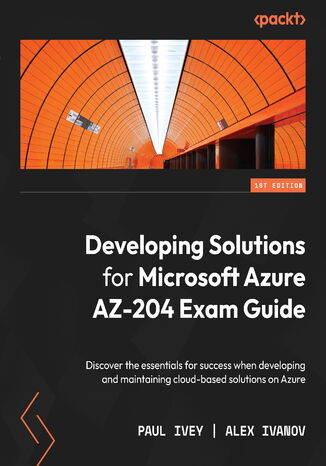
Paul Ivey, Alex Ivanov
With the prevalence of cloud technologies and DevOps ways of working, the industry demands developers who can build cloud solutions and monitor them throughout their life cycle. Becoming a Microsoft-certified Azure developer can differentiate developers from the competition, but with such a plethora of information available, it can be difficult to structure learning in an effective way to obtain certification.Through easy-to-understand explanations and exercises, this book will provide a more palatable learning experience than what you may expect from an exam preparation book. You’ll start off with a recap of some important cloud concepts, such as IaaS, PaaS, and SaaS. From there, you’ll learn about each relevant solution area, with use cases. The chapters also cover different implementation methodologies, both manual and programmatic – ranging from compute resources such as App Service and serverless applications to storage, database, security, monitoring solutions, and connecting to third-party services.By the end of this book, you'll have learned everything you need to pass the AZ-204 certification exam and have a handy, on-the-job reference guide.
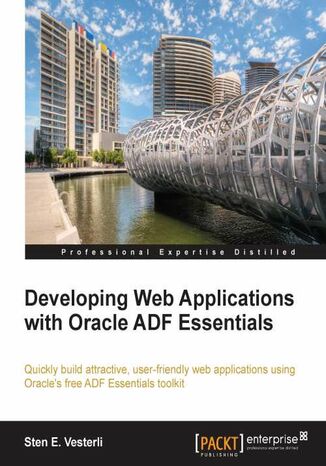
Sten E Vesterli
With ADF, Oracle gives you the chance to use the powerful tool used by Oracle's own developers. Modern enterprise applications must be user-friendly, visually attractive, and fast performing. Oracle Fusion Applications are just that; but to get the desired output you need proven methods to use this powerful and flexible tool to achieve success in developing your enterprise applications.Developing Web Applications with Oracle ADF Essentials explains all you need to know in order to build good-looking, user-friendly applications on a completely free technology stack. It explains the highly productive, declarative development approach that will literally have your application running within a few hours, as well as how to use Java to add business logic.Developing Web Applications with Oracle ADF Essentials tells you how to develop and deploy web application applications based on the highly productive and free Oracle ADF Essentials framework. You will first learn how to build business services on top of database tables, and then how to easily build a web application using these services. You will see how to visually design the flow through your application with ADF task flows, and how to use Java programming to implement business logic. Using this book, you can start building and deploying advanced web applications on a robust, free platform quickly.Towards the end, you will be ready to build real-world ADF Essentials applications and will be able to consider yourself an ADF Essentials journeyman.