
Informatyka
Zajrzyj do kategorii Informatyka w księgarni internetowej Ebookpoint. Znajdziesz tutaj bestsellerowe książki, ebooki i kursy video z branży IT. Sięgnij po najlepszą literaturę dla specjalistów i rozwijaj doświadczenie, które już posiadasz, lub rozpocznij swoją przygodę z programowaniem, cyberbezpieczeństwem lub grafiką komputerową. Pogłębiaj swoją wiedzę tak, jak Ci wygodnie - z tradycyjną książką, wygodnym ebookiem lub nowoczesnym videokursem. Sprawdź, jakie tytuły znajdziesz w kategorii Informatyka!
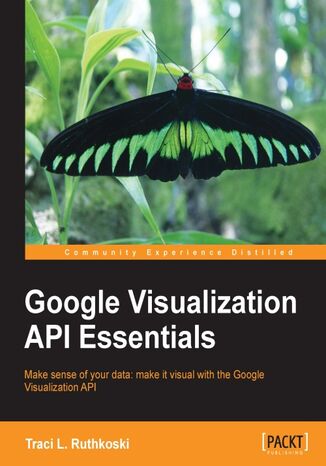
Traci Lynn Ruthkoski
There's a lot of data in our world, and visual representations are often the best method of making sense of it all. Yet, it should not take an army of programmers and analysts to create visualizations in order to make data useful. The Google Visualization API is accessible to novice and advanced programmers alike, making data useful to more people.Google Visualization API Essentials will show you how to create interactive data displays with very little code. The API, combined with Google Spreadsheets and Fusion Tables, is a complete system, from data management to analytical displays. Not only is it simple to learn, but the Google Visualization API can also be viewed as a first step to learning additional Google APIs.Google Visualization API Essentials uses both methodology overviews and hands-on examples with real data to introduce chart and graph creation on the Google platform. Topics are presented from various aspects, including Google Spreadsheets and Fusion Tables, and Graphic User Interfaces. An overview of the various API development environments available to developers is also covered. Basic and advanced charts, data source connectivity, style formatting, and publishing options are also explored in depth.Google Visualization API Essentials brings the arsenal of Google Visualizations into the web developer toolkit.
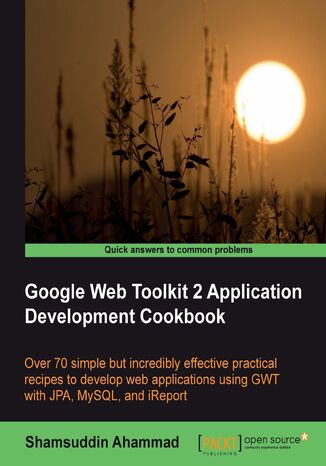
Shamsuddin Ahammad
GWT 2 radically improves web experience for users by using existing Java tools to build no-compromise AJAX for any modern browser. It provides a solid platform so that other great libraries can be built on top of GWT. Creating web applications efficiently and making them impressive, however, is not as easy as it sounds. Writing web applications for multiple browsers can be quite tasking. In addition, building, reusing, and maintaining large JavaScript code bases and AJAX components can be difficult. GWT 2 Application Development Cookbook eases these burdens by allowing developers to quickly build and maintain complex yet highly efficient JavaScript front-end applications in the Java programming language . It tells you how to make web experience all the more thrilling and hassle free, using various tools along with GWT SDK.This book starts with developing an application from scratch. Right from creating the layout of the home page to home page elements including left and right sidebars, to placing tree like navigational menu, menu bars, tool bars, banners, footers are discussed with examples.You will see how to create forms using the Ext GWT library widgets and handle different types of events. Then you will move on to see how to design a database for sales processing systems and learn to create the database in MySQL with the help of easy–to-follow recipes.One of the interesting topics of this book is using JPA in GWT. Using the JPA object in GWT is a challenge. To use them perfectly, a mechanism to convert the JPA object into plain object and vice versa is required. You will see recipes to use entity classes, entity managers, and controller classes in GWT application. You will efficiently create reports with parameters, variables and subreports, and get the report output in both HTML and PDF format using real-world recipes.You will then learn to configure the GlassFish server to deploy a GWT application with database. Finally, learn how to trace speed and improve perfomance in web applications using tracing techniques.
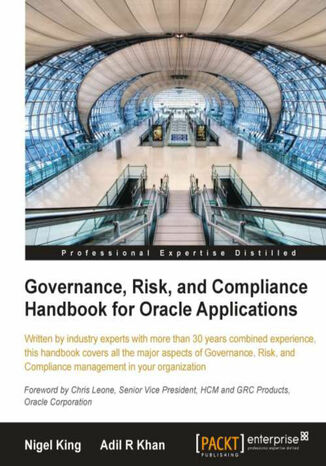
Nigel King, Adil Khan
It seems that every year since the Enron collapse there has been a fresh debacle that refuses to lower the spotlight from corporate Governance, Risk, and Compliance management.Before Sarbanes Oxely forced company managers to become risk conscious, if you asked a chief executive whether he thought he had adequate internal controls, the most likely answer would have been What is an internal control? This is clearly no longer the case. Every week some story breaks detailing a lack of good governance, a failure to plan for a foreseeable catastrophe or a failure to comply with an important law or regulation. These stories bring GRC themes into public view, and public scrutiny, and make management and directors keen to show they have put their best efforts forward to govern their companies well, manage risks to the enterprise, and to comply with all applicable laws.Perhaps only Oracle and SAP are in a position to really address all three aspects. The mission of GRC applications is to ensure that the managers and directors of Enterprises that run such applications have a strong defensible position. Written by industry experts with more than 30 years combined experience, this book covers the Governance, Risk Management and Compliance Management of a large modern enterprise and how the IT Infrastructure, in particular the Oracle IT Infrastructure, can assist in that governance. This book is not an implementation guide for GRC products rather it shows you how those products participate in the governance process, how they introduce or mitigate risk, and how they can be brought into compliance with best practice, as well as applicable laws and regulations.The book is divided into three major sections:Governance ñ where we discuss the strategic management of the enterprise, setting plans for managers, making disclosures to investors, and ensuring that the board knows that the enterprise is meeting its goals and staying within its policies.Risk Management ñ where we discuss audit disciplines. This is where we work out what can go wrong, document what we have to do to prevent it from going wrong and check that what we think prevents it going wrong - actually works! We move through the various sub-disciplines within the audit profession and show what tools are best suited from within the Oracle family to assist.Compliance Management ñ where we map the tools and facilities that we have discovered in the first two sections to frameworks and legislations. We give this from an industry and geography agnostic viewpoint, and then drill into some specific industries and countries.We neither stay in the narrow definition of GRC applications, nor limit ourselves to the Business Applications but take you to the most appropriate places in the full Oracle footprint. The book is written from the perspective of big GRC. It is not an implementation manual for the GRC products, although we hope you can get the best out of the GRC products after reading this book. We discuss many applications and technology products that are not in the GRC product family.
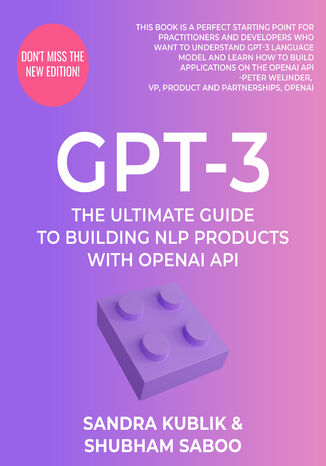
GPT-3. The Ultimate Guide To Building NLP Products With OpenAI API
Sandra Kublik, Shubham Saboo
GPT-3 has made creating AI apps simpler than ever. This book provides a comprehensive guide on how to utilize the OpenAI API with ease. It explores imaginative methods of utilizing this tool for your specific needs and showcases successful businesses that have been established through its use.The book is divided into two sections, with the first focusing on the fundamentals of the OpenAI API. The second part examines the dynamic and thriving environment that has arisen around GPT-3.Chapter 1 sets the stage with background information and defining key terms. Chapter 2 goes in-depth into the API, breaking it down into its essential components, explaining their functions and offering best practices. Chapter 3, you will build your first app with GPT-3.Chapter 4 features interviews with the founders of successful GPT-3-based products, who share challenges and insights gained. Chapter 5 examines the perspective of enterprises on GPT-3 and its potential for adoption. The problematic consequences of widespread GPT-3 adoption, such as misapplication and bias, are addressed along with efforts to resolve these issues in Chapter 6. Finally, Chapter 7 delves into the future by exploring the most exciting trends and possibilities as GPT-3 becomes increasingly integrated into the commercial ecosystem.
Paulo Motta
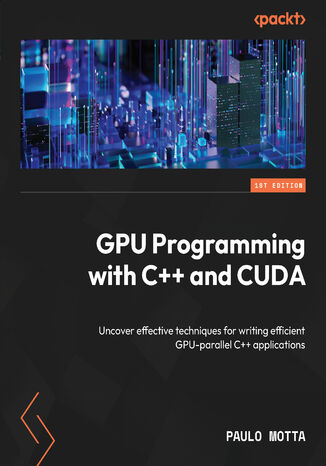
Written by Paulo Motta, a senior researcher with decades of experience, this comprehensive GPU programming book is an essential guide for leveraging the power of parallelism to accelerate your computations. The first section introduces the concept of parallelism and provides practical advice on how to think about and utilize it effectively. Starting with a basic GPU program, you then gain hands-on experience in managing the device. This foundational knowledge is then expanded by parallelizing the program to illustrate how GPUs enhance performance.The second section explores GPU architecture and implementation strategies for parallel algorithms, and offers practical insights into optimizing resource usage for efficient execution.In the final section, you will explore advanced topics such as utilizing CUDA streams. You will also learn how to package and distribute GPU-accelerated libraries for the Python ecosystem, extending the reach and impact of your work.Combining expert insight with real-world problem solving, this book is a valuable resource for developers and researchers aiming to harness the full potential of GPU computing. The blend of theoretical foundations, practical programming techniques, and advanced optimization strategies it offers is sure to help you succeed in the fast-evolving field of GPU programming.
Shelley Powers
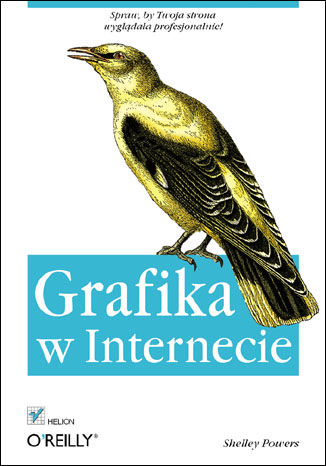
Spraw, by Twoja strona wyglądała profesjonalnie! Jaki format wybrać dla plików graficznych? Jak tworzyć grafikę użytkową? Jak wykorzystać grafikę wektorową? Wszyscy doskonale wiemy o tym, że o wartości strony internetowej świadczą treści na niej umieszczone. Nie da się jednak zaprzeczyć, że forma, w jakiej są one podane, również ma znaczenie. Osiągnięcie równowagi w tym zakresie nie jest rzeczą łatwą. Jak sprawić, żeby nie doszło do przerostu formy nad treścią? Jak zapewnić optymalny stosunek jakości użytych grafik do ich objętości (w końcu przepustowość łączy nie jest nieskończona)? Przy dużej liczbie odwiedzających różnica kilku kilobajtów może przełożyć się na ogromny wzrost obciążenia łączy, a co za tym idzie, wzrost kosztów utrzymania strony. Wydawałoby się, że te i wiele innych kwestii mogą rozwiązać tylko profesjonaliści. Jednak wcale nie musi tak być! Każdy, kto przeczyta tę książkę, będzie czuł się swobodnie w zagadnieniach związanych z publikacją i wykorzystaniem grafiki w Internecie! Dzięki książce "Grafika w internecie" poznasz wszystkie aspekty pracy z obrazami umieszczanymi w globalnej sieci. Shelley Powers przedstawi Ci wykorzystywane formaty plików graficznych oraz pokaże, do czego każdy z nich nadaje się najlepiej. Zdobędziesz wiedzę na temat dostępnych narzędzi do obróbki grafiki -- zarówno tych płatnych, jak i darmowych. Ponadto nauczysz się tworzyć miniatury zdjęć i układać zdjęcia na stronie. Dowiesz się, jak tworzyć grafikę użytkową, jakie zasady obowiązują przy pracy z grafiką wektorową oraz jakie możliwości drzemią w formacie SVG. Na koniec zapoznasz się z tematami związanymi z projektowaniem stron internetowych -- zrozumiesz, jak wykorzystać kaskadowe arkusze stylów (CSS), jak przygotować dobrą i przejrzystą stronę oraz jak dynamicznie zmieniać właściwości grafiki! Jeżeli myślisz, że praktyczne wykorzystanie grafiki na stronach WWW to wiedza tajemna, ta książka z pewnością to zmieni! Formaty plików graficznych i ich zastosowanie Przygotowanie zdjęć do publikacji w Internecie Narzędzia do obróbki grafiki -- płatne i darmowe Edytory obrazów dostępne online Tworzenie miniatur Sposoby układania zdjęć na stronie Narzędzia do automatycznego generowania galerii oraz pokazów slajdów Tworzenie grafiki użytkowej Wykorzystanie grafiki wektorowej i formatu SVG Zastosowanie kaskadowych arkuszy stylów (CSS) Zasady tworzenia dobrych stron WWW Narzędzia ułatwiające projektowanie stron WWW Dynamiczna modyfikacja grafik Automatyzacja obróbki grafiki -- narzędzie ImageMagick oraz obróbka za pomocą PHP/GD Sposób wykorzystania serwisów Google Maps oraz Yahoo! Maps Łączenie danych z grafiką Poznaj wszystkie aspekty praktycznego wykorzystania grafiki w Internecie!
Grails 1.1 Web Application Development. Reclaiming Productivity for faster Java Web Development
Jon Dickinson
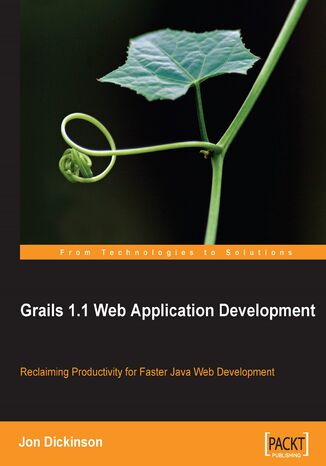
Web development is trickyóeven a simple web application has a number of context changes ready to trip up the unwary. Grails takes the everyday pain out of web application development, allowing us to focus on delivering real application logic and create seamless experiences that will address the needs of our users. This book will take the pain out of Grails by showing you exactly how to build a web application with a minimum of fuss.With this book, even if you are new to Grails, you will be up and running before you know it. You will be able to code faster and your code will be better. This clear and concise book is packed with examples and clear instructions to help you build your first Grails application and gives you the skills to speed up your application development by adding a different angle for learning about the topic. After a brief introduction to the dynamic JVM-based Groovy programming language, which teaches you enough about Groovy to understand the relationship between Grails and the Groovy scripting language, it shows how to use Grails and a number of key plug-ins to deliver valuable web applications. It also takes you through creating, developing, testing, and deploying an example team collaboration application in Grails.Using an incremental and iterative approach you will learn how to build a basic web application with secure authentication and different levels of authorization. You will learn how to handle file upload allowing users to share files. Some advanced features of object-oriented persistence will be introduced through adding tags for messages and files to giving users a robust categorization system.You will then build on the basic application to enhance the user experience through AJAX and the RichUI plug-in. You will take a further step into the world of Web 2.0 by adding an RSS feed and a REST service to the application. Once the entire application is up and running, you will learn how to create your own plug-in for tagging. Finally, you will learn how to deploy this application to a production environment.
Gary Hutson, Matt Jackson
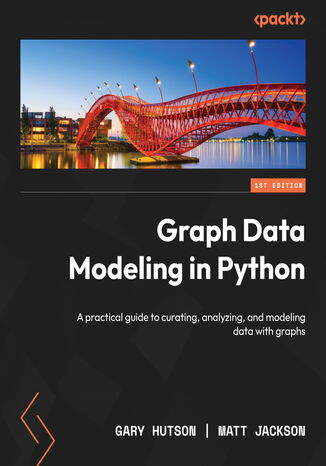
Graphs have become increasingly integral to powering the products and services we use in our daily lives, driving social media, online shopping recommendations, and even fraud detection. With this book, you’ll see how a good graph data model can help enhance efficiency and unlock hidden insights through complex network analysis.Graph Data Modeling in Python will guide you through designing, implementing, and harnessing a variety of graph data models using the popular open source Python libraries NetworkX and igraph. Following practical use cases and examples, you’ll find out how to design optimal graph models capable of supporting a wide range of queries and features. Moreover, you’ll seamlessly transition from traditional relational databases and tabular data to the dynamic world of graph data structures that allow powerful, path-based analyses. As well as learning how to manage a persistent graph database using Neo4j, you’ll also get to grips with adapting your network model to evolving data requirements.By the end of this book, you’ll be able to transform tabular data into powerful graph data models. In essence, you’ll build your knowledge from beginner to advanced-level practitioner in no time.
Gary Hutson, Matt Jackson
Graphs have become increasingly integral to powering the products and services we use in our daily lives, driving social media, online shopping recommendations, and even fraud detection. With this book, you’ll see how a good graph data model can help enhance efficiency and unlock hidden insights through complex network analysis.Graph Data Modeling in Python will guide you through designing, implementing, and harnessing a variety of graph data models using the popular open source Python libraries NetworkX and igraph. Following practical use cases and examples, you’ll find out how to design optimal graph models capable of supporting a wide range of queries and features. Moreover, you’ll seamlessly transition from traditional relational databases and tabular data to the dynamic world of graph data structures that allow powerful, path-based analyses. As well as learning how to manage a persistent graph database using Neo4j, you’ll also get to grips with adapting your network model to evolving data requirements.By the end of this book, you’ll be able to transform tabular data into powerful graph data models. In essence, you’ll build your knowledge from beginner to advanced-level practitioner in no time.