
Informatyka
Zajrzyj do kategorii Informatyka w księgarni internetowej Ebookpoint. Znajdziesz tutaj bestsellerowe książki, ebooki i kursy video z branży IT. Sięgnij po najlepszą literaturę dla specjalistów i rozwijaj doświadczenie, które już posiadasz, lub rozpocznij swoją przygodę z programowaniem, cyberbezpieczeństwem lub grafiką komputerową. Pogłębiaj swoją wiedzę tak, jak Ci wygodnie - z tradycyjną książką, wygodnym ebookiem lub nowoczesnym videokursem. Sprawdź, jakie tytuły znajdziesz w kategorii Informatyka!
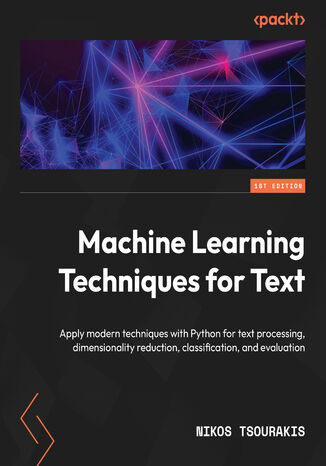
Nikos Tsourakis
With the ever-increasing demand for machine learning and programming professionals, it's prime time to invest in the field. This book will help you in this endeavor, focusing specifically on text data and human language by steering a middle path among the various textbooks that present complicated theoretical concepts or focus disproportionately on Python code.A good metaphor this work builds upon is the relationship between an experienced craftsperson and their trainee. Based on the current problem, the former picks a tool from the toolbox, explains its utility, and puts it into action. This approach will help you to identify at least one practical use for each method or technique presented. The content unfolds in ten chapters, each discussing one specific case study. For this reason, the book is solution-oriented. It's accompanied by Python code in the form of Jupyter notebooks to help you obtain hands-on experience. A recurring pattern in the chapters of this book is helping you get some intuition on the data and then implement and contrast various solutions.By the end of this book, you'll be able to understand and apply various techniques with Python for text preprocessing, text representation, dimensionality reduction, machine learning, language modeling, visualization, and evaluation.
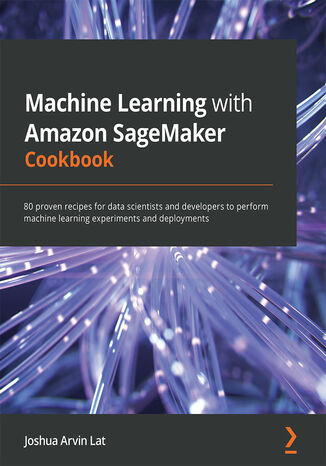
Joshua Arvin Lat
Amazon SageMaker is a fully managed machine learning (ML) service that helps data scientists and ML practitioners manage ML experiments. In this book, you'll use the different capabilities and features of Amazon SageMaker to solve relevant data science and ML problems.This step-by-step guide features 80 proven recipes designed to give you the hands-on machine learning experience needed to contribute to real-world experiments and projects. You'll cover the algorithms and techniques that are commonly used when training and deploying NLP, time series forecasting, and computer vision models to solve ML problems. You'll explore various solutions for working with deep learning libraries and frameworks such as TensorFlow, PyTorch, and Hugging Face Transformers in Amazon SageMaker. You'll also learn how to use SageMaker Clarify, SageMaker Model Monitor, SageMaker Debugger, and SageMaker Experiments to debug, manage, and monitor multiple ML experiments and deployments. Moreover, you'll have a better understanding of how SageMaker Feature Store, Autopilot, and Pipelines can meet the specific needs of data science teams.By the end of this book, you'll be able to combine the different solutions you've learned as building blocks to solve real-world ML problems.
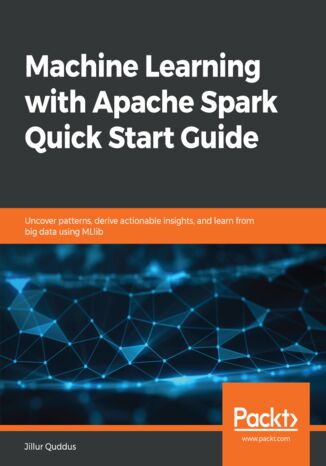
Jillur Quddus
Every person and every organization in the world manages data, whether they realize it or not. Data is used to describe the world around us and can be used for almost any purpose, from analyzing consumer habits to fighting disease and serious organized crime. Ultimately, we manage data in order to derive value from it, and many organizations around the world have traditionally invested in technology to help process their data faster and more efficiently.But we now live in an interconnected world driven by mass data creation and consumption where data is no longer rows and columns restricted to a spreadsheet, but an organic and evolving asset in its own right. With this realization comes major challenges for organizations: how do we manage the sheer size of data being created every second (think not only spreadsheets and databases, but also social media posts, images, videos, music, blogs and so on)? And once we can manage all of this data, how do we derive real value from it?The focus of Machine Learning with Apache Spark is to help us answer these questions in a hands-on manner. We introduce the latest scalable technologies to help us manage and process big data. We then introduce advanced analytical algorithms applied to real-world use cases in order to uncover patterns, derive actionable insights, and learn from this big data.
Jillur Quddus
Every person and every organization in the world manages data, whether they realize it or not. Data is used to describe the world around us and can be used for almost any purpose, from analyzing consumer habits to fighting disease and serious organized crime. Ultimately, we manage data in order to derive value from it, and many organizations around the world have traditionally invested in technology to help process their data faster and more efficiently.But we now live in an interconnected world driven by mass data creation and consumption where data is no longer rows and columns restricted to a spreadsheet, but an organic and evolving asset in its own right. With this realization comes major challenges for organizations: how do we manage the sheer size of data being created every second (think not only spreadsheets and databases, but also social media posts, images, videos, music, blogs and so on)? And once we can manage all of this data, how do we derive real value from it?The focus of Machine Learning with Apache Spark is to help us answer these questions in a hands-on manner. We introduce the latest scalable technologies to help us manage and process big data. We then introduce advanced analytical algorithms applied to real-world use cases in order to uncover patterns, derive actionable insights, and learn from this big data.
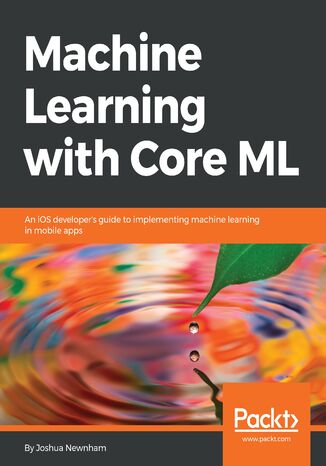
Joshua Newnham
Core ML is a popular framework by Apple, with APIs designed to support various machine learning tasks. It allows you to train your machine learning models and then integrate them into your iOS apps.Machine Learning with Core ML is a fun and practical guide that not only demystifies Core ML but also sheds light on machine learning. In this book, you’ll walk through realistic and interesting examples of machine learning in the context of mobile platforms (specifically iOS). You’ll learn to implement Core ML for visual-based applications using the principles of transfer learning and neural networks. Having got to grips with the basics, you’ll discover a series of seven examples, each providing a new use-case that uncovers how machine learning can be applied along with the related concepts. By the end of the book, you will have the skills required to put machine learning to work in their own applications, using the Core ML APIs
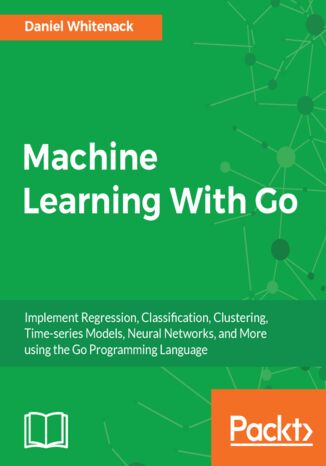
Daniel Whitenack
The mission of this book is to turn readers into productive, innovative data analysts who leverage Go to build robust and valuable applications. To this end, the book clearly introduces the technical aspects of building predictive models in Go, but it also helps the reader understand how machine learning workflows are being applied in real-world scenarios.Machine Learning with Go shows readers how to be productive in machine learning while also producing applications that maintain a high level of integrity. It also gives readers patterns to overcome challenges that are often encountered when trying to integrate machine learning in an engineering organization.The readers will begin by gaining a solid understanding of how to gather, organize, and parse real-work data from a variety of sources. Readers will then develop a solid statistical toolkit that will allow them to quickly understand gain intuition about the content of a dataset. Finally, the readers will gain hands-on experience implementing essential machine learning techniques (regression, classification, clustering, and so on) with the relevant Go packages.Finally, the reader will have a solid machine learning mindset and a powerful Go toolkit of techniques, packages, and example implementations.
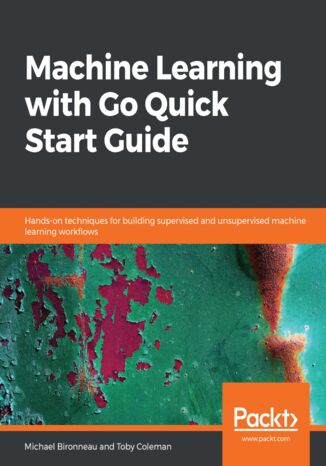
Michael Bironneau, Toby Coleman
Machine learning is an essential part of today's data-driven world and is extensively used across industries, including financial forecasting, robotics, and web technology. This book will teach you how to efficiently develop machine learning applications in Go.The book starts with an introduction to machine learning and its development process, explaining the types of problems that it aims to solve and the solutions it offers. It then covers setting up a frictionless Go development environment, including running Go interactively with Jupyter notebooks. Finally, common data processing techniques are introduced.The book then teaches the reader about supervised and unsupervised learning techniques through worked examples that include the implementation of evaluation metrics. These worked examples make use of the prominent open-source libraries GoML and Gonum.The book also teaches readers how to load a pre-trained model and use it to make predictions. It then moves on to the operational side of running machine learning applications: deployment, Continuous Integration, and helpful advice for effective logging and monitoring.At the end of the book, readers will learn how to set up a machine learning project for success, formulating realistic success criteria and accurately translating business requirements into technical ones.
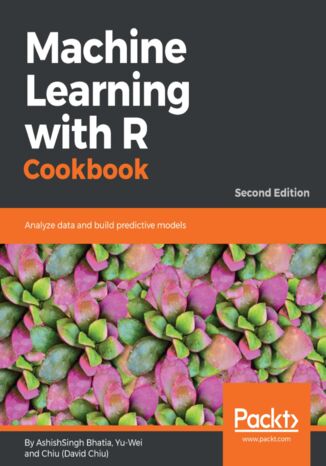
Machine Learning with R Cookbook. Analyze data and build predictive models - Second Edition
AshishSingh Bhatia, Yu-Wei, Chiu (David Chiu)
Big data has become a popular buzzword across many industries. An increasing number of people have been exposed to the term and are looking at how to leverage big data in their own businesses, to improve sales and profitability. However, collecting, aggregating, and visualizing data is just one part of the equation. Being able to extract useful information from data is another task, and a much more challenging one. Machine Learning with R Cookbook, Second Edition uses a practical approach to teach you how to perform machine learning with R. Each chapter is divided into several simple recipes. Through the step-by-step instructions provided in each recipe, you will be able to construct a predictive model by using a variety of machine learning packages. In this book, you will first learn to set up the R environment and use simple R commands to explore data. The next topic covers how to perform statistical analysis with machine learning analysis and assess created models, covered in detail later on in the book. You'll also learn how to integrate R and Hadoop to create a big data analysis platform. The detailed illustrations provide all the information required to start applying machine learning to individual projects. With Machine Learning with R Cookbook, machine learning has never been easier.
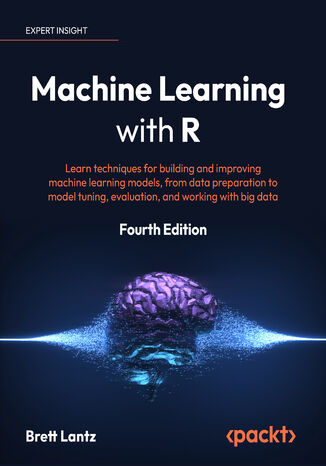
Brett Lantz
Machine learning, at its core, is concerned with transforming data into actionable knowledge. R offers a powerful set of machine learning methods to quickly and easily gain insight from your data.Machine Learning with R, Fourth Edition, provides a hands-on, accessible, and readable guide to applying machine learning to real-world problems. Whether you are an experienced R user or new to the language, Brett Lantz teaches you everything you need to know for data pre-processing, uncovering key insights, making new predictions, and visualizing your findings. This 10th Anniversary Edition features several new chapters that reflect the progress of machine learning in the last few years and help you build your data science skills and tackle more challenging problems, including making successful machine learning models and advanced data preparation, building better learners, and making use of big data.You'll also find this classic R data science book updated to R 4.0.0 with newer and better libraries, advice on ethical and bias issues in machine learning, and an introduction to deep learning. Whether you're looking to take your first steps with R for machine learning or making sure your skills and knowledge are up to date, this is an unmissable read that will help you find powerful new insights in your data.