
Informatyka
Zajrzyj do kategorii Informatyka w księgarni internetowej Ebookpoint. Znajdziesz tutaj bestsellerowe książki, ebooki i kursy video z branży IT. Sięgnij po najlepszą literaturę dla specjalistów i rozwijaj doświadczenie, które już posiadasz, lub rozpocznij swoją przygodę z programowaniem, cyberbezpieczeństwem lub grafiką komputerową. Pogłębiaj swoją wiedzę tak, jak Ci wygodnie - z tradycyjną książką, wygodnym ebookiem lub nowoczesnym videokursem. Sprawdź, jakie tytuły znajdziesz w kategorii Informatyka!
OpenGL. Podstawy programowania grafiki 3D
Janusz Ganczarski
OpenGL na scenę! Podstawy OpenGL, czyli co trzeba wiedzieć, żeby zacząć tworzyć grafikę trójwymiarową przy użyciu tej biblioteki Programowanie w Open GL, czyli jakie elementy należy wziąć pod uwagę przy tworzeniu realistycznego obrazu Bez matmy ani rusz, czyli jak zaprząc geometrię i arytmetykę do pracy przy scenie Darmowa biblioteka OpenGL jest świetnym narzędziem do tworzenia grafiki trójwymiarowej na różnych platformach sprzętowych i w różnych systemach operacyjnych. Jej legendarne możliwości, doskonalone od 1992 roku do dziś, znakomicie sprawdzają się na przykład w grach komputerowych. Z kolei otwarty interfejs programistyczny pozwolił na zbudowanie wokół niej mnóstwa narzędzi uzupełniających i rozszerzeń, które przydadzą się każdemu użytkownikowi pragnącemu wykreować swój własny świat w formacie 3D. Jeśli masz ochotę spróbować sił w programowaniu grafiki i zobaczyć na ekranie to, co na razie pozostaje jedynie w Twojej wyobraźni, ta książka pomoże Ci zrealizować cel. Dowiesz się z niej, jak zbudowana jest biblioteka, jakie zasady rządzą pisaniem programów w OpenGL oraz do czego służą obiekty i co możesz z nimi zrobić. Nauczysz się przekształcać scenę, budować modele oświetlenia i obsługiwać tekstury. Poznasz różne rodzaje buforów i zobaczysz, na czym polega antyaliasing. Odkryjesz też, jak przetwarzać geometrię obiektów i jak tworzyć realistyczne cienie. W dodatkach do książki znajdziesz natomiast informacje, które pomogą Ci rozpocząć pracę z tą biblioteką. Poznaj OpenGL i zachwyć świat swoimi grafikami! Co to jest OpenGL? Historia i perspektywy OpenGL Pierwszy program Rzutowanie i transformacje Cieniowanie i oświetlenie Tekstury i antyaliasing Zaawansowane przekształcanie geometrii Cienie Odwzorowanie środowiska i nierówności powierzchni Rozszerzenia Macierze i wektory Język GLSL Wykreuj swój świat z OpenGL!
OpenGL. Receptury dla programisty
Muhammad Mobeen Movania
Ponad 40 gotowych przepisów pokazujących możliwości zastosowania biblioteki OpenGL w nowoczesnych aplikacjach OpenGL dostarcza programistom API do renderowania zaawansowanych grafik i animacji. To oprogramowanie umożliwia im tworzenie niezwykle atrakcyjnych gier, prezentacji oraz efektów graficznych. Jeżeli chcesz poznać możliwości OpenGL, jeżeli szukasz odpowiedzi na nurtujące Cię pytania, to trafiłeś na świetną książkę! Znajdziesz w niej zbiór receptur cenionych przez programistów. Dzięki nim błyskawicznie rozwiążesz typowe problemy oraz zobaczysz, jak podejść do przeróżnych zagadnień związanych z OpenGL. Sięgnij po tę lekturę, a nauczysz się wybierać obiekty na podstawie ich różnych właściwości, mapować środowisko, filtrować obraz oraz tworzyć realne scenerie za pomocą odpowiedniej gry światła i cienia. Ponadto zobaczysz, jak śledzić promienie, ścieżki oraz tworzyć animacje szkieletowe i symulacje fizyczne. Ta książka to kopalnia najlepszych przepisów na wykorzystanie OpenGL! Na licznych przykładach poznasz zasady: tworzenia renderingowego kontekstu w OpenGL 3.3, operowania wirtualną kamerą i wskazywania obiektów w scenie 3D, symulowania odbić lustrzanych za pomocą renderowania pozaekranowego i mapowania środowiska, stosowania technik mapowania cieni włącznie z mapowaniem wariancyjnym, implementowania systemów cząsteczkowych przy użyciu shaderów, realizacji globalnego oświetlenia w oparciu o GPU i z użyciem harmonik sferycznych oraz SSAO, symulowania przezroczystości metodami bazującymi na dualnym peelingu głębi, wykonywania renderingów wolumetrycznych metodą cięcia połówkowokątowego i symulacji fizycznych z transformacyjnym sprzężeniem zwrotnym. Najlepsze przepisy na OpenGL!
OpenGL. Receptury dla programisty
Muhammad Mobeen Movania
Ponad 40 gotowych przepisów pokazujących możliwości zastosowania biblioteki OpenGL w nowoczesnych aplikacjach OpenGL dostarcza programistom API do renderowania zaawansowanych grafik i animacji. To oprogramowanie umożliwia im tworzenie niezwykle atrakcyjnych gier, prezentacji oraz efektów graficznych. Jeżeli chcesz poznać możliwości OpenGL, jeżeli szukasz odpowiedzi na nurtujące Cię pytania, to trafiłeś na świetną książkę! Znajdziesz w niej zbiór receptur cenionych przez programistów. Dzięki nim błyskawicznie rozwiążesz typowe problemy oraz zobaczysz, jak podejść do przeróżnych zagadnień związanych z OpenGL. Sięgnij po tę lekturę, a nauczysz się wybierać obiekty na podstawie ich różnych właściwości, mapować środowisko, filtrować obraz oraz tworzyć realne scenerie za pomocą odpowiedniej gry światła i cienia. Ponadto zobaczysz, jak śledzić promienie, ścieżki oraz tworzyć animacje szkieletowe i symulacje fizyczne. Ta książka to kopalnia najlepszych przepisów na wykorzystanie OpenGL! Na licznych przykładach poznasz zasady: tworzenia renderingowego kontekstu w OpenGL 3.3, operowania wirtualną kamerą i wskazywania obiektów w scenie 3D, symulowania odbić lustrzanych za pomocą renderowania pozaekranowego i mapowania środowiska, stosowania technik mapowania cieni włącznie z mapowaniem wariancyjnym, implementowania systemów cząsteczkowych przy użyciu shaderów, realizacji globalnego oświetlenia w oparciu o GPU i z użyciem harmonik sferycznych oraz SSAO, symulowania przezroczystości metodami bazującymi na dualnym peelingu głębi, wykonywania renderingów wolumetrycznych metodą cięcia połówkowokątowego i symulacji fizycznych z transformacyjnym sprzężeniem zwrotnym. Najlepsze przepisy na OpenGL!
Peter J. Langley, Antonio Santiago Perez
OpenLayers 3 is one of the most important and complete open source JavaScript mapping libraries today. Throughout this book, you will go through recipes that expose various features of OpenLayers 3, allowing you to gain an insight into building complex GIS web applications.You will get to grips with the basics of creating a map with common functionality and quickly advance to more complicated solutions that address modern challenges. You will explore into maps, raster and vector layers, and styling in depth. This book also includes problem solving and how-to recipes for the most common and important tasks.
Antonio Santiago Perez, Antonio Santiago
Data visualization and analysis has become an important task for many companies. Understanding the basic concepts of GIS and knowing how to visualize data on a map is a required ability for many professionals today. OpenLayers is a JavaScript library to load, display, and render maps from multiple sources on web pages.OpenLayers Cookbook teaches how to work with OpenLayers, one of the most important and complete open source JavaScript libraries.Through an extensive set of recipes, this book shows how to work with the main concepts required to build a GIS web applicationñ maps, raster and vector layers, styling, theming, and so on.OpenLayers Cookbook includes problem solving and how-to recipes for the most common and important tasks. A wide range of topics are covered.The range of recipes includes: creating basic maps, working with raster and vector layers, understanding events and working with main controls, reading features from different data sources, styling features, and understanding the underlying architecture.OpenLayers Cookbook describes solutions and optimizations to problems commonly found.
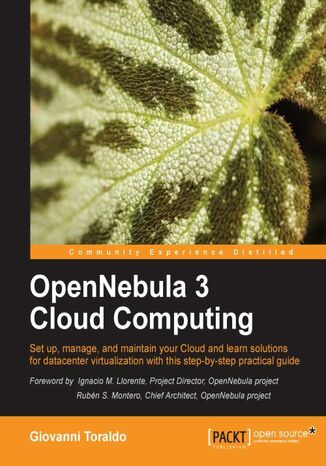
Giovanni Toraldo, Ignacio Martin Llorente
OpenNebula is one of the most advanced and highly-scalable open source cloud computing toolkits. If you ever wanted to understand what Cloud Computing is and how to realize it, or if you need a handy way to manage your messy infrastructure in a simple and coherent manner, this is your way. OpenNebula 3 Cloud Computing guides you along the building and maintenance of your cloud infrastructure, providing real-world examples, step-by-step configuration and other critical information. The book keeps you a step ahead in dealing with the demanding nature of cloud computing and virtual infrastructure management using one of the most advanced cloud computing toolkitsñ OpenNebula. The book takes you from a basic knowledge of OpenNebula to expert understanding of the most advanced features.The book starts with a basic planning of hardware resources and presents the unique benefits of the supported hypervisors; you will go in deep with day-to-day management of virtual instances, infrastructure monitoring and integration with Public Clouds like Amazon EC2.With this book you will be able to get started with fast and cheap configuration recipes, but also go deeper for a correct integration with your existing infrastructure.You will deal with well-know virtualization technologies like Xen and VMware, but also with the promising KVM technology integrated in the Linux kernel. After the basic infrastructure set-up, you will learn how to create and manage virtual instance via both command-line and web interfaces, and how to monitor your existing resources.At the end, the book acquaints you with integrating your local infrastructure with external Cloud resources but also publishing your resources to others via common API interfaces.
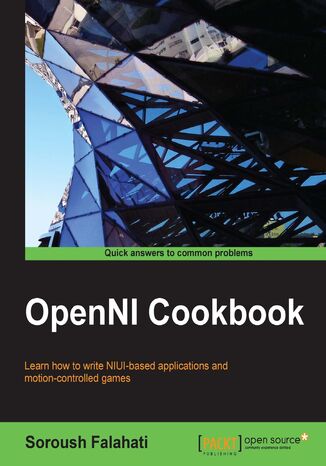
OpenNI Cookbook. Learn how to write NIUI-based applications and motion-controlled games
Soroush Falahati
The release of Microsoft Kinect, then PrimeSense Sensor, and Asus Xtion opened new doors for developers to interact with users, re-design their application’s UI, and make them environment (context) aware. For this purpose, developers need a good framework which provides a complete application programming interface (API), and OpenNI is the first choice in this field. This book introduces the new version of OpenNI.OpenNI Cookbook will show you how to start developing a Natural Interaction UI for your applications or games with high level APIs and at the same time access RAW data from different sensors of different hardware supported by OpenNI using low level APIs. It also deals with expanding OpenNI by writing new modules and expanding applications using different OpenNI compatible middleware, including NITE.OpenNI Cookbook favors practical examples over plain theory, giving you a more hands-on experience to help you learn. OpenNI Cookbook starts with information about installing devices and retrieving RAW data from them, and then shows how to use this data in applications. You will learn how to access a device or how to read data from it and show them using OpenGL, or use middleware (especially NITE) to track and recognize users, hands, and guess the skeleton of a person in front of a device, all through examples.You also learn about more advanced aspects such as how to write a simple module or middleware for OpenNI itself.OpenNI Cookbook shows you how to start and experiment with both NIUI designs and OpenNI itself using examples.
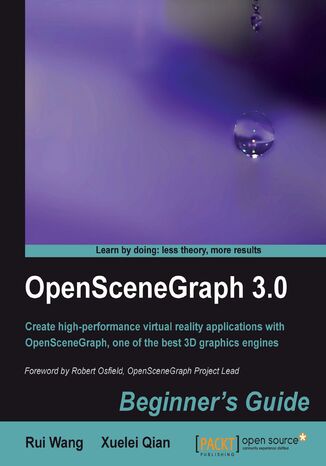
Xuelei Qian, Rui Wang, Robert Osfield
Virtual reality has quite a lot of demand in computer science today and OpenSceneGraph, being one of the best 3D graphics toolkits, is being used widely. Although you can use the powerful OpenSceneGraph, based on the low-level OpenGL API, to implement virtual-reality applications that simulate different environments in the 3D world, developing picture-perfect applications is easier said than done.This book has been written with the goal of helping readers become familiar with the structure and main functionalities of OpenSceneGraph (OSG), and guide them to develop virtual-reality applications using this powerful 3D graphics engine. This book covers the essence of OpenSceneGraph (OSG), providing programmers with detailed explanations and examples of scene graph APIs.This book helps you take full advantages of the key features and functionalities of OpenSceneGraph (OSG). You will learn almost all of the core elements required in a virtual reality application, including memory management, geometry creation, the structure of the scene graph, realistic rendering effects, scene navigation, animation, interaction with input devices and external user interfaces, file reading and writing, and so on.With the essential knowledge contained in this book, you will be able to start using OSG in your own projects and research fields, and extend its functionalities by referring to OSG's source code, official examples and API documentation.This handy book divides the core functionalities of the proved and comprehensive OpenSceneGraph (OSG) 3D graphics engine into different aspects, which are introduced in separate chapters. Each chapter can be treated as an individual part that covers one important field of OSG programming, along with several examples illustrating concrete usages and solutions. But the sequence of chapters is also organized from the easy to the more difficult, to help you get to grips with OSG.By the end of the whole book, you will have gained a ready-to-use OSG development environment for yourself and have the general ability to develop OSG-based applications and extend practical functionalities for your own purposes.
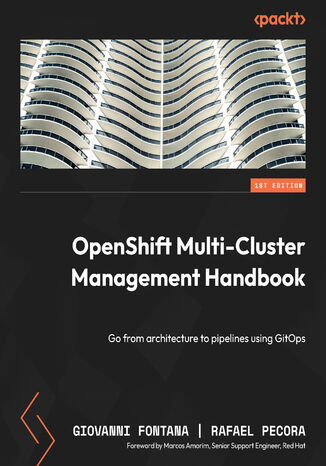
OpenShift Multi-Cluster Management Handbook. Go from architecture to pipelines using GitOps
Giovanni Fontana, Rafael Pecora, Marcos Amorim
For IT professionals working with Red Hat OpenShift Container Platform, the key to maximizing efficiency is understanding the powerful and resilient options to maintain the software development platform with minimal effort. OpenShift Multi-Cluster Management Handbook is a deep dive into the technology, containing knowledge essential for anyone who wants to work with OpenShift.This book starts by covering the architectural concepts and definitions necessary for deploying OpenShift clusters. It then takes you through designing Red Hat OpenShift for hybrid and multi-cloud infrastructure, showing you different approaches for multiple environments (from on-premises to cloud providers). As you advance, you’ll learn container security strategies to protect pipelines, data, and infrastructure on each layer. You’ll also discover tips for critical decision making once you understand the importance of designing a comprehensive project considering all aspects of an architecture that will allow the solution to scale as your application requires.By the end of this OpenShift book, you’ll know how to design a comprehensive Red Hat OpenShift cluster architecture, deploy it, and effectively manage your enterprise-grade clusters and other critical components using tools in OpenShift Plus.