
Informatyka
Zajrzyj do kategorii Informatyka w księgarni internetowej Ebookpoint. Znajdziesz tutaj bestsellerowe książki, ebooki i kursy video z branży IT. Sięgnij po najlepszą literaturę dla specjalistów i rozwijaj doświadczenie, które już posiadasz, lub rozpocznij swoją przygodę z programowaniem, cyberbezpieczeństwem lub grafiką komputerową. Pogłębiaj swoją wiedzę tak, jak Ci wygodnie - z tradycyjną książką, wygodnym ebookiem lub nowoczesnym videokursem. Sprawdź, jakie tytuły znajdziesz w kategorii Informatyka!
David Brian Mathews, David B Mathews, Reinier...
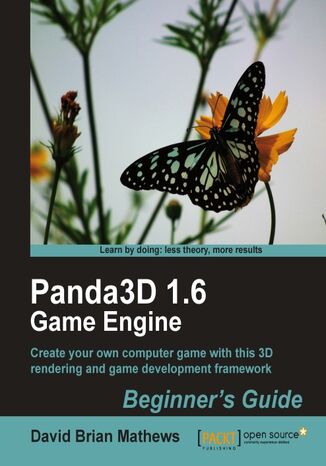
Panda3D is a game engine, a framework for 3D rendering and game development for Python and C++ programs. It includes graphics, audio, I/O, collision detection, and other abilities relevant to the creation of 3D games. Also, Panda3D is Open Source and free for any purpose, including commercial ventures. This book will enable you to create finished, marketable computer games using Panda3D and other entirely open-source tools and then sell those games without paying a cent for licensing.Panda3D 1.6 Game Engine Beginner's Guide follows a logical progression from a zero start through the game development process all the way to a finished, packaged installer. Packed with examples and detailed tutorials in every section, it teaches the reader through first-hand experience. These tutorials are followed by explanations that describe what happened in the tutorial and why.You will start by setting up a workspace, and then move on to the basics of starting up Panda3D. From there, you will begin adding objects like a level and a character to the world inside Panda3D. Then the book will teach you to put the game's player in control by adding change over time and response to user input. Then you will learn how to make it possible for objects in the world to interact with each other by using collision detection and beautify your game with Panda3D's built-in filters, shaders, and texturing. Finally, you will add an interface, audio, and package it all up for the customer.
Jeff Winder, Carlos Ulloa, Joseph Winder, Paul...
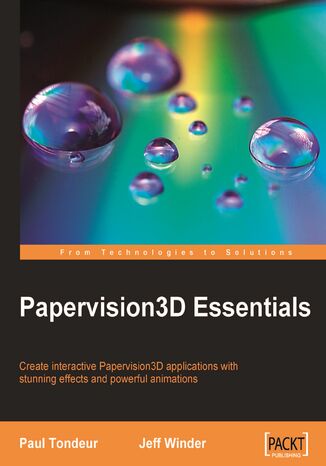
Papervision3D is a powerful real-time 3D engine for Flash. Papervision3D can take externally created 3D models and render them as Flash content, without requiring end-users to download or install an additional plug-in. It has an outstanding reputation within the Flash community and its ease of use has even impressed experienced 3D game developers. However, getting started with Papervision3D can be daunting and mastering it can be challenging. This book guides you through the easiest way to tackle challenges that you may normally face with Papervision3D and master them effectively.The book will show you how to build Papervision3D applications from scratch in the easiest way, providing plenty of examples that make sense even if you're not a Flash expert. Papervision3D Essentials serves as a comprehensive guide to getting you started, as well as being an invaluable reference for every Papervision3D user and developer. By the end of this book you will be able to create your own projects with real-time 3D rendering.Since the first release of Papervision3D in 2007, the authors have been involved in various commercial projects with Papervision3D, building up a deep understanding of the engine. In Papervision3D Essentials, the authors share their knowledge to help you create stunning 3D content in Flash and teach you how to work with one of the most exciting open-source Flash projects around. Papervision3D Essentials shows you how to download Papervsion3D and make it work in Flash, Flash Builder and Flex Builder. It provides a short introduction to Object Oriented Programming and classes for those who are new to non-timeline programming. Then, it takes a closer look at the engine, discussing a broad range of topics from how to work with built-in 3D objects to using and animating cameras, 3D objects, and light. Applying materials and textures, using filters and effects, particles and performance optimizations are also covered. Ultimately, this book will provide you with the information you need to build your first Papervision3D application. Covering the basics, but by no means limited to beginners, Papervision3D Essentials provides a thorough explanation of the engine and numerous tips and tricks, making it a valuable resource for every Papervision3D user.
Alvin Ashcraft
.NET has included managed threading capabilities since the beginning, but early techniques had inherent risks: memory leaks, thread synchronization issues, and deadlocks. This book will help you avoid those pitfalls and leverage the modern constructs available in .NET 6 and C# 10, while providing recommendations on patterns and best practices for parallelism and concurrency. Parallel, concurrent, and asynchronous programming are part of every .NET application today, and it becomes imperative for modern developers to understand how to effectively use these techniques.This book will teach intermediate-level .NET developers how to make their applications faster and more responsive with parallel programming and concurrency in .NET and C# with practical examples. The book starts with the essentials of multi-threaded .NET development and explores how the language and framework constructs have evolved along with .NET. You will later get to grips with the different options available today in .NET 6, followed by insights into best practices, debugging, and unit testing.By the end of this book, you will have a deep understanding of why, when, and how to employ parallelism and concurrency in any .NET application.
Jan Palach, Jan Palach V Cruz da...
Pascal. Ćwiczenia praktyczne. Wydanie III
Andrzej Kierzkowski
Naucz się myśleć jak programista Poznaj podstawy Pascala Dowiedz się, jak tworzyć dobre programy Język Pascal - prostszy, niż przypuszczasz! Choć popularny Turbo Pascal powstał niemal trzy dekady temu, a historia samego Pascala liczy sobie już ponad czterdzieści lat, nadal jest on jednym z najpopularniejszych języków programowania strukturalnego. Nie tylko dlatego, że wiele napisanych w nim programów działa po dziś dzień i w dalszym ciągu wymaga konserwacji, a bardzo popularne środowisko Delphi wykorzystuje pewną jego odmianę. Głównym powodem jest jego wartość edukacyjna — prosta i czytelna składnia Pascala, niewielki zestaw słów kluczowych i spore możliwości czynią z niego doskonałą platformę nauki dla początkujących programistów. Opanowanie tego języka znakomicie ułatwia poznawanie innych języków oraz skutecznie uczy rozwiązywania problemów algorytmicznych, o czym najlepiej może świadczyć fakt, że język ten nadal wykorzystywany jest w procesie kształcenia przyszłych informatyków na wielu polskich uczelniach. "Pascal. Ćwiczenia praktyczne. Wydanie III" to kolejne wydanie najpopularniejszej w Polsce książki o Pascalu, sprawdzonej i wykorzystywanej przez wykładowców, studentów, nauczycieli informatyki oraz ich uczniów. Znajdziesz tu zbiór ćwiczeń, dzięki którym poznasz zasady programowania w tym języku i używane w nim struktury danych. Nauczysz się rozwiązywać zadania programistyczne za pomocą algorytmów i dowiesz się, z jakich elementów składa się każdy program w Pascalu. Wykonując kolejne ćwiczenia, poznasz instrukcje tego języka, opracujesz własne procedury i funkcje, utworzysz nowe typy danych oraz dowiesz się, jak kompilować i uruchamiać swoje programy. Przede wszystkim zaś nauczysz się myśleć i działać jak prawdziwy informatyk. A wtedy kariera profesjonalnego programisty stanie przed Tobą otworem! Podstawowe pojęcia algorytmiki Korzystanie ze schematów blokowych Obsługa środowiska programistycznego Struktura programów w Pascalu Korzystanie z instrukcji języka Tworzenie oraz używanie funkcji i procedur Używanie wbudowanych typów danych i tworzenie własnych Metody dostępu do plików dyskowych Poznaj najlepsze metody rozwiązywania problemów programistycznych
Pasja testowania. Wydanie II rozszerzone
Krzysztof Jadczyk
Przetestuj się w roli testera Pasja testowania to podręcznik przeznaczony dla osób, które stawiają pierwsze kroki w świecie IT i rozważają, czy praca testera, ważna i nieźle płatna, jest dla nich. Tester oprogramowania - to brzmi dobrze! Tylko na czym polegają jego zadania? Jakich umiejętności się od niego wymaga? Znajomość których narzędzi będzie oczekiwana? Skąd czerpać o nich wiedzę? I przede wszystkim: jak się przekonać, czy będzie się dobrym testerem? Na te i inne pytanie odpowiada Pasja testowania. Dzięki tej książce poznasz teoretyczne podstawy pracy testera, zrozumiesz, na czym polega jego warsztat i z jakich elementów się składa, dowiesz się też, jak zabrać się do pracy testerskiej. Autor, praktyk z kilkunastoletnim stażem, wprowadzi Cię w te zagadnienia krok po kroku. Co więcej, obali najpowszechniejsze mity krążące w światku testerów i zwróci uwagę na klienta, czyli prawdziwego odbiorcę efektów Twojej pracy. Na deser zaś pozwoli Ci samemu się przetestować - proponuje bowiem szereg ćwiczeń, dzięki którym zostaniesz prawdziwym mistrzem testowania. Czego zresztą szczerze Ci życzy!
PCI DSS Version 4.0.1. A guide to the payment card industry data security standard
IT Governance Publishing, Stephen Hancock
This book provides an essential resource for anyone involved in managing or ensuring PCI DSS compliance. It begins by introducing the Payment Card Industry Data Security Standard (PCI DSS), explaining its importance, and the regulatory framework that governs it. Readers will understand how to assess their organization’s compliance status and the vital steps to avoid data breaches. The book offers a comprehensive exploration of compliance programs and how organizations can design their own effective strategies.The text then dives into the specifics of PCI DSS, focusing on its core components and requirements. Key chapters describe how to comply with and maintain compliance, as well as how to use tools like the PCI self-assessment questionnaire (SAQ). Real-world case studies of cardholder data breaches highlight the consequences of non-compliance. Readers will also learn about the integration of PCI DSS with other standards like ISO/IEC 27001.Throughout, this guide emphasizes practical advice for implementing key security frameworks such as the Software Security Framework (SSF) and Point-to-Point Encryption (P2PE). By the end of the book, readers will have a clear roadmap to not only meet but sustain PCI DSS compliance and strengthen their organization's data security practices.
PCI DSS Version 4.0.1. A guide to the payment card industry data security standard
IT Governance Publishing, Stephen Hancock
This book provides an essential resource for anyone involved in managing or ensuring PCI DSS compliance. It begins by introducing the Payment Card Industry Data Security Standard (PCI DSS), explaining its importance, and the regulatory framework that governs it. Readers will understand how to assess their organization’s compliance status and the vital steps to avoid data breaches. The book offers a comprehensive exploration of compliance programs and how organizations can design their own effective strategies.The text then dives into the specifics of PCI DSS, focusing on its core components and requirements. Key chapters describe how to comply with and maintain compliance, as well as how to use tools like the PCI self-assessment questionnaire (SAQ). Real-world case studies of cardholder data breaches highlight the consequences of non-compliance. Readers will also learn about the integration of PCI DSS with other standards like ISO/IEC 27001.Throughout, this guide emphasizes practical advice for implementing key security frameworks such as the Software Security Framework (SSF) and Point-to-Point Encryption (P2PE). By the end of the book, readers will have a clear roadmap to not only meet but sustain PCI DSS compliance and strengthen their organization's data security practices.
PCI DSS Version 4.0.1. A guide to the payment card industry data security standard
IT Governance Publishing, Stephen Hancock
This book provides an essential resource for anyone involved in managing or ensuring PCI DSS compliance. It begins by introducing the Payment Card Industry Data Security Standard (PCI DSS), explaining its importance, and the regulatory framework that governs it. Readers will understand how to assess their organization’s compliance status and the vital steps to avoid data breaches. The book offers a comprehensive exploration of compliance programs and how organizations can design their own effective strategies.The text then dives into the specifics of PCI DSS, focusing on its core components and requirements. Key chapters describe how to comply with and maintain compliance, as well as how to use tools like the PCI self-assessment questionnaire (SAQ). Real-world case studies of cardholder data breaches highlight the consequences of non-compliance. Readers will also learn about the integration of PCI DSS with other standards like ISO/IEC 27001.Throughout, this guide emphasizes practical advice for implementing key security frameworks such as the Software Security Framework (SSF) and Point-to-Point Encryption (P2PE). By the end of the book, readers will have a clear roadmap to not only meet but sustain PCI DSS compliance and strengthen their organization's data security practices.

Stephan Schmidt, Stoyan Stefanov, Carsten Lucke, Aaron...
Przewodnik po najbardziej przydatnych pakietach PEAR Poznaj najpopularniejsze pakiety repozytorium PEAR Korzystaj z baz danych za pomocą MDB2 Używaj gotowych komponentów do szybkiego tworzenia aplikacji w PHP Jednym z głównych powodów popularności PHP jest szeroki dostęp do bibliotek i rozszerzeń tego języka. Najważniejszym ich źródłem jest PEAR -- internetowe repozytorium komponentów i aplikacji języka PHP. Pakiety dostępne w PEAR zawierają gotowe rozszerzenia umożliwiające wykonanie niemal wszystkich standardowych operacji w PHP. Rozszerzenia te przechodzą przez ścisły system kontroli jakości, a ich autorzy muszą stosować się do określonych zaleceń. Dlatego pisanie programów z wykorzystaniem pakietów jest nie tylko szybsze, ale prowadzi też do powstawania lepszych i bardziej spójnych aplikacji. Dzięki książce "PEAR. Programowanie w PHP" nauczysz się wykonywać codzienne zadania programistyczne przy użyciu klas z popularnych pakietów PEAR. Dowiesz się, jak obsługiwać bazy danych za pomocą pakietu MDB2, a także jak wyświetlać dane zapisane w różnych formatach. Poznasz sposoby tworzenia i analizowania dokumentów XML oraz przekształcania obiektów PHP na format XML i z powrotem. Zobaczysz, jak tworzyć własne usługi WWW oraz używać interfejsów udostępnianych w usługach autorstwa innych producentów. Praca z bazami danych Wyświetlanie informacji w różnych formatach Tworzenie i przetwarzanie plików XML Przygotowywanie i udostępnianie usług WWW Korzystanie z gotowych usług WWW Praca z datami Zwiększ swoją produktywność, korzystając z gotowych komponentów.