
Informatyka
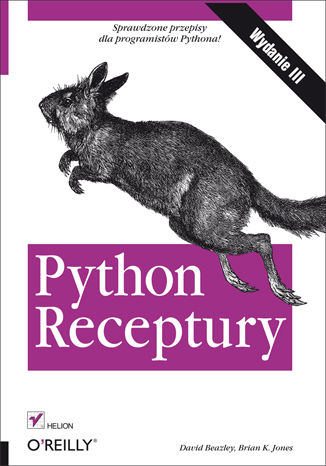
Python. Receptury. Wydanie III
David Beazley, Brian K. Jones
Python to język programowania z ponad 20-letnią historią. Opracowany na początku lat 90. ubiegłego wieku, błyskawicznie zdobył sympatię programistów. Jest używany zarówno do pisania przydatnych skryptów czy małych narzędzi, jak i do pracy nad dużymi projektami. Korzysta z automatycznego zarządzania pamięcią oraz pozwala na podejście obiektowe i funkcyjne do tworzonego programu. Wokół języka Python skupiona jest bardzo silna społeczność programistów. Ta książka to sprawdzone źródło informacji na temat Pythona i jego najczęstszych zastosowań. Należy ona do cenionej serii „Receptury”, w której znajdziesz najlepsze sposoby rozwiązywania problemów. Przekonaj się, jak wydajnie operować na strukturach danych, łańcuchach znaków, tekście i liczbach. Zobacz, jak korzystać z iteratorów i generatorów. Ponadto naucz się tworzyć własne klasy i funkcje oraz sprawdź, jak uzyskać dostęp do plików i sieci. Te i dziesiątki innych receptur opisano w tej książce. To obowiązkowa pozycja na półce każdego programisty pracującego z językiem Python. Dzięki tej książce: rozwiążesz w optymalny sposób najczęstsze problemy napiszesz program korzystający z puli wątków będziesz lepszym programistą Pythona! Najlepsze rozwiązania typowych problemów!
Sean Saito, Yang Wenzhuo, Rajalingappaa Shanmugamani
Reinforcement learning is one of the most exciting and rapidly growing fields in machine learning. This is due to the many novel algorithms developed and incredible results published in recent years.In this book, you will learn about the core concepts of RL including Q-learning, policy gradients, Monte Carlo processes, and several deep reinforcement learning algorithms. As you make your way through the book, you'll work on projects with datasets of various modalities including image, text, and video. You will gain experience in several domains, including gaming, image processing, and physical simulations. You'll explore technologies such as TensorFlow and OpenAI Gym to implement deep learning reinforcement learning algorithms that also predict stock prices, generate natural language, and even build other neural networks.By the end of this book, you will have hands-on experience with eight reinforcement learning projects, each addressing different topics and/or algorithms. We hope these practical exercises will provide you with better intuition and insight about the field of reinforcement learning and how to apply its algorithms to various problems in real life.
Python Robotics Projects. Build smart and collaborative robots using Python
Prof. Diwakar Vaish
Robotics is a fast-growing industry. Multiple surveys state that investment in the field has increased tenfold in the last 6 years, and is set to become a $100-billion sector by 2020. Robots are prevalent throughout all industries, and they are all set to be a part of our domestic lives. This book starts with the installation and basic steps in configuring a robotic controller. You'll then move on to setting up your environment to use Python with the robotic controller. You'll dive deep into building simple robotic projects, such as a pet-feeding robot, and more complicated projects, such as machine learning enabled home automation system (Jarvis), vision processing based robots and a self-driven robotic vehicle using Python.By the end of this book, you'll know how to build smart robots using Python.
Python Robotics Projects. Build smart and collaborative robots using Python
Prof. Diwakar Vaish
Robotics is a fast-growing industry. Multiple surveys state that investment in the field has increased tenfold in the last 6 years, and is set to become a $100-billion sector by 2020. Robots are prevalent throughout all industries, and they are all set to be a part of our domestic lives. This book starts with the installation and basic steps in configuring a robotic controller. You'll then move on to setting up your environment to use Python with the robotic controller. You'll dive deep into building simple robotic projects, such as a pet-feeding robot, and more complicated projects, such as machine learning enabled home automation system (Jarvis), vision processing based robots and a self-driven robotic vehicle using Python.By the end of this book, you'll know how to build smart robots using Python.
Paolo Acampora
Blender, a powerful open source 3D software, can be extended and powered up using the Python programming language. This book teaches you how to automate laborious operations using scripts, and expand the set of available commands, graphic interfaces, tools, and event responses, which will enable you to add custom features to meet your needs and bring your creative ideas to life.The book begins by covering essential Python concepts and showing you how to create a basic add-on. You’ll then gain a solid understanding of the entities that affect the look of Blender’s objects such as modifiers, constraints, and materials. As you advance, you’ll get to grips with the animation system in Blender and learn how to set up its behavior using Python. The examples, tools, patterns, and best practices present throughout the book will familiarize you with the Python API and build your knowledge base, along with enabling you to produce valuable code that empowers the users and is ready for publishing or production.By the end of this book, you’ll be able to successfully design add-ons that integrate seamlessly with the software and its ecosystem.
Python Social Media Analytics. Analyze and visualize data from Twitter, YouTube, GitHub, and more
Siddhartha Chatterjee, Michal Krystyanczuk
Social Media platforms such as Facebook, Twitter, Forums, Pinterest, and YouTube have become part of everyday life in a big way. However, these complex and noisy data streams pose a potent challenge to everyone when it comes to harnessing them properly and benefiting from them. This book will introduce you to the concept of social media analytics, and how you can leverage its capabilities to empower your business.Right from acquiring data from various social networking sources such as Twitter, Facebook, YouTube, Pinterest, and social forums, you will see how to clean data and make it ready for analytical operations using various Python APIs. This book explains how to structure the clean data obtained and store in MongoDB using PyMongo. You will also perform web scraping and visualize data using Scrappy and Beautifulsoup. Finally, you will be introduced to different techniques to perform analytics at scale for your social data on the cloud, using Python and Spark. By the end of this book, you will be able to utilize the power of Python to gain valuable insights from social media data and use them to enhance your business processes.
Python Text Processing with NLTK 2.0 Cookbook: LITE
Jacob Perkins
Martino A Sabia, Jia Shuan Cathy Wang
Sebastian Raschka
Sprawdź drugie wydanie tej książki >> --- Uczenie maszynowe, zajmujące się algorytmami analizującymi dane, stanowi chyba najciekawszą dziedzinę informatyki. W czasach, w których generuje się olbrzymie ilości danych, samouczące się algorytmy maszynowe stanowią wyjątkową metodę przekształcania tych danych w wiedzę. W ten sposób powstało wiele innowacyjnych technologii, a możliwości uczenia maszynowego są coraz większe. Nieocenioną pomoc w rozwijaniu tej dziedziny stanowią liczne nowe biblioteki open source, które pozwalają na budowanie algorytmów w języku Python, będącym ulubionym, potężnym i przystępnym narzędziem naukowców i analityków danych. Niniejsza książka jest lekturą obowiązkową dla każdego, kto chce rozwinąć swoją wiedzę o danych naukowych i zamierza w tym celu wykorzystać język Python. Przystępnie opisano tu teoretyczne podstawy dziedziny i przedstawiono wyczerpujące informacje o działaniu algorytmów uczenia maszynowego, sposobach ich wykorzystania oraz metodach unikania poważnych błędów. Zaprezentowano również biblioteki Theano i Keras, sposoby przewidywania wyników docelowych za pomocą analizy regresywnej oraz techniki wykrywania ukrytych wzorców metodą analizy skupień. Nie zabrakło opisu technik przetwarzania wstępnego i zasad oceny modeli uczenia maszynowego. W tej książce: podstawowe rodzaje uczenia maszynowego i ich zastosowanie, biblioteka scikit-learn i klasyfikatory uczenia maszynowego, wydajne łączenie różnych algorytmów uczących, analiza sentymentów — przewidywanie opinii osób na podstawie sposobu pisania, praca z nieoznakowanymi danymi — uczenie nienadzorowane, tworzenie i trenowanie sieci neuronowych. Uczenie maszynowe — odkryj wiedzę, którą niosą dane!