
Informatyka
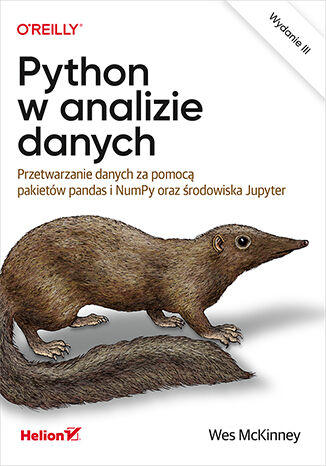
Wes McKinney
Wprawny analityk danych potrafi z nich uzyskać wiedzę ułatwiającą podejmowanie trafnych decyzji. Od kilku lat można do tego używać nowoczesnych narzędzi Pythona, które zbudowano specjalnie do tego celu. Praca z nimi nie wymaga głębokiej znajomości statystyki czy algebry. Aby cieszyć się uzyskanymi rezultatami, wystarczy się wprawić w stosowaniu kilku pakietów i środowisk Pythona. Ta książka jest trzecim, starannie zaktualizowanym wydaniem wyczerpującego przewodnika po narzędziach analitycznych Pythona. Uwzględnia Pythona 3.0 i bibliotekę pandas 1.4. Została napisana w przystępny sposób, a poszczególne zagadnienia bogato zilustrowano przykładami, studiami rzeczywistych przypadków i fragmentami kodu. W trakcie lektury nauczysz się korzystać z możliwości oferowanych przez pakiety pandas i NumPy, a także środowiska IPython i Jupyter. Nie zabrakło wskazówek dotyczących używania uniwersalnych narzędzi przeznaczonych do ładowania, czyszczenia, przekształcania i łączenia zbiorów danych. Pozycję docenią analitycy zamierzający zacząć pracę w Pythonie, jak również programiści Pythona, którzy chcą się zająć analizą danych i obliczeniami naukowymi. Dzięki książce nauczysz się: eksplorować dane za pomocą powłoki IPython i środowiska Jupyter korzystać z funkcji pakietów NumPy i pandas używać pakietu matplotlib do tworzenia czytelnych wizualizacji analizować i przetwarzać dane regularnych i nieregularne szeregi czasowe rozwiązywać rzeczywiste problemy analityczne Wes McKinney zaktualizował swoją książkę, aby była podstawowym źródłem informacji o wszystkich zagadnieniach związanych z analizą danych przy użyciu języka Python i biblioteki pandas. Gorąco polecam tę pozycję! Paul Barry, wykładowca i autor książek
Python w zadaniach. Programowanie dla młodzieży. Poziom podstawowy
Urszula Wiejak, Adrian Wojciechowski
Opanuj Pythona od strony praktycznej! Poznaj konstrukcje języka Python Naucz się stosować je w praktyce Wykorzystaj standardowe biblioteki Rozwiąż 139 zadań i sprawdź swoje rozwiązania Python to bardzo popularny, wydajny i elastyczny język programowania ogólnego przeznaczenia, którego prosta, czytelna i zwięzła składnia zdobyła uznanie rzesz programistów na całym świecie. Duże możliwości, przenośność kodu, możliwość pisania skryptów - wszystko to sprawia, że Python znajduje zastosowanie w najróżniejszych dziedzinach i wspiera rozwój wielu popularnych serwisów internetowych. Bez wątpienia warto się go nauczyć! Jeśli chcesz poznać ten język, jesteś na dobrej drodze! Książka omawia najważniejsze elementy programowania w Pythonie. Co ważne, wiedza została usystematyzowana w formie konkretnych zadań do wykonania. Poznasz dzięki nim typy danych i składnię języka, dowiesz się, jak debugować programy, nauczysz się korzystać z funkcji oferowanych przez biblioteki i opanujesz podstawy tworzenia graficznych interfejsów użytkownika. To podręcznik przeznaczony dla młodzieży, ale doskonale sprawdzi się również w przypadku osób dorosłych, które rozpoczynają przygodę z programowaniem. Instalowanie oraz konfigurowanie środowiska i niezbędnych narzędzi Podstawowe informacje na temat języka i programowania Typy danych, zmienne proste i tablicowe Operatory, instrukcje warunkowe oraz instrukcje pętli Operacje wejścia-wyjścia w konsoli i na plikach Biblioteki graficzne, dźwiękowe i wideo Korzystanie z funkcji wbudowanych i tworzenie własnych Programowanie obiektowe, obsługa wątków i wyjątków Tworzenie graficznych interfejsów użytkownika Zadania do samodzielnego wykonania i praktyczny projekt gry Poznaj Pythona, rozwiązuj zadania, zostań programistą!
Python w zadaniach. Programowanie dla młodzieży. Poziom podstawowy
Urszula Wiejak, Adrian Wojciechowski
Opanuj Pythona od strony praktycznej! Poznaj konstrukcje języka Python Naucz się stosować je w praktyce Wykorzystaj standardowe biblioteki Rozwiąż 139 zadań i sprawdź swoje rozwiązania Python to bardzo popularny, wydajny i elastyczny język programowania ogólnego przeznaczenia, którego prosta, czytelna i zwięzła składnia zdobyła uznanie rzesz programistów na całym świecie. Duże możliwości, przenośność kodu, możliwość pisania skryptów - wszystko to sprawia, że Python znajduje zastosowanie w najróżniejszych dziedzinach i wspiera rozwój wielu popularnych serwisów internetowych. Bez wątpienia warto się go nauczyć! Jeśli chcesz poznać ten język, jesteś na dobrej drodze! Książka omawia najważniejsze elementy programowania w Pythonie. Co ważne, wiedza została usystematyzowana w formie konkretnych zadań do wykonania. Poznasz dzięki nim typy danych i składnię języka, dowiesz się, jak debugować programy, nauczysz się korzystać z funkcji oferowanych przez biblioteki i opanujesz podstawy tworzenia graficznych interfejsów użytkownika. To podręcznik przeznaczony dla młodzieży, ale doskonale sprawdzi się również w przypadku osób dorosłych, które rozpoczynają przygodę z programowaniem. Instalowanie oraz konfigurowanie środowiska i niezbędnych narzędzi Podstawowe informacje na temat języka i programowania Typy danych, zmienne proste i tablicowe Operatory, instrukcje warunkowe oraz instrukcje pętli Operacje wejścia-wyjścia w konsoli i na plikach Biblioteki graficzne, dźwiękowe i wideo Korzystanie z funkcji wbudowanych i tworzenie własnych Programowanie obiektowe, obsługa wątków i wyjątków Tworzenie graficznych interfejsów użytkownika Zadania do samodzielnego wykonania i praktyczny projekt gry Poznaj Pythona, rozwiązuj zadania, zostań programistą!
Adam Hopkins
Today’s developers need something more powerful and customizable when it comes to web app development. They require effective tools to build something unique to meet their specific needs, and not simply glue a bunch of things together built by others. This is where Sanic comes into the picture. Built to be unopinionated and scalable, Sanic is a next-generation Python framework and server tuned for high performance.This Sanic guide starts by helping you understand Sanic’s purpose, significance, and use cases. You’ll learn how to spot different issues when building web applications, and how to choose, create, and adapt the right solution to meet your requirements. As you progress, you’ll understand how to use listeners, middleware, and background tasks to customize your application. The book will also take you through real-world examples, so you will walk away with practical knowledge and not just code snippets.By the end of this web development book, you’ll have gained the knowledge you need to design, build, and deploy high-performance, scalable, and maintainable web applications with the Sanic framework.
QGIS Python Programming Cookbook. Automating geospatial development - Second Edition
Joel Lawhead
QGIS is a desktop geographic information system that facilitates data viewing, editing, and analysis. Paired with the most efficient scripting language—Python, we can write effective scripts that extend the core functionality of QGIS. Based on version QGIS 2.18, this book will teach you how to write Python code that works with spatial data to automate geoprocessing tasks in QGIS. It will cover topics such as querying and editing vector data and using raster data. You will also learn to create, edit, and optimize a vector layer for faster queries, reproject a vector layer, reduce the number of vertices in a vector layer without losing critical data, and convert a raster to a vector. Following this, you will work through recipes that will help you compose static maps, create heavily customized maps, and add specialized labels and annotations. As well as this, we’ll also share a few tips and tricks based on different aspects of QGIS.
QGIS Quick Start Guide. A beginner's guide to getting started with QGIS 3.4
Andrew Cutts
QGIS is a user friendly, open source geographic information system (GIS). The popularity of open source GIS and QGIS, in particular, has been growing rapidly over the last few years. This book is designed to help beginners learn about all the tools required to use QGIS 3.4.This book will provide you with clear, step-by-step instructions to help you apply your GIS knowledge to QGIS. You begin with an overview of QGIS 3.4 and its installation. You will learn how to load existing spatial data and create vector data from scratch. You will then be creating styles and labels for maps. The final two chapters demonstrate the Processing toolbox and include a brief investigation on how to extend QGIS. Throughout this book, we will be using the GeoPackage format, and we will also discuss how QGIS can support many different types of data.Finally, you will learn where to get help and how to become engaged with the GIS community.
Ben Mearns, Alex Mandel, Alexander Bruy, Anita...
The first module Learning QGIS, Third edition covers the installation and configuration of QGIS. You’ll become a master in data creation and editing, and creating great maps. By the end of this module, you’ll be able to extend QGIS with Python, getting in-depth with developing custom tools for the Processing Toolbox. The second module QGIS Blueprints gives you an overview of the application types and the technical aspects along with few examples from the digital humanities. After estimating unknown values using interpolation methods and demonstrating visualization and analytical techniques, the module ends by creating an editable and data-rich map for the discovery of community information. The third module QGIS 2 Cookbook covers data input and output with special instructions for trickier formats. Later, we dive into exploring data, data management, and preprocessing steps to cut your data to just the important areas. At the end of this module, you will dive into the methods for analyzing routes and networks, and learn how to take QGIS beyond the out-of-the-box features with plug-ins, customization, and add-on tools. This Learning Path combines some of the best that Packt has to offer in one complete, curated package. It includes content from the following Packt products: ? Learning QGIS, Third Edition by Anita Graser ? QGIS Blueprints by Ben Mearns ? QGIS 2 Cookbook by Alex Mandel, Víctor Olaya Ferrero, Anita Graser, Alexander Bruy
Miguel Garc?É?íÂ!!=a, Barry Harmsen, Miguel Angel Garcia
Business Intelligence technologies are a must-have in every business to make informed decisions and keep up-to speed with the ever-evolving markets. QlikView's disruptive technology makes it a key player and leader in the industry; with its flexibility and powerful analytics environment, building QlikView apps can be mastered by both, business users as well as developers.This book will help you learn QlikView Development from a basic to a practitioner level using a step-by-step approach in a practical environment, and apply proven best practices on each topic.Throughout the book, we will build a QlikView app based on real data about Airline Operations that will help HighCloud Airlines make informed business decisions and analysis-guided strategies. HighCloud Airlines executives are evaluating if entering the US market is a good strategy and, if so, which line of business should they focus their investments on; they need QlikView to make the best decision.The application will be evolving chapter by chapter, along with your skills, going from a simple proof of concept to creating a Data Model, adding a custom style, building a Dashboard and handling and manipulating the source data via script. We will meet the HighCloud Airlines requirement by using many different data visualization objects and time-saving techniques.The whole application uses real data taken from the Bureau of Transportations statistics of the US and encompasses the operations of Airlines both domestic and international. With three years worth of data, you will help HighCloud Airlines discover where people travel the most, which are the Carriers with the most market share, what is the average load factor per airline, which aircraft is the most used to perform flights, which are the busiest airports, and a whole universe of new insights.
Miguel Angel Garcia, Barry Harmsen, Stephen Redmond,...
QlikView is one of the most flexible and powerful business intelligence platforms around, and if you want to transform data into insights, it is one of the best options you have at hand. Use this Learning Path, to explore the many features of QlikView to realize the potential of your data and present it as impactful and engaging visualizations.Each chapter in this Learning Path starts with an understanding of a business requirement and its associated data model and then helps you create insightful analysis and data visualizations around it. You will look at problems that you might encounter while visualizing complex data insights using QlikView, and learn how to troubleshoot these and other not-so-common errors. This Learning Path contains real-world examples from a variety of business domains, such as sales, finance, marketing, and human resources.With all the knowledge that you gain from this Learning Path, you will have all the experience you need to implement your next QlikView project like a pro.This Learning Path includes content from the following Packt products:• QlikView for Developers by Miguel Ángel García, Barry Harmsen • Mastering QlikView by Stephen Redmond • Mastering QlikView Data Visualization by Karl Pover