
Informatyka
Zajrzyj do kategorii Informatyka w księgarni internetowej Ebookpoint. Znajdziesz tutaj bestsellerowe książki, ebooki i kursy video z branży IT. Sięgnij po najlepszą literaturę dla specjalistów i rozwijaj doświadczenie, które już posiadasz, lub rozpocznij swoją przygodę z programowaniem, cyberbezpieczeństwem lub grafiką komputerową. Pogłębiaj swoją wiedzę tak, jak Ci wygodnie - z tradycyjną książką, wygodnym ebookiem lub nowoczesnym videokursem. Sprawdź, jakie tytuły znajdziesz w kategorii Informatyka!
Rushi Gajjar, Gajjar R Pareshkumar
Raspberry Pi Zero Cookbook. Delve into the practical world of the Raspberry Pi Zero
Edward Snajder
The Raspberry Pi Zero, one of the most inexpensive, fully-functional computers available, is a powerful and revolutionary product developed by the Raspberry Pi Foundation. The Raspberry Pi Zero opens up a new world for the makers out there. This book will give you expertise with the Raspberry Pi Zero, providing all the necessary recipes that will get you up and running.In this book, you will learn how to prepare your own circuits rather than buying the expensive add–ons available in the market. We start by showing you how to set up and manage the Pi Zero and then move on to configuring the hardware, running it with Linux, and programming it with Python scripts. Later, we integrate the Raspberry Pi Zero with sensors, motors, and other hardware. You will also get hands-on with interesting projects in media centers, IoT, and more.
Raspberry Pi Zero Cookbook. Delve into the practical world of the Raspberry Pi Zero
Edward Snajder
The Raspberry Pi Zero, one of the most inexpensive, fully-functional computers available, is a powerful and revolutionary product developed by the Raspberry Pi Foundation. The Raspberry Pi Zero opens up a new world for the makers out there. This book will give you expertise with the Raspberry Pi Zero, providing all the necessary recipes that will get you up and running.In this book, you will learn how to prepare your own circuits rather than buying the expensive add–ons available in the market. We start by showing you how to set up and manage the Pi Zero and then move on to configuring the hardware, running it with Linux, and programming it with Python scripts. Later, we integrate the Raspberry Pi Zero with sensors, motors, and other hardware. You will also get hands-on with interesting projects in media centers, IoT, and more.
Raspberry Pi Zero W Wireless Projects. Go mobile with the world's most popular microprocessor
Vasilis Tzivaras
The Raspberry Pi has always been the go–to, lightweight ARM-based computer. The recent launch of the Pi Zero W has not disappointed its audience with its $10 release. W here stands for Wireless, denoting that the Raspberry Pi is solely focused on the recent trends for wireless tools and the relevant use cases. This is where our book—Raspberry Pi Zero W Wireless Projects—comes into its own. Each chapter will help you design and build a few DIY projects using the Raspberry Pi Zero W board. First, you will learn how to create a wireless decentralized chat service (client-client) using the Raspberry Pi's features?. Then you will make a simple two-wheel mobile robot and control it via your Android device over your local Wi-Fi network. Further, you will use the board to design a home bot that can be connected to plenty of devices in your home. The next two projects build a simple web streaming security layer using a web camera and portable speakers that will adjust the playlist according to your mood. You will also build a home server to host files and websites using the board. Towards the end, you will create free Alexa voice recognition software and an FPV Pi Camera, which can be used to monitor a system, watch a movie, spy on something, remotely control a drone, and more.By the end of this book, you will have developed the skills required to build exciting and complex projects with Raspberry Pi Zero W.
Raspberry Pi Zero W Wireless Projects. Go mobile with the world's most popular microprocessor
Vasilis Tzivaras
The Raspberry Pi has always been the go–to, lightweight ARM-based computer. The recent launch of the Pi Zero W has not disappointed its audience with its $10 release. W here stands for Wireless, denoting that the Raspberry Pi is solely focused on the recent trends for wireless tools and the relevant use cases. This is where our book—Raspberry Pi Zero W Wireless Projects—comes into its own. Each chapter will help you design and build a few DIY projects using the Raspberry Pi Zero W board. First, you will learn how to create a wireless decentralized chat service (client-client) using the Raspberry Pi's features?. Then you will make a simple two-wheel mobile robot and control it via your Android device over your local Wi-Fi network. Further, you will use the board to design a home bot that can be connected to plenty of devices in your home. The next two projects build a simple web streaming security layer using a web camera and portable speakers that will adjust the playlist according to your mood. You will also build a home server to host files and websites using the board. Towards the end, you will create free Alexa voice recognition software and an FPV Pi Camera, which can be used to monitor a system, watch a movie, spy on something, remotely control a drone, and more.By the end of this book, you will have developed the skills required to build exciting and complex projects with Raspberry Pi Zero W.
Raspberry Pi Zero W Wireless Projects. Go mobile with the world's most popular microprocessor
Vasilis Tzivaras
The Raspberry Pi has always been the go–to, lightweight ARM-based computer. The recent launch of the Pi Zero W has not disappointed its audience with its $10 release. W here stands for Wireless, denoting that the Raspberry Pi is solely focused on the recent trends for wireless tools and the relevant use cases. This is where our book—Raspberry Pi Zero W Wireless Projects—comes into its own. Each chapter will help you design and build a few DIY projects using the Raspberry Pi Zero W board. First, you will learn how to create a wireless decentralized chat service (client-client) using the Raspberry Pi's features?. Then you will make a simple two-wheel mobile robot and control it via your Android device over your local Wi-Fi network. Further, you will use the board to design a home bot that can be connected to plenty of devices in your home. The next two projects build a simple web streaming security layer using a web camera and portable speakers that will adjust the playlist according to your mood. You will also build a home server to host files and websites using the board. Towards the end, you will create free Alexa voice recognition software and an FPV Pi Camera, which can be used to monitor a system, watch a movie, spy on something, remotely control a drone, and more.By the end of this book, you will have developed the skills required to build exciting and complex projects with Raspberry Pi Zero W.
Khaled Tannir
RavenDB is a second generation document database written in .NET, offering a flexible data model designed to address requirements coming from real-world systems. It is different from the other document databases around, as with RavenDB you can get up and running in a few minutes, and that includes grasping all the basics. It allows you to build high-performance, low-latency applications with ease and efficiency.RavenDB 2.x Beginner's Guide introduces RavenDB concepts and teaches you everything, right from installing RavenDB, to creating documents, and querying indexes. This book will help you take advantage of powerful, document-oriented NoSQL databases and build a solid foundation on which you can create your .NET applications.This book presents RavenDB, the .NET document-oriented NoSQL database, through a series of clear and practical exercises that will help you to take advantage of this database server.The book starts off with an introduction to RavenDB and its Management Studio. You will then move ahead and learn how to quickly and efficiently build high performance, NoSQL document-oriented .NET applications using the .NET client API or the HTTP REST API. Next, Dynamic and static indexes that use map/reduce to process datasets are covered. You will then see how to create and query these indexes, with the help of detailed examples. You will also learn how to deploy your RavenDB server in a production environment and how to optimize and secure it.With numerous practical examples, RavenDB 2.x Beginner's Guide teaches you everything you need to know for building high performance .NET document-oriented NoSQL databases.
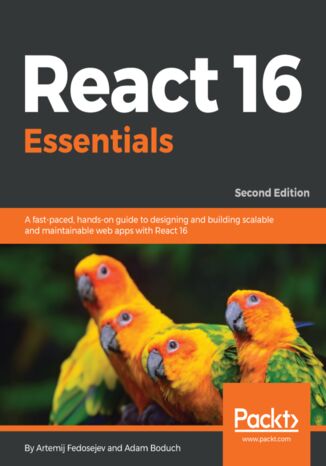
Artemij Fedosejev, Adam Boduch
React 16 Essentials, Second Edition, fully updated for React 16, takes you on a fast-paced journey through building your own maintainable React 16 applications. React experts Artemij Fedosejev and Adam Boduch give you all the essentials you need to know and start working with React 16, in this new edition of the best-selling React.js Essentials title. You'll find the latest React 16 code updates, assessment of React Fiber, new coverage of Redux, and how to work as a modern React developer.The authors offer you their current assessment of React Fiber, and you'll soon be exploring React 16 hands on, creating your own single and multiple user interface elements with React 16. You'll then see how to create stateless and stateful components and make them reactive. You'll also learn to interact between your components and lifecycle methods, and gauge how to effectively integrate your user interface components with other JavaScript libraries. Delve deep into the core elements of the Redux architecture and learn how to manage your application and data persistence. Then go the extra mile with the Jest test framework, and run multiple tests on your applications and find solutions to scale without complexity.Today React is used by Facebook, Instagram, Khan Academy, and Imperial College London, to name a few. Many new users recognize the benefits of React and adopt it in their own projects, forming a fast-growing community. The speed at which React has evolved promises a bright future for anyone who invests in learning it today. Let Artemij and Adam bring you a brand new look at React 16 and React Fiber, and move your web development into the future.
React 16 Tooling. Master essential cutting-edge tools, such as create-react-app, Jest, and Flow
Adam Boduch
React 16 Tooling covers the most important tools, utilities, and libraries that every React developer needs to know — in detail. As React has grown, the amazing toolset around it has also grown, adding features and enhancing the development workflow. Each of these essential tools is presented in a practical manner and in a logical order mirroring the development workflow. These tools will make your development life simpler and happier, enabling you to create better and more performant apps.Adam starts with a hand-picked selection of the best tools for the React 16 ecosystem. For starters, there’s the create-react-app utility that’s officially supported by the React team. Not only does this tool bootstrap your React project for you, it also provides a consistent and stable framework to build upon. The premise is that when you don’t have to think about meta development work, more focus goes into the product itself.Other React tools follow this same approach to automating and improving your development life. Jest makes unit testing quicker. Flow makes catching errors easier. Docker containers make deployment in a stack simpler. Storybook makes developing components straightforward. ESLint makes writing standardized code faster. The React DevTools plugin makes debugging a cinch. React 16 Tooling clears away the barriers so you can focus on developing the good parts. In this book, we’ll look at each of these powerful tools in detail, showing you how to build the perfect React ecosystem to develop your apps within.
Carlos Santana Roldán
Filled with useful React patterns that you can use in your projects straight away, this book will help you save time and build better web applications with ease.React 17 Design Patterns and Best Practices is a hands-on guide for those who want to take their coding skills to a new level. You’ll spend most of your time working your way through the principles of writing maintainable and clean code, but you’ll also gain a deeper insight into the inner workings of React.As you progress through the chapters, you’ll learn how to build components that are reusable across the application, how to structure applications, and create forms that actually work. Then you’ll build on your knowledge by exploring how to style React components and optimize them to make applications faster and more responsive.Once you’ve mastered the rest, you’ll learn how to write tests effectively and how to contribute to React and its ecosystem.By the end of this book, you'll be able to avoid the process of trial and error and developmental headaches. Instead, you’ll be able to use your new skills to efficiently build and deploy real-world React web applications you can be proud of.
Carlos Santana Roldán
JavaScript pozwala na tworzenie znakomitego kodu, ale wymaga od programisty sporych umiejętności. Tworzenie nawet bardzo złożonych aplikacji jest jednak łatwiejsze dzięki dostępnym narzędziom. Szczególnym uznaniem cieszy się React - popularna biblioteka open source służąca do tworzenia dynamicznych aplikacji na bazie niewielkich komponentów wielokrotnego użytku. React jest narzędziem, które w stosunkowo prosty sposób pozwala w pełni skorzystać z możliwości nowoczesnych przeglądarek i urządzeń mobilnych. To książka przeznaczona dla średnio zaawansowanych użytkowników biblioteki React, którzy chcą tworzyć elastyczniejsze i łatwiejsze w utrzymaniu aplikacje. Wyjaśniono tu sposób działania wewnętrznych mechanizmów biblioteki React. Zaprezentowano, jak należy budować komponenty możliwe do wielokrotnego użycia, jak projektować strukturę aplikacji, a także omówiono zasady tworzenia poprawnych formularzy. Opisano też procesy definiowania stylów dla komponentów biblioteki React, jak również ich optymalizowania w celu przyspieszenia aplikacji i zwiększenia ich responsywności. Nie zabrakło szczegółowego omówienia technik tworzenia zestawów efektywnych testów, ponadto znalazły się tutaj informacje na temat korzystania z takich narzędzi jak służący do testowania Enzyme, React Router czy ułatwiający ciągłą integrację CircleCI. Zdobywanie umiejętności niezbędnych do zbudowania działającej aplikacji ułatwiają liczne przykłady, wskazówki i fragmenty kodu. W książce między innymi: składniki biblioteki React, w tym Context API i React hooks tworzenie i optymalizacja komponentów stosowanie języka GraphQL w projektach renderowanie po stronie serwera tworzenie wydajnego zestawu testów techniki optymalizacji komponentów React: nowy wymiar efektywnego programowania aplikacji!