
Informatyka
Zajrzyj do kategorii Informatyka w księgarni internetowej Ebookpoint. Znajdziesz tutaj bestsellerowe książki, ebooki i kursy video z branży IT. Sięgnij po najlepszą literaturę dla specjalistów i rozwijaj doświadczenie, które już posiadasz, lub rozpocznij swoją przygodę z programowaniem, cyberbezpieczeństwem lub grafiką komputerową. Pogłębiaj swoją wiedzę tak, jak Ci wygodnie - z tradycyjną książką, wygodnym ebookiem lub nowoczesnym videokursem. Sprawdź, jakie tytuły znajdziesz w kategorii Informatyka!
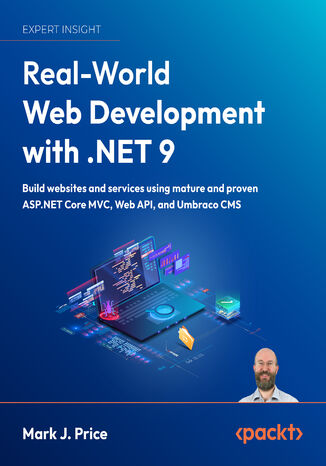
Mark J. Price
Real-World Web Development with .NET 9 equips you to build professional websites and services using proven technologies like ASP.NET Core MVC, Web API, and OData—trusted by organizations for delivering robust web applications.You’ll learn to design and build efficient web applications with ASP.NET Core MVC, creating well-structured, maintainable code that follows industry best practices. From there, you’ll focus on Web API, building RESTful services that are both secure and scalable. Along the way, you’ll also explore testing, authentication, and containerization for deployment, ensuring that your solutions are fully production ready.In the final part of the book, you will be introduced to Umbraco CMS, a popular content management system for .NET. By mastering this tool, you’ll learn how to empower users to manage website content independently.By the end of this book, you'll not only have a solid grasp of controller-based development but also the practical know-how to build dynamic, content-driven websites using a popular .NET CMS.
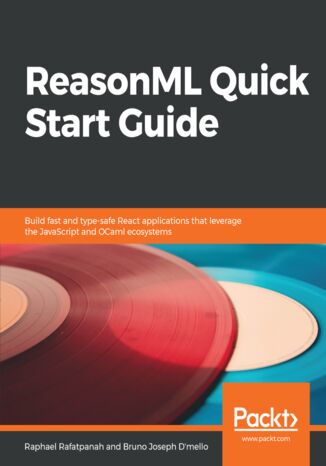
Raphael Rafatpanah, Bruno Joseph D'mello
ReasonML, also known as Reason, is a new syntax and toolchain for OCaml that was created by Facebook and is meant to be approachable for web developers. Although OCaml has several resources, most of them are from the perspective of systems development. This book, alternatively, explores Reason from the perspective of web development.You'll learn how to use Reason to build safer, simpler React applications and why you would want to do so. Reason supports immutability by default, which works quite well in the context of React.In learning Reason, you will also learn about its ecosystem – BuckleScript, JavaScript interoperability, and various npm workflows. We learn by building a real-world app shell, including a client-side router with page transitions, that we can customize for any Reason project. You'll learn how to leverage OCaml's excellent type system to enforce guarantees about business logic, as well as preventing runtime type errors.You'll also see how the type system can help offload concerns that we once had to keep in our heads.We'll explore using CSS-in-Reason, how to use external JSON in Reason, and how to unit-test critical business logic. By the end of the book, you'll understand why Reason is exploding in popularity and will have a solid foundation on which to continue your journey with Reason.
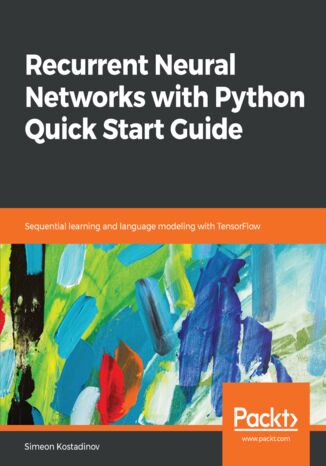
Simeon Kostadinov
Developers struggle to find an easy-to-follow learning resource for implementing Recurrent Neural Network (RNN) models. RNNs are the state-of-the-art model in deep learning for dealing with sequential data. From language translation to generating captions for an image, RNNs are used to continuously improve results. This book will teach you the fundamentals of RNNs, with example applications in Python and the TensorFlow library. The examples are accompanied by the right combination of theoretical knowledge and real-world implementations of concepts to build a solid foundation of neural network modeling.Your journey starts with the simplest RNN model, where you can grasp the fundamentals. The book then builds on this by proposing more advanced and complex algorithms. We use them to explain how a typical state-of-the-art RNN model works. From generating text to building a language translator, we show how some of today's most powerful AI applications work under the hood.After reading the book, you will be confident with the fundamentals of RNNs, and be ready to pursue further study, along with developing skills in this exciting field.
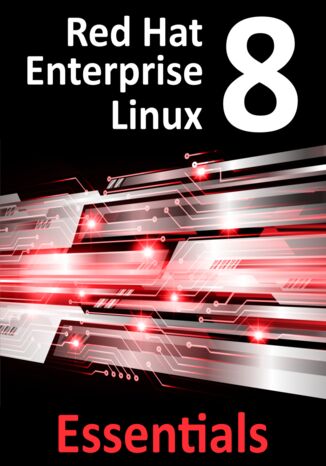
Red Hat Enterprise Linux 8 Essentials. Learn to install, administer and deploy RHEL 8 systems
Neil Smyth
Red Hat Enterprise Linux 8 is one of the most secure and dependable operating systems available. For this reason, the ambitious system or network engineer will find a working knowledge of Red Hat Enterprise 8 to be an invaluable advantage in their respective fields. This book, now updated for RHEL 8.1, begins with a history of Red Enterprise Linux and its installation. You will be virtually perform remote system administration tasks with cockpit web interface and write shell scripts to maintain server-based systems without desktop installation. Then, you will set up a firewall system using a secure shell and enable remote access to Gnome desktop environment with virtual network computing (VNC). You’ll share files between the Red Hat Enterprise Linux 8 (RHEL 8) and Windows System using Samba client and NFS. You will also run multiple guest operating systems using virtualization and Linux containers, and host websites using RHEL 8 by installing an Apache web server. Finally, you will create logical disks using logical volume management and implement swap space to maintain the performance of a RHEL 8 system. By the end of this book, you will be armed with the skills and knowledge to install the RHEL 8 operating system and use it expertly.
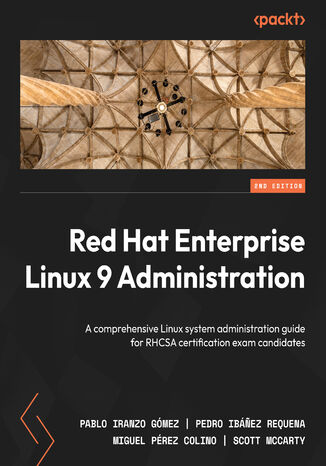
Pablo Iranzo Gómez, Pedro Ibanez Requena, Miguel...
With Red Hat Enterprise Linux 9 becoming the standard for enterprise Linux used from data centers to the cloud, Linux administration skills are in high demand. With this book, you’ll learn how to deploy, access, tweak, and improve enterprise services on any system on any cloud running Red Hat Enterprise Linux 9.Throughout the book, you’ll get to grips with essential tasks such as configuring and maintaining systems, including software installation, updates, and core services. You’ll also understand how to configure the local storage using partitions and logical volumes, as well as assign and deduplicate storage. You’ll learn how to deploy systems while also making them secure and reliable.This book provides a base for users who plan to become full-time Linux system administrators by presenting key command-line concepts and enterprise-level tools, along with essential tools for handling files, directories, command-line environments, and documentation for creating simple shell scripts or running commands. With the help of command line examples and practical tips, you’ll learn by doing and save yourself a lot of time.By the end of the book, you’ll have gained the confidence to manage the filesystem, users, storage, network connectivity, security, and software in RHEL 9 systems on any footprint.
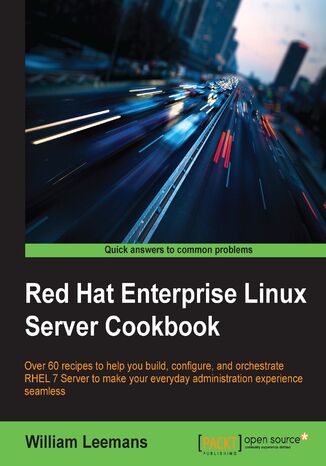
Red Hat Enterprise Linux Server Cookbook. Click here to enter text
William Leemans
Dominating the server market, the Red Hat Enterprise Linux operating system gives you the support you need to modernize your infrastructure and boost your organization’s efficiency. Combining both stability and flexibility, RHEL helps you meet the challenges of today and adapt to the demands of tomorrow.This practical Cookbook guide will help you get to grips with RHEL 7 Server and automating its installation. Designed to provide targeted assistance through hands-on recipe guidance, it will introduce you to everything you need to know about KVM guests and deploying multiple standardized RHEL systems effortlessly. Get practical reference advice that will make complex networks setups look like child’s play, and dive into in-depth coverage of configuring a RHEL system. Also including full recipe coverage of how to set up, configuring, and troubleshoot SELinux, you’ll also discover how secure your operating system, as well as how to monitor it.
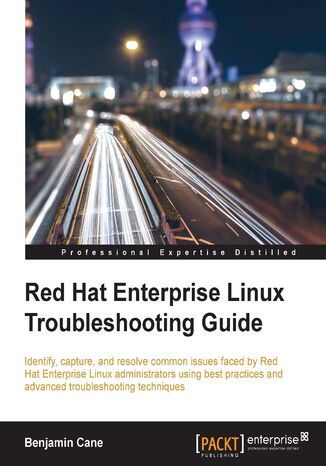
Benjamin Cane
Red Hat Enterprise Linux is an operating system that allows you to modernize your infrastructure, boost efficiency through virtualization, and finally prepare your data center for an open, hybrid cloud IT architecture. It provides the stability to take on today's challenges and the flexibility to adapt to tomorrow's demands.In this book, you begin with simple troubleshooting best practices and get an overview of the Linux commands used for troubleshooting. The book will cover the troubleshooting methods for web applications and services such as Apache and MySQL. Then, you will learn to identify system performance bottlenecks and troubleshoot network issues; all while learning about vital troubleshooting steps such as understanding the problem statement, establishing a hypothesis, and understanding trial, error, and documentation. Next, the book will show you how to capture and analyze network traffic, use advanced system troubleshooting tools such as strace, tcpdump & dmesg, and discover common issues with system defaults.Finally, the book will take you through a detailed root cause analysis of an unexpected reboot where you will learnto recover a downed system.
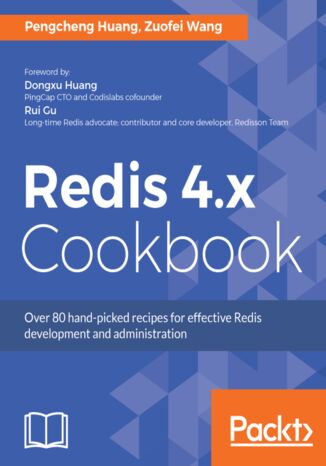
Redis 4.x Cookbook. Over 80 hand-picked recipes for effective Redis development and administration
Pengcheng Huang, Zuofei Wang
Redis is considered the world's most popular key-value store database. Its versatility and the wide variety of use cases it enables have made it a popular choice of database for many enterprises. Based on the latest version of Redis, this book provides both step-by-step recipes and relevant the background information required to utilize its features to the fullest. It covers everything from a basic understanding of Redis data types to advanced aspects of Redis high availability, clustering, administration, and troubleshooting. This book will be your great companion to master all aspects of Redis.The book starts off by installing and configuring Redis for you to get started with ease. Moving on, all the data types and features of Redis are introduced in detail. Next, you will learn how to develop applications with Redis in Java, Python, and the Spring Boot web framework. You will also learn replication tasks, which will help you to troubleshoot replication issues. Furthermore, you will learn the steps that need to be undertaken to ensure high availability on your cluster and during production deployment. Toward the end of the book, you will learn the topmost tasks that will help you to troubleshoot your ecosystem efficiently, along with extending Redis by using different modules.