
Informatyka
Zajrzyj do kategorii Informatyka w księgarni internetowej Ebookpoint. Znajdziesz tutaj bestsellerowe książki, ebooki i kursy video z branży IT. Sięgnij po najlepszą literaturę dla specjalistów i rozwijaj doświadczenie, które już posiadasz, lub rozpocznij swoją przygodę z programowaniem, cyberbezpieczeństwem lub grafiką komputerową. Pogłębiaj swoją wiedzę tak, jak Ci wygodnie - z tradycyjną książką, wygodnym ebookiem lub nowoczesnym videokursem. Sprawdź, jakie tytuły znajdziesz w kategorii Informatyka!
Tomasz Francuz
Poznaj praktyczne zastosowania urządzeń peryferyjnych dla mikrokontrolera AVR! Dowiedz się, jak działają zewnętrzne pamięci półprzewodnikowe Naucz się korzystać z komparatorów oraz przetworników ADC i DAC Poznaj techniki wyświetlania obrazu i odtwarzania dźwięku Mikrokontrolery bez urządzeń peryferyjnych stanowią niszę rozwijaną głównie przez pasjonatów elektroniki, dla których programowanie jest celem samym w sobie. Praktyczne zastosowanie takich gadżetów jest możliwe dopiero po dołączeniu pamięci masowej, wyświetlacza alfanumerycznego i graficznego, przetworników analogowo-cyfrowych i cyfrowo-analogowych oraz czujników. Dzięki tym układom mikrokontrolery AVR komunikują się ze światem, zbierają informacje, magazynują dane i mogą służyć nam w codziennym życiu jako stacje pogodowe, odtwarzacze cyfrowe czy sterowniki ogrzewania. Recenzja książki na Forbot.pl >> Jeśli masz już pewną wiedzę na temat mikrokontrolerów AVR i chciałbyś ją wzbogacić o wiadomości dotyczące ciekawych zastosowań urządzeń peryferyjnych, sięgnij po jedyną w swoim rodzaju książkę AVR. Układy peryferyjne. Jest ona adresowana do czytelników, którzy chcą poszerzyć swoje praktyczne umiejętności programowania mikrokontrolerów AVR, w tym mikrokontrolerów z rodziny XMEGA. Stanowi naturalną kontynuację doskonałego podręcznika AVR. Praktyczne projekty, kierowanego do mniej zaawansowanych programistów. Książka omawia także specyficzne dla mikrokontrolerów AVR elementy języka C. Łączenie kodu C i asemblera oraz debugowanie programu Obsługa interfejsów dostępu do pamięci zewnętrznej Tworzenie i używanie systemu plików Korzystanie z przetworników ADC i DAC oraz komparatorów Obsługa wyświetlaczy alfanumerycznych i graficznych Przetwarzanie dźwięku i danych wideo Twórz praktyczne rozwiązania z mikrokontrolerami AVR i układami peryferyjnymi!
Tomasz Francuz
Poznaj praktyczne zastosowania urządzeń peryferyjnych dla mikrokontrolera AVR! Dowiedz się, jak działają zewnętrzne pamięci półprzewodnikowe Naucz się korzystać z komparatorów oraz przetworników ADC i DAC Poznaj techniki wyświetlania obrazu i odtwarzania dźwięku Mikrokontrolery bez urządzeń peryferyjnych stanowią niszę rozwijaną głównie przez pasjonatów elektroniki, dla których programowanie jest celem samym w sobie. Praktyczne zastosowanie takich gadżetów jest możliwe dopiero po dołączeniu pamięci masowej, wyświetlacza alfanumerycznego i graficznego, przetworników analogowo-cyfrowych i cyfrowo-analogowych oraz czujników. Dzięki tym układom mikrokontrolery AVR komunikują się ze światem, zbierają informacje, magazynują dane i mogą służyć nam w codziennym życiu jako stacje pogodowe, odtwarzacze cyfrowe czy sterowniki ogrzewania. Recenzja książki na Forbot.pl >> Jeśli masz już pewną wiedzę na temat mikrokontrolerów AVR i chciałbyś ją wzbogacić o wiadomości dotyczące ciekawych zastosowań urządzeń peryferyjnych, sięgnij po jedyną w swoim rodzaju książkę AVR. Układy peryferyjne. Jest ona adresowana do czytelników, którzy chcą poszerzyć swoje praktyczne umiejętności programowania mikrokontrolerów AVR, w tym mikrokontrolerów z rodziny XMEGA. Stanowi naturalną kontynuację doskonałego podręcznika AVR. Praktyczne projekty, kierowanego do mniej zaawansowanych programistów. Książka omawia także specyficzne dla mikrokontrolerów AVR elementy języka C. Łączenie kodu C i asemblera oraz debugowanie programu Obsługa interfejsów dostępu do pamięci zewnętrznej Tworzenie i używanie systemu plików Korzystanie z przetworników ADC i DAC oraz komparatorów Obsługa wyświetlaczy alfanumerycznych i graficznych Przetwarzanie dźwięku i danych wideo Twórz praktyczne rozwiązania z mikrokontrolerami AVR i układami peryferyjnymi!
Yohan Wadia
AWS is at the forefront of Cloud Computing today. Many businesses are moving away from traditional datacenters and toward AWS because of its reliability, vast service offerings, lower costs, and high rate of innovation. Because of its versatility and flexible design, AWS can be used to accomplish a variety of simple and complicated tasks such as hosting multitier websites, running large scale parallel processing, content delivery, petabyte storage and archival, and lots more.Whether you are a seasoned sysadmin or a rookie, this book will provide you with all the necessary skills to design, deploy, and manage your applications on the AWS cloud platform. The book guides you through the core AWS services such as IAM, EC2, VPC, RDS, and S3 using a simple real world application hosting example that you can relate to. Each chapter is designed to provide you with the most information possible about a particular AWS service coupled with easy to follow hands-on steps, best practices, tips, and recommendations. By the end of the book, you will be able to create a highly secure, fault tolerant, and scalable environment for your applications to run on.
AWS Administration Cookbook. Harness the full capability of AWS
Rowan Udell, Lucas Chan
Amazon Web Services (AWS) is a bundled remote computing service that provides cloud computing infrastructure over the Internet with storage, bandwidth, and customized support for application programming interfaces (API). Implementing these services to efficiently administer your cloud environments is a core task.This book will help you build and administer your cloud environment with AWS. We’ll begin with the AWS fundamentals, and you’ll build the foundation for the recipes you’ll work on throughout the book. Next, you will find out how to manage multiple accounts and set up consolidated billing. You will then learn to set up reliable and fast hosting for static websites, share data between running instances, and back up your data for compliance. Moving on, you will find out how to use the compute service to enable consistent and fast instance provisioning, and will see how to provision storage volumes and autoscale an application server. Next, you’ll discover how to effectively use the networking and database service of AWS. You will also learn about the different management tools of AWS along with securing your AWS cloud. Finally, you will learn to estimate the costs for your cloud. By the end of the book, you will be able to easily administer your AWS cloud.
AWS Automation Cookbook. Continuous Integration and Continuous Deployment using AWS services
Nikit Swaraj
AWS CodeDeploy, AWS CodeBuild, and CodePipeline are scalable services offered by AWS that automate an application's build and deployment pipeline. In order to deliver tremendous speed and agility, every organization is moving toward automating their entire application pipeline. This book will cover all the AWS services required to automate your deployment to your instances.You'll begin by setting up and using one of the AWS services for automation –CodeCommit. Next, you'll learn how to build a sample Maven and NodeJS application using CodeBuild. After you've built the application, you'll see how to use CodeDeploy to deploy the application in EC2/Auto Scaling. You'll also build a highly scalable and fault tolerant Continuous Integration (CI)/Continuous Deployment (CD) pipeline using some easy-to-follow recipes.Following this, you'll achieve CI/CD for a microservice application and reduce the risk within your software development life cycle globally. You'll also learn to set up an infrastructure using CloudFormation templates and Ansible, and see how to automate AWS resources using AWS Lambda.Finally, you'll learn to automate instances in AWS and automate the deployment lifecycle of applications. By the end of this book, you'll be able to minimize application downtime and implement CI/CD, gaining total control over your software development lifecycle.
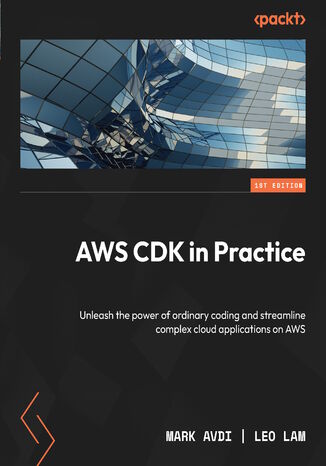
Mark Avdi, Leo Lam
As cloud applications are becoming more complex, multiple tools and services have emerged to cater to the challenges of running reliable solutions. Although infrastructure as code, containers, and orchestration tools, such as Kubernetes, have proved to be efficient in solving these challenges, AWS CDK represents a paradigm shift in building easily developed, extended, and maintained applications.With AWS CDK in Practice, you’ll start by setting up basic day-to-day infrastructure while understanding the new prospects that CDK offers. You’ll learn how to set up pipelines for building CDK applications on the cloud that are long-lasting, agile, and maintainable. You’ll also gain practical knowledge of container-based and serverless application development. Furthermore, you’ll discover how to leverage AWS CDK to build cloud solutions using code instead of configuration files. Finally, you’ll explore current community best practices for solving production issues when dealing with CDK applications.By the end of this book, you’ll have practical knowledge of CDK, and you’ll be able to leverage the power of AWS with code that is simple to write and maintain using AWS CDK.
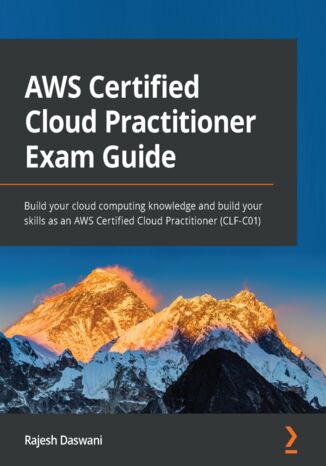
Rajesh Daswani
Amazon Web Services is the largest cloud computing service provider in the world. Its foundational certification, AWS Certified Cloud Practitioner (CLF-C01), is the first step to fast-tracking your career in cloud computing. This certification will add value even to those in non-IT roles, including professionals from sales, legal, and finance who may be working with cloud computing or AWS projects. If you are a seasoned IT professional, this certification will make it easier for you to prepare for more technical certifications to progress up the AWS ladder and improve your career prospects.The book is divided into four parts. The first part focuses on the fundamentals of cloud computing and the AWS global infrastructure. The second part examines key AWS technology services, including compute, network, storage, and database services. The third part covers AWS security, the shared responsibility model, and several security tools. In the final part, you'll study the fundamentals of cloud economics and AWS pricing models and billing practices.Complete with exercises that highlight best practices for designing solutions, detailed use cases for each of the AWS services, quizzes, and two complete practice tests, this CLF-C01 exam study guide will help you gain the knowledge and hands-on experience necessary to ace the AWS Certified Cloud Practitioner exam.
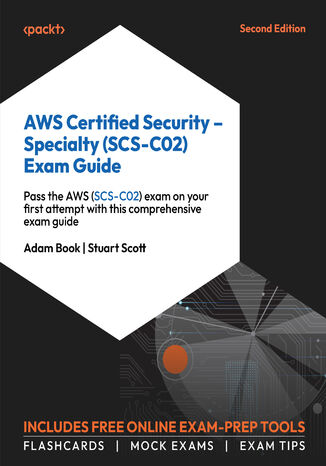
Adam Book, Stuart Scott
The AWS Certified Security – Specialty exam validates your expertise in advanced cloud security, a crucial skill set in today's cloud market. With the latest updates and revised study material, this second edition provides an excellent starting point for your exam preparation.You’ll learn the fundamentals of core services, which are essential prerequisites before delving into the six domains covered in the exam. The book addresses various security threats, vulnerabilities, and attacks, such as DDoS attacks, offering insights into effective mitigation strategies at different layers. You’ll learn different tools available in Amazon Web Services (AWS) to secure your Virtual Private Cloud and allow the correct traffic to travel securely to your workloads. As you progress, you’ll explore the intricacies of AWS EventBridge and IAM services. Additionally, you’ll get lifetime access to supplementary online resources, including mock exams with exam-like timers, detailed solutions, interactive flashcards, and invaluable exam tips, all accessible across various devices such as PCs, tablets, and smartphones.Ultimately, armed with the knowledge and skills acquired from this AWS security guide, you'll be well-prepared to pass the exam and design secure AWS solutions with confidence.
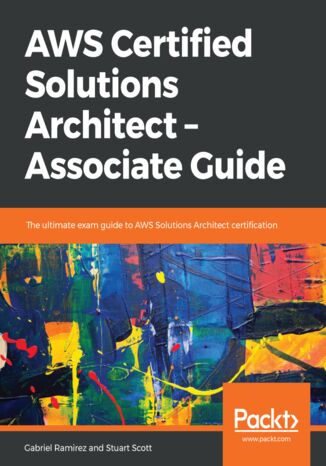
Gabriel Ramirez Isaias Ramirez Melgarejo, Stuart Scott
Amazon Web Services (AWS) is currently the leader in the public cloud market. With an increasing global interest in leveraging cloud infrastructure, the AWS Cloud from Amazon offers a cutting-edge platform for architecting, building, and deploying web-scale cloud applications.As more the rate of cloud platform adoption increases, so does the need for cloud certification. The AWS Certified Solution Architect – Associate Guide is your one-stop solution to gaining certification. Once you have grasped what AWS and its prerequisites are, you will get insights into different types of AWS services such as Amazon S3, EC2, VPC, SNS, and more to get you prepared with core Amazon services. You will then move on to understanding how to design and deploy highly scalable applications. Finally, you will study security concepts along with the AWS best practices and mock papers to test your knowledge.By the end of this book, you will not only be fully prepared to pass the AWS Certified Solutions Architect – Associate exam but also capable of building secure and reliable applications.