
Biznes i ekonomia
Kategoria biznes i ekonomia w księgarni Ebookpoint to obszerna kolekcja publikacji dedykowanych zarówno dla doświadczonych przedsiębiorców, menedżerów, jak i osób dopiero rozpoczynających swoją przygodę z biznesem. Znajdziesz tu ebooki, audiobooki i książki poruszające kluczowe aspekty zarządzania, finansów, ekonomii oraz innowacji w świecie biznesu. Literatura biznesowa na wyciągnięcie ręki i dostępna w kilka chwil!
The Impact of COVID-19 on Accounting, Business Practice and Education
Joanna Dyczkowska
Książka prezentuje wpływ pandemii COVID-19 na rachunkowość, działalność gospodarczą oraz edukację. W poszczególnych rozdziałach przedstawiane są doświadczenia płynące z wielu krajów (w tym m.in. z Brazylii, Francji, Niemiec, Kazachstanu, Polski, Rumunii, Słowacji oraz Włoch) na temat sposobów radzenia sobie ze skutkami pandemii. Książka omawia rządowe, instytucjonalne oraz indywidualne środki, które zostały podjęte w celu przeciwdziałania finansowym, organizacyjnym i społecznym implikacjom kryzysu pandemicznego.
Daša Mokošová, Miriama Blahušiaková, Joanna Dyczkowska
Sustainable performance accounts for a critical issue for top management and operational managers facing the green and social transition. Accordingly, they require a clear roadmap indicating how to build ESG strategy, track and report on sustainability performance and manage these results in the longer term. This monograph offers insight into the topic of sustainability performance measurement, reporting and management in business organisations and institutions. The Authors from various countries, including Austria, Brazil, Germany, Hungary, Italy, Lithuania and Poland, present their broad perspectives and opinions, refer to various business sectors, and indicate how the regulatory framework and institutional bodies support sustainable development. With this focus, the book may interest accounting and management scholars, doctoral and master's students of socio-economic studies, and business practitioners. The book can also be used as supplementary material for accounting and management courses at the graduate and postgraduate levels. The monograph incudes 15 chapters, for example: Non-Financial Disclosure and Sustainability Regulation: Voluntary or Mandatory Effectiveness; Sustainable Performance Measurement under the New European Regulation for Corporate Sustainability Reporting: What Will Be the Impact of the European Sustainability Reporting Standards (Beyond New KPIs)?; Cost and Benefits of Sustainability Reporting: Literature Review, Valuable Information for Stakeholders or Corporate Spin? The View of Non-Financial Reports Potential Preparers and Users; Gaining Competitive Advantage through Social Responsibility Reporting - a Lesson from the Non-Profit Sector; The Balanced Scorecard for a Museum as a Non-Profit Organisation; Eco-Efficiency Indicators in District Heating Companies; Sustainability and Sustainability Performance: Empirical Findings from the German Banking and Insurance Sectors.
Tomasz Domański
The aim of this publication is to highlight the role of postgraduate MBA programmes in the advancement of professional career paths of graduates. The monograph is based on the results of the author's empirical research, conducted through interviews with a sample of graduates from the international postgraduate Polish-French MBA-type management programme (to be designated as an MBA starting in 2023). It is the only programme of its kind in Poland that offers the students the opportunity to receive a French Master 2 degree in management and a Polish certificate confirming the completion of the postgraduate MBA management programme. The programme is international par excellence and is delivered in a hybrid format - exclusively in French and English - by an international teaching staff. It is also the oldest programme of its kind in Poland, as it has been delivered continuously since 1993. Thirty-two graduating classes have already completed it. The programme harmoniously combines two key challenges of contemporary MBA studies: the digitization of online education and internationalisation. The author of this monograph has been the programme's initiator and director from the very beginning. Professor Tomasz Domański heads the Department of International Marketing and Retailing at the Faculty of International and Political Studies, University of Łódź. He served for many years as the Faculty's Dean and Vice-Dean for Academic Affairs and International Cooperation (2000-2016). He is also the Director of the Polish-French MBA in Management, run in collaboration with the University of Lyon III in France. An advocate of the consistent internationalisation of the University and its openness to diverse communities. He was the driving force behind the extension of the educational offer of the Faculty of International and Political Studies with majoring in International Marketing, currently offered as a practical degree programme. He also authors numerous publications on marketing strategies, modern distribution channels, territorial marketing, cultural marketing, and university marketing.
Katarzyna Ławińska, Małgorzata Jabłońska
The prepared scientific monograph entitled The importance of social innovations in the knowledge-based economy in the context of footwear sector solutions is an attempt to further exemplify social innovations by identifying real links between social need and a specific good, service, method and process, in the context of solutions used in the footwear industry. Poland is one of the leading European footwear manufacturers, ranking 7th in terms of production volume in the EU, with a market share of 2.5%. In addition, strong competition is observed in the industry, which is conducive to the emergence of new innovations. The work contains theoretical and practical references to innovations in the industry, such as examples of modifications of footwear materials that have been used in business practice, and their measurable effect is to improve the comfort of using footwear. The authors refer to the environmental aspects of innovation, indicating the directions of utilization of production residues of the footwear and tanning industry, including composites, granules, and biostimulants for plants. The subject matter taken up in the monograph is an important contribution to the development of further scientific research covering the footwear industry and its importance in developing social innovations in Poland and the world. Based on the obtained research results and statistical data analysis, we attempted to outline the prospects for the development of social innovations in the footwear industry until 2050. The book can be an interesting study for practitioners and theoreticians, particularly for scientists representing disciplines such as economics and finance, management sciences, materials engineering, or entrepreneurs looking for opportunities to finance innovation in various areas.
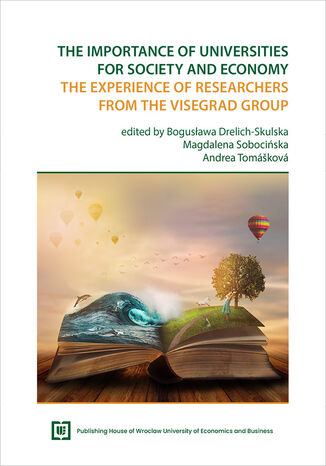
red. Bogusława Drelich-Skulska, Magdalena Sobocińska, Andrea Tomášková
The monograph entitled "The Importance of Universities for Society and Economy. The Experience of Researchers from the Visegrad Group" was made by 28 authors representing 12 universities from the Visegrad Group. The intention of the authors is to answer the question about the role of universities and the relevance of research they conduct for the construction of sustainable societies and modern economies in conditions of volatile the environments. Addressing the problems discussed in this monograph from the perspective of the experience of researchers from Poland, Czechia, Slovakia and Hungary, corresponds with the important direction in the development of science, namely its internationalisation. The monograph consists of three parts. The first concerns the functioning of universities and directions in the development of education, as well as the scientific research conducted in the context of the sustainability crisis, and the need to expand the scope of implementation of the sustainable development concept. The considerations included in the second part of the monograph regard academic teaching and areas of research emerging in the context of the ongoing technological progress, particularly visible in the growing use of artificial intelligence, and the need to develop digital competencies. The third part presents the results of research undertaken in view of finding research gaps resulting from changes in the geopolitical and social conditions produced by the COVID-19 pandemic
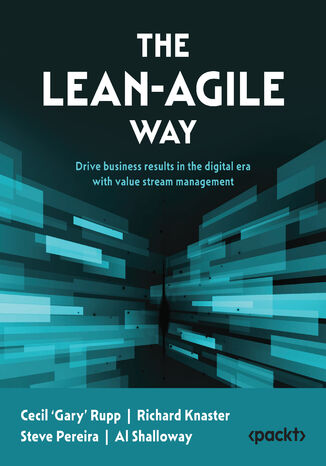
The Lean-Agile Way. Unleash business results in the digital era with value stream management
Cecil 'Gary' Rupp, Richard Knaster, Steve Pereira,...
In today’s fast-paced business landscape, efficiency is essential. Authored by industry experts Cecil ‘Gary’ Rupp, a Lean-Agile consultant with over three decades of executive experience; Richard Knaster, a SAFe® Fellow and transformation leader; Steve Pereira, a value stream consultant and board advisor; and Al Shalloway, creator of FLEX and PMI’s Disciplined Agile Value Stream Consultant workshop, the book offers proven strategies to streamline processes, enhance products, and improve service delivery. You’ll start with an introduction to foundational Lean and Agile practices, recognizing the significance of digital enhancements in modernizing business processes. As you progress, you'll learn VSM techniques to identify and prioritize work and investments to provide maximum value to customers. Moreover, you'll grasp Lean-Agile practices aimed at promoting collaboration among teams and ensuring the continuous flow of product-oriented deliveries tailored to address customer needs. Finally, you'll gain executive-level insights on how organizations must access timely information for decision-making and foster a culture of continuous business transformation. Armed with this knowledge and a robust toolkit, you'll be empowered to drive meaningful change, optimize resources, and stay ahead in the rapidly evolving marketplace.
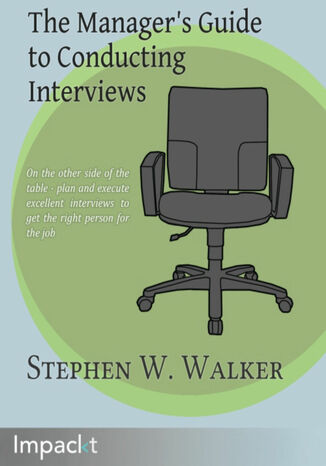
Stephen Walker
On the other side of the table - Plan and execute excellent interviews to get the right person for the jobAs an experienced managerial behavior consultant, Stephen Walker, co-founder of Motivation Matters, is passionate about helping to improve organizational performance in businesses. In this quick and practical book, Stephen takes you through the entire process of an interview, from getting to know the specifications of the role, to discussing the results and reaching a final decision with other stakeholders. Being able to build a strong team around you is essential to a business' success and to do this you need to interview effectively and confidently. This is not only essential for prospective employees; it is also an important managerial skill.Walking you through the interview process from the initial planning and preparation to meeting and greeting the interviewee, this book provides you with everything you need to know to hire for success. With templates, examples, and tips on how to incorporate cutting edge techniques such as NLP into your interviewing technique, The Manager’s Guide to Conducting Your First Interview, is the perfect companion to managers new and old, giving you a fresh perspective on effective interviewing.
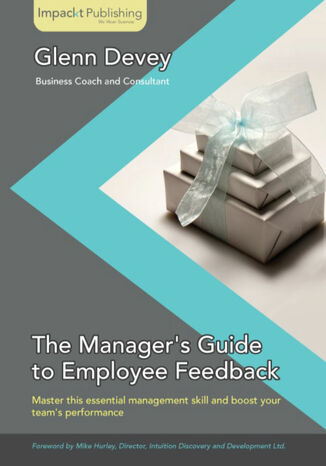
Glenn Robert Devey
Master this essential skill for new managers and successfully deliver feedback to raise your team’s performance with this practical guide book and ebook.