
Wird geladen...
Details zum E-Book
Einloggen wenn Sie am Inhalt des Artikels interessiert sind.
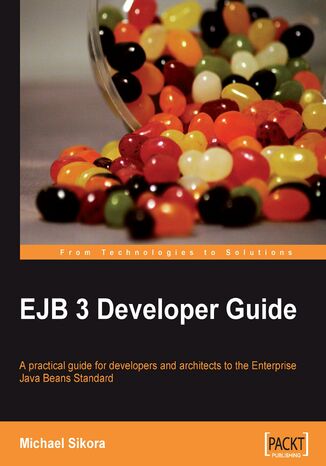
EJB 3 Developer Guide. Enterprise JavaBean 3 - a Practical Book and eBook Guide for developers and architects using the EJB Standard
Michael Sikora
Wird geladen...
E-BOOK
Wird geladen...
This book is a fast-paced tutorial that explores the key features of EJB 3 with many accompanying examples. This book is not a complete reference guide, but a concise exploration of EJB 3's core elements. This book is primarily aimed at professional developers who already have a working knowledge of Java. Enterprise architects and designers with a background in Java would also find this book of use. Previous experience of working with Java is essential and knowledge of relational databases is desirable. As this book is an introduction to EJB 3, it is aimed at those who are new to EJB 3. As the new version of EJB is so radically different from the previous version (EJB 2.x), the book is suitable for and should be of interest to those who have had experience working with EJB 2.x. The text makes it clear where the differences between the versions of EJB lie, although they are not explored in detail.
- EJB 3 Developer Guide
- Table of Contents
- EJB 3 Developer Guide
- Credits
- About the Author
- About the Reviewers
- Preface
- What This Book Covers
- What You Need for This Book
- Who Is This Book For
- Approach of this Book
- Conventions
- Reader Feedback
- Customer Support
- Downloading the Example Code for the Book
- Errata
- Questions
- 1. Introduction to the EJB 3 Architecture
- Introduction to the Java EE Architecture
- The EJB 3 Architecture
- EJB Container Services
- The JPA Persistence Engine
- EJB 3 Compared with Earlier Versions
- Getting Started
- Installing GlassFish
- Testing the Installation
- Accessing the Administrator Console
- Shutting Down GlassFish
- Downloading Example Source Code
- Summary
- 2. Session Beans
- Introduction
- Stateless Session Beans
- Annotations
- Creating a Session Bean Client
- Running the Example
- The Program Directory Structure
- The Ant Build Script
- The Application Client Container
- Building the Application
- Stateless Session Beans LifeCycle
- Stateful Session Beans
- Stateful Session Bean's LifeCycle
- Local Interfaces
- Summary
- 3. Entities
- Introduction
- EJB 3 Entities
- Comparison with EJB 2.x Entity Beans
- Mapping an Entity to a Database Table
- Introducing the EntityManager
- Packaging and Deploying Entities
- The Program Directory Structure
- Building the Application
- Field-Based Annotations
- Generating Primary Keys
- Table Strategy
- Sequence Strategy
- Identity Strategy
- Auto Strategy
- Overriding Metadata Defaults
- Summary
- 4. Object/Relational Mapping
- O/R Mapping Default Behavior
- A Banking Example Application
- Customer Entity
- Account Entity
- Address Entity
- Referee Entity
- Testing the Application
- A Banking Example Application
- O/R Mapping Overriding Defaults
- Customer Entity
- Account Entity
- Address Entity
- BankServiceBean
- O/R Mapping Additional Annotations
- Referee Class
- BankServiceBean
- Composite Primary Keys
- O/R Inheritance Mapping
- SINGLE_TABLE Strategy
- JOINED Strategy
- Table per Concrete Class Strategy
- Summary
- O/R Mapping Default Behavior
- 5. The Java Persistence Query Language
- Introduction
- Simple Queries
- Projection
- Conditional Expressions
- Aggregate Functions
- GROUP BY
- HAVING
- Queries with Relationships
- Joins
- Inner Joins
- Outer Joins
- Fetch Joins
- Collection Comparison Expressions
- Constructor Expressions
- SubQueries
- Functions
- CONCAT
- SUBSTRING
- TRIM
- LOWER and UPPER
- LENGTH
- LOCATE
- ABS
- SQRT
- MOD
- SIZE
- Queries with Parameters
- Positional Parameters
- Named Parameters
- Named Queries
- Handling Date and Time
- @Temporal annotation
- Queries with Date Parameters
- Datetime Functions
- Bulk Update and Delete
- Native SQL
- Summary
- 6. Entity Manager
- Application-managed Entity Manager
- Entity Manager Merge
- Entity Manager Methods
- remove()
- contains()
- flush()
- setFlushMode()
- refresh()
- clear()
- Cascade Operations
- persist
- remove
- merge
- refresh
- all
- Extended Persistence Context
- Entity LifeCycle Callback Methods
- Entity Listeners
- Summary
- 7. Transactions
- Introduction
- Container-Managed Transaction Demarcation
- SUPPORTS
- NOT_SUPPORTED
- REQUIRED
- REQUIRES_NEW
- MANDATORY
- Never
- Examples of Transaction Attributes
- REQUIRED Example
- REQUIRES_NEW Example
- NOT_SUPPORTED Example
- SUPPORTS Example
- MANDATORY Example
- NEVER Example
- Controlling Container Managed Transactions
- SessionSynchronization Interface
- Doomed Transactions
- Concurrency and Database Locking
- Isolation Levels
- Lost Update Problem
- Versioning
- Read and Write Locking
- UserTransaction Interface
- Summary
- 8. Messaging
- Introduction
- Java Message Service (JMS) API
- Queue Producer and Consumer Examples
- Synchronous Queue Consumer Example
- Running the Queue Producer and Synchronous Queue Consumer Examples
- An Asynchronous Queue Consumer Example
- Running the Asynchronous Queue Consumer Example
- Synchronous Queue Consumer Example
- Topic Producer and Consumer Examples
- Synchronous Topic Consumer Example
- Running the Topic Producer and Synchronous Topic Consumer Examples
- An Asynchronous Topic Consumer Example
- Running the Asynchronous Topic Consumer Example
- Synchronous Topic Consumer Example
- Motivation for Message-Driven Beans
- A Simple Message-Driven Bean Example
- A Session Bean Queue Producer
- A Message-Driven Bean Queue Consumer
- MDB Activation Configuration Properties
- acknowledgeMode
- subscriptionDurability
- messageSelector
- MessageDrivenContext
- MDB LifeCycle
- MDB Example Revisited
- Sending Message Confirmation to a Client
- MDBs and Transactions
- Summary
- 9. EJB Timer Service
- Introduction
- Timer Service Examples
- A Single Event Example
- An Interval Event Example
- A Timer Interface Example
- Timers and Transactions
- Summary
- 10. Interceptors
- Interceptor Methods
- Interceptor Classes
- Default Interceptors
- Interceptor Communication
- Summary
- 11. Implementing EJB 3 Web Services
- Overview of Web Service Concepts
- The SOAP Protocol
- The WSDL Standard
- The UDDI Standard
- SOA and Web Services
- Creating a Java Application Web Service
- Creating an Endpoint Implementation Interface
- The WSDL Document
- The
Element - The
Element - The
Element - The
and Elements
- The
- The GlassFish WSGEN Tool
- Deploying a Java Application as a Web Service
- The GlassFish Admin Console Test Harness
- Creating a Java Web Service Client
- Overriding JAX-WS Annotation Defaults
- Deploying an EJB Session Bean as a Web Service
- Packaging an EJB Web Service
- Creating an EJB Web Service Client
- Summary
- Overview of Web Service Concepts
- 12. EJB 3 Security
- Java EE Container Security
- Authentication
- GlassFish Authentication
- Mapping Roles to Groups
- Authenticating an EJB Application Client
- EJB Authorization
- Declarative Authorization
- Denying Authorization
- EJB Security Propagation
- Programmatic Authorization
- Declarative Authorization
- Java EE Web Container Security
- Web-Tier Authorization
- Transport Layer Security
- Web-Tier Authentication
- Example of Web-Tier Authentication and Authorization
- Summary
- A. Annotations and Their Corresponding Packages
- Index
- Titel:EJB 3 Developer Guide. Enterprise JavaBean 3 - a Practical Book and eBook Guide for developers and architects using the EJB Standard
- Autor:Michael Sikora
- Originaler Titel:EJB 3 Developer Guide. Enterprise JavaBean 3 - a Practical Book and eBook Guide for developers and architects using the EJB Standard.
- ISBN:9781847195616, 9781847195616
- Veröffentlichungsdatum:2008-05-23
- Format:E-Book - EPUB
- Artikel-ID: e_3cff
- Verleger: Packt Publishing
Wird geladen...
Wird geladen...