
Деталі електронної книги
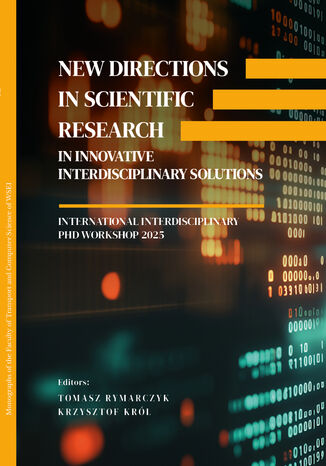
New directions in scientific research in innovative interdisciplinary solutions International Interdisciplinary PhD Workshop 2025
Tomasz Rymarczyk Krzysztof Król
This publication was prepared as a permanent record of research findings
presented by doctoral students and academics representing diverse research
backgrounds and schools. The focus is on interdisciplinary solutions, combining
engineering, computer science, and mathematical methods with approaches relevant
to management science and socio-economic applications.
The International Interdisciplinary PhD Workshop (IIPhDW) is a cyclical
and international conference, and its primary function is to provide a platform for
research presentations, knowledge exchange, and collaboration between young
scientists from various disciplines. The 2025 edition featured a particularly strong
technical component, encompassing artificial intelligence, computer science, automation
and control, robotics and mechatronics, telecommunications, signal
processing, as well as mechanical and production engineering. At the same time,
the inclusion of topics in economics and management confirmed the workshop's
broad scope and its ability to integrate research perspectives relevant to contemporary
technological and organizational challenges.
A significant group of publications includes works on process and biomedical
tomography, as well as image reconstruction methods using machine learning
and deep learning, including approaches combining physical models with neural
network architectures. Examples include research on image reconstruction in
electrical impedance tomography, the integration of tomography with neural networks
for industrial process monitoring, and the use of ultrasound tomography
in measurement and reconstruction analysis. This theme is further reinforced by
works on hybrid tomography systems, process monitoring using mixed reality
technology, and applications in the areas of physiological parameter monitoring
and non-invasive diagnostics.
The second recognizable axis is artificial intelligence in IT and cyberphysical
systems, encompassing both the construction of predictive and classification
models and their implementation in industrial, medical, and service environments.
This trend includes work related to the application of machine learning
methods in system and network security, solutions based on LLM agents in
project team workflows, processing unstructured data using OCR and language
models, and multimodal analysis in intelligent customer service systems. This
perspective highlights the contemporary trend of convergence of AI techniques
with data engineering, software engineering, and systems integration, which has
direct implications for the design of scalable implementation solutions.
The third thematic area covers embedded systems, communication, and signal
processing, along with elements of computational resource optimization. The
monograph includes papers on, among other things, phase shift estimation in
noisy environments, pseudorandom sequence generation, acoustic feature detection,
and the efficiency of machine learning applications at the network edge in
the context of Kubernetes scheduling heuristics. In the monograph, this strand
serves a methodological purpose, providing signal analysis tools and computational
mechanisms that form the foundation for many AI and measurement system
applications.
A significant complement to the technical perspective are works in the areas
of management and organizational and economic analysis, which address the
need to understand the determinants of technology implementation and the conduct
of innovative projects. The publications address, among other things, the
predictors of success in startup management and the analysis of organizational
improvements in public institutions. Their presence strengthens the interdisciplinary
nature of the monograph by demonstrating that the effectiveness of engineering
solutions depends not only on the quality of algorithms and devices, but
also on the organizational, process, and decision-making context.
The monograph is intended as a reference for academics and doctoral students,
particularly those seeking examples of research that combines theory with
application. The collected papers offer a comprehensive overview of research activities
typical of early careers in science, from conceptual studies and method
analysis, through device and software architecture prototyping, to experiments
and evaluation of the effectiveness of proposed solutions. At the same time, the
publication allows for the identification of common methodological denominators,
such as the growing importance of measurement data, simulation, deep
learning, systems integration, and the pursuit of real-time operation in industrial
and biomedical environments.
The introduction, on the one hand, contextualizes the monograph within the
mission of IIPhDW as a workshop supporting researcher development and the
internationalization of research. On the other hand, it organizes the chapter topics
in the perspective of dominant technological trends and application needs that
permeate various fields. Consequently, the monograph can be viewed as a synthetic
overview of current research directions for doctoral students and young
academics, as well as an inspiration for undertaking work combining artificial
intelligence methods, measurement systems, software engineering, and management
analyses within modern interdisciplinary projects.
Introduction ... 14
Monika Kulisz, Grzegorz Kłosowski, Tomasz Rymarczyk
Performance analysis of the differential neural network architecture in industrial tomography ... 16
Introduction ... 16
1. Methods ... 17
2. Results ... 19
3. Discussion and Conclusions ... 21
References ... 22
Grzegorz Kłosowski, Tomasz Rymarczyk, Konrad Niderla
Application of Multi-Head Neural Network Structures in Process Tomography ... 24
Introduction ... 24
1. Methods ... 25
2. Results ... 27
3. Discussion and Conclusions ... 29
References ... 30
Dariusz Majerek
PINN-VIT: a physics-informed neural network enhanced with vision transformer for image reconstruction in electrical impedance tomography ... 32
Introduction ... 32
1. Methods ... 33
2. Results ... 35
3. Discussion and Conclusions ... 36
References ... 38
Barbara Stefaniak, Dariusz Wójcik, Tomasz Rymarczyk
Generate CT pictures for human torse using AI ... 40
Introduction ... 40
1. Motivation ... 41
2. Methodology ... 41
2.1. Dataset preprocessing ... 41
2.2. Adapted CrossViT Architecture for 3D CT Generation ... 41
2.3. Decoder and training objective ... 42
3. Results ... 43
4. Conclusion ... 43
References ... 45
Oleksii Hyka, Dariusz Wójcik, Tomasz Rymarczyk
Modular Software Architecture of the Portable Defektoskop Device ... 46
Introduction .... 46
1. System Architecture ... 46
2. Core Services ... 47
3. Update Management ... 48
4. Communication Framework ... 48
5. 3D Visualization System ... 49
6. Results ... 49
7. Conclusion ... 50
References ... 51
Marcin Dziadosz, Tomasz Rymarczyk, Dariusz Majerek
Application of machine learning algorithms in measurement and reconstruction analysis using Ultrasound Tomography ... 52
Introduction ... 52
1. Transmission ultrasound tomography .... 53
2. Methods ... 53
3. Transmission UST forward problem ... 54
4. Transmission UST inverse problem ... 55
5. Conclusion ... 58
References ... 59
Yadu Krishnan Krishnakumar, Andreas Ahrens, Christoph Lange, Jelena Zaščerinska, Olaf Grote
Measuring burstiness in randomised bit sequences ... 60
Introduction ... 62
1. Model Basics ... 62
2. Measuring Burstiness ... 63
3. Practical Application ... 64
4. Comparison with NIST Test Results ... 65
5. Conclusions ... 65
References ... 66
Grzegorz Rybak, Dariusz Wójcik, Tomasz Rymarczyk
Performance Analysis of Holography and Mixed Reality Systems for Industrial Process Tomography SUPERVISION ... 68
Introduction ... 68
1. Mixed reality for IPT ... 69
2. Algorithms and methods ... 70
3. Results and discussion ... 72
4. Conclusions and future works ... 77
References .... 78
Jacek Korzeniak
Predictors of Success in Startup Management ... 80
Introduction ... 80
1. Methodology ... 81
2. Challenges in the context of the startup definition ... 81
3. Defining startup success criteria ... 82
4. Characteristics of a Startup Founder ... 83
5. Conclusions .... 85
References ... 85
Sabrina Ferdous, Radosław Wajman
Personalized Modeling and Deep Learning–Based Temporal Prediction of Pediatric Bladder Behavior .... 86
Introduction ... 86
1. Related Work ... 87
2. Methodology .... 88
2.1. Personalized Bladder Simulation ... 88
2.2. Proposed Deep Learning Method ... 88
2.3. Training Details ... 89
2.4. Datasets and Setup ... 89
3. Results ... 90
4. Discussion and Future Work ... 90
5. Conclusions ... 91
References ... 91
Andreas Wenzel, Andreas Ahrens, Yadu Krishnan Krishnakumar, Ingo Müller
Generating randomised bit sequences using sigma-delta converter ... 94
Introduction ... 94
1. Model Basics .... 96
2. First Results .... 99
References ... 99
Jan Bartelt, Olaf Hagendorf
Study of anomaly detection methods in unobtrusively acquired data in the context of AAL ... 102
Introduction .... 102
1. Motivation .... 103
2. Available Data .... 103
3. Application Requirements ... 105
4. Algorithm Requirements ... 105
5. Algorithm Selection ... 106
6. Conclusion ... 106
References .... 107
Dominik Gnaś, Tomasz Rymarczyk, Michał Oleszek, Dariusz Wójcik
Development of a Hybrid Non-Invasive Glucose Sensor Combining Electrical Impedance and Optical Spectroscopy ... 110
Introduction .... 110
1. Discussion of measurement methods .... 111
2. Development of the hardware layer .... 111
3. Conclusion .... 113
References .... 115
Michał Styła, Przemysław Adamkiewicz, Tomasz Rymarczyk
Radar-based location system using high-frequency signals and reflective microwave tomography for indoor human detection and positioning ... 116
Introduction ... 116
1. System structure and hardware layer .... 117
2. Data acquisition and processing .... 118
References .... 121
Patryk Marek, Alicja Rachwał, Jakub Pizoń, Nina Krawczak, Paweł Woźniak
Automated Project Team Design Using LLM-Based Agents ... 122
Introduction ... 122
1. Proposed team assembly system .... 123
2. Case study .... 125
3. Conclusions and future work ... 126
References .... 127
Alicja Rachwał, Jakub Pizoń, Nina Krawczak, Patryk Marek, Paweł Woźniak
Performance Testing with Locust: A Flexible Approach to Load Simulation ... 128
Introduction ... 128
1. Locust description ... 129
2. Case study ... 130
3. Conclusions .... 132
References ... 133
Michał Styła, Dariusz Wójcik, Przemysław Adamkiewicz
Implementation of a miniature measurement platform for asset location using ultra-wideband signals and time-of-flight distance measurement methods ... 136
Introduction ... 136
1. Development of the hardware layer .... 137
2. Localization algorithms and noise reduction ... 138
3. Conclusion ... 142
References ... 143
Marek Wójcik
Introduction to research on using artificial intelligence for automation and optimisation of it system and computer network security ... 144
Introduction ... 144
1. Scope and Thesis .... 145
2. Architecture Overview .... 145
3. Scenario Catalogue .... 146
4. Data Strategy and Governance .... 147
5. Numerical Modelling .... 147
6. Text Understanding with LLMs .... 148
7. Fusion Policies .... 148
8. Evaluation Methodology .... 149
9. Human Factors, Ethics, and Interpretability .... 149
10. Generalisability and Expected Outcomes .... 149
References .... 150
Łukasz Gugała
Detecting sound features using python .... 152
Introduction ..... 152
1. Why use Python for detecting features? ... 153
2. Machine learning based on audio features .... 153
3. Normalization and noise removing .... 154
4. How to train models? .... 155
References .... 158
Mateusz Wieleba
Areas for improvement in the police force and economic crime ... 160
Introduction ... 160
1. Current Challenges in Combating Economic Crime .... 160
2. Police Education System and the Need for Reforms .... 162
3. Priority Areas for Improvement .... 163
4. Conclusion .... 164
References .... 165
Michał Gołąbek, Barbara Stefaniak, Tomasz Rymarczyk, Dariusz Wójcik
Enhancing Geometric Accuracy of 3D Ultrasonic Imaging: A Weighted Reconstruction Approach for Nondestructive Testing ... 166
Introduction ... 166
1. Aims and novelties ... 167
2. Hardware ... 167
3. Methods .... 169
4. Results and conclusions ... 170
References ... 171
Michał Maj, Kamil Krawczak, Szymon Olędzki, Damian Pliszczuk, Tomasz Rymarczyk, Tomasz Cieplak
Semantic Extraction of Medical Data from Unstructured Documents Using OCR, LLM, and GraphQL .... 174
Introduction ... 174
1. OCR and Semantic Extraction ... 175
3. GraphQL Layer and Semantic Interface .... 177
4. Conclusions .... 180
References .... 180
Michał Maj, Łukasz Maciura, Jakub Pizoń, Damian Pliszczuk, Tomasz Rymarczyk, Tomasz Cieplak
Cross-Modal Computer Vision and Emotional Recognition in Intelligent Customer Service Systems ... 182
Introduction ... 182
1. Related Work .... 183
3. Dataset and Methodology ... 186
4. Experiments and Results .... 187
5. Conclusion and Future Work ... 188
References .... 189
Krzysztof Król, Monika Kulisz, Grzegorz Kłosowski, Tomasz Rymarczyk
Application of electrical impedance tomography to monitor the alcoholic fermentation process in real time ... 190
Introduction ... 190
1. Materials and Methods ... 191
2. Results and Discussion .... 193
References .... 195
Tomasz Rymarczyk, Grzegorz Kłosowski, Monika Kulisz, Konrad Niderla
CRYSTALLIZATION control environment using hybrid tomography and deep reinforcement learning ... 198
Introduction .... 198
1. Model Components ... 200
2. Reinforcement Learning Methods .... 201
3. Conclusions .... 202
References .... 202
Michał Oleszek, Tomasz Łobodiuk
Efficient Phase Shift Estimation in Noisy Discrete-Time Signal Processing ... 204
Introduction ... 204
1. Methodology ... 204
2. Algoritm .... 204
2.1 Discrete Fourier Transform (DFT) ... 205
2.2 Curve Fit ... 205
2.3 Least Squares (LSQ) ... 205
2.4 Hilbert Transform .... 205
2.5 Quadrature Demodulation ... 206
2.6 Cross-Correlation .... 206
3. Results .... 206
4. Conclusion .... 210
References ... 211
Michał Gołąbek, Dariusz Majerek, Tomasz Rymarczyk, Krzysztof Król
Integration of Reconstruction and Machine Learning Methodsin Industrial Process Monitoring ... 212
Introduction .... 212
1. Hardware Construction .... 213
2. Methods ... 214
3. Results .... 215
References .... 217
Michał Gołąbek, Grzegorz Kłosowski, Marcin Dziadosz, Dariusz Wójcik, Tomasz Rymarczyk
Development of a portable, bimodal tomographic system for monitoring the lower urinary tract .... 218
Introduction .... 218
1. Hardware Construction ... 220
References ..... 222
Paweł Kaleta
Efficient cloud resource management .... 224
Introduction .... 224
1. Cloud Models ... 224
2. Resource Management Strategies .... 225
3. Platforms and Tools .... 226
4. Security Aspects ... 227
5. Energy Efficiency and Costs ... 228
6. Conclusion ... 228
References .... 229
Krzysztof Król, Grzegorz Kłosowski, Monika Kulisz, Tomasz Rymarczyk
Integration of Hybrid Tomography and Neural Networks in Industrial Process Monitoring ... 230
Introduction .... 230
1. Materials and Methods .... 231
2. Results and discussion .... 232
References .... 234
Monika Kulisz, Grzegorz Kłosowski, Tomasz Rymarczyk, Konrad Niderla
Application of electrical impedance tomography to real-time monitoring and optimization processes .... 236
1. Fermentation Process .... 237
2. Methods ... 237
References ... 241
Łukasz Maciura, Krzysztof Król, Grzegorz Rybak, Tomasz Rymarczyk
Evolutionary training of recurrent networks for classification and prediction in industry .... 242
Introduction ... 242
2. Results and discussion .... 246
References ... 247
Tomasz Rymarczyk, Marcin Dziadosz, Mariusz Mazurek, Amelia Kosior-Romanowska, Dariusz Wójcik, Krzysztof Król
Application of Deep Residual Neural Networks for Chemical Compound Identification Based on FTIR Spectra in an Optical Tomography System ... 250
Introduction ... 250
1. The system .... 251
2. The machine learning approach ... 251
3. Conclusions ... 255
References .... 255
Tomasz Rymarczyk, Mariusz Mazurek, Marcin Dziadosz, Konrad Niderla
Using machine learning and mobile eit sensors for non-invasive urinary tract monitoring .... 258
Introduction ... 258
1. The method ... 259
2. The results .... 260
3. Conclusions .... 263
References ... 264
Paweł Barwiak
Using financial statements to build a picture of how a company operates .... 266
Introduction ... 266
1. Objective ... 267
2. Method ... 267
3. Results .... 268
4. Conclusion ... 270
References .... 271
- Назва:New directions in scientific research in innovative interdisciplinary solutions International Interdisciplinary PhD Workshop 2025
- Автор:Tomasz Rymarczyk Krzysztof Król
- ISBN:978-83-67550-42-0, 9788367550420
- Дата видання:2026-04-23
- Формат:Eлектронна книга - PDF
- Ідентифікатор видання: e_4wrv
- Видавець: Lubelska Akademia WSEI